Table of Contents >> Show >> Hide
- Quick Take: The 60-Second Verdict
- Specs at a Glance
- Unboxing: What Comes in the Box?
- Setup & Inflation: From Trunk to Water Without Losing Your Mind
- On-Water Performance: How It Actually Paddles
- Comfort: Seats, Space, and the “Two Humans in One Kayak” Factor
- Durability & Build Quality: The Big Tradeoff
- Safety: The Stuff That Matters More Than the Kayak
- Challenger K2 vs. Other Popular Options
- Who This Kayak Is Perfect For
- Who Should Skip It
- Our Extended “We Tried It” Experience (500+ Words of Real-World Use Notes)
- Conclusion: Is the Intex Challenger K2 Worth It?
- SEO Tags
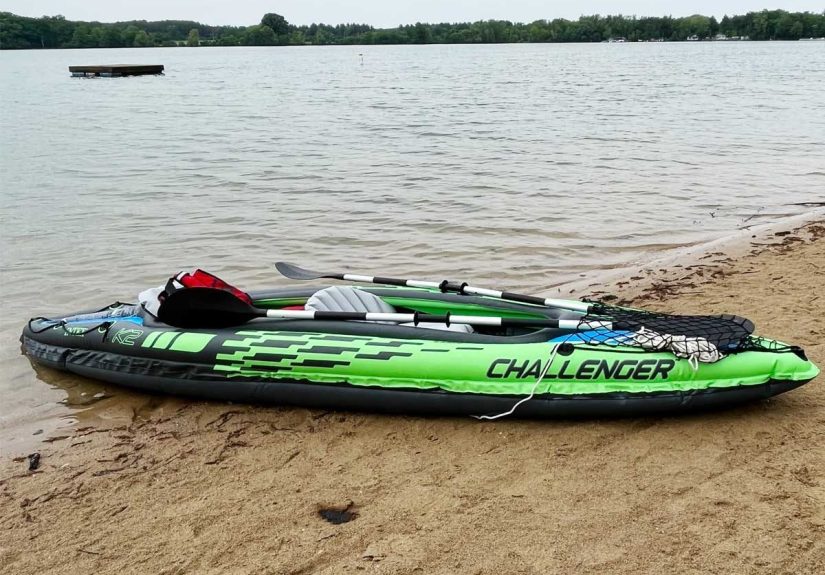
The Intex Challenger K2 is the “pizza night” of kayaking: it’s not pretending to be fine dining, but it absolutely
gets you fed, happy, and outside with minimal drama. It’s a budget-friendly inflatable tandem kayak that shows up
with a full starter kit (paddles, pump, patch kit, carry bag), a removable skeg for straighter tracking, and a
low-profile shape meant for lakes and mild rivers. In other words: it’s built for casual fun, not for bragging rights.
This review uses a “real-life use” approach: we evaluated the Challenger K2 the way most people actually use itinflate,
launch, paddle, laugh, accidentally bonk paddles with your partner, then deflate and stuff it back into the bag like a sleeping bag
that suddenly forgot how to be a rectangle. We also compare it to similar budget inflatables so you can decide if this is your
starter kayak… or your “I tried kayaking once and I liked it” kayak.
Quick Take: The 60-Second Verdict
Buy the Intex Challenger K2 if you want an affordable, packable tandem inflatable kayak for calm water,
and you’re okay with “good enough” performance and “be kind to it” durability.
Skip it if you expect hard-shell kayak speed, want to bounce off rocks, paddle long distances often,
or plan to do rough water, rapids, or big windy open areas.
What We Loved
- Value: it’s one of the cheapest ways to get two people paddling with a complete kit.
- Stable feel: rides low and feels reassuring for beginners.
- Skeg helps tracking: it’s not a laser beam, but it’s not a shopping cart with one wobbly wheel either.
- Portable: deflates and stores without needing a garage (or a therapist).
What We Didn’t Love
- Durability is the tradeoff: it’s rugged for the price, but still vinylsharp rocks and dragging are not its love language.
- Included pump works… eventually: you’ll get there, but you’ll feel it in your arms and your ego.
- Comfort is “fine,” not fancy: seats do the job, but serious paddlers usually upgrade or step up to a higher-end boat.
Specs at a Glance
Here’s the headline stuff most people want first. Specs can vary slightly by listing or model year, but these are the
commonly published numbers:
- Type: 2-person inflatable sit-in kayak
- Length: about 11’6″
- Width: about 30″
- Capacity: commonly listed around 400 lbs (always confirm on your specific kayak’s label/manual)
- Materials: vinyl/PVC construction (often described as 30-gauge vinyl)
- Key features: inflatable I-beam floor, removable skeg, grab lines, cargo net, high-visibility graphics
One note that confuses shoppers: weight listings are all over the place because some sources list the boat-only weight,
while others list the packaged kit weight (boat + accessories). If you’re carrying it from the car to the water, assume you’re
carrying “boat plus stuff,” not just the hull.
Unboxing: What Comes in the Box?
The Challenger K2 is popular partly because it’s a true starter bundle. Most packages include:
- Inflatable kayak (main hull with multiple air chambers)
- Two aluminum paddles
- Hand pump
- Repair patch kit
- Carry/storage bag
- Inflatable seats with backrests
- Removable skeg (fin)
Translation: you can go from “I own no kayak things” to “I’m on the water” without shopping for extra essentialsexcept
the essentials that actually keep you alive, like a properly fitting PFD (life jacket). More on safety later.
Setup & Inflation: From Trunk to Water Without Losing Your Mind
Step 1: Pick your launch spot like you’re protecting a phone screen
Setup is easiest on grass, sand, or a smooth surface. Sharp gravel and hidden sticks are the classic villains in the inflatable kayak story.
If you can’t avoid rough ground, lay down a tarp or thick blanket first. Think of it as a red carpet for your budget boat.
Step 2: Inflation time (and the pump reality check)
The included pump is functional, but it’s not fast. If you’re expecting “two minutes and done,” you’ll be emotionally unprepared.
The good news is that the Challenger K2 uses common quick-fill/quick-deflate style valves in many kits, which keeps the process straightforward.
Practical tip: inflate in stagesget the chambers mostly filled, then go back and firm everything up evenly. That helps the hull shape settle correctly,
and it’s easier on your arms than trying to brute-force one chamber to full firmness immediately.
Step 3: Seats and spacing (aka “Don’t put both seats in the same ZIP code”)
Seat placement matters more than people expect. Too far forward and the bow plows. Too far back and the stern drags.
For two adults, start with the seats roughly balanced around the midpoint, then adjust after a short test paddle.
Also: paddling in sync is real. If your paddles keep clacking together, stagger your timing slightly or shorten your stroke.
Tandem kayaking is basically a low-stakes relationship workshop with splashy consequences.
Step 4: Install the skeg (seriously, don’t “save it for later”)
The removable skeg is a big reason the Challenger K2 tracks as well as it does for a soft inflatable.
If you forget it, you’ll spend more time correcting your direction and less time going forwardlike trying to drive a shopping cart
with one rebellious wheel.
On-Water Performance: How It Actually Paddles
Let’s set expectations the healthy way: no inflatable in this price tier is going to feel like a sleek hard-shell touring kayak.
The Challenger K2’s goal is simplerstable, floaty fun on calm water.
Stability
Stability is one of the Challenger K2’s best traits. The kayak rides low and has buoyant side chambers, so beginners usually feel comfortable quickly.
It’s the kind of boat that makes first-timers say, “Oh! This is not terrifying.”
That said, stability is not invincibility. Sudden weight shifts, standing up, or leaning hard to one side can still flip youespecially if you’re
paddling with a second person who treats “balance” as a rumor.
Tracking and speed
With the skeg installed, the Challenger K2 tracks decently for a budget inflatable. You’ll still make small corrections (you’re in a flexible boat with
inflatable structure), but it won’t feel like you’re paddling in parentheses: “( ) ( ) ( )”.
Speed is modest. The streamlined shape helps, but this kayak is built for casual outings, not for chasing your friend’s hard-shell like it owes you money.
If your goal is long-distance touring, you’ll want a stiffer, higher-performance inflatable or a folding/hard-shell option.
Maneuverability
Turning is predictable and beginner-friendly, especially on calm water. The skeg adds stability and straighter tracking, but it can reduce
“spin on a dime” turning compared to a shorter or more rockered hull. For mild rivers with gentle bends, it can do fine.
For tight, technical maneuvering, it’s not the star of that movie.
Wind and small chop
Inflatable kayaks can get pushed around by wind, but the Challenger’s low profile helps reduce that effect. Still, in steady wind
on open water, you’ll notice drift. It’s best on protected lakes, coves, and slow rivers where the wind isn’t treating you like a sailboat.
Comfort: Seats, Space, and the “Two Humans in One Kayak” Factor
Seats
The included inflatable seats are… fine. They provide basic support and get you paddling, but they’re not luxury recliners.
After a longer outing, many people feel the difference between “a seat exists” and “a seat supports my spine’s long-term happiness.”
If you plan to paddle often, comfort upgrades can be as simple as adding a thin, quick-dry cushion, adjusting seat placement,
and making sure your posture isn’t doing that “shrimp hunch” thing.
Cockpit space and legroom
For a budget tandem, the cockpit is reasonably roomy. You can fit two adults, but your experience depends on height,
how much gear you bring, and how politely you coexist. If you’re both tall and packing a cooler, it can get cozy fast.
Communication is performance
In a tandem, paddling smoothly is a teamwork sport. Decide who sets the pace. Call out turns. And remember:
“Stop paddling for a second” is not an insult, it’s an aerodynamic strategy.
Durability & Build Quality: The Big Tradeoff
Here’s the honest truth: the Challenger K2’s low price is partly possible because it’s built from vinyl/PVC rather than higher-end
reinforced fabrics or drop-stitch construction found in pricier inflatables.
What 30-gauge vinyl means in real life
Vinyl can be plenty durable for calm water use when you treat it wellcarry it instead of dragging it, avoid sharp rocks,
and keep it away from anything pointy. But if you want a boat that shrugs off rough shorelines, dog nails, and accidental
boulder kisses, you’ll likely be happier spending more.
Typical wear points
- Bottom contact: dragging on pavement or sharp gravel is the fastest way to shorten its lifespan.
- Seams and folds: repeated tight folding and stuffing can stress material over time (store loosely when possible).
- Valves: keep them cleansand and grit can create slow leaks.
- Skeg area: if you land in shallow rocky spots, remove the skeg before scraping in.
How to make it last (without treating it like glass)
- Rinse and dry before long-term storage.
- Don’t store it fully inflated in hot sun for hoursheat expands air and can over-stress seams.
- Use a tarp at rocky launches.
- Carry it by the grab lines/handles rather than dragging it.
- Patch small issues earlytiny leaks rarely improve with time and positive thinking.
Safety: The Stuff That Matters More Than the Kayak
A kayak review that ignores safety is basically reviewing a car without mentioning seatbelts.
The Challenger K2 is intended for lakes and mild rivers. Keep your trips within your skills and conditions.
Wear a PFD (and make sure it fits)
Always wear a properly fitting, U.S. Coast Guard-approved life jacket. “It’s in the bag” is not the same as “it’s on your body.”
Fit matterssnug, secure, and appropriate for paddling.
Check wind and weather before you launch
Wind changes everything. A calm lake can turn into a slow-motion treadmill if the breeze picks up and you’re paddling against it.
Check a marine or local forecast, and avoid thunderstorms and high winds.
Cold water is sneaky
Even on a sunny day, cold water can cause cold shock and hypothermia faster than most people expect. Dress for the water temperature,
not just the air temperature, and keep trips conservative early in the season.
Where this kayak should (and shouldn’t) go
Best: calm lakes, slow rivers, protected bays, short casual paddles, “let’s float and snack” outings.
Not ideal: whitewater, rapids, open ocean, large windy reservoirs, rocky rivers where scraping is constant, or long expeditions where failure is not an option.
Challenger K2 vs. Other Popular Options
Intex Challenger K2 vs Intex Explorer K2
These two get compared constantly because they often sit near each other in price. The Explorer K2 is typically shorter and more maneuverable,
while the Challenger K2 tends to feel a bit more “straight-line friendly” with its length and skeg setup.
If you want relaxed lake paddles and extra room, Challenger K2 often makes sense. If you’re on tighter, bendy waterways,
some paddlers prefer the shorter feel of the Explorer-style hull.
Step-up inflatables (when you’re ready to stop babying the boat)
If you fall in love with kayaking and start going weekly, you’ll eventually notice what higher-end inflatables do better:
stiffer hulls, better seats, more robust materials, improved tracking and speed, and more confidence around abrasion.
The Challenger K2 is a great “starter chapter,” but it doesn’t have to be your whole story.
Who This Kayak Is Perfect For
- Beginners who want a low-cost way to try kayaking
- Casual paddlers who mostly do calm lakes and mild rivers
- People with limited storage space (apartment-friendly)
- Families who want a “weekend fun” boat that includes the essentials
- Anyone who wants a packable tandem for short, easy outings
Who Should Skip It
- Paddlers who want speed, efficiency, or long-distance touring performance
- Anyone regularly dealing with rocky launches, shallow boulder gardens, or rough water
- People who hate maintenance (inflatable ownership is a small lifestyle choice)
- Those who want premium comfort without upgrades
Our Extended “We Tried It” Experience (500+ Words of Real-World Use Notes)
Let’s talk about what it’s like to actually live with the Intex Challenger K2because the real test isn’t a spec sheet,
it’s whether you’ll use it more than twice before it becomes an oddly expensive closet ornament.
The Challenger K2’s biggest superpower is lowering the “friction” between you and the water. No roof rack. No garage puzzle.
No lifting a hard-shell like you’re auditioning for a moving company.
The first outing usually starts the same way: excitement, followed by the sudden realization that “inflatable kayak” still means
“you must inflate it.” The included hand pump gets the job done, but it’s not subtle. Expect a few minutes of pumping, a short break,
another few minutes of pumping, and a moment where you question your cardio. The upside is that the process is straightforward.
Once the main chambers take shape, the kayak goes from floppy pool toy to something that looks surprisingly legit.
The next moment of truth is seat setup. This is where tandem kayaking reveals its personality: it’s either teamwork… or
synchronized annoyance. When the seats are placed well, the cockpit feels roomy enough for two people to sit without
feeling like they’re sharing a single airline armrest. When the seats are placed poorly, it’s a comedy of small problems:
knees bumping, paddles clacking, and one person quietly deciding they should’ve brought a solo kayak and a new friend.
On the water, the Challenger K2 feels reassuringly stable. That low, planted ride is confidence-building for beginners.
You can relax, chat, and even stop paddling for a second without immediately spinning into a slow donut (assuming you installed the skeg).
Without the skeg, you’ll notice the kayak wandering more with each stroke, which is the paddling equivalent of walking with one shoe untied:
you can do it, but you’ll regret the choice the entire time.
For short lake cruisesthink 30 to 90 minutesthe experience is genuinely fun. You glide along, spot birds, take a million photos,
and feel like you unlocked an outdoorsy personality trait for the price of a nice dinner. But the longer you paddle,
the more you notice the Challenger’s “budget” DNA. The seats are okay, but after a while you’ll want better support.
The paddles do the job, but they’re not premium. And speed is perfectly fine for casual paddling, but not “cover miles like a touring machine.”
If you’re trying to keep up with friends in hard-shell kayaks, you’ll be working harder for less distancelike running on sand while they’re on a track.
Then there’s durability, the eternal inflatable question. Day-to-day, it holds up well when treated with basic respect:
carry it to the water, avoid scraping on rocks, and don’t drag it across rough pavement. The moment you get carelesslaunching on sharp gravel,
landing in a rocky shallows, or letting a pointy stick become the kayak’s new best friendyou’ll remember it’s vinyl.
The good news is that small issues are usually manageable if you catch them early. The better news is that most owners never have a problem
because they use it exactly as intended: calm water, gentle shorelines, and short outings.
The end-of-day routine is where the Challenger K2 shines again. You land, wipe it down, deflate, fold, and pack it away.
No roof rack gymnastics. No lifting a 60-pound plastic boat overhead. It’s the kind of convenience that makes you more likely
to go again next weekendand that’s the whole point. The Challenger K2 isn’t trying to be the best kayak in the world.
It’s trying to be the kayak you’ll actually use.
Conclusion: Is the Intex Challenger K2 Worth It?
If you want an affordable inflatable tandem kayak for calm waterand you’ll treat it like an inflatable (not like a bumper car)the Intex Challenger K2
is a smart, fun buy. It’s stable, beginner-friendly, portable, and comes as a complete kit. The biggest compromises are durability and long-haul comfort,
which is exactly what you’d expect at this price.
Our bottom line: the Challenger K2 is best as a starter tandem inflatable kayak for lakes and mild rivers, short trips, and casual adventures.
If it turns you into a frequent paddler, you’ll eventually outgrow itand that’s not a failure. That’s the kayak doing its job.