Table of Contents >> Show >> Hide
- Why This Christmas Conflict Feels So Personal
- What “Taking Over Christmas” Usually Looks Like
- Should the Mom Stop Her MIL From Taking Over Christmas?
- What the Couple Should Do First
- How to Set Christmas Boundaries Without Starting World War Ho-Ho-Ho
- Common Mistakes That Make the Situation Worse
- A Better Goal Than “Winning” Christmas
- What This Mom Can Say Right Now
- More Experiences Families Quietly Live Through Every Christmas
- Conclusion
Christmas is supposed to be merry, bright, and at least somewhat fueled by cookies. But in plenty of homes, the real holiday tradition is a quiet power struggle over who gets to run the day. One mom’s awkward dilemma about her mother-in-law taking over Christmas hits a nerve for a reason: it is not really about stockings, brunch casseroles, or who gets to hand out presents. It is about control, family roles, and that uncomfortable moment when “helpful” starts feeling like a full-scale holiday coup.
If you have ever watched a MIL rearrange your plans, override your parenting choices, or act like she is the official director of Christmas while you stand there holding tape and resentment, you already know the issue. The problem is not always that she means harm. Sometimes the problem is that nobody has clearly said where grandma’s role ends and the parents’ role begins. So the whole thing turns into a festive little mess with cinnamon on top.
This article breaks down why the conflict happens, whether the mom should step in, and how to set boundaries with in-laws at Christmas without turning dinner into a live-action family group chat fight.
Why This Christmas Conflict Feels So Personal
Holiday family conflict tends to hit harder than regular everyday tension because Christmas carries a ridiculous amount of emotional luggage. People bring memories, traditions, expectations, grief, nostalgia, and a very specific opinion about when gifts should be opened. When a mother-in-law steps in too aggressively, it can feel less like a small annoyance and more like a challenge to the parent’s authority, identity, and place in the family.
For many moms, Christmas is not just another date on the calendar. It is one of the biggest memory-making days of the year. They want to choose the traditions, protect time with their kids, and create a rhythm that feels like their own little family unit. So when MIL starts calling the shots, deciding schedules, changing gift routines, or taking over special moments, the emotional reaction is not petty. It is often a sign that an important line has been crossed.
And yes, this is where things get awkward. Nobody wants to be labeled controlling, ungrateful, or dramatic over a holiday. But nobody wants to be quietly erased from their own Christmas either. That is the tension.
What “Taking Over Christmas” Usually Looks Like
When people hear the phrase taking over Christmas, they sometimes imagine cartoon-villain behavior. In real life, it is usually more subtle. It can look like a MIL insisting that every Christmas morning follow her traditions. It can mean buying matching outfits without asking, directing the gift-opening order, deciding the menu, inviting extra relatives, or grabbing center stage in moments that belong to the parents and children.
Sometimes it is framed as excitement. Sometimes it is disguised as generosity. Sometimes it comes wrapped in the classic line: “I was only trying to help.” And to be fair, some mothers-in-law genuinely do think they are helping. But impact matters more than intention. If the parents feel sidelined, overruled, or steamrolled, then the dynamic is a problem even if the wrapping paper looks nice.
Signs the line has been crossed
A healthy grandparent presence adds warmth. An overbearing one adds pressure. The line is usually crossed when grandma stops participating in Christmas and starts managing it. If the mom feels like a guest in her own holiday, that is not holiday magic. That is a boundary issue wearing a Santa hat.
Why partners often miss the problem
The spouse whose parent is taking over may not see it right away. To them, the behavior can seem normal because it has always been normal. A son might think, “That is just how Mom is,” while his partner is internally screaming into a bowl of mashed potatoes. This mismatch matters, because if the couple is not aligned, the Christmas conflict will keep repeating year after year with more ornaments and less patience.
Should the Mom Stop Her MIL From Taking Over Christmas?
In most cases, yes, but not with a dramatic holiday ambush. The goal is not to punish the mother-in-law, embarrass her in front of the family, or launch a December turf war. The goal is to protect the couple’s home, traditions, and parenting role while leaving room for the grandmother to still be included in a respectful way.
The smartest move is not “let her do whatever she wants so nobody gets upset.” That usually creates more resentment, and resentment has a way of showing up at the worst possible time. It comes out in snappy comments, passive-aggressive sighs, and sudden emotional meltdowns over wrapping paper that absolutely did not deserve that level of hostility.
The better move is to step in early, clearly, and calmly. That means recognizing the pattern, deciding what is not working, and addressing it before Christmas morning turns into a competitive sport.
What the Couple Should Do First
1. Get on the same page privately
Before anyone talks to MIL, the couple needs a private conversation. Not a rushed one while folding laundry. Not a tense one in the car after a family dinner. A real conversation. What exactly feels off? Which traditions matter most? What does each person want Christmas to look like this year?
This part is crucial because vague frustration creates vague solutions. “Your mom is doing too much” will not get you far. “We want Christmas morning at home with the kids before anyone visits” is specific. “We do not want anyone else directing presents or deciding activities” is specific. Specific boundaries are much easier to communicate and defend.
2. Decide what is flexible and what is not
Not every issue has to become a showdown. Maybe grandma can bring dessert, help with dinner, or host an evening gathering. Maybe she can start a fun tradition of reading a Christmas story or doing a cookie exchange with the grandkids. The point is not to kick her out of the holiday. The point is to stop handing over the steering wheel.
Figure out the non-negotiables first. For many parents, those include Christmas morning, gift opening, family photos, meal timing, or parenting decisions around the children. Once those are protected, it is easier to be gracious about the smaller stuff.
3. Have the spouse speak to their own parent
As a general rule, each partner should handle their own side of the family when a sensitive boundary needs to be set. That usually reduces defensiveness. A conversation from a son to his mother is more likely to land as, “This is our family decision,” rather than, “My wife is trying to push you out.”
That does not mean the daughter-in-law has no voice. It means the couple acts as a team and communicates as a united front. The message should sound like we, not she wants.
How to Set Christmas Boundaries Without Starting World War Ho-Ho-Ho
Use calm, direct language
Clear beats clever every time. Overexplaining often creates openings for debate. A simple statement works better: “We are doing Christmas morning at home with the kids this year.” Or: “We are keeping gift opening low-key and parent-led.” Or: “We would love for you to join us for dinner, but we are keeping the morning just for our household.”
Notice what these examples do not do: apologize for existing, invite a committee vote, or pretend the boundary is a temporary weather pattern. They are warm, but firm.
Do not wait until the big day
Nothing good comes from setting a major boundary while someone is already in your living room wearing a reindeer sweater and issuing instructions. The earlier the conversation happens, the better. It gives everyone time to adjust expectations before emotions spike.
Offer a role, not the lead role
If the relationship is otherwise decent, one helpful strategy is to give the MIL a meaningful but limited role. Ask her to bring her famous pie, lead a sing-along, help the kids with one activity, or host dessert later in the day. Inclusion can soften the sting of change, as long as inclusion does not quietly turn back into domination.
Common Mistakes That Make the Situation Worse
Letting resentment do the talking
If the boundary conversation waits until months of irritation have piled up, it will probably come out sharp. That is when people say things they cannot easily walk back, like “You ruin every holiday,” which is memorable for all the wrong reasons.
Blaming the wrong person
Sometimes the real issue is not just the MIL. It is the partner who will not speak up, the couple who never created their own traditions, or the family pattern where everyone tiptoes around one strong personality. If the son keeps dodging the conversation, the daughter-in-law may end up cast as the villain for naming a problem he helped create.
Confusing kindness with surrender
Being polite does not mean giving away every meaningful part of the holiday. You can be warm and still say no. You can be respectful and still protect your kids’ experience. You can pass the gravy and maintain a boundary at the same time.
A Better Goal Than “Winning” Christmas
The real win is not proving that MIL is wrong. It is building a Christmas that reflects the couple’s values, protects their peace, and leaves room for extended family without handing them control. Healthy holiday traditions usually do not happen by accident. They happen because someone is brave enough to say, “This matters to us, and we want to do it differently.”
That can feel scary, especially in families where guilt is used like tinsel and every preference gets treated like a personal attack. But adults are allowed to make new traditions. Parents are allowed to lead their own home. Grandparents are allowed to participate without running the show. That is not cruel. That is structure.
What This Mom Can Say Right Now
If the mom in this awkward Christmas debate wants a practical script, here is one: “We love that you’re excited about the holiday, and we want you to be part of it. At the same time, we need Christmas to reflect our little family too. So this year, we’re doing Christmas morning our way with the kids, and then we’d love to celebrate with you later in the day.”
That kind of message is honest, adult, and hard to misunderstand. It does not accuse. It does not grovel. It does not leave the door wide open for a holiday takeover sequel.
If MIL gets upset, that does not automatically mean the boundary was wrong. Sometimes it just means the old arrangement benefited her more than it benefited everyone else. People often resist new boundaries precisely because the old system was so convenient for them.
More Experiences Families Quietly Live Through Every Christmas
One mom might notice the trouble starting weeks before Christmas. Her mother-in-law begins texting daily about decorations, menus, and matching pajamas for the kids. At first it seems sweet. Then it becomes strangely managerial. By December 20, grandma has planned breakfast, purchased half the gifts, invited an uncle nobody discussed, and announced what time everyone should arrive. The mom smiles through it until Christmas morning, when her own child looks to grandma for permission to open presents. That is the moment everything feels off. Not because grandma loves the kids too much, but because the mother suddenly realizes she has been slowly edited out of her own family ritual.
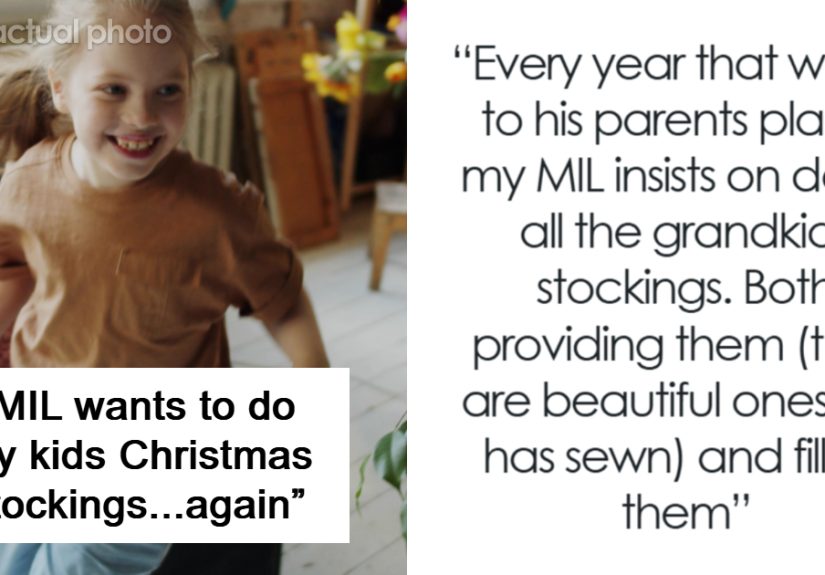
Another family has the opposite problem. The MIL does not bark orders or make big speeches. She simply inserts herself into every meaningful moment. She hands out the stockings before the parents are ready. She insists on sitting in the center for photos. She redirects the children toward the gifts she bought first. There is no single explosive event, just a series of tiny takeovers that leave the mom feeling silly for being upset and exhausted for pretending she is not. Those are often the hardest situations because each incident seems too small to challenge, but together they create a holiday that feels completely hijacked.
In some homes, the real awkwardness comes after the boundary is finally set. A husband tells his mother that Christmas morning will stay private this year, and suddenly the room temperature drops by ten degrees. She says she “understands,” but in the way that clearly means she absolutely does not. She mentions all the sacrifices she made when her children were young. She wonders aloud whether she is still welcome at all. Everyone becomes so focused on her disappointment that the original issue nearly disappears. This is where many couples cave. They think the boundary caused the problem, when really the boundary simply revealed the problem that was already there.
There are also families where the change goes surprisingly well. A couple explains that they want a slower morning at home with their kids and would love grandma to come for brunch instead. She is a little hurt at first, but once expectations are clear, the day actually improves. The children are calmer. The parents are more present. Grandma arrives to a house that is no longer frantic, and she gets to enjoy the fun parts without carrying the expectation that she must direct the entire production. Sometimes less control creates more connection.
And then there are the moms who discover something important in the middle of all this: what they really wanted was not perfection. They did not need the tree to look like a catalog or the cinnamon rolls to deserve applause. They just wanted to feel like the mother in their own home, not a background character in someone else’s Christmas pageant. That is why this issue lands so hard. Holiday traditions are memory-making machinery. When someone constantly takes over, they are not just taking a task. They are taking ownership of moments that matter.
So if a mom is debating whether to stop her MIL from taking over Christmas, the answer is not “calm down” or “just be grateful for the help.” The better answer is this: protect what matters, communicate before resentment hardens, and remember that a family holiday should not require one person to disappear so another person can feel important. Christmas can include grandma without becoming Grandma Presents: The Director’s Cut.
Conclusion
When a MIL takes over Christmas, the awkwardness is usually a symptom of something bigger: unclear roles, unspoken expectations, and a couple that has not fully claimed its own traditions yet. The answer is not a dramatic showdown or silent resentment. It is a calm reset. Parents have every right to shape their holiday, protect special moments with their children, and define how extended family fits into the day.
Stopping a mother-in-law from taking over Christmas is not about exclusion. It is about balance. When boundaries are clear, everyone can enjoy the holiday with less tension and a lot fewer emotionally loaded casserole dishes. And honestly, that might be the most magical Christmas gift of all.