Table of Contents >> Show >> Hide
- How Birthday Portraits Became My Favorite Kind of Gift
- What Drawing Hundreds of Faces Taught Me About Likeness
- The Practical System I Use for Every Birthday Portrait
- Why Handmade Birthday Portraits Feel So Personal
- The Funny, Frustrating Problems Nobody Warns You About
- Extra Experiences From the Birthday Portrait Trenches
- Conclusion
It started the way many oddly specific life traditions begin: with one well-meaning idea, a cheap sketchbook, and absolutely no long-term business plan. One year, instead of buying a birthday gift that would eventually end up in a drawer beside old chargers and mystery batteries, I drew a portrait of my friend. It was not flawless. The nose was a little ambitious. The hair had strong “windswept by emotional weather” energy. But my friend loved it, and that was the problem. Because the next year, someone else had a birthday. Then someone else. Then another. Before I knew it, I had created the least scalable hobby in modern friendship: hand-drawn birthday portraits.
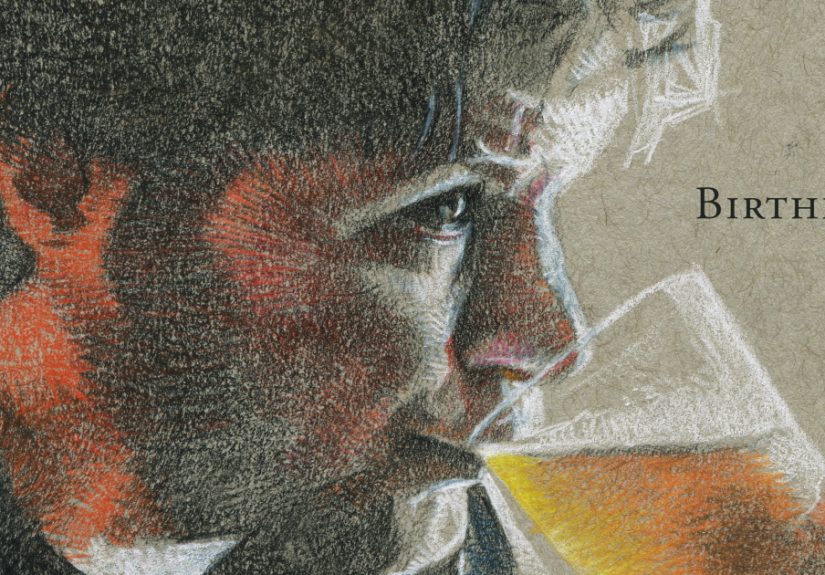
Now, after drawing hundreds of portraits for birthdays, I can say this with confidence: portrait drawing is not really about faces. Not exactly. It is about attention. It is about deciding that a person’s expression, posture, haircut, favorite jacket, laugh lines, tired eyes, or glorious overconfident eyebrow deserve to be noticed and translated into art. That is why birthday portraits land differently from store-bought gifts. A portrait says, “I see you,” which is much nicer than saying, “I panicked in a gift shop at 7:42 p.m.”
Along the way, I learned that the best portraits are not stiff, airbrushed monuments to perfection. They are little essays in identity. They show clues about personality, mood, and presence. Sometimes the strongest likeness does not come from polishing every eyelash into submission. It comes from getting the tilt of the head right, preserving the mischievous smile, or keeping the weird curl that refuses to behave. In other words, the portrait becomes memorable the moment it stops trying to be generic.
How Birthday Portraits Became My Favorite Kind of Gift
There is a reason handmade birthday gifts hit differently. A portrait is time made visible. It is effort with cheekbones. It carries intention in a way that mass-produced objects simply cannot. Even psychology research on gift-giving points toward the same basic truth: thoughtful gifts strengthen emotional connection because the meaning behind the gift matters as much as, and often more than, the price tag. A portrait may cost less than a fancy gadget, but it usually says far more. It says, “I spent hours thinking about your face,” which sounds alarming out of context and deeply moving within it.
That emotional weight is exactly why I kept going. Over the years, my birthday portrait routine turned into a personal archive of friendship. I can flip through old scans and remember entire eras of my life through people’s hairstyles alone. Here is the year everyone wore oversized denim. Here is the year three of my friends discovered mustaches and treated them like personality upgrades. Here is the year I learned that drawing bangs is a trust exercise. The portraits became a timeline not just of my friends, but of how we were all changing.
What surprised me most was how often people responded to the small details. Not “Wow, you rendered the skin tones with technical sophistication.” No. It was always something like, “You got my smirk,” or “That is exactly the face I make when I’m about to say something chaotic.” That is when I understood that a successful birthday portrait is not a sterile copy of a photograph. It is a visual translation of someone’s vibe, which is both less scientific and far more important.
What Drawing Hundreds of Faces Taught Me About Likeness
Likeness starts with the big shapes, not the tiny details
One of the biggest lessons I learned was that people do not recognize themselves from eyelashes first. They recognize themselves from shape, proportion, and structure. The height-to-width ratio of the head, the distance between the features, the angle of the jaw, the placement of the eyes, the silhouette of the hair, the slope of the shouldersthose are the things doing the heavy lifting. If those are off, adding detailed pupils is like putting premium icing on a crooked cake.
So I stopped beginning with detail and started beginning with scaffolding. I map the head shape, center line, and major feature placement first. Sometimes I use a loose grid. Sometimes I compare one distance to another and measure with my pencil like an old-school studio goblin. Sometimes I step back every few minutes to check whether the entire face is drifting into “close cousin” territory instead of “actual friend.” This is not glamorous, but it works. Portrait drawing rewards humility. The face will let you know when you are being too confident.
Expression matters more than mathematical perfection
Another thing I learned: symmetry is overrated. Real faces are alive because they are slightly uneven, asymmetrical, and full of movement. One eyebrow sits higher. One side of the smile pulls harder. One eye squints more when laughter kicks in. If I smooth all of that away in the name of “beauty,” I may create a prettier drawing, but I usually lose the person.
That is especially true with birthday portraits, because the goal is not to make my friends look like anonymous magazine covers. The goal is to make the drawing feel like them. A grin, a skeptical side-eye, the sleepy softness of a morning face, or the pure chaos of a laugh caught mid-burst often says more than a perfectly centered pose ever could. Capturing expression is part of capturing likeness. Miss the expression, and the portrait may still be competent, but it will not feel inhabited.
Backgrounds, clothes, and objects are not decorationthey are information
I used to think portrait backgrounds were filler. Then I got smarter. Or at least less lazy. The setting, clothing, and surrounding objects tell stories. A favorite hoodie, a guitar resting by the chair, the coffee mug someone is always holding, the stacks of books, the chipped nail polish, the plant they somehow keep alive despite all evidence to the contrarythese details help the portrait carry identity beyond the face.
That is why some of my favorite birthday portraits are not the most technically refined ones. They are the ones where I included the right clues. A friend who always wears loud earrings gets the loud earrings. A baker gets flour on the apron. A runner gets the windbreaker tied at the waist. A friend who loves old movies gets a dramatic shadow and a tiny bit of cinematic flair. Portraiture becomes richer when it stops asking only, “What does this person look like?” and starts asking, “How do they move through the world?”
The Practical System I Use for Every Birthday Portrait
Drawing hundreds of birthday portraits taught me that inspiration is lovely, but systems save lives. Or at least save deadlines. Here is the method I return to over and over:
1. I choose a reference photo with clear light
If the lighting in the photo is flat, the drawing will fight me from the beginning. Good portrait references have clear shadows, readable forms, and enough contrast to describe the planes of the face. Soft window light is usually my best friend. Flash-heavy photos tend to flatten everything into sadness.
2. I look for the person’s “anchor feature”
Every face has a few traits that make it unmistakable: the curve of the mouth, the distance between brow and nose, a distinct jawline, wild curls, heavy lids, a chipped front tooth, or the particular way a smile pushes into the cheeks. I decide early what makes this person instantly recognizable. That becomes my anchor.
3. I block in the big shapes first
Head shape, hair mass, shoulder tilt, neck angle, and general feature placement come before any detailed rendering. If the architecture is wrong, no amount of shading can save me. This is the portrait equivalent of remembering to build the house before choosing the throw pillows.
4. I keep checking proportion
I compare eye width to nose width, nose length to mouth placement, brow line to chin length. I step back. I squint. I flip the drawing. I ask myself hard questions. Is the head too narrow? Did the mouth slide sideways? Did I accidentally invent a new skull shape? These are important birthday questions.
5. I save the most delicate details for late in the process
Once the structure feels right, I refine edges, features, and values. I add the details that make the portrait breathe: a sparkle in the eye, a scar, laugh lines, freckles, a necklace, wrinkles in a shirt collar, the exact kind of messy bun that says “I tried, but not enough to lose my personality.”
6. I stop before I over-explain the drawing
This may be the hardest part. Portraits can die from too much correcting. Sometimes the freshest version appears twenty minutes before I ruin it by trying to make it “perfect.” I have learned to leave some breathing room in the mark-making. A portrait should feel alive, not taxidermied.
Why Handmade Birthday Portraits Feel So Personal
The emotional power of a birthday portrait is not mystical. It is relational. People respond to being interpreted with care. A portrait says that someone spent time looking, selecting, editing, and translating. That process is intimate in a healthy, human way. It turns a birthday gift into evidence of attention.
There is also a quiet kind of bravery in giving handmade art. Store-bought gifts hide behind packaging and branding. A handmade portrait arrives with fingerprints all over it, sometimes metaphorically and sometimes because charcoal has laws of its own. It reveals taste, effort, judgment, and vulnerability. It can say, “This is how I see you,” which is a pretty enormous thing to hand another person on a Tuesday night over cake.
And yes, it helps that giving can feel good for the giver too. Researchers have linked gift-giving with reward, pleasure, and connection. That does not mean I am out here chasing dopamine with graphite like some sort of wholesome art gremlin. But it does mean the ritual has a feedback loop. My friends feel seen. I feel connected. Everyone wins, except perhaps my wrist.
The Funny, Frustrating Problems Nobody Warns You About
Let me now honor the less glamorous side of the tradition. First, hair is chaos. Curly hair is gorgeous chaos. Buzz cuts are deceptive because they look simple but expose every structural mistake underneath. Glasses can make a portrait look instantly right or catastrophically wrong. Smiles are dangerous because teeth become tiny architectural lies if you are not careful. Beards are helpful until they are not. And friends who send you low-resolution selfies from a dim restaurant should know that they are playing a risky game with their own birthday legacy.
Then there is the emotional challenge. Drawing someone you love can make you weirdly nervous. You want to honor them. You want them to feel beautiful without feeling edited into another species. You want the portrait to feel thoughtful, not creepy; affectionate, not overly solemn; personal, not overworked. It is a balancing act between accuracy and warmth.
But those problems are part of the charm. A birthday portrait is not supposed to feel manufactured. It is supposed to carry the signs of a real hand making real choices for a real person. A tiny imperfection can sometimes make the whole thing more lovable. It proves the gift was made, not merely purchased.
Extra Experiences From the Birthday Portrait Trenches
I once drew a portrait for a friend who had just cut her hair after a rough year, and I almost used an older reference photo because it was technically better. Better light. Better angle. Better clarity. Very respectable cheekbone situation. But the newer photo had the haircut that mattered. It had this calm, relieved expression, like someone who had finally exhaled after carrying too much for too long. So I used the newer one. The drawing was harder because the photo gave me less information, but when she opened it, she got emotional immediately. Not because the shading was impressive, but because I had drawn the version of her that felt current and true. That portrait taught me that likeness is not only anatomical. It is emotional timing.
Another year, I made a portrait of a friend known for being the funniest person in every room. I tried a serious pose first, thinking it would look more “artistic.” It was technically solid and completely wrong. It looked like him the way a wax museum version looks like somebody: close enough to be unsettling. I started over and used a reference where he was mid-laugh, eyes half-closed, shoulders slightly raised, grin completely unembarrassed. Suddenly the drawing worked. It was messier, looser, and far more honest. Since then, I have trusted energy more than polish.
There was also the time I drew a portrait for a friend who always wore giant headphones and lived in oversized sweaters. I considered removing those details because, from a purely formal standpoint, they were bulky and distracting. Then I realized that without them, I was erasing half of what made the image feel like her. So I kept the headphones. I kept the sweater folds. I even kept the slightly crooked way she tucked one shoulder forward. When she saw it, she laughed and said, “You got my emotional support outfit.” That may still be one of the best compliments I have ever received.
Over the years, these portraits have also changed the way I pay attention in everyday life. I notice people’s gestures more now: how someone leans into a joke, how another person pushes their glasses up when they are thinking, how a friend’s face softens when they talk about home. Drawing portraits has made me a better observer, and honestly, a better friend. You cannot draw people over and over without becoming more curious about what makes each of them distinctly themselves.
That, more than anything, is why I keep doing it. Not because every portrait is perfect. Not because birthdays arrive at a reasonable pace. And certainly not because drawing eyebrows is a relaxing hobby. I keep doing it because each portrait becomes a record of affection. It captures a face, yes, but also a season of friendship, a version of someone’s identity, and the small details that might otherwise blur with time. In a world that moves fast and forgets faster, a handmade birthday portrait says: you were here, you mattered, and for a few quiet hours, someone looked closely enough to prove it.
Conclusion
After drawing hundreds of portraits of my friends for their birthdays, I have come to think of portrait drawing as equal parts observation, design, memory, and care. The technical side matters: strong shapes, smart proportions, clear lighting, and expressive choices all help the drawing succeed. But the emotional side matters more. The portraits people treasure most are usually the ones that feel like recognition, not perfection.
That is the real reason this tradition has lasted. A handmade portrait turns a birthday gift into a piece of visual storytelling. It captures personality, preserves a moment, and reminds people that being truly noticed is one of the rarest presents we can give each other. Also, unlike a novelty mug, it has a fighting chance of surviving the next apartment move.