Table of Contents >> Show >> Hide
- What Is Ngaren: The Museum of Humankind?
- Why Kenya Is the Perfect Home for a Museum of Humankind
- A Museum That Connects Fossils, Climate, Tools, and Identity
- The Richard Leakey Legacy
- How Ngaren Could Change Heritage Tourism in Kenya
- Kenya’s Existing Museum Network and the Bigger Heritage Picture
- Ancient Heritage Is Not Ancient News
- Why the Museum’s Message Matters Globally
- Designing Wonder Without Losing Scientific Accuracy
- Challenges and Responsibilities
- What Visitors Might Experience
- Experiences Related to Kenya's New Museum and Ancient Heritage
- Conclusion: A Museum for the Human Family
Note: This article is based on real publicly available information from museum, architecture, science, heritage, and human-origins sources, including National Museums of Kenya, Studio Libeskind, UNESCO, Smithsonian, National Geographic Education, NASA Earth Observatory, Harvard museum programming, and research-focused institutions.
Imagine a museum where the welcome sign might as well read: “Congratulations, you have arrived at the family reunion of the human species.” That is the spirit behind Kenya’s ambitious Ngaren: The Museum of Humankind, a proposed museum envisioned for Kenya’s Rift Valley and designed to honor the deep story of human origins, ancient tools, fossil discoveries, migration, climate change, and the shared ancestry that connects every person on Earth.
Kenya has long been described as one of the world’s great cradles of humankind, and not because the phrase looks good on a tourism posteralthough, let’s be honest, it absolutely does. The country’s landscapes, especially around Lake Turkana and the Great Rift Valley, have yielded extraordinary clues about early humans and our relatives. Fossils, stone tools, footprints, geological layers, and ancient lake beds have helped scientists reconstruct millions of years of evolution. Ngaren aims to transform that scientific record into a powerful public experience: part museum, part science center, part architectural landmark, and part reminder that humanity’s oldest stories are not dusty footnotes. They are the prologue to all of us.
What Is Ngaren: The Museum of Humankind?
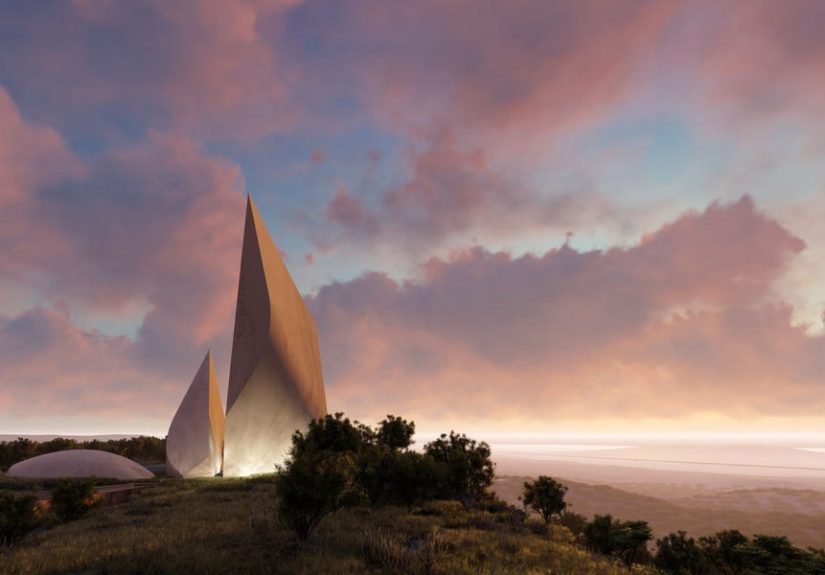
Ngaren: The Museum of Humankind was conceived as a major cultural and scientific institution dedicated to telling the story of humanity from its ancient beginnings to its uncertain future. The project was commissioned by the late Dr. Richard Leakey, the Kenyan paleoanthropologist, conservationist, and public figure whose career helped bring global attention to East Africa’s fossil record. The museum’s design was developed by Studio Libeskind, the architecture firm led by Daniel Libeskind, known internationally for emotionally expressive buildings that often deal with memory, identity, and history.
The museum is planned for the Rift Valley region, a landscape that is both visually dramatic and scientifically legendary. The design concept draws inspiration from ancient hand axes, among the earliest tools associated with human ingenuity. Instead of creating a quiet box full of labels and glass cases, the proposed architecture rises from the land like a sculptural statement. It suggests that human history was never flat, tidy, or polite. It was jagged, experimental, adaptive, and occasionally messybasically the same energy as trying to assemble furniture without instructions, but over two million years.
Why Kenya Is the Perfect Home for a Museum of Humankind
Kenya is not just a beautiful setting for this museum. It is central to the story the museum wants to tell. The Turkana Basin in northern Kenya has produced some of the most important fossil discoveries in the study of human evolution. Lake Turkana, sometimes called the “Jade Sea,” sits within a region where sediment, volcanic ash, and time have preserved evidence of ancient environments and early human relatives.
Among the most famous discoveries linked to Kenya is Turkana Boy, also known as Nariokotome Boy or KNM-WT 15000. Discovered in 1984 near Lake Turkana, this remarkably complete Homo erectus skeleton gave scientists valuable information about body size, growth, walking, and adaptation in early humans. Smithsonian’s Human Origins Program describes Turkana Boy as one of the most informative fossils for understanding Homo erectus anatomy, while National Geographic Education highlights the discovery as a landmark in the story of human evolution.
Koobi Fora, on the eastern side of Lake Turkana, is another world-class site. UNESCO recognizes the Lake Turkana National Parks as a World Heritage Site, noting the importance of Koobi Fora’s fossil deposits for understanding human ancestry and ancient environments. In plain English: if Earth kept a scrapbook of humanity’s early chapters, Kenya got several of the best pages.
A Museum That Connects Fossils, Climate, Tools, and Identity
Many museums focus on what happened. Ngaren’s vision goes further by asking why it matters now. The story of human evolution is not only about skulls, bones, and stone tools. It is also about climate change, migration, survival, cooperation, extinction, adaptation, and the fragile relationship between humans and the planet.
That makes the museum especially relevant in the twenty-first century. Ancient climate shifts shaped habitats, influenced animal movements, altered food sources, and affected the survival of species. Today, human-driven climate change poses new challenges, and Ngaren’s message links the deep past to modern responsibility. The fossil record tells us that change is not optional. The real question is whether we learn fast enough.
The Meaning Behind Ancient Hand Axes
The museum’s architecture is inspired by ancient hand axes and early stone tools. That design choice is more than decorative. Stone tools represent one of the clearest signs of early technological behavior. They show planning, skill, experimentation, and problem-solving. In other words, before humans had smartphones, satellites, or coffee machines that require a software update, we had stone toolsand they were revolutionary.
Hand axes are especially symbolic because they sit at the intersection of survival and imagination. A tool is never just an object; it is evidence of a mind seeing possibility in raw material. Ngaren’s design turns that idea into architecture. The building itself becomes a monument to the first sparks of invention.
The Richard Leakey Legacy
Dr. Richard Leakey’s name is deeply connected with Kenya’s scientific heritage. The son of Louis and Mary Leakey, he continued a family legacy of paleoanthropological research while also becoming an influential conservationist and public servant. His work with the National Museums of Kenya, the Kenya Wildlife Service, and the Turkana Basin Institute helped shape how Kenya’s natural and cultural heritage is studied, protected, and shared with the world.
Ngaren reflects Leakey’s broad view of science. He did not treat fossils as museum trophies. He saw them as evidence with ethical force. If long-extinct species could dominate the Earth for ages and then disappear, humans should perhaps avoid getting too smug about our Wi-Fi passwords and skyscrapers. The deeper lesson is humility: we are extraordinary, but not exempt from nature’s rules.
How Ngaren Could Change Heritage Tourism in Kenya
Kenya is already famous for wildlife safaris, national parks, coastal heritage, and vibrant cultural traditions. A major museum dedicated to human origins would add another powerful layer to the country’s tourism identity. It could encourage visitors to see Kenya not only as a place of landscapes and wildlife, but as a place where the human story becomes visible in stone, bone, soil, and science.
Heritage tourism works best when it benefits local communities, supports education, and respects the places it celebrates. If developed thoughtfully, Ngaren could create opportunities for guides, educators, researchers, artists, hospitality businesses, and nearby communities. It could also inspire Kenyan students to see science not as something imported from elsewhere, but as something rooted in their own land.
More Than a Building: A Platform for Education
The most exciting museums today are not silent warehouses of artifacts. They are learning platforms. Ngaren’s proposed concept includes immersive storytelling, digital interpretation, and science education designed for a broad audience. That matters because human evolution can be complex. The topic includes unfamiliar names, long timelines, and debates that can make even curious readers feel like they accidentally opened a graduate textbook.
A strong museum can translate that complexity without dumbing it down. It can help a child understand why a fossil foot bone matters. It can help a tourist grasp why volcanic ash layers are useful for dating discoveries. It can help adults connect ancient climate shifts with today’s environmental choices. And it can do all this without forcing visitors to pretend they already know how to pronounce “Australopithecus” on the first try.
Kenya’s Existing Museum Network and the Bigger Heritage Picture
Ngaren would not stand alone. Kenya already has a rich network of museums and heritage sites overseen by National Museums of Kenya. Nairobi National Museum introduces visitors to Kenya’s natural history, cultural heritage, art, and human-origins collections. Hyrax Hill Museum near Nakuru preserves evidence of prehistoric settlement. Koobi Fora Museum and related heritage sites connect visitors to the fossil landscapes of Lake Turkana. Fort Jesus in Mombasa tells stories of coastal history, trade, conflict, and Swahili heritage.
Together, these institutions show that “heritage” is not one thing. It includes fossils and music, architecture and language, sacred sites and scientific specimens, beadwork and botany, migration and memory. A new museum of humankind would add a global frame to that national story. It would say: Kenya’s ancient heritage is not only Kenyan heritage. It is human heritage.
Ancient Heritage Is Not Ancient News
One reason this museum concept feels timely is that discoveries in Kenya continue to reshape what scientists know. Recent research on ancient footprints near Koobi Fora has suggested that different hominin species may have lived in the same landscape around 1.5 million years ago. Fossil footprints are especially fascinating because they preserve behavior, not just anatomy. A bone says, “This creature existed.” A footprint says, “This creature passed here.” That small shift makes the past feel almost cinematic.
These findings challenge the old idea of evolution as a simple ladder leading neatly to modern humans. The real story is more like a branching path with experiments, dead ends, neighbors, cousins, and surprising overlaps. Ngaren’s value lies in helping the public understand that complexity. Human evolution is not a straight march from “primitive” to “perfect.” It is a long, tangled, astonishing process of adaptation.
Why the Museum’s Message Matters Globally
At its heart, Ngaren is about shared ancestry. That message may be its most powerful contribution. In a world often divided by nationality, race, religion, politics, and language, the science of human origins offers a humbling reminder: our differences are recent compared with our common roots.
That does not erase culture. On the contrary, it makes culture even more remarkable. Humans spread, adapted, invented, sang, cooked, painted, traded, argued, migrated, and built meaning in thousands of ways. A museum of humankind can celebrate both unity and diversity. It can show that we are one species with many stories, one family with many accents, and one planet that cannot be replaced if we treat it like a disposable snack wrapper.
Designing Wonder Without Losing Scientific Accuracy
Any museum about ancient heritage must balance drama and evidence. Spectacular architecture can attract attention, but the science must remain the backbone. That is why partnerships with researchers, museums, universities, and local experts matter. Visitors should leave amazed, but also better informed.
The best museum experiences do not simply say, “Look at this old thing.” They explain how we know what we know. How are fossils dated? Why do footprints matter? What can teeth reveal about diet? How do stone tools show planning? Why do scientists revise theories when new evidence appears? A museum that answers these questions teaches more than facts. It teaches scientific thinking.
Challenges and Responsibilities
A museum of this scale also comes with serious responsibilities. It must respect local communities, protect fragile sites, avoid turning human origins into a shallow tourist slogan, and ensure that Kenyan voices lead the interpretation of Kenyan heritage. It must also address conservation, accessibility, funding, staffing, and long-term sustainability.
Another responsibility is narrative fairness. For too long, African heritage has often been interpreted through outside perspectives. A modern museum in Kenya has the opportunity to center African scholarship, Kenyan expertise, Indigenous knowledge, and local stewardship. Ancient heritage should not be presented as treasure extracted from a landscape. It should be presented as living responsibility shared with the people who call that landscape home.
What Visitors Might Experience
Although the final visitor experience depends on how the museum is completed and curated, the concept suggests a journey through deep time. Visitors might begin with cosmic origins, move through Earth’s changing climates, encounter extinct species, explore the rise of early humans, examine stone tools, study migration routes, and end with urgent questions about the future.
The experience could combine fossils, replicas, digital reconstructions, immersive environments, oral histories, interactive maps, and educational programming. Done well, it would not feel like walking through a textbook. It would feel like stepping into a conversation between geology, biology, culture, and imagination.
Experiences Related to Kenya’s New Museum and Ancient Heritage
To understand why a museum like Ngaren matters, picture a traveler arriving in Kenya with the usual checklist: wildlife, landscapes, food, maybe a heroic attempt to take a good photo without blinking. Then the traveler stands before a fossil cast of Turkana Boy or looks across the Rift Valley and realizes the trip is not only about seeing another country. It is about seeing the beginning of a story that includes everyone.
The experience of engaging with Kenya’s ancient heritage can be surprisingly emotional. Human-origins sites do not behave like ordinary attractions. A beach relaxes you. A mountain humbles you. A fossil site quietly rearranges your sense of time. Suddenly, your daily worriesemails, traffic, the mysterious disappearance of matching socksshrink against a timeline measured in millions of years. That perspective is not depressing. It is freeing.
Visitors to museums and fossil-related heritage sites often describe a strange closeness to the past. A stone tool may look simple at first glance, but then you imagine the hands that shaped it. Someone selected the stone. Someone struck it carefully. Someone carried it, used it, perhaps taught another person how to make one. That object becomes a bridge between intelligence and survival. It reminds us that technology did not begin with screens. It began with observation, patience, and the courage to try.
For students, a museum of humankind could be transformative. Many young people learn evolution as a chapter in a science book, complete with diagrams that look as if they were designed to test attention spans. But standing in a museum built near the landscapes where key discoveries were made changes the lesson. It says: science happens here. Knowledge is not abstract. It is dug from sediments, debated in labs, protected by communities, and shared through education.
For Kenyan families, the museum could become a place of pride. It would affirm that Kenya’s ancient heritage is not a side note in world history. It is central to the human story. Children could grow up knowing that the land beneath their feet has helped answer some of the biggest questions humans can ask: Where did we come from? How did we adapt? What connects us? What do we owe the future?
For international visitors, the experience could challenge stereotypes. Too often, Africa is framed through narrow lenses: safari scenery, crisis headlines, or simplified cultural images. A museum like Ngaren can widen that frame. It can present Kenya as a center of science, architecture, conservation, education, and global heritage. It can make clear that the study of human origins is not a foreign story placed onto Africa, but a story deeply grounded in African landscapes and African expertise.
There is also an environmental experience woven into the topic. The Rift Valley and Lake Turkana regions reveal how climate, water, animals, and humans have interacted over immense spans of time. When visitors learn that ancient climate shifts influenced evolution, they may better understand why today’s environmental choices matter. The past becomes a teacher with very old credentials.
A thoughtful museum visit might end not with a simple souvenir purchase, but with a question. If earlier humans survived through adaptation and cooperation, what does survival require now? If ancient tools changed the future of our species, what toolsscientific, ethical, political, and culturaldo we need today? If we all share ancestry, why do we work so hard to forget it?
That is the real experience Ngaren promises: not just looking backward, but returning to the present with sharper eyes. Kenya’s new museum vision pays homage to ancient heritage by refusing to trap it in the past. It treats heritage as a living force, one that can educate, unite, caution, and inspire. And if a museum can make visitors feel both very small in time and very responsible in the present, then it has done something extraordinary.
Conclusion: A Museum for the Human Family
Kenya’s proposed Ngaren Museum of Humankind is more than an architectural project. It is a bold cultural statement about origins, identity, science, and responsibility. By honoring ancient fossils, early tools, changing climates, and the landscapes of the Rift Valley, the museum would help visitors understand that the human story is shared, complex, and unfinished.
In a world that often feels divided, the idea behind Ngaren is refreshingly simple: before we were strangers, we were relatives. Kenya’s ancient heritage gives the world a rare chance to look back with wonder and look forward with wisdom. That is not just museum material. That is a message worth building in stone, steel, light, and memory.