Table of Contents >> Show >> Hide
- The Viral Magic of a Little Girl and Her Extremely Opinionated Cat
- Why This Story Practically Begged to Be Illustrated
- What the Story Gets Right About Kids, Creativity, and Cat Behavior
- How an Illustrated Version Can Become Even Better Than the Original
- Why Readers Can’t Resist Stories Like This
- More Experiences Related to This Topic: When Kids Turn Pets Into Story Characters
- Final Thoughts
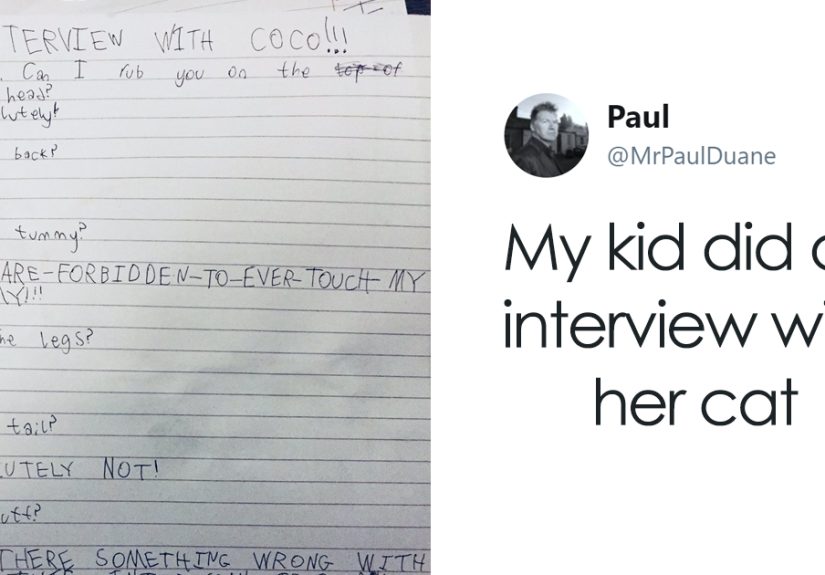
Every once in a while, the internet produces something so oddly perfect that nobody wants to improve it. They just want to frame it, preserve it, and maybe put it in a museum between “first moon landing photo” and “that one meme your aunt still quotes incorrectly.” A little girl interviewing her cat belongs in that category. It is funny, charming, sharply observed, andmost important of allabsolutely believable to anyone who has ever loved a cat that acts like a velvet-covered union representative.
That is exactly why the idea of illustrating the moment feels so right. A handwritten cat interview is already half comedy sketch, half picture book. Add expressive drawings, a suspicious feline side-eye, and the dramatic tension of a child asking, “Can I pet you here?” and you suddenly have a tiny masterpiece of family humor. It is not just cute internet content. It is a perfect collision of children’s imagination, cat behavior, visual storytelling, and the universal truth that cats are very committed to their boundaries.
In this article, we are taking a closer look at why this story hit so hard, why an illustrated version feels inevitable, what it gets right about kids and cats, and why the whole thing works as both a joke and a genuinely smart piece of storytelling. Because sometimes the funniest thing on the internet is also the most revealing. And sometimes the best editor in the room is a cat who ends the interview early.
The Viral Magic of a Little Girl and Her Extremely Opinionated Cat
The appeal of the story is simple on the surface: a young girl imagines a formal interview with her cat, and the cat’s answers become progressively more dramatic as the questions move from acceptable pets to absolutely forbidden zones. The setup is inherently funny because it treats ordinary pet-owner behavior like a serious press conference. It is part journalism, part improv comedy, and part feline diplomacy gone horribly wrong.
What made the original moment memorable was not just the joke, but the precision of the joke. The little girl clearly understood something adult pet owners know in their bones: cats are affectionate, but on a highly customized subscription plan. Head scratches? Maybe. Back pets? Often. Belly rubs? You have chosen chaos. That emotional accuracy is what gave the piece legs. Or, in cat terms, what gave it a dramatic tail flick and a reason to leave the room.
There is also something deeply satisfying about the format. Kids love role-play. They turn stuffed animals into patients, teachers, astronauts, dragons, and restaurant critics with no warning and no need for budget approval. Child development experts have long pointed out that pretend play helps children build creativity, social understanding, and emotional skills. When a child interviews a cat, they are not just being funnythey are practicing perspective-taking, narrative structure, and the delightful art of giving another character a strong voice.
And that voice matters. The cat in this kind of story is never generic. The cat is a full character. Not “a cat.” The cat. The one with preferences, moods, standards, and a suspiciously good sense of timing. That is what turns a cute moment into a memorable one.
Why This Story Practically Begged to Be Illustrated
Some stories live happily as text. Others take one look at you and say, “Please add pictures immediately.” This is one of those stories. The moment you hear “little girl interviews cat,” your brain starts storyboarding. You can already see the child with a notebook. You can already see the cat seated like an unwilling celebrity doing press for a movie it hates. You can already imagine the facial expressions escalating from polite cooperation to offended disbelief.
Because the Joke Is Already Visual
Illustration works here because the humor is built on contrast. A child is earnest. A cat is majestic and annoyed. The questions are innocent. The answers feel like declarations from a tiny emperor. Visual storytelling thrives on that kind of tension. One panel of a hopeful child leaning in with a pencil is funny. One panel of a cat narrowing its eyes like a retired detective is even funnier. Put them together, and you have a whole mood.
Picture books and illustrated stories also help readers decode emotion fast. That is part of why they are so powerful for children. Images can reinforce tone, pacing, and meaning in a way that makes a simple exchange feel richer. A slight ear tilt, a puffed tail, a stretched paw, or an exaggerated stare can do the work of an entire paragraph. In a story like this, illustration is not decoration. It is comedic acceleration.
Because Cats Are Basically Born to Be Drawn
Cats are visual comedians. Their body language does half the writing for you. A cat with ears forward and body relaxed looks interested. A cat who leans into your hand is sending a much nicer message than one whose tail starts thumping like a disapproving metronome. Animal welfare and feline behavior experts have spent years explaining that cats communicate through posture, ears, eyes, tail movement, and vocalizations. Which is great news for illustrators, because it means a cat character can “speak” loudly even when no speech bubble is present.
That is also why a well-illustrated cat story feels truthful instead of gimmicky. Good cat humor is rooted in observation. The funniest drawings are funny because cat people recognize them instantly. The offended loaf. The judgmental sit. The sudden refusal to participate. The “you may pet me, but not like that” face. These are not fantasy details. They are documentary footage with whiskers.
What the Story Gets Right About Kids, Creativity, and Cat Behavior
One reason this story travels so well across age groups is that it accidentally lands on several things people care about: children’s creativity, early literacy, respectful pet care, and family connection. It is silly, yes. But it is not empty silly. It has a working engine under the hood.
Kids Build Big Skills Through Small, Funny Stories
Shared reading, storytelling, and back-and-forth conversation are strongly tied to children’s language, cognitive, and social-emotional development. That matters here, because the cat interview format is basically a tiny exercise in narrative thinking. The child sets a scene, asks questions, imagines responses, and shapes the result into a coherent piece with pacing and punch lines. That is serious storytelling work wearing a fake mustache and pretending to be casual.
It also mirrors what early literacy specialists often emphasize: oral language matters. Kids develop reading and writing strength through hearing, speaking, retelling, describing, and playing with language. A funny pet interview does all of that. It encourages turn-taking, character voice, expressive phrasing, and a sense of audience. In other words, it is not just adorable. It is secretly excellent practice.
Even better, it reflects the kind of joyful back-and-forth that helps children learn. Responsive exchangeswhat researchers often call back-and-forth interactionsare powerful because they build connection and communication at the same time. In a family setting, that can look like reading together, asking playful questions, or inventing dialogue for pets. The lesson is not “make everything educational.” The lesson is “the fun stuff counts.”
It Understands the Emotional Logic of Cats
The story also works because the imagined cat answers align with real feline behavior. Cats do communicate preferences. They may recognize familiar voices, respond to pet-directed speech from their owners, and signal comfort or irritation through subtle body language. They are not passive plush furniture with a heartbeat. They are active participants in relationships, and they are often very clear about what kind of contact they want and when they want it.
That is why the funniest version of a cat character is not one that acts like a tiny human in a fur coat. It is one that stays gloriously cat-like. A good cat character is not polite just because the format is polite. A good cat character says, “I accepted one head scratch. Why are you freelancing?” The humor lands because it respects the species. This is anthropomorphism with boundaries, not nonsense with whiskers glued on top.
It Turns Boundaries Into Comedy Without Making Them Heavy
Another reason the piece resonated is that it frames preference and refusal in a simple, funny way. The child asks. The cat responds. The answer changes by body part. The negotiation has terms. That structure is amusing, but it also reflects something healthy: good pet relationships depend on paying attention. Not every purr is an invitation, not every exposed belly is an open application, and not every fluffy creature wants your hand in its business.
That makes the story appealing to adults, too. Under the jokes, there is a familiar truth about living with animals: affection works best when it is observant. You do not win with a cat by assuming. You win by noticing. And sometimes by withdrawing your hand with dignity.
How an Illustrated Version Can Become Even Better Than the Original
Illustrating this kind of cat interview is not just about drawing something cute. It is about translating rhythm into images. The best version would understand that the entire joke is an escalation. The first answer should feel friendly. The next answer should feel slightly firmer. The final answer should feel like the end of a scandal-plagued press conference.
Use Page Turns Like Punch Lines
If this were laid out like a picture book or comic, the pacing should do a lot of the work. One question per panel keeps the build clean. One particularly dramatic answer on a page turn turns a simple sentence into a reveal. Let the cat’s face carry the joke. Let the child’s sincerity remain intact. The comedy comes from the mismatch between her professional interview tone and the cat’s increasingly offended energy.
Background details could make the whole thing sing: a pencil with bite marks, a teacup nobody asked for, a carpet throne the cat definitely believes it owns, and maybe a family member lurking in the doorway trying not to laugh. Small domestic details would make the piece feel warm instead of overproduced. This should not look like a boardroom. It should look like a home where imagination is allowed to run around barefoot.
Lean Into Expression, Not Noise
The strongest illustrated version would avoid clutter. The cat’s expressions should be readable. The child should look focused, curious, and increasingly aware that this interview may be going off the rails. A great illustrator would know that one raised eyebrow on a child and one deadpan stare from a cat can beat a room full of visual chaos.
Color could help, too. Cozy tones would support the warmth of the family setup, while sharper contrast in key reaction moments would make the cat’s outrage pop. And because this is cat content, there should absolutely be at least one panel where the cat appears to be contemplating whether to answer the question or knock something off a nearby table instead.
Why Readers Can’t Resist Stories Like This
Stories like this travel because they hit three sweet spots at once. First, they are specific. This is not “a cute kid likes a cat.” It is “a child conducted a mock interview with a cat who has a detailed petting policy.” Specificity is memorable. Second, they are emotionally safe. Nobody has to solve a crisis. Nobody has to learn twelve life hacks. It is just a recognizable family moment turned up to comic brightness. Third, they invite participation. Every reader immediately starts thinking of their own cat, their own child, or the exact place where their pet would absolutely say no.
There is also a deeper pleasure in seeing imagination treated as worthy material. Adults often say they value creativity, then only fully applaud it once it comes with a startup valuation or a museum wall label. But a child inventing a voice for a cat and landing the joke cleanly? That is creativity in its purest form. It is observant, playful, structured, and delightfully unnecessary. Which is often where the best art begins.
More Experiences Related to This Topic: When Kids Turn Pets Into Story Characters
Anyone who has spent time around children and animals knows this cat interview is not an isolated phenomenon. It is part of a much bigger and sweeter pattern. Kids do not just live with pets; they draft them into ongoing dramatic productions. Dogs become sidekicks, rabbits become tiny kings, guinea pigs become commuters with stressful office jobs, and catsnaturallybecome impossible celebrities who refuse to answer follow-up questions.
One of the funniest parts of these made-up pet stories is how confidently children assign motives. A dog staring at the fridge is not “waiting for food”; he is “thinking about his future.” A cat sitting on a windowsill is not “watching birds”; she is “reviewing the neighborhood.” A turtle under a lamp is not “existing”; he is “having a business meeting.” The humor is not random. It grows out of careful observation. Children notice patterns, moods, routines, and little quirks adults sometimes miss because they are too busy paying bills or Googling why the cat only drinks from one weird sink.
These imaginative pet narratives also become family memory glue. A child says one funny thing about the cat, everyone laughs, and suddenly the line lives forever. It gets repeated at dinner. It shows up in birthday cards. It becomes part of the pet’s identity. Before long, the family is not simply feeding a cat named Coco or Max or Pickles; they are living with “the one who does not permit leg touching” or “the one who pretends to hate everyone but follows Dad into every room.” That kind of storytelling gives ordinary life texture. It turns a household routine into mythology.
There is another reason these moments matter: they create low-pressure opportunities for expression. Some kids are not eager to talk directly about their own feelings, but they will happily tell you that the cat is tired, offended, jealous, brave, or in desperate need of privacy. Through that character voice, children experiment with tone, empathy, and emotional language. They are trying on ideas in a playful format. The cat becomes both co-star and safe narrative disguise.
And then there is the visual side. Many children naturally move from spoken stories to drawn ones. The pet gets a speech bubble. Then a costume. Then a whole comic strip. One picture becomes five. A single joke grows into a world. That is why a story like this feels so expandable. It already contains movement, character, conflict, and resolution. Or, in cat terms, conflict, more conflict, and a dramatic exit.
The best part is that nobody needs professional tools to make it work. A pencil, scrap paper, and one judgmental pet can do the job. That simplicity is part of the charm. In an era when every hobby seems to require gear, subscriptions, optimization, and a ring light, the child-and-cat story remains beautifully analog. One imagination. One animal. One absurdly specific point of view. It is homemade, hilarious, and emotionally true.
So yes, illustrating the interview is a wonderful idea. But the larger magic is this: the interview itself proves that kids do not need help finding stories. They are already finding them in living rooms, on sofas, near food bowls, and under coffee tables. The pet is not a prop. The pet is a collaborator with terrible availability and strong opinions.
Final Thoughts
Little Girl Did An Interview With Her Cat And Someone Suggested It Should Be Illustrated, So We Did is the kind of title that sounds like a joke, but it opens the door to something more meaningful. The story works because it is funny, yesbut also because it honors how children think, how cats behave, and how family life becomes memorable through tiny acts of imagination.
Illustration does not just make the idea prettier. It reveals why the premise is so durable. The child’s sincerity, the cat’s selective tolerance, the visual comedy of escalating offense, and the warmth of a home where this kind of joke can happen at allthat is the real magic. It is internet-friendly, sure. But it is also deeply human. Or, perhaps more accurately, deeply human-and-cat.
And that may be the secret. The best illustrated cat story is never just about a cat. It is about attention. It is about play. It is about noticing that your pet has a point of view, then having the imagination to turn that point of view into art. Also, it is about not touching the tummy. Some lessons arrive in many forms. This one just happened to arrive with whiskers.