Table of Contents >> Show >> Hide
- What Are Magnetic Future Maps?
- Why the Magnetic Feature Makes a Difference
- The Importance of Map Projection
- Best Places to Use Magnetic Future Maps
- How to Style Magnetic Future Maps
- Practical Benefits of Magnetic Future Maps
- What to Consider Before Buying
- Are Magnetic Future Maps Worth It?
- Experience Notes: Living With Magnetic Future Maps
- Conclusion
Some home décor just sits there looking pretty. A magnetic map, however, has the audacity to look good and start conversations. Magnetic Future Maps sit right in that sweet spot: part wall art, part travel planner, part geography lesson, and part “wait, why does Greenland look different than I remember?” moment.
At first glance, Magnetic Future Maps may seem like stylish world maps with a clever magnetic finish. But the idea goes deeper than a decorative poster with a few shiny pins. These maps combine modern cartographic design, interactive use, and everyday practicality. They can turn a blank wall into a planning board, a family memory wall, a classroom tool, or a home office feature that quietly whispers, “Yes, I know where Patagonia is.”
Whether you are a frequent traveler, a geography lover, a parent trying to sneak learning into the kitchen, or a design-conscious homeowner who refuses to hang another generic “Live Laugh Love” sign, Magnetic Future Maps offer a smart and visually striking alternative.
What Are Magnetic Future Maps?
Magnetic Future Maps are interactive wall maps designed to be both beautiful and useful. Unlike a standard paper map that hangs politely in the background, a magnetic map invites participation. You can mark places you have visited, pin dream destinations, attach notes, add photos, plan routes, or use it as a stylish noticeboard.
The “Future Maps” concept is closely associated with contemporary map design that treats cartography as more than reference material. Instead of making maps that feel like classroom leftovers from 1998, the design approach focuses on clean color palettes, bold scale, and visual impact. The result is a map that works in a living room, office, studio, kitchen, classroom, or travel-themed bedroom without making the space feel like an airport information kiosk.
A Map That Works Like Wall Art
One of the biggest appeals of Magnetic Future Maps is that they do not look like purely functional office equipment. They are designed to be seen. Large-format maps can anchor a wall the way a painting or oversized print does, but with more meaning. Instead of abstract shapes that guests pretend to understand, the map gives people something instantly recognizable and endlessly discussable.
That matters because wall décor has changed. People increasingly want objects that feel personal, flexible, and useful. A magnetic world map can evolve over time. Today it may show past vacations. Next month, it may help plan a cross-country road trip. A year later, it may display postcards, Polaroids, wedding travel memories, or a child’s school project about volcanoes. It is décor with a passport and a calendar.
Why the Magnetic Feature Makes a Difference
The magnetic finish is not just a gimmick. It changes how the map is used. With a regular poster, you either admire it from a distance or attack it with pushpins, tape, or sticky notes until it looks like a conspiracy board from a detective drama. A magnetic map offers a cleaner way to interact.
Small magnets can mark locations without puncturing the surface. Magnetic strips or markers can hold photos, tickets, notes, lists, invitations, and reminders. Some magnetic maps also include a protective write-on/wipe-off surface, allowing users to write temporary notes with dry-erase markers. That makes the map useful for planning, teaching, brainstorming, and tracking goals.
Travel Tracking Without Wall Damage
Traditional pushpin travel maps are fun, but they create holes. Over time, heavy pin use can make a map look tired, especially around popular destinations. A magnetic travel map avoids that issue. You can move magnets around whenever plans change, which is ideal for people who treat travel planning like a sport.
For example, one color of magnet can show places already visited, another can mark dream destinations, and a third can highlight upcoming trips. Families can assign different colors to different people. Couples can mark “his trips,” “her trips,” and “our trips.” Teachers can use magnets to identify countries during lessons. Businesses can track international clients, shipping zones, suppliers, or event locations. Suddenly, the map is not just decorativeit is doing actual work.
The Importance of Map Projection
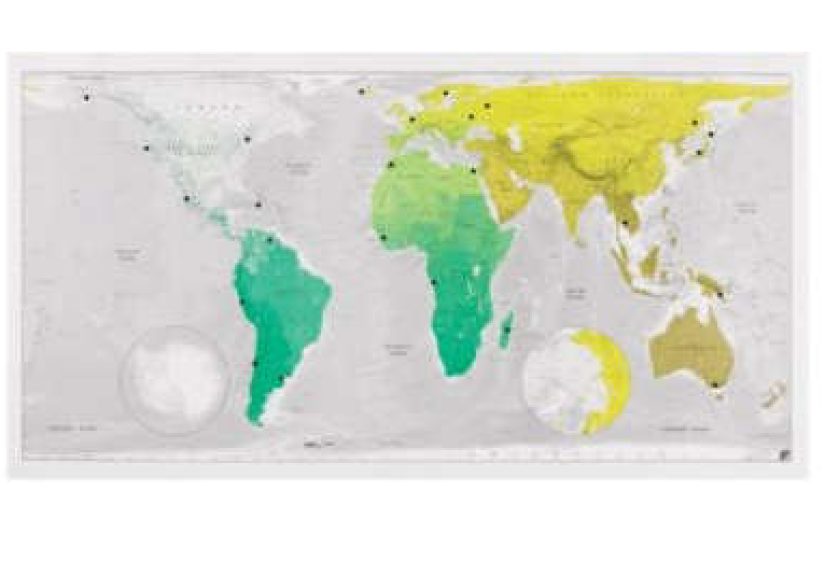
One reason Magnetic Future Maps stand out is their use of a more thoughtful world map projection. Many people grew up seeing Mercator-style maps, which are useful for navigation but famously distort the size of landmasses near the poles. That is why Greenland often looks enormous, even though Africa is vastly larger in reality.
Equal-area projections aim to represent countries and continents in more accurate relative size. They may alter shapes, but they give viewers a better sense of global proportion. This is not just a technical cartography detail. It changes how people understand the world. A map that shows landmasses more proportionally can challenge assumptions, spark curiosity, and make geography feel fresh again.
Why Equal-Area Design Feels Modern
An equal-area world map can look surprising at first because it does not match the map many people memorized in school. That surprise is part of the charm. It encourages people to stop, look closer, and ask questions. In a home, that makes it a conversation piece. In a classroom, it becomes a teaching tool. In an office, it signals global awareness without requiring a motivational poster of a mountain climber.
The design also has visual benefits. Equal-area maps often feel more balanced and graphic. When paired with a contemporary color palette, the result is less “dusty atlas” and more “smart design object.” That is exactly why Magnetic Future Maps can appeal to both map nerds and interior design fansa rare diplomatic agreement between geography and aesthetics.
Best Places to Use Magnetic Future Maps
The beauty of Magnetic Future Maps is their flexibility. They can work in many different spaces, provided the wall has enough room and the map is positioned where people can actually interact with it. Hiding an interactive map behind a door would be like buying a grand piano and using it as a laundry shelf. Technically possible, emotionally questionable.
Home Office
A magnetic world map is a natural fit for a home office. It adds visual interest behind a desk and can double as a planning board. Remote workers, writers, consultants, educators, and entrepreneurs can use it to track projects, clients, markets, or research locations. It is especially helpful for people whose work involves travel, logistics, culture, international business, or content planning.
Kitchen or Family Room
In family spaces, the map becomes part of daily life. Children can point out countries during dinner, parents can mark vacation ideas, and everyone can attach photos or notes. The kitchen is especially effective because people naturally gather there. A magnetic map in that space turns casual moments into mini geography lessonswithout anyone feeling like they have been ambushed by homework.
Children’s Room or Homeschool Area
For kids, a magnetic map can make geography tactile and playful. Instead of simply reading country names, children can move magnets, identify continents, trace routes, and connect places with stories. Add animal magnets, flag magnets, or color-coded markers, and the map becomes a learning station. It is educational décor, which is a polite way of saying it teaches while pretending to be fun.
Travel-Themed Living Room
For travelers, Magnetic Future Maps can become a memory wall. Add postcards from past trips, small printed photos, museum tickets, train passes, or handwritten notes. The map becomes a visual autobiography of movement: where you have been, where you are going, and where you keep promising yourself you will visit “next year” for six consecutive years.
Office, Studio, or Creative Workspace
Creative teams can use magnetic maps for brainstorming, campaign planning, editorial calendars, market mapping, or international project tracking. Designers and photographers may use them to plan shoots. Teachers and tutors can create location-based lessons. Even small businesses can use them to visualize customer regions or shipping destinations.
How to Style Magnetic Future Maps
A map this large and interactive deserves some design attention. The goal is to make it feel intentional, not like it was taped up during a panic-cleaning session before guests arrived.
Choose the Right Wall
Pick a wall where the map has breathing room. Large maps need space around them so they can be appreciated as a design feature. If the wall is already crowded with shelves, frames, and decorative objects, the map may feel chaotic. A clean wall in an office, hallway, kitchen, or family room usually works best.
Consider Eye Level
Hang the map where people can easily read and interact with it. If it is too high, children cannot use it. If it is too low, furniture may block it. The ideal height depends on the room, but the center of the map should generally sit near average eye level.
Use Magnets With a System
Random magnets can still be charming, but a simple system makes the map more useful. Try using colors by category:
- Blue magnets for places visited
- Green magnets for future trips
- Yellow magnets for family connections
- Red magnets for work-related locations
- White magnets for dream destinations
This turns the map into a visual dashboard. It also prevents the classic problem of looking at a cluster of magnets and wondering whether they mean “honeymoon idea,” “client location,” or “place we saw on a cooking show at 11 p.m.”
Practical Benefits of Magnetic Future Maps
Beyond good looks, Magnetic Future Maps offer several practical advantages. They encourage planning, improve spatial awareness, create family conversations, and support visual organization.
They Make Travel Goals Visible
There is a big difference between saying, “We should go to Japan someday,” and placing a magnet on Japan every time you walk past the wall. Visible goals are harder to ignore. A magnetic map keeps travel dreams present without turning them into a spreadsheet, which is excellent news for anyone allergic to cells and formulas.
They Support Better Geography Awareness
Many people know country names but struggle with relative location and scale. A large wall map helps build that mental framework. Seeing countries in context makes news, history, food, sports, and culture easier to understand. When a country appears in a headline, the map gives it a physical place in your mind.
They Encourage Storytelling
Maps naturally invite stories. A magnet on Italy may lead to a memory about a train ride. A note near Peru may spark a conversation about hiking. A photo attached over Vietnam may remind someone of the best bowl of soup they ever had. The map becomes a quiet storytelling machine, and unlike social media, it does not ask you to update your status.
They Reduce Clutter
Because magnetic maps can hold notes, tickets, lists, and photos, they can replace a messy bulletin board. Instead of scattering travel reminders across the fridge, desk, and random drawer of doom, you can keep them on one attractive surface. That makes the map especially useful in busy households or creative spaces.
What to Consider Before Buying
Magnetic Future Maps are appealing, but they are not automatically perfect for every space. Before buying, consider size, wall surface, installation method, magnet strength, finish, and how you plan to use it.
Size Matters
Large maps are dramatic, but they require wall space. Measure carefully before ordering. A map that looks perfect online may feel enormous in a small apartment hallway. On the other hand, a smaller map may get visually lost on a wide blank wall. Measure the wall, check furniture placement, and leave room around the edges.
Check Mounting Requirements
Some magnetic maps use hanging strips, rails, or framing options. Make sure the mounting method suits your wall. Textured walls, humid rooms, and uneven surfaces can affect adhesion. If you rent, check whether the installation method is removable or likely to annoy your landlord.
Think About Finish and Durability
A write-on/wipe-off finish can be very useful, but it also requires the right markers and cleaning habits. Use non-permanent dry-erase pens only if the manufacturer recommends them. Avoid harsh cleaning products unless they are approved for the surface. The goal is to preserve the map, not accidentally create abstract art called “Permanent Marker Regret.”
Are Magnetic Future Maps Worth It?
For many people, yes. Magnetic Future Maps are worth considering if you want wall décor that is attractive, interactive, and useful. They are especially valuable for travelers, families, educators, designers, remote workers, and anyone who enjoys visual planning.
They may not be the cheapest wall décor option, but they offer more function than a regular poster. A good magnetic map can serve as art, education, memory board, planning tool, and conversation starter. That combination gives it staying power. Instead of becoming background decoration, it continues to change as your life changes.
Experience Notes: Living With Magnetic Future Maps
The real charm of Magnetic Future Maps shows up after the first week. At first, you hang the map, step back, and admire how smart the room suddenly looks. The wall that used to say “I should probably buy art someday” now says “I have opinions about cartography.” That alone feels like progress. But the map becomes more interesting once people start using it.
In a family home, the first magnets usually go on the obvious places: where everyone lives, where relatives are, where past vacations happened. Then someone remembers a layover in Amsterdam. Someone else insists that layovers count only if you left the airport. A debate begins. The map has done its job.
For travel planning, the experience is surprisingly motivating. Putting a magnet on a future destination makes the idea feel less vague. A trip to Greece, Costa Rica, Alaska, or New Zealand stops being a floating fantasy and becomes a visible target. You may still need to save money, request time off, renew a passport, and convince yourself that packing cubes will solve your personality, but the dream has a place now.
In a home office, the map can help organize thinking. Writers can mark article locations. Business owners can track clients. Teachers can prepare lessons. Designers can pin inspiration from different regions. Even if the map is not used every day, it adds a global frame of reference to the room. It reminds you that work, culture, news, and ideas are connected across places.
Children often respond well because magnets make the map physical. They can move markers, compare distances, and ask questions. “Why is Australia down there?” “How far is Japan?” “Is Antarctica a country?” These questions may interrupt dinner, but they are much better than “Can I have the tablet?” for the 47th time.
There is also an emotional side. A magnetic map can become a memory keeper. A train ticket from a honeymoon, a postcard from a friend, a photo from a national park, or a sticky note that says “Someday” can all live together. Over time, the map stops being just a product. It becomes a record of curiosity, movement, and ambition.
The only downside is that it may make your wall more interesting than your bookshelf, your framed prints, and possibly your guests. But that is a risk many homes are willing to take.
Conclusion
Magnetic Future Maps bring together design, geography, memory, and planning in one highly usable piece of wall décor. They are not just maps to look at; they are maps to touch, update, personalize, and discuss. Their magnetic surface makes them practical, while their equal-area-inspired design encourages a more thoughtful way to see the world.
For homes, classrooms, offices, and creative spaces, they offer something rare: décor that remains useful long after the novelty wears off. They can help track travels, plan adventures, teach geography, organize notes, display memories, and make a room feel more intelligent without becoming stiff or boring.
If your wall needs personality, your travel plans need focus, or your family needs a fun reason to talk about the world beyond the weather forecast, Magnetic Future Maps are a stylish and meaningful choice. They are proof that a map can be more than a guide from one place to another. Sometimes, it can be the place where future adventures begin.