Table of Contents >> Show >> Hide
- The Fluffy Friendship That Won Everyone Over
- Why Do Some Dogs and Cats Become Best Friends?
- What Their Bond Teaches Us About Multi-Pet Homes
- The Secret Ingredient: Reading Body Language
- A Day in the Life of Three Best Friends
- How to Encourage This Kind of Friendship at Home
- Why Stories Like This Resonate So Much
- Related Experiences: What Life Feels Like When Dogs and Cats Truly Bond
- Conclusion
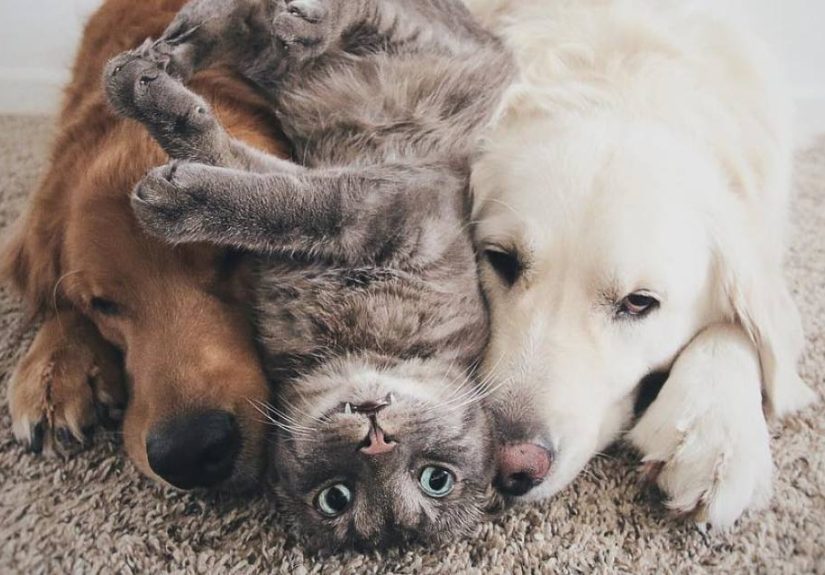
If you still believe cats and dogs are destined to star in a never-ending sitcom called Who Stole My Nap Spot?, allow Watson, Kiko, and Harry to change your mind. This fluffy little triotwo golden retrievers and one cathas become the kind of feel-good story people click on for “just one minute” and then somehow spend twenty minutes smiling at. And honestly, fair enough. When three animals of different species decide that life is better as a group project, the internet takes notice.
But this story is more than a parade of adorable cuddle piles. It also reveals something practical and surprisingly reassuring for pet parents: dogs and cats can absolutely build strong, affectionate relationships. Not every household will turn into a live-action friendship poster, of course. Some pets prefer peaceful coexistence over dramatic declarations of love. Still, with the right temperament, careful introductions, a steady routine, and enough patience to outlast a cat’s side-eye, mixed-species bonds can thrive.
That is what makes Watson, Kiko, and Harry such a charming case study in modern pet life. Their bond is sweet on the surface, but underneath the cuteness is a bigger lesson about trust, comfort, and how animals create their own version of family. For anyone building a multi-pet household, this trio is both inspiration and proof that “like cats and dogs” does not have to mean chaos. Sometimes it means synchronized naps, shared curiosity, and a suspiciously organized cuddle committee.
The Fluffy Friendship That Won Everyone Over
Watson and Kiko, two golden retriever boys, and Harry, their feline sidekick, first captured attention because they seemed to do what many people assume is impossible: enjoy each other’s company all the time. They were shown lounging together, hanging out in close contact, and generally behaving like roommates who had signed a peace treaty and then turned it into a lifestyle brand.
What made the trio especially memorable was not just that the dogs tolerated the cat or that the cat merely allowed the dogs to exist. Plenty of homes reach that level and call it success. Watson, Kiko, and Harry seemed to go further. Their body language and proximity suggested comfort. Their togetherness looked natural, relaxed, and routine. No one appeared tense. No one looked like they were preparing a surprise betrayal at 3 a.m. near the food bowls.
That is the gold standard in a mixed-pet home: not forced interactions, but easy companionship. When animals choose to rest near one another, move around together, and share space without stress, that is when a household begins to feel genuinely harmonious.
Why Do Some Dogs and Cats Become Best Friends?
Contrary to pop culture, dogs and cats are not sworn enemies. They are simply different. Dogs tend to be more direct and social in their greetings, while cats often prefer caution, distance, and the right to judge everyone from a higher surface. Problems usually come from miscommunication, not destiny.
1. Early socialization helps a lot
Animals introduced to other species when they are young often adapt more easily later on. Puppies that grow up around cats may learn that felines are roommates, not squeaky chase toys. Kittens raised around calm dogs often become less suspicious of wagging tails and large paws. That does not guarantee friendship, but it improves the odds that first impressions will be less “absolutely not” and more “I will allow this meeting for now.”
Watson, Kiko, and Harry feel like the kind of trio that benefited from repeated positive experiences. Familiarity lowers tension. Routine lowers uncertainty. And pets, like people, are usually more relaxed when life stops feeling like a surprise quiz.
2. Temperament matters more than stereotypes
Breed tendencies can shape behavior, but personality is the real headline. One dog may be calm, patient, and soft with smaller animals. Another may be overly excitable and think every moving object is an invitation to sprint. One cat may be confident and curious. Another may prefer to file a formal complaint from under the bed.
That is why successful interspecies friendship is usually built on compatible temperaments. Calm dogs do better. Confident but not aggressive cats do better. And homes where humans actively guide the relationship do best of all.
3. Safe space is not optional
In a healthy multi-pet household, the cat needs escape routes and protected territory. High perches, gated rooms, quiet nap spots, and private litter-box access all matter. This is not the cat being dramatic. This is the cat being a cat. Felines feel safer when they can observe from above, retreat when needed, and move around without being cornered by well-meaning goofballs with golden retriever energy.
Dogs need structure too. A dog that understands cues like “leave it,” “stay,” and “settle” is much easier for a cat to live with. Good manners are not just nice for guests; they are the foundation of interspecies diplomacy.
What Their Bond Teaches Us About Multi-Pet Homes
The friendship between Watson, Kiko, and Harry is adorable, but it is also instructive. It shows that pet harmony is usually built through a series of ordinary decisions rather than one magical movie moment. In real life, friendship grows through repeated safe contact, positive associations, and daily routines that make everyone feel secure.
Predictable routines build confidence
Pets love consistency. Feedings at similar times, regular rest periods, familiar sleeping spots, and repeated patterns of play all help reduce stress. This matters especially for cats, who often take environmental changes personally. Move one chair, and suddenly the entire universe has become suspicious.
In households where dogs and cats get along, routines often act like glue. Pets know what happens next. They know where to go. They know who gets fed first, where the toys are, and which sofa cushion has somehow become legally designated as a shared throne. That predictability makes companionship easier because it reduces conflict before it starts.
Enrichment prevents relationship drama
Bored pets are creative, and not in the charming way. A bored dog may pace, bark, dig, or chase. A bored cat may scratch furniture, swat at housemates, vocalize dramatically, or invent sports that only make sense at dawn. Mental stimulation is one of the best things a pet parent can provide.
For dogs, enrichment can include scent games, food puzzles, obedience practice, sniff-heavy walks, and short training sessions that make them think. For cats, enrichment often works best when it taps into instinct: climbing, stalking, batting, pouncing, and quick bursts of play around dawn and dusk. When each animal has an outlet for energy, curiosity, and natural behavior, they are less likely to dump that energy onto a sibling who did not ask for it.
Positive associations beat forced interactions
The best introductions are gradual. Use gates. Use distance. Use treats, toys, and praise. Let pets observe one another without pressure. Feed on opposite sides of a barrier if needed. Keep sessions short. End while things are still calm. If one pet shows stress, slow down. If there is conflict, go back a step.
That may sound less exciting than “they locked eyes and instantly became soulmates,” but it is how real success usually happens. Friendship is more sustainable when it is chosen, not pushed.
The Secret Ingredient: Reading Body Language
One reason Watson, Kiko, and Harry feel so peaceful is that good cross-species relationships depend on comfort signals, not wishful thinking. Pet parents sometimes assume that because nothing exploded, everything is fine. Meanwhile, the cat is hiding, the dog is fixating, and the household vibe is one whisker away from a meeting with management.
Relaxed pets tend to look, well, relaxed. Their bodies are loose. Their movements are natural. They rest, play, and explore without constant vigilance. Stressed pets often send quieter signals first: avoiding eye contact, freezing, tucking the tail, licking lips, pinning ears back, hiding, twitching the tail, or refusing food. These are the moments when humans need to pay attention.
A truly successful trio is not one where the animals are forced to stay near each other for a cute photo. It is one where they willingly choose that closeness because it feels safe. That is what makes the friendship between two dogs and a cat so heartwarming. The sweetness means more when it is clearly real.
A Day in the Life of Three Best Friends
Picture the household rhythm. Morning begins with tail thumps, breakfast negotiations, and Harry appearing like a tiny supervisor who arrived early for his shift. Watson is probably the gentle optimist. Kiko brings the cheerful sidekick energy. Harry, naturally, operates as both cuddle partner and quality-control inspector.
Later, the dogs drift toward the floor for a nap, and Harry decides the best available mattress is made entirely of retriever. This is not unusual in mixed-pet homes where trust is deep. Animals that feel safe together often sleep in close contact. Resting is vulnerable. Choosing to rest beside another animal is one of the strongest quiet signs of comfort there is.
Then comes play. Maybe the dogs carry toys around like proud interns presenting quarterly reports. Maybe Harry swats at a tail, darts away, and returns as if he had nothing to do with the incident. The point is not that they behave the same way. The point is that they have learned each other’s style. Good animal friendships do not erase differences. They make room for them.
By evening, the house settles again. Someone claims the couch. Someone claims the best blanket. Harry likely claims both and still acts inconvenienced. The dogs oblige, because golden retrievers are often the unofficial goodwill ambassadors of domestic life. Another day ends the same way it began: together.
How to Encourage This Kind of Friendship at Home
If this trio has you dreaming about your own dog-and-cat success story, the good news is that harmony is possible. The slightly less glamorous news is that it usually requires management, patience, and the ability to celebrate tiny wins like “nobody hissed at breakfast.”
Start slowly
Separate spaces at first. Controlled visual access. Calm meetings. No chasing. No forced nose-to-nose chaos. Let the relationship build at a pace the more cautious pet can handle.
Protect resources
Give each pet access to food, water, beds, toys, and rest areas without competition. Cats especially need litter boxes placed in quiet, accessible spots, and in multi-cat households the classic rule still helps: one box per cat, plus one extra.
Reward the behavior you want
Calm glances, polite sniffing, quiet passing, shared space, and relaxed body language should all be reinforced. Think of it as teaching the household culture you want to live in.
Respect individuality
Not every cat wants to cuddle a dog. Not every dog wants a feline roommate perched above them like a tiny landlord. Success does not always mean best friends. Sometimes success means peaceful coexistence, and that counts too.
Why Stories Like This Resonate So Much
Part of the appeal is obvious: dogs and cats being affectionate together feels delightfully wrong in the best way. But the deeper reason is that these stories reassure us. They remind us that connection is not always about sameness. Sometimes it is about repeated kindness, mutual trust, and finding comfort in another creature’s companyeven when one of you barks and the other judges silently from a cushion.
Watson, Kiko, and Harry are not just internet-cute. They represent a version of home that people love to believe in: peaceful, warm, a little ridiculous, and full of everyday tenderness. Their friendship feels wholesome because it is built from ordinary momentsresting close, moving together, sharing space, and showing up for one another without making a fuss about it.
In a noisy world, three calm pets in a cuddle heap can feel oddly profound.
Related Experiences: What Life Feels Like When Dogs and Cats Truly Bond
Anyone who has lived with a mixed-species pet friendship knows that the magic is usually found in the little routines. It is in the way the dog waits outside the bathroom because the cat went in first. It is in the cat who pretends not to care, then quietly follows the dog from room to room like a tiny, fuzzy detective. It is in the shared sunbeam, the synchronized nap, and the suspiciously cooperative staring session whenever someone opens a bag of treats.
Some pet parents describe a slow transformation rather than an instant friendship. At first there is distance, caution, and a lot of evaluating from across the room. Then one day the dog lies down instead of bouncing forward. The cat does not retreat. A week later they are eating peacefully in the same room. A month later they are sleeping six inches apart. Eventually they are family, and nobody remembers when the line between “new pet” and “best friend” disappeared.
Others talk about the comic side of these relationships. The dog becomes the cat’s bodyguard, escort, and part-time heating pad. The cat becomes the dog’s confidence coach, grooming critic, and manager of all elevated surfaces. The dynamic is rarely balanced in the human sense, but it works beautifully in theirs. One brings enthusiasm. The other brings boundaries. Together they form a complete household government.
There are also stories where one pet teaches the other how to relax. Nervous dogs often gain confidence from calm, predictable feline housemates. Shy cats may grow bolder after watching an easygoing dog move safely through the world. They begin by observing each other and end by borrowing each other’s courage. That may be the most moving part of all: friendship does not just look cute, it can actually change behavior in gentle ways.
Of course, experienced pet owners will tell you that the strongest bonds are built on respect. The dog learns not to chase. The cat learns that not every wagging tail is a threat. Humans learn to supervise, manage the environment, and appreciate tiny milestones. Nobody rushes the process. Nobody insists on a cuddle that has not been earned. Then, one quiet afternoon, everyone looks over and realizes the dog and the cat are asleep together as if they have been doing it forever.
That is why stories like Watson, Kiko, and Harry resonate so deeply. They reflect what many families have witnessed in their own homes: connection formed through routine, patience, and trust. The friendships may not always be photogenic enough for the internet, but they are just as meaningful. A cat waiting by the door for the dog to come back from a walk. A dog checking on the cat during a thunderstorm. Two species, very different by design, somehow deciding that life is better side by side.
And maybe that is the real reason these stories stay with us. They are adorable, yes. But they also remind us that companionship is often built in small daily choicessharing space, respecting boundaries, showing up again tomorrow. Sometimes the purest version of friendship is not dramatic at all. Sometimes it is simply a cat, two dogs, and another ordinary day spent together.
Conclusion
Watson, Kiko, and Harry are a delightful reminder that the old cat-versus-dog stereotype deserves a long vacation. Their story works because it is charming on the surface and meaningful underneath. It shows that with the right mix of temperament, patience, structure, enrichment, and trust, a multi-pet household can become more than peaceful. It can become joyful.
For pet parents, that is the real takeaway. Friendship between dogs and cats is not a fantasy reserved for viral photos. It is something that can grow when animals feel secure, understood, and free to build relationships at their own pace. And when it does happen, the result is the kind of everyday sweetness that makes a home feel fuller, softer, and much more entertaining.
Because sometimes the best proof that different personalities can thrive together is not found in a lecture or a training manual. Sometimes it is found in one cat, two dogs, and a perfectly shared nap.