Table of Contents >> Show >> Hide
- Why A Sweating Finger Looks So Wild Up Close
- What Is Actually Happening On Your Fingertip
- When Finger Sweating Is Normal And When It Is Not
- Why Tiny Droplets Can Cause Big Real-World Problems
- Can You Actually Stop Sweaty Fingers?
- Why We Cannot Look Away From A Sweating Finger
- Experiences That Make This Topic Feel Very Real
- Conclusion
section, uses standard American English, omits source links as requested, and is grounded in medical/scientific information about eccrine sweat glands, palmar hyperhidrosis, emotional sweating, fingertip gPubMed+4PubMed+4Encyclopedia Britannica+4PMC+14Cleveland Clinic+14PubMed+14le>
There are few things stranger than seeing an ordinary body part turn into a science-fiction landscape. A fingertip, under normal circumstances, is just a fingertip. It taps screens, opens snack bags, scrolls way too long at midnight, and occasionally points at something obvious while pretending to be helpful. But zoom in close enoughreally closeand that same finger becomes a surreal terrain of ridges, pores, and tiny beads of moisture that look less like sweat and more like a weather event happening on a miniature planet.
That is exactly why an ultra-closeup of a finger sweating feels so unbelievable. It takes a body process you barely notice and turns it into something dramatic, almost theatrical. Suddenly, sweating is not just “my hands are clammy.” It is a close-up performance by your nervous system, your skin, and thousands of microscopic sweat glands doing their jobs with alarming enthusiasm.
And the wild part is this: finger sweating is not some weird glitch. It is normal. In fact, fingertips and palms are some of the most sweat-gland-rich areas on the human body. Sometimes that moisture helps you grip objects better. Sometimes it makes your phone feel like a wet bar of soap. And sometimes, when the sweating goes into overdrive, it may point to a real medical condition called palmar hyperhidrosis.
So let’s zoom in on what is actually happening when a finger starts sweating, why it looks so shocking up close, and when sweaty fingertips are just a human quirk versus a sign that your body is overdoing it.
Why A Sweating Finger Looks So Wild Up Close
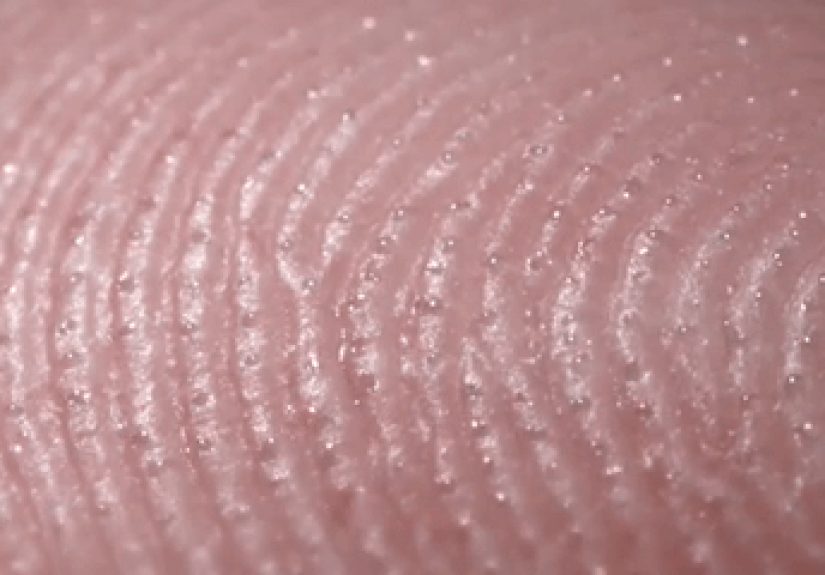
At normal viewing distance, finger sweat barely registers. Maybe your hands feel slick. Maybe your fingerprints appear on a glass screen like a ghostly confession. But under magnification, the whole scene changes. The raised ridges of your fingerprint look like tiny hills. The pores become visible as openings in the skin. Sweat emerges in pinpoint droplets, then gathers, spreads, and glistens across the ridged surface.
That visual drama happens because sweat on the fingers is highly localized at first. It does not flood out in one cinematic splash. It appears in tiny units from eccrine sweat glands, which release watery sweat directly onto the skin surface. On a closeup image or video, those droplets can look almost mechanical, as if your finger were quietly operating a microscopic sprinkler system.
There is also a contrast effect at work. We think of skin as smooth, but magnification reveals texture. We think of sweat as invisible, but up close it reflects light and clings to every ridge. The result is half biology lesson, half jump scare. Your hand suddenly looks like it belongs in a documentary narrated by someone whispering, “And now, the fingertip begins to perspire.”
What Is Actually Happening On Your Fingertip
Your fingertips are packed with eccrine sweat glands
Humans have millions of eccrine sweat glands, and the highest concentrations are found on the palms and soles. That means your fingertips are built with a serious capacity for moisture production. Unlike apocrine glands, which are associated with areas like the underarms, eccrine glands produce a mostly watery sweat that helps with cooling and skin-surface moisture.
On the fingers, however, sweat is not just about temperature control. These glands can respond fast, and sometimes for reasons that have nothing to do with weather. Your body may turn on fingertip sweating because you are hot, but it may also do it because you are nervous, focused, startled, or trying very hard not to drop something expensive.
Palms and fingers sweat differently from the rest of the body
One of the coolest facts about palmar sweating is that it has a split personality. Sweat across much of the body is tied to heat regulation. Palm and fingertip sweating, on the other hand, is strongly linked to emotional and tactile triggers. Stress, anxiety, anticipation, and even certain kinds of mental effort can set it off. That is why your palms may sweat before a test, during a job interview, or when someone says, “Can everyone introduce themselves?” which is really just a socially acceptable horror movie.
Researchers sometimes call this emotional sweating. It is driven by the autonomic nervous system, especially the sympathetic pathways that prepare the body for action. In other words, your sweaty fingertip may be less about the room temperature and more about your nervous system yelling, “Something is happening! Release the moisture!”
Fingerprints are not just for crime shows
Those fingerprint ridges are not decorative. They help with touch, friction, and grip. A small amount of moisture on the finger pads can improve contact with objects by changing friction at the skin’s surface. That is why a tiny bit of sweat may actually help you hold, feel, and manipulate things more effectively.
But there is a catch. There is an ideal zone. Too dry, and grip can become less efficient. Too wet, and the surface becomes slippery. Your fingers are basically negotiating moisture levels all day long like tiny overworked engineers. Get the balance right, and you hold a coffee mug with ease. Get it wrong, and suddenly you are juggling your phone over concrete like your thumbs have betrayed you.
When Finger Sweating Is Normal And When It Is Not
Most finger sweating is completely normal. If your hands get damp during a stressful moment, after exercise, in hot weather, or when you are concentrating intensely, that is just the body doing body things. Annoying body things, perhaps, but still normal.
It becomes more concerning when the sweating is excessive, frequent, and out of proportion to the situation. If your palms and fingers sweat heavily when you are cool, resting, or not especially nervousand if it regularly interferes with daily lifeyou may be dealing with hyperhidrosis. Primary focal hyperhidrosis often affects the palms, soles, underarms, and sometimes the face. It can begin in childhood or adolescence and may run in families.
That condition is more than a mild inconvenience. It can affect school, work, sports, social interactions, and confidence. Writing on paper becomes a soggy negotiation. Handshakes turn into a source of dread. Touchscreens become less responsive. Makeup, notebooks, game controllers, musical instruments, and steering wheels all suddenly seem weirdly judgmental.
There is also secondary hyperhidrosis, which is excessive sweating caused by another issue such as medication effects, thyroid problems, low blood sugar, infections, menopause, or neurological conditions. If sweating starts suddenly, happens all over the body, or appears along with other symptoms, it is smart to get checked by a healthcare professional.
Why Tiny Droplets Can Cause Big Real-World Problems
An ultra-closeup of a sweating finger is visually fascinating, but the real-life consequences are often much less glamorous. Sweaty fingers can interfere with precision, comfort, and confidence in ways that sound small until you live with them.
Take technology. Modern life assumes your fingers will behave like obedient little styluses. But sweaty fingertips can leave smears, reduce traction, and make swiping feel inconsistent. Then there is paper. If you have ever had ink streak, notebook pages curl, or exam papers absorb the evidence of your panic, you know that finger sweat can be oddly destructive for something so tiny.
Creative work can be affected too. Artists may smudge drawings. Musicians may struggle with grip and control. Gamers may feel their performance drop because their hands keep slipping. Athletes, crafters, mechanics, and anyone who relies on fine hand movement know that even minor changes in fingertip friction can matter.
Then there is the social side. People rarely talk about sweaty fingers with the seriousness they deserve, but it can be genuinely stressful. A damp handshake, a slick palm during a group activity, or the fear of holding hands when your fingers feel like they just ran a marathon can make a person self-conscious fast. Tiny sweat droplets can carry a surprisingly large emotional weight.
Can You Actually Stop Sweaty Fingers?
The good news is yesat least in many cases, you can reduce or manage the problem.
Start with the basics
If your finger sweating is mild, simple strategies may help. Prescription-strength or clinical-strength antiperspirants can be used on the hands, usually at night. That surprises people because antiperspirant is often treated like it belongs exclusively in the underarm aisle, but it can also help reduce sweat production on the palms and fingers.
Some people also manage triggers where possible: keeping hands cool, washing and drying regularly, using absorbent towels, choosing grip-friendly materials, and practicing stress-management techniques for anxiety-related sweating. These are not magic tricks, but they can make day-to-day life easier.
Medical treatments can help a lot
For more severe cases, doctors may recommend iontophoresis, a treatment that uses a mild electrical current through water to reduce sweating in the hands and feet. It sounds a little like a rejected superhero origin story, but it is a real treatment and can work well for some people.
Botulinum toxin injections are another option. These can block the chemical signals that activate sweat glands. The downside is that hand injections can be uncomfortable, and the results are temporary, so treatment may need to be repeated.
Oral medications may also be used, though side effects such as dry mouth, blurry vision, or urinary issues can limit how well people tolerate them. In severe, treatment-resistant cases, surgery may be considered. Procedures aimed at interrupting the nerve signals involved in sweating can help, but surgery carries risks, including compensatory sweating elsewhere on the body.
The bottom line is this: if finger sweating is making everyday life harder, you do not have to just shrug and keep a towel in your pocket forever. There are real treatments, and many people get meaningful relief.
Why We Cannot Look Away From A Sweating Finger
Part of the fascination is pure visual shock. We are seeing something common from an uncommon angle. But part of it is also psychological. A sweating finger is intimate, involuntary, and oddly revealing. It shows the body operating in real time, with no filter, no polish, and no concern for whether you are trying to look cool while holding a coffee cup.
It also hits that sweet spot between gross and mesmerizing. The droplets are tiny and clean, but they still trigger that “wow, bodies are weird” reaction. And because the fingertip is so familiar, the closeup feels personal. You are not looking at some rare biological specimen. You are looking at a high-definition reminder that your own skin is doing strange, brilliant work all day long.
In that sense, the unbelievable part is not that fingers sweat. It is that something so routine can look so alien when magnified. A sweating fingertip is proof that the human body is a lot more dramatic than it gets credit for.
Experiences That Make This Topic Feel Very Real
If you want to understand why an ultra-closeup of a finger sweating is so captivating, just talk to people who have noticed it happening in real life. The experience can be awkward, funny, frustrating, and weirdly memorable all at once. A student might notice it first during an exam, when the page under their hand starts to soften and wrinkle and the pen grip gets just slippery enough to become distracting. Suddenly, the test is not only about chemistry or history; it is also about surviving your own overenthusiastic fingertips.
For office workers, the experience may show up in smaller ways throughout the day. A mouse gets slick. A laptop trackpad feels inconsistent. A printed document picks up damp fingerprints around the edges. It is not dramatic enough to count as a workplace crisis, but it is absolutely annoying enough to make someone wipe their hands on their pants every half hour and pretend that is a completely normal productivity ritual.
Gamers and musicians often describe sweaty fingers in especially vivid terms because performance depends on control. For gamers, the problem is not just discomfort; it is the split-second feeling that the controller no longer belongs to them. Buttons feel different. Joysticks feel less predictable. A tense match turns into a battle against both the opponent and the moisture situation. Musicians can run into the same thing. A guitarist may feel the strings differently. A pianist may become hyperaware of how the keys respond. A violinist, drummer, or bassist may find that one small change in grip creates a huge change in confidence.
Artists and crafters get their own version of the problem. Charcoal smudges more easily. Paper picks up moisture. Delicate materials feel less stable. The hand, which is supposed to be the tool, starts acting like an unpredictable weather system. And because creative work often requires calm, precision, and patience, sweaty fingers can be extra irritating. Nothing says “I am in a focused artistic flow state” like stopping every five minutes to dry your hands on a towel.
Then there are the social experiences, which may be the most emotionally charged of all. A handshake can become a mini event. Holding hands can create self-consciousness. Passing a phone to someone else can come with that tiny flash of panic where you wonder whether they just noticed the screen is damp. These moments may sound minor to outsiders, but when they happen often, they can shape behavior. People start avoiding certain interactions, overthinking ordinary contact, or building small habits to hide the issue.
That is why the ultra-closeup image resonates. It validates something many people have quietly dealt with. It turns an invisible annoyance into a visible phenomenon. It says, “No, you are not imagining it. Your fingertip really is doing all that.” And for anyone who has ever wiped their hand before a handshake, fanned their fingers after a stressful moment, or watched a phone nearly slide away because their grip suddenly changed, the image is not just unbelievable. It is deeply, hilariously familiar.
Conclusion
An ultra-closeup of a finger sweating feels unbelievable because it reveals a hidden world most people never notice: pores opening, droplets forming, fingerprint ridges guiding moisture, and the nervous system quietly running the show. What looks bizarre under magnification is actually a normal part of human biologyup to a point. A little finger sweat can help with touch and grip. Too much can interfere with daily life and may signal palmar hyperhidrosis or another issue worth checking out.
In other words, your sweating fingertip is not broken. It is just far more interesting than it looks from across the room. And when the camera gets close enough, the humble finger stops being background equipment and becomes the star of one very sweaty show.