Table of Contents >> Show >> Hide
- What Is the Mumu LED Linear Suspension?
- Mumu Specs at a Glance (So You Don’t Have to Squint at a Cut Sheet)
- Where the Mumu Looks (and Works) Best
- Brightness: Will 2,150 Lumens Feel Like “Enough”?
- Color Temperature: Why 3000K Is the Crowd-Pleaser
- CRI 90: The Quiet Quality Upgrade
- Dimming: Triac/ELV, Compatibility, and the “Why Is It Flickering?” Trap
- Installation and Hanging Height: The Make-or-Break Details
- Design Notes: Why the Wood Ends Matter More Than You Think
- Layering Light: The Secret to Making Mumu Look Expensive
- Mumu vs. Architectural Linear Pendants: Same Shape, Different Superpowers
- Buying Checklist: How to Choose the Right Size and Finish
- FAQ
- Real-World Experiences With the Mumu LED Linear Suspension (About )
- Conclusion
Linear pendant lights have one job: look effortlessly “architect-designed” while doing the very unglamorous work of helping you see your food, your laptop keyboard, and (occasionally) your own dignity during a Zoom call.
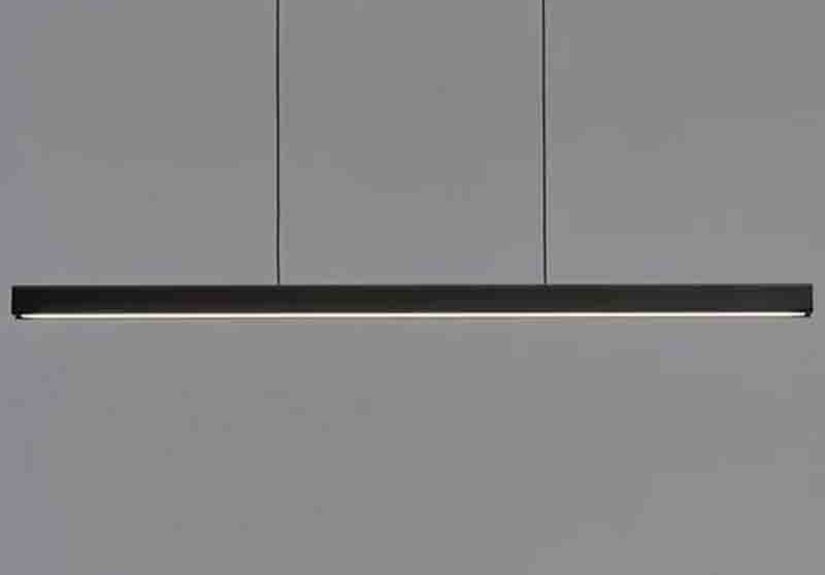
The Mumu LED Linear Suspension nails that brief with a minimalist bar profile, warm light, and a clever material mixcool metal balanced by warm wood end caps.
It’s the lighting equivalent of wearing a crisp white tee with a great watch: simple, intentional, and quietly expensive-looking.
In this guide, we’ll break down what the Mumu is, how bright it actually feels in real rooms, where it performs best, and how to avoid the classic “why does my beautiful pendant make my kitchen look like a cave?” mistake.
We’ll also compare it to more architectural linear pendants (the kind you see in offices and galleries) so you can pick the right tool for your ceiling.
What Is the Mumu LED Linear Suspension?
The Mumu LED Linear Suspension is a sleek, built-in LED linear pendant designed to hover above tables, islands, desks, and counters with a clean horizontal silhouette.
Its signature detail is the warm wood at both endsan organic “softener” that keeps the fixture from feeling like a cold sci-fi prop.
The design language is modern, but not sterile: think Scandinavian restraint with a dash of workshop craftsmanship.
Why people like it (besides the obvious “ooh, pretty” factor)
- Warm, high-quality light that flatters wood, food, and human faces.
- Minimal profile that doesn’t visually clutter a space.
- Two sizes so you can match fixture length to table/island length.
- Built-in dimming compatibility (when paired with the right dimmer) for “task mode” and “date-night mode.”
Mumu Specs at a Glance (So You Don’t Have to Squint at a Cut Sheet)
Specs matter because this isn’t a decorative candle chandelier you buy purely with your heart. A linear LED pendant is part design object, part lighting equipment.
Here’s what you need to know in human language:
Large (47-inch) version
- Length: about 47 inches
- Wattage: 32W
- Light output: about 2,150 lumens
- Color temperature: 3000K (warm white)
- Color quality: CRI 90 (high color rendering)
- Dimming: built-in driver designed for phase-cut (Triac/ELV-style) dimming with a compatible dimmer
- Voltage: 120V
- Max hang height: adjustable to roughly 78.7 inches
- Finishes: matte white with beech ends; matte black with walnut ends
XL (about 71-inch) version
- Length: about 70.9–70.8 inches
- Wattage: 48W
- Light output: about 3,200 lumens
- Color temperature: 3000K
- Color quality: CRI 90
- Dimming: phase-cut (Triac/ELV-style) with compatible dimmer
- Voltage: 120V
- Max hang height: adjustable to roughly 78.7 inches
Translation: the Large model is great for typical dining tables and standard kitchen islands; the XL is for longer islands, larger tables, or spaces where you want a stronger “line” in the room.
Where the Mumu Looks (and Works) Best
The Mumu is happiest when it has a clear “job” and a surface beneath it. It’s a linear fixtureso it naturally complements linear furniture and layouts.
Top placements
- Dining table: The classic. It frames the table and creates a warm pool of light for meals and conversation.
- Kitchen island: Especially if your kitchen already has recessed cans for general lighting.
- Home office desk: Great for a long desk setup where you want even light without multiple fixtures.
- Studio / creative space: CRI 90 helps colors look more accurate for art, textiles, and product work.
- Hospitality vibes: Boutique cafés and small restaurants love linear pendants because they look intentional without taking over the room.
One important reality check: the Mumu is a design-forward pendant with respectable lumen output, but it is not trying to be your entire lighting plan.
In most homes, it shines brightest (pun fully intended) as part of a layered setup: pendant + ambient ceiling light + optional accent lighting.
Brightness: Will 2,150 Lumens Feel Like “Enough”?
Lumens are the amount of light produced. What you actually feel is illuminance on a surface (often measured in footcandles or lux), which depends on fixture height, beam spread, diffusion, and room surfaces.
A dining table in a darker room will “eat” light; a white kitchen with reflective countertops will bounce it back like a friendly mirror.
A practical way to think about it
Many lighting guidelines suggest roughly 30–50 footcandles for desk-type tasks and about 15–60 footcandles across a conference/dining table depending on the activity and preferences.
That’s why you’ll see some people perfectly happy with a pendant at dinner brightness, while others want more punch for homework, chopping vegetables, or spreadsheet combat.
Example: Mumu Large over a 6-foot dining table
If you hang the 47-inch Mumu around 30–34 inches above the tabletop (a common sweet spot), you’ll get a focused, comfortable pool of warm light across the table.
For meals, it’s great. For high-detail tasks (assembling a puzzle, sewing, reading tiny print), you may want:
- a slightly brighter overall room (recessed or ceiling fixture on low), or
- an additional task light nearby (under-cabinet lighting in kitchens, a floor lamp in dining corners), or
- the XL model if the table/island is long and you want broader coverage.
Bottom line: the Mumu delivers “premium dining glow” out of the box. If your space needs “surgical prep room,” you’re shopping in the wrong aisleand your guests may fear you.
Color Temperature: Why 3000K Is the Crowd-Pleaser
The Mumu’s 3000K color temperature is warm whiteoften considered the most versatile choice for homes and hospitality.
It’s warm enough to feel inviting, but not so amber that white surfaces look yellow or food looks like it’s lit by a campfire.
How 3000K plays with materials
- Wood: looks richer and more natural (perfect match for the wood end caps).
- Stone and quartz: keeps warmth without making it muddy.
- Black/white kitchens: softens contrast and adds comfort.
- Skin tones: generally more flattering than cooler 4000K+ lighting.
If your home is very modern with lots of cool gray finishes and you love a crisp gallery feel, you might prefer a cooler CCT in other fixtures.
But as a centerpiece over a table or island, 3000K is a safe bet that won’t turn your dinner into an interrogation.
CRI 90: The Quiet Quality Upgrade
CRI (Color Rendering Index) tells you how accurately colors appear under a light source compared to a reference.
A CRI of 90 is widely considered “high” for residential decorative lighting.
Practically, that means:
- food looks more appetizing (yes, lighting affects salad confidence),
- wood and fabrics show nuance instead of looking flat, and
- your home doesn’t feel like it’s lit by a bargain office supply aisle.
Dimming: Triac/ELV, Compatibility, and the “Why Is It Flickering?” Trap
The Mumu uses a built-in driver designed for phase-cut dimming (often called Triac; many modern setups use ELV-style dimmers for LEDs).
This is common for decorative pendants on standard 120V residential wiring.
How to get smooth dimming
- Choose the right dimmer type. Many LED fixtures behave best with an ELV-compatible dimmer rather than an old-school incandescent dimmer.
- Check the dimmer’s compatibility guidance. Some industry programs help consumers identify compatible LED/dimmer pairings.
- Expect a “low-end” setting adjustment. Good dimmers often allow you to set the minimum dim level to avoid drop-out or shimmer at very low brightness.
If your project is commercial or you’re comparing systems: architectural linear pendants often use 0–10V or DALI dimming for centralized controls and large-scale scenes.
Those systems can be excellentbut real-world performance depends on the drivers, wiring, and control strategy, and dimming consistency can vary across products.
For the Mumu’s typical use case (dining tables and islands), a well-chosen residential dimmer is usually the simplest path to happiness.
Installation and Hanging Height: The Make-or-Break Details
A linear pendant can be the most beautiful object in your home… and still look wrong if it’s hung too high, too low, or off-center.
Here are the rules designers quietly follow (and then pretend were “instinct”):
Recommended height above a dining table
- Typical range: 30–36 inches above the tabletop
- Go higher if you have tall ceilings or people who stand up dramatically while telling stories.
- Go lower if you want a more intimate, restaurant-like feel (but keep sightlines comfortable).
Recommended height above a kitchen island
- Typical range: 30–40 inches above the countertop
- Tip: If you already have bright recessed lighting, you can hang a touch lower for mood and form without sacrificing task light.
Spacing and proportion tips
- Center it. The fixture should align with the table/island centerline, not the room’s centerline (your furniture will win this argument).
- Length matching: A common guideline is choosing a pendant length around 1/2 to 2/3 the length of the surface below.
- Mind the canopy/junction box. If your electrical box is off-center, plan for a swag solution or move the boxdon’t “just live with it” (you won’t).
Safety note: If you’re not comfortable working with household wiring, hire a licensed electrician. This is not the moment to “learn by vibes.”
Design Notes: Why the Wood Ends Matter More Than You Think
Most linear pendants are straight metal bars. Clean, yesbut sometimes they read as a piece of office equipment that escaped into your kitchen.
The Mumu’s wood end caps do three jobs:
- Warmth: visually connects the fixture to furniture and flooring.
- Texture: adds material contrast without adding clutter.
- Balance: makes the fixture look “finished” from every angle, not like a cut-off extrusion.
If your home already has wood tones (table, stools, beams, trim), the Mumu feels integrated.
If your space is ultra-minimal in glass, steel, and stone, it becomes a deliberate warm accentlike a single wooden spoon in a drawer full of stainless tools.
Layering Light: The Secret to Making Mumu Look Expensive
People often install a linear pendant and expect it to do everything: ambient, task, accent, emotional support.
But lighting works best in layers:
- Ambient: overall room brightness (recessed lights, ceiling fixtures, indirect lighting)
- Task: light where work happens (countertops, desks, reading spots)
- Accent: highlights art, shelves, and architectural features
The Mumu excels as a statement-task hybrid: it gives functional downlight and a strong design line.
Pair it with subtle ambient lighting and it looks intentional, not lonely.
Mumu vs. Architectural Linear Pendants: Same Shape, Different Superpowers
This is where shoppers get confused: a “linear pendant” can mean a decorative fixture like Mumuor a high-output architectural system meant to evenly light an entire office bay.
They may look similar in photos, but they behave differently.
Decorative linear pendant (like Mumu)
- Designed for homes and hospitality focal points
- Warm, flattering light and refined materials
- Typically lower total lumens than commercial systems
- Residential-friendly dimming (phase-cut/Triac/ELV)
Architectural linear pendant (common in offices)
- Designed for high efficacy and uniform illumination
- Often offers direct/indirect distributions
- Higher lumen packages (including “lumens per foot” selection)
- Commercial control protocols (0–10V, DALI) and advanced sensing
If you’re lighting a full open office, you typically want architectural systems.
If you’re elevating a kitchen island or dining table, the Mumu’s design-first approach is the point.
Buying Checklist: How to Choose the Right Size and Finish
Size
- Choose 47-inch for most dining tables and standard islands.
- Choose XL (about 71-inch) for longer islands, larger tables, or bigger rooms where a longer line looks proportionate.
Finish
- Matte white + beech: airy, bright, great for light kitchens and Scandinavian interiors.
- Matte black + walnut: higher contrast, great for modern, industrial, or moody spaces.
Dimming
- Plan your dimmer up frontespecially if you’re pairing with other LED fixtures on the same circuit.
- If possible, choose a quality dimmer known for LED performance and low-end stability.
FAQ
Is the Mumu bright enough for a kitchen island?
For many kitchens, yesespecially when it’s paired with recessed or under-cabinet lighting.
If the pendant is your only kitchen light source, you may want additional ambient lighting or the XL size for more output and coverage.
Can I use it in a high ceiling space?
It’s adjustable, so you can drop it to a comfortable height above a table or island even with taller ceilings.
Just remember: the higher you hang a pendant, the more its light spreads and the less intense it feels on the surface below.
Is it good for outdoor use?
It’s typically intended for indoor use. For covered outdoor areas, you’d usually look for fixtures specifically rated for damp/wet locations.
Real-World Experiences With the Mumu LED Linear Suspension (About )
Here’s what people tend to notice after living with a linear pendant like the Mumu for a whilebeyond the first week of walking into the room and thinking,
“Okay, wow, my ceiling got its life together.”
1) The “dinner table glow-up” moment
In a typical dining setup, the Mumu’s warm 3000K light changes the mood instantly.
The table becomes a destination, not just a flat surface that collects mail and existential dread.
Families often discover they linger longer after meals because the light feels cozy without being dim or sleepy.
One funny side effect: people start taking more photos of food at homenot because they’re trying to be influencers,
but because the CRI 90 color quality makes everything look a little more “magazine-ready.”
The key lesson from dining rooms: a pendant like this works best when it’s not fighting your other lights.
If overhead recessed cans are blasting cool light at full power, the pendant can feel underwhelming.
But when the room is layeredambient lights low, pendant doing the main table lightingthe Mumu becomes the hero.
2) The kitchen island: task light vs. mood light negotiations
Over an island, people often expect a linear pendant to function like under-cabinet lighting: crisp and intense.
The Mumu can absolutely provide usable countertop light, but many homeowners end up using it more as a “beautiful primary”
while relying on under-cabinet strips or recessed lights for heavy prep tasks.
The surprise win is how it makes the kitchen feel calmer.
Turn it on at 20–40% in the evening and suddenly the island becomes a place to chat, snack, or help kids with homework,
without the whole kitchen looking like a high-security lab.
A common experience-based tip: hang it thoughtfully.
Too high and you lose the intimacy and the countertop looks dimmer.
Too low and tall friends will fear standing up quickly.
Most people end up happiest around that classic “about 30–40 inches above the counter” range, adjusted for sightlines.
3) The home office upgrade you didn’t expect
In a home office, a linear pendant can outperform a single ceiling light because it spreads light more evenly along a desk.
With the Mumu, the warm tone keeps the space from feeling clinical, while the high color rendering helps screens, paper, and objects look more natural.
People who work long hours often report that “warm but clear” lighting reduces that harsh end-of-day fatigue feeling
not because the light is magical, but because it’s simply less visually aggressive than cooler overhead lighting.
The dimmer becomes your best friend here: bright for daytime tasks, lower for evening wind-down.
The only recurring complaint in real installs is dimmer compatibilitywhen someone uses an older dimmer not designed for LEDs and gets flicker.
Once a compatible dimmer is installed (and sometimes adjusted for low-end trim), the experience tends to shift from “why is it twitchy?” to “oh… this is smooth.”
Overall, the lived experience of the Mumu is this: it looks minimal, but it makes spaces feel warmer, more intentional, and more “finished.”
And once you have a clean line of light hovering over the table, it’s hard to go back to a lonely ceiling boob light. (You know the one.)
Conclusion
The Mumu LED Linear Suspension is a strong choice if you want a minimalist linear pendant with warm, high-quality light and a material detail that keeps it human.
Choose the 47-inch size for most dining tables and standard islands; go XL when the surface is long or the room needs a longer visual line.
Plan for compatible dimming, hang it at a thoughtful height, and pair it with layered ambient lightingand the Mumu will do what great lighting always does:
make your everyday moments look like you hired a designer (even if you absolutely did not).