Table of Contents >> Show >> Hide
- What Exactly Is TESS?
- Before the Planet Parade, a Comet Crashed the Audition
- Why a Comet Sighting Matters for an Exoplanet Mission
- TESS Versus Kepler: Same Family, Different Personalities
- The Hardware Behind the Surprise
- The Comet Was Not Alone in the Frame
- From Unexpected Comet to Major Planet Hunter
- What This Means for Astronomy and for Readers Who Just Like Cool Space Stories
- Conclusion
- Experiences Related to “NASA's New Exoplanet-Hunting Satellite Picks Up a Comet”
Space missions are usually introduced with grand speeches, glossy animations, and enough acronyms to make a Scrabble board cry. NASA’s Transiting Exoplanet Survey Satellite, better known as TESS, was no exception. It launched with a big job: scan the sky, find worlds beyond our solar system, and hand astronomers a treasure map of nearby planets worth studying. But before TESS could fully settle into its role as an exoplanet hunter, it pulled off a delightful little surprise. During an early test run, NASA’s new planet-finding satellite spotted a comet.
That moment was more than a fun cosmic cameo. It was a preview of what makes TESS such a powerful observatory. The same wide-field cameras designed to catch tiny dips in starlight from passing planets also turned out to be excellent at seeing motion, change, and drama across huge swaths of sky. In other words, TESS showed that even when it is not chasing alien worlds, it still knows how to steal the scene.
What Exactly Is TESS?
TESS is NASA’s exoplanet scout, built to search for planets orbiting bright, nearby stars. Unlike the Kepler Space Telescope, which stared deeply into one relatively narrow patch of sky, TESS was designed to go wide. Very wide. Its mission is to survey most of the sky in sectors, looking for the telltale dimming that happens when a planet crosses in front of its host star from our point of view. That dimming is called a transit, and it is the bread and butter of modern planet hunting.
The spacecraft carries four red-sensitive, wide-field cameras that work together like a sky-sweeping panoramic lens. Rather than zooming in on one tiny celestial neighborhood, TESS methodically observes giant slices of sky for weeks at a time. That design lets it monitor hundreds of thousands of bright stars close enough for follow-up study by larger telescopes. In plain English, TESS is not just trying to find planets. It is trying to find the planets astronomers can really get to know.
That makes the mission especially important in the broader search for habitable worlds. Bright nearby stars are easier to study, their planets are easier to confirm, and their atmospheres are more accessible to observatories that come later. TESS is the scout on the hill, waving a flag and saying, “You, you, and you go check these out.”
Before the Planet Parade, a Comet Crashed the Audition
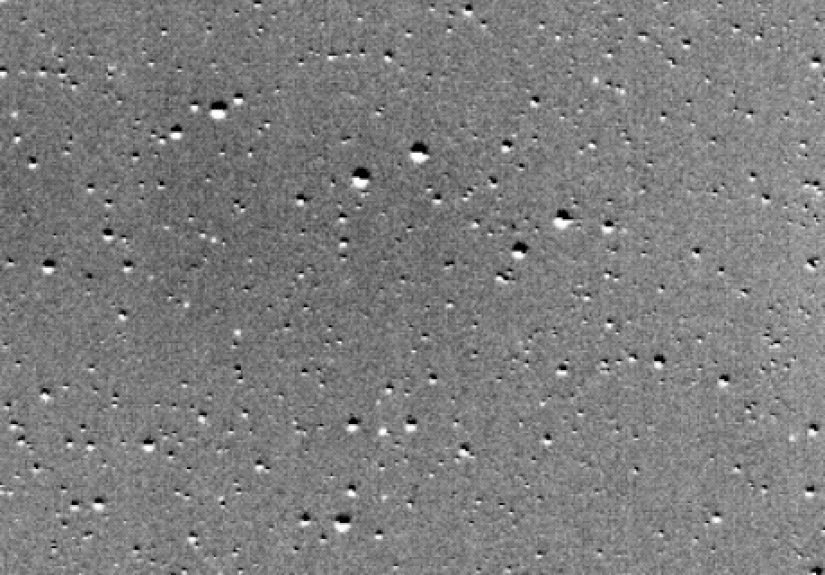
Before TESS officially began routine science operations in July 2018, the mission team put the spacecraft through a series of camera tests. This was the cosmic equivalent of checking the lights, adjusting the microphone, and making sure the lead performer could hit the right notes. During one of those tests, TESS observed comet C/2018 N1 over a span of about 17 hours.
Now that is a charming plot twist. NASA built TESS to detect exoplanets by measuring tiny changes in the brightness of stars, yet one of the first eye-catching things it recorded was not a distant planet at all. It was a comet moving across the frame, complete with a tail that shifted direction as it interacted with the solar wind. Instead of a clean opening act with only stars behaving politely, the new planet hunter got a messy, icy visitor streaking through the shot. Space, as always, refused to be boring.
Comet C/2018 N1 had been discovered only weeks earlier by NASA’s NEOWISE mission. When TESS saw it, the comet was roughly 29 million miles from Earth in the southern constellation Piscis Austrinus. In the sequence of images, the comet glides across the field while its tail stretches and subtly pivots. That motion made for a visually striking test, but it also served a deeper purpose: it demonstrated that TESS could gather stable, repeated images over a long stretch of time while covering a broad field of view.
Why a Comet Sighting Matters for an Exoplanet Mission
At first glance, a comet might seem like a random bonus feature. Nice picture. Cool tail. Moving on. But the observation actually told scientists a lot about the spacecraft.
1. It proved the cameras were steady and sensitive
TESS needs to detect extremely subtle changes in brightness. A planet transit does not usually announce itself with fireworks. It is often more like a star briefly whispering, “Did I just get slightly dimmer?” If the cameras jitter, drift, or misbehave, that signal becomes much harder to trust. By successfully tracking a moving comet and capturing a stable sequence over many hours, TESS showed it could deliver the kind of consistent data exoplanet science demands.
2. It highlighted the power of the mission’s wide field of view
TESS watches enormous sections of sky at once. That is useful for planet searches, but it also means the satellite inevitably catches other phenomena in the act. A narrow-field observatory might miss these surprise appearances. TESS, by contrast, is the observatory equivalent of someone who walks into a room and notices everything: the planets, the asteroids, the variable stars, the comet, and even the weird reflected light from Mars hanging around offstage.
3. It reminded scientists that sky surveys rarely stay in one lane
The best survey missions often end up doing more than their original job description. TESS was launched to find exoplanets, but its continuous monitoring also makes it useful for studying supernovae, pulsating stars, asteroids, stellar flares, and other transient events. The comet sighting was an early hint that TESS would become a multi-purpose machine for time-domain astronomy the study of things that change over time.
TESS Versus Kepler: Same Family, Different Personalities
To understand why the comet episode felt so exciting, it helps to know where TESS fits in NASA’s exoplanet story. Kepler, its famous predecessor, transformed astronomy by showing that planets are common throughout the galaxy. It performed a deep, narrow survey, staring at one patch of sky and revealing thousands of exoplanets. Kepler taught us that the Milky Way is practically littered with worlds.
TESS took that lesson and changed the strategy. Instead of digging deeper into one field, it cast a far broader net across roughly 85 percent of the sky. Its targets are closer and brighter than Kepler’s in many cases, which makes them better candidates for follow-up studies with major observatories. If Kepler was the census-taker, TESS is the neighborhood talent scout.
This difference is exactly why a comet could show up so naturally in early TESS imagery. A mission built to stare across large pieces of sky is naturally going to collect more than tidy rows of stars waiting to host exoplanets. It will also catch the Solar System acting up in the foreground. That is not a bug. That is one of the joys of doing astronomy with a wide-angle lens.
The Hardware Behind the Surprise
TESS’s design is a big reason the comet observation worked so well. The spacecraft’s four cameras watch a combined strip of sky that is enormous by space telescope standards. Each observing sector is monitored for about 27 days, giving scientists long stretches of uninterrupted brightness data. The spacecraft also follows a highly elliptical orbit around Earth that helps provide stable observations and regular data downlinks without spending too much time in regions of intense radiation.
That orbit is clever. Instead of hugging Earth too closely, TESS loops out into a high, stable path that gives it a relatively clean view of space. The mission was built for persistence: long looks, repeated measurements, and minimal distractions. Those same traits that help it catch a tiny exoplanet transit also made it perfectly capable of filming a comet during an early systems check.
And because TESS was built to measure changes in visible light with precision, it can do more than merely snap pretty pictures. It creates light curves records of how an object’s brightness changes over time. For planets, those curves reveal transits. For comets, they can show motion, activity, and changing dust or gas behavior. Different science target, same observational superpower.
The Comet Was Not Alone in the Frame
The 2018 TESS test sequence did not just feature comet C/2018 N1. The field also included variable stars, asteroids, and even a faint beam of reflected light from Mars. That mix was almost poetic. Here was a spacecraft built to hunt worlds around other suns, and before it officially started its main assignment, it delivered a mash-up reel of the restless sky.
This matters because astronomy is increasingly becoming the science of change. Modern observatories do not just catalog where things are. They track how things brighten, fade, flare, drift, erupt, and vanish. TESS entered that arena with a mission focused on exoplanets, but the comet cameo made it clear that the satellite would also be valuable in the broader study of transient and moving objects.
From Unexpected Comet to Major Planet Hunter
In hindsight, the early comet observation feels like a warm-up scene before the real blockbuster. Since those first months, TESS has grown into one of astronomy’s most productive planet-hunting missions. It has identified thousands of planet candidates and helped expand the catalog of confirmed exoplanets by finding worlds around bright stars that are ideal for follow-up work. The mission has also continued to contribute to studies far beyond classic planet hunting, including stars, black holes, exploding systems, and shifting objects closer to home.
That growth gives the comet story an extra layer of charm. The satellite that accidentally opened with a comet has since become exactly what NASA hoped it would be: a workhorse observatory feeding the next era of exoplanet research. Yet that early surprise remains one of the clearest demonstrations of the mission’s flexibility. TESS was built to find planets, but its true talent may be seeing the sky as a living, changing place.
What This Means for Astronomy and for Readers Who Just Like Cool Space Stories
There is a reason this story resonates beyond the astronomy community. It captures the best kind of scientific reality: even the most carefully designed missions can still surprise us. TESS was not “failing” at its job when it picked up a comet. It was revealing the full range of what its engineering made possible.
For astronomers, that is a reminder to keep wide-open missions in the toolkit. When you build an observatory that repeatedly watches huge portions of the sky with high precision, you do not just answer the question you started with. You also discover the questions you forgot to ask.
For everyone else, the story is a lovely little entry point into exoplanet science. A satellite made to find other worlds got photobombed by an icy wanderer from our own solar system, and the result was scientifically useful. That is not just good science. That is great storytelling.
Conclusion
NASA’s TESS mission was launched to search for exoplanets around bright, nearby stars, but one of its earliest memorable moments came from much closer to home. By capturing comet C/2018 N1 during pre-science camera tests, TESS proved that its wide-field, high-precision design could do more than hunt alien worlds. It could also record the changing, moving, unpredictable sky in remarkable detail.
That unexpected comet sighting now feels like the perfect introduction to the mission. TESS is a planet hunter, yes, but it is also a witness to motion and change across the cosmos. It scans, tracks, measures, and occasionally stumbles into something wonderfully unplanned. In science, those accidents are often where the magic starts.
Experiences Related to “NASA’s New Exoplanet-Hunting Satellite Picks Up a Comet”
There is something especially satisfying about this story because it captures the emotional side of astronomy, not just the technical one. Imagine being part of the TESS team in those early days. You have spent years designing cameras, testing hardware, planning the orbit, arguing over software, scheduling observations, and carrying the quiet hope that the spacecraft will actually do what it was built to do. Then the first striking sequence is not some carefully framed textbook image. It is a comet drifting through the field like space decided to improvise.
That kind of moment is part relief, part amazement, and part laughter. Relief, because the instrument is clearly working. Amazement, because the sky is suddenly alive on your screen. And laughter, because the universe has a habit of being both majestic and slightly chaotic. You build a machine to find planets, and the first cosmic scene-stealer is a dirty snowball with a dramatic tail. Of course it is.
For amateur skywatchers, the experience lands a little differently but just as powerfully. Stories like this make space feel less remote. Exoplanets can sound abstract because they are so far away and often known only through measurements and light curves. A comet, on the other hand, feels familiar. It moves. It glows. It has a tail. It is easier to picture. So when people hear that TESS, the same spacecraft hunting distant worlds, also captured a comet in our celestial backyard, the mission suddenly feels more approachable. It connects the exotic search for alien planets with the kind of Solar System drama people already love.
There is also a deeper experience tucked inside the story: the joy of realizing that science is not always a straight line. Many people imagine space missions as rigid scripts where every result is planned in advance. Real science is messier and more human. Researchers build tools for one purpose, then notice something unexpected and realize the tool can do more. That is exactly what makes astronomy feel so alive. The sky does not care about our neat categories. Planets, comets, asteroids, flares, and variable stars all share the stage, and a good observatory ends up learning from all of them.
Even for readers who never plan to memorize the phrase “Transiting Exoplanet Survey Satellite,” this story offers a memorable feeling: wonder with a side of surprise. It reminds us that exploration is not just about checking boxes. It is about being ready when something unplanned glides into view. TESS was built to find worlds around other stars, and it absolutely does that. But in catching a comet so early, it also gave us a tiny lesson in curiosity. Keep watching carefully. The universe may hand you something better than the thing you were expecting.