Table of Contents >> Show >> Hide
- What “6th Generation” Really Means (Without Turning It Into Sci-Fi)
- Why the Navy Wants a New Fighter Now
- Meet F/A-XX: The Navy’s Next-Generation Carrier Fighter
- How F/A-XX Fits Into the Carrier Air Wing
- Building It Faster: Digital Engineering, Agile Software, Open Architecture
- The Hard Part: Cost, Schedule, and the Industrial Base
- Navy F/A-XX vs. Air Force NGAD (F-47): Similar Goals, Different Jobs
- What a 2030s Carrier Air Wing Could Look Like
- FAQ: Quick Answers People Actually Want
- Experiences: The Human Side of a 6th-Gen Navy Fighter (Extra )
- Conclusion
If you’ve ever watched a carrier launch at sunrise and thought, “Wow, that’s loud,” the U.S. Navy has been thinking,
“Also: that needs to be farther.” Not louder (it’s already doing great in the loud category), but farthermore range,
more survivability, more networking, and more options when the airspace gets crowded and complicated.
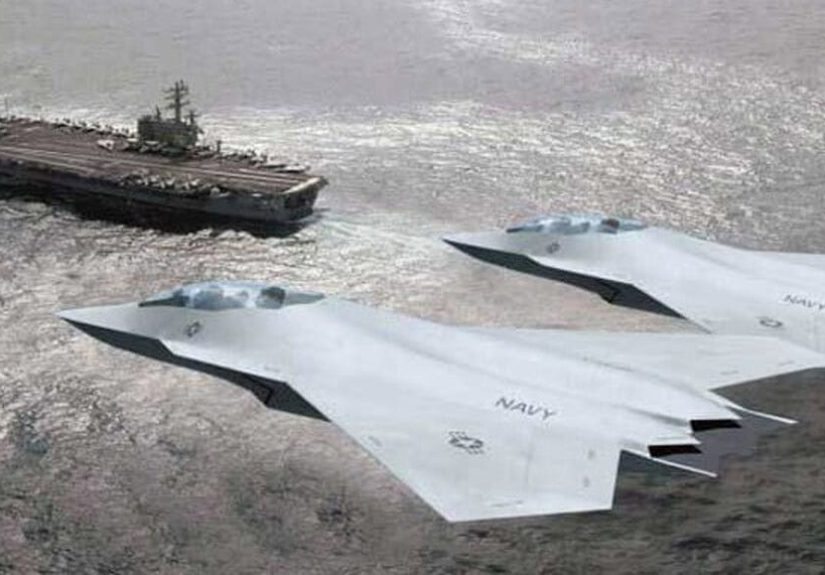
That’s where the Navy’s next fighter conceptcommonly referred to as F/A-XXcomes in. It’s part of the Navy’s
broader push toward next-generation air dominance: a mix of crewed and uncrewed systems, smarter sensors, faster software
updates, and the kind of connectivity that makes a carrier air wing feel less like a set of separate aircraft and more like one
big, coordinated team.
A lot of the specifics are classified (as you’d expect for something meant to stay ahead of top-tier threats). But there’s still
plenty we can sayaccuratelyabout why the Navy wants a sixth-generation fighter, how it could fit into the carrier air wing,
and what the biggest hurdles are between “concept art” and “operational squadron.”
What “6th Generation” Really Means (Without Turning It Into Sci-Fi)
“Sixth generation fighter” is one of those phrases that can mean anything from “better stealth” to “basically a spaceship.”
In reality, it usually points to a package of advancesespecially in how aircraft sense, share, and act on information.
Think less “one magical jet” and more “an ecosystem that’s hard to out-think.”
A fighter plus a family
One of the most consistent themes in U.S. planning is that next-generation air dominance is a family of systems, not just a
single aircraft. The GAO has described both Air Force and Navy efforts in that “family” framing, highlighting digital engineering,
agile software, and open architecture as key approachesand noting the Navy’s NGAD includes a piloted aircraft referred to as F/A-XX,
separate from the Air Force’s NGAD effort.
Common “6th gen” design goals you’ll hear discussed publicly
- More survivability in high-end threat environments (stealth is part of this, but not the whole story).
- Longer reach so the aircraft can do useful work without needing to park dangerously close to threats.
- Sensor fusion and networking that turn the aircraft into a quarterbacknot just a shooter.
- Software-driven upgrades that improve capability faster than traditional modernization cycles.
- Manned-unmanned teaming, where uncrewed systems can extend sensing, decoying, or support roles.
Put simply: if fifth-generation aircraft are built to see first and shoot first, sixth-generation thinking is often about
seeing first, sharing first, deciding firstand still having enough performance to survive the trip home.
Why the Navy Wants a New Fighter Now
The Navy isn’t chasing “next” for novelty. Carrier aviation is facing a practical problem: the distances are big, the threats are growing,
and a carrier air wing has to remain effective even when operating far from homeand potentially far from land-based support.
The range problem (and why it’s not just about fuel)
The Pacific is huge, and modern anti-ship and air defense systems are designed to make it risky for high-value assets to get close.
In that environment, the carrier air wing has to generate effectssensing, electronic attack, and strikewithout needing perfect conditions.
More range helps, but so does a better ability to manage emissions, share targeting data, and coordinate with other assets.
This is also why the Navy has been investing in carrier-based unmanned refueling with the MQ-25 Stingray. Official program documentation
describes MQ-25’s primary mission as aerial refueling (with ISR as a secondary mission), extending carrier air wing effectiveness range and
relieving Super Hornets from the tanking mission.
Aging aircraft and the reality of production lines
The Navy’s current workhorse fighter, the F/A-18E/F Super Hornet, has served for decades and continues to receive upgrades. But time does what it does:
airframes age, threats evolve, and sustainment gets harder. Meanwhile, the industrial base shifts. Boeing has publicly discussed the Super Hornet line
winding down, and coverage of that production sunset has been a recurring reminder that “keep building the old jet forever” isn’t a planit’s a postponement.
The GAO has also documented how tactical aircraft modernization involves balancing upgrades to existing fleets with developing replacements, and how
delays in major programs can ripple through retirement schedules and shortfalls. That’s not a Navy-only issueit’s a defense-wide juggling actbut
it lands especially hard on carrier aviation because the air wing has to be ready on the ship, on schedule, every time.
Meet F/A-XX: The Navy’s Next-Generation Carrier Fighter
“F/A-XX” is not the official name painted on a tailat least not publicly. It’s the widely used shorthand for the Navy’s future carrier-based fighter
intended to replace the Super Hornet in the 2030s and complement the F-35C.
What we can say with confidence
- It’s carrier-based, meaning it must handle catapult launches, arrested landings, salt corrosion, and deck constraints.
- It’s expected to arrive in the 2030s, aligning with public congressional primers and long-range aviation planning references.
- It’s part of a broader “air wing of the future” approach, mixing crewed and uncrewed systems.
- It’s focused on survivability and reach in contested environments, with a heavy emphasis on integration and networking.
What’s likely (but still bounded by public information)
Most public discussion of sixth-generation fighters points to improvements in stealth, sensors, mission systems, and the ability to operate as a
command-and-control node. For the Navy, there’s an extra layer: everything has to work in the unique reality of carrier operations, where space is limited,
maintenance must be fast, and every design choice affects deck handling and sortie generation.
If you want a simple mental image: the Navy is trying to field a fighter that can “think” faster, travel farther, and coordinate betterwhile still being
tough enough to slam onto a carrier deck at night in bad weather and do it again tomorrow.
How F/A-XX Fits Into the Carrier Air Wing
A future carrier air wing isn’t built around one aircraft. It’s a team sport. Today’s core mix includes F-35C for stealth and sensor fusion,
EA-18G Growler for electronic attack, E-2D Hawkeye for airborne early warning and battle management, and (increasingly) MQ-25 for organic refueling.
F/A-XX is expected to join that cast as a centerpiece for the 2030s.
Example: why “organic refueling” changes the math
Carrier strike groups have always used tanking to extend range, but when a fighter has to spend a big chunk of its time acting as a gas station,
that’s a double cost: fewer strike fighters available for strike tasks, and more fatigue life consumed. MQ-25 is designed specifically to reduce that burden.
Pairing an unmanned tanker with a longer-range next-generation fighter is a logical “one-two punch” for extending reach without stretching the air wing thin.
Electronic warfare and sensing: the quiet superpowers
In modern air combat, “winning” often starts before the first shotthrough detection, identification, electronic attack, and networked coordination.
The Navy has repeatedly emphasized better networks and advanced capabilities as priorities for future fights, and the existence of dedicated electronic
attack and airborne early warning platforms underscores the air wing’s systems approach.
A next-gen fighter that can plug into that architecturesharing data securely, managing emissions, and helping coordinate uncrewed teammateswould be less
a lone wolf and more a lead guitarist in a very expensive band. (Still loud. Still dramatic. But now in perfect sync.)
Building It Faster: Digital Engineering, Agile Software, Open Architecture
One of the biggest lessons across modern defense programs is that hardware is only half the story. The other half is how fast you can improve it.
The GAO has noted that digital engineering, agile software development, and open architecture are viewed as keys to speed and agility for next-gen efforts.
Why open architecture matters
Open architecture is the idea that mission systems should be modular enough to accept upgradesnew sensors, processors, electronic warfare techniques,
and communicationswithout turning every change into a multi-year engineering crisis. If done well, it can reduce vendor lock-in, enable competition at
the subsystem level, and keep the platform adaptable as threats evolve.
Why “agile” is hard in a jet
It’s one thing to update an app. It’s another thing to update software that has to be safe, secure, and certifiable in a high-performance aircraft.
“Agile” in this context doesn’t mean reckless speed; it means structured, testable increments with modern tooling and simulationso capability evolves
on a schedule that matches reality, not wishful thinking.
The Hard Part: Cost, Schedule, and the Industrial Base
If designing a sixth-generation fighter were easy, everyone would do it by Tuesday.
Congressional pressure and program momentum
Recent reporting indicates Congress has been pushing to move the Navy’s next-generation fighter forward with significant funding adds and requests for clearer
acquisition strategy and schedule details. Multiple outlets have described the program as being in a stalled or delayed state at pointsexactly the kind of
“purgatory” that increases risk over time because the fleet doesn’t pause aging while paperwork catches up.
Competition and capacity constraints
Reporting has also indicated an active competition among major primes for the F/A-XX effort and described concerns about contractor capacity and the broader
supplier ecosystem. That matters because the U.S. is pursuing multiple advanced aviation efforts at oncefighters, bombers, uncrewed aircraft, engines,
electronic warfare, and more. Even if you have money, you still need experienced engineers, cleared software talent, specialized manufacturing, and a healthy
supplier base for components that can’t be ordered like pizza.
Affordability isn’t optional
Modern tactical aircraft are expensive to develop and operate, and sustainment can become a long-term budget gravity well. The GAO has described how delays and
sustainment challenges in major programs can affect broader modernization plans. A next-gen fighter has to deliver real advantagebut it also has to be
buyable, supportable, and maintainable over decades.
Navy F/A-XX vs. Air Force NGAD (F-47): Similar Goals, Different Jobs
The Navy isn’t the only service pursuing next-generation air dominance. The Air Force has publicly announced an Engineering and Manufacturing Development
award for its NGAD platform, identified as the F-47 in official releases and congressional materials.
Same era, different constraints
- Air Force NGAD is land-based and optimized for air superiority missions tied to Air Force operational concepts.
- Navy F/A-XX must be carrier-capable, which adds design constraints (structure, landing gear robustness, deck handling, corrosion control).
Both programs emphasize operating in contested environments, integrating with uncrewed systems, and leveraging modern development approachesbut the carrier
requirement alone can shape everything from size to range to maintenance philosophy.
What a 2030s Carrier Air Wing Could Look Like
It’s risky to make hard predictions for a classified program, but the direction of travel is visible in public documentation and program activity:
more uncrewed support, more networking, and a crewed platform designed to orchestrate effects across the battlespace.
Likely themes
- Longer reach through a combination of aircraft design and organic refueling.
- More distributed sensing, potentially including uncrewed systems that extend detection and targeting.
- Faster upgrades through modular mission systems and software-driven capability growth.
- Better survivability through stealth, electronic warfare integration, and smarter tactics enabled by shared data.
The end goal is straightforward: keep the carrier air wing relevant and effective even as adversaries build systems specifically intended to push it back.
FAQ: Quick Answers People Actually Want
Is F/A-XX replacing the F-35C?
Public descriptions generally frame F/A-XX as a Super Hornet replacement that complements the F-35C. In practice, the 2030s air wing is expected to be a mix,
not a single-type fleet.
When will it enter service?
Public congressional primers and reporting commonly point to the 2030s as the likely entry window, but schedules can change based on funding, testing,
and industrial base realities.
Will it fly with drones?
The broader direction of U.S. next-generation air dominance is to integrate crewed aircraft with uncrewed teammates. The Navy’s own shift toward carrier-based
unmanned refueling (MQ-25) is a concrete example of that trajectory.
Experiences: The Human Side of a 6th-Gen Navy Fighter (Extra )
It’s easy to talk about sixth-generation fighters like they’re purely machinesstealth shapes, sensor graphs, budget lines, and “capability roadmaps.”
But the most interesting part of a next-generation Navy fighter program may be how it changes the day-to-day experience of the people who build, fly, fix,
and manage carrier aviation.
Start with the carrier deck crew. If you’ve never seen a flight deck at work, picture controlled chaos choreographed by hand signals, radios, colored jerseys,
and a deep respect for jet blast. A new aircraft doesn’t just show up and “fit.” It has to be moved, parked, chained down, fueled, armed, inspected, launched,
recovered, and fixedoften in tight spaces, in weather that does not care about your deadlines. When a next-generation fighter is designed, every inch of
wingspan and every maintenance panel can ripple into the experience of the sailors who keep the deck running.
Then there are the maintainersthe people who live in the land of tools, torque values, and “why is this panel always the one that won’t cooperate?”
One promise of next-gen development approaches is smarter diagnostics and modularity: quicker fault isolation, more replaceable line-replaceable units,
and software updates that can improve performance without tearing the jet apart. If that promise holds, the experience of maintenance could shift from
hunting problems to confirming themless time chasing ghosts, more time turning jets for the next sortie. That’s not glamour; that’s readiness.
Pilots and aircrew will feel a different kind of change. Modern fighter aviation is already information-heavy, and the trend is accelerating:
more fused sensor pictures, more datalink tracks, more options, and more need to decide quickly. The “experience” becomes less about raw stick-and-rudder
(still essential, still respected) and more about managing the fight as a systemprioritizing threats, coordinating assets, controlling emissions, and
making decisions that ripple across a network. In that world, training and simulation matter even more. A next-generation fighter will likely demand
new training pipelines and new ways to rehearse complex scenariosbecause you can’t learn a modern, high-end environment by improvising on game day.
Program managers and engineers have their own version of the experience: the constant tension between “we want everything” and “physics, budgets,
and schedules exist.” Public accountability organizations have emphasized digital engineering and agile software as ways to move faster, but even the best
tools can’t eliminate trade-offs. The lived reality is requirements reviews, test plans, cyber and safety certifications, supply chain risks, and the
pressure of building something that must work not just once, but for decades.
And finally there’s the quiet satisfaction of milestones that signal a shift in what’s possible. When the Navy demonstrated unmanned aerial refueling with
the MQ-25 test assetfirst with a Super Hornet and later with an F-35Cit wasn’t just a cool headline. It was a glimpse of a carrier air wing where uncrewed
systems take on critical support roles, freeing crewed fighters to focus on missions only they can do. That’s the “human side” of future air dominance:
not replacing people, but rebalancing what people dopushing humans toward the decisions that matter most and letting machines carry more of the routine load.
If F/A-XX succeeds, the experience of carrier aviation in the 2030s may feel like this: the deck is still loud, the ocean is still unpredictable, and the
stakes are still highbut the air wing operates with more reach, more coordination, and more flexibility. In other words, the future will still be intense…
just better connected.
Conclusion
The Navy’s push toward a sixth-generation carrier fighter is less about chasing buzzwords and more about solving real operational math:
longer distances, tougher defenses, and the need to keep carrier airpower credible in the 2030s and beyond. F/A-XX represents a bet on range,
survivability, and system-level integrationpaired with enablers like MQ-25 and a broader move toward crewed-uncrewed teaming.
The program also sits in the real world of budgets, timelines, industrial capacity, and the hard-earned lessons of past aircraft acquisitions.
That’s why the most important story isn’t just what the next fighter might doit’s whether the Navy can build it fast enough, affordably enough,
and flexibly enough to stay ahead of the threats it’s designed to deter.