Table of Contents >> Show >> Hide
- The Big Picture: This Console Is Built Around Speed
- Quick Resume: The Feature That Matches How My Brain Actually Works
- Performance That Feels Future-Proof: 4K, High Frame Rates, and the Fancy Stuff
- Backward Compatibility: It’s a Time Machine That Also Improves the Past
- Smart Delivery and a More Flexible Way to Buy Games
- Xbox Game Pass: The Reason the Series X Feels Like a Game Library, Not Just a Console
- Design and Practicality: The Quiet, Confident Box I Actually Want in My Living Room
- Who the Xbox Series X Feels Perfect For
- Conclusion: My Hype Is Practical (But Still Loud)
- My 500-Word Countdown Diary: The Real-Life Reasons I’m So Ready
I’ve been excited for new consoles before. I’ve also been excited for “new” diet sodas, which turned out to be the exact same soda with a label redesign and a vibe. The Xbox Series X is not a vibe-only upgrade. It’s the kind of hardware that makes you wonder why your old console loaded games the way a fax machine sends a photo: slowly, loudly, and with an aura of regret.
Even though the Series X has been out for a while, it still feels like the most sensible “next step” for the way I play: bouncing between games, revisiting classics, and wanting buttery-smooth performance without turning my living room into a troubleshooting forum. Here’s why I’m counting down the days until one is sitting under my TV, quietly judging my backlog.
The Big Picture: This Console Is Built Around Speed
If the Xbox Series X had a mission statement, it would be: “Stop wasting the player’s time.” Microsoft’s hardware pitch centers on fast storage and the Xbox Velocity Architecture, which combines a custom NVMe SSD, hardware-accelerated decompression, a DirectStorage API layer, and Sampler Feedback Streaming to move game data around far more efficiently than older console designs.
Real-world speed feels like a quality-of-life upgrade
On paper, you’ll see phrases like “lightning-fast load times,” “custom SSD,” and numbers that make PC folks nod approvingly. In practice, it means less time staring at tips you’ve already memorized (“Try using cover!”) and more time actually playing. Reviews and hands-on testing across major gaming and tech outlets have consistently highlighted that the Series X turns waiting into a much smaller part of the experienceespecially compared with previous Xbox generations.
“Fast” isn’t just about loading screens anymore
Speed also changes how games can be designed. When developers can stream assets quickly, worlds can feel more detailed and responsive. Even when a game isn’t built exclusively for next-gen hardware, the Series X’s storage and I/O improvements often translate into snappier menus, quicker fast travel, and fewer “I’ll check my phone while this loads” moments. My screen time report will never forgive Microsoft for this.
Quick Resume: The Feature That Matches How My Brain Actually Works
I don’t play one game at a time. I play one game, then I remember another game exists, then I “just want to check something” in a third game, and suddenly I’ve created a rotating buffet of unfinished quests. The Xbox Series X basically shrugs and says, “Sure. That’s fine.”
Instantly hopping between games feels like cheating (the good kind)
Quick Resume lets you suspend multiple games and jump back in near-instantly, often within seconds, picking up where you left off. The exact number varies by game and memory usage, but many testers have described regularly switching among several titles without losing progress. It’s the closest a console has come to treating games like apps: pause, swap, resume, repeatno drama, no loading lecture.
It’s not just convenient; it changes habits
This is the kind of feature that quietly rewires your routine. Got ten minutes? You don’t avoid a big RPG because “it takes too long to boot.” You actually play. It’s the difference between “I’ll game later” and “I’m already in the game.”
I’m also weirdly excited for the small things: the moment you realize you can bounce between a multiplayer match, a single-player story checkpoint, and a retro classic without treating the dashboard like a waiting room.
Performance That Feels Future-Proof: 4K, High Frame Rates, and the Fancy Stuff
Let’s talk about the part everyone brags about at parties (if you go to the kind of parties I apparently go to): power. The Xbox Series X is built around a custom AMD Zen 2 CPU and RDNA 2 GPU, with a hardware spec that was designed to push true 4K gaming, higher frame rates, and modern rendering features like DirectX ray tracing.
Up to 120 FPS support: the “I can’t go back” problem
A lot of outlets have made the same observation: once you experience games running smoothly at higher frame rates (especially on a display that supports it), older 30 FPS experiences can feel… sticky. Not unplayable. Just like moving from a shopping cart with one wonky wheel to one that glides straight.
Ray tracing and visual upgrades that actually matter
Ray tracing is often marketed like it’s a magic spell, but the real impact shows up in believable lighting, reflections, and shadowsespecially in scenes with lots of neon, glass, puddles, or dramatic darkness. Microsoft has leaned into hardware-accelerated DirectX Raytracing as a key next-gen feature, and the “Optimized for Series X|S” program highlights technologies like ray tracing and variable rate shading that help developers balance fidelity and performance.
HDMI 2.1, VRR, and ALLM: the behind-the-scenes heroes
The Series X ecosystem also embraces modern display features. Variable Refresh Rate (VRR) helps smooth out frame rate dips to reduce tearing, and Auto Low Latency Mode (ALLM) can automatically switch supported TVs into a low-lag “Game Mode.” Microsoft’s own guidance notes that some of the most advanced features require HDMI 2.1 on your display.
Translation: if your TV is ready, the Series X can deliver an experience that looks crisp, feels responsive, and doesn’t punish you with lag. If your TV isn’t ready, the Series X still works greatbut it might quietly tempt you into a future upgrade. The console isn’t forcing you… it’s just suggesting.
Backward Compatibility: It’s a Time Machine That Also Improves the Past
I love new games. I also love old games. I also love buying a game in 2012 and then pretending I’ll “definitely play it someday.” The Xbox Series X is one of the best consoles for that kind of gamer because backward compatibility isn’t treated like a checkboxit’s treated like a feature.
Auto HDR and FPS Boost: “old” doesn’t have to look old
Microsoft supports enhancements for select backward compatible titles, including Auto HDR and FPS Boost. Auto HDR can add HDR-like improvements to supported older games, while FPS Boost can increase frame ratessometimes dramaticallymaking older titles feel more modern without developers having to rebuild the whole thing.
Your existing library gets a second life
The emotional value here is real. Instead of leaving your back catalog behind, the Series X turns it into a strength. Games you already own can run better, load faster, and sometimes feel like stealth remasters. It’s the first time “I already bought that” has sounded like an exciting sentence.
Smart Delivery and a More Flexible Way to Buy Games
Console generations used to come with a familiar fear: “If I buy this game now, will I have to buy it again later?” Microsoft’s Smart Delivery initiative is designed to reduce that friction by delivering the best version of a supported game for the Xbox you’re using. That’s not just consumer-friendly; it’s sanity-friendly.
For me, it means fewer mental spreadsheets and less hesitation when a sale pops up. If a game supports Smart Delivery, I can buy once and feel confident I’m not signing up for the “double dip deluxe edition” experience.
Xbox Game Pass: The Reason the Series X Feels Like a Game Library, Not Just a Console
Hardware is exciting. A steady stream of games to play is what makes hardware worth owning. Xbox Game Pass is still central to why the Series X is so appealing: it turns the console into a front door for a rotating library of titles, spanning big releases, indies, and classics.
It’s a subscription that encourages experimentation
Normally, I’m cautious about trying random games. My brain treats a purchase like a commitment ceremony. Game Pass flips that: you can sample genres you’d never risk paying full price for, discover weird little gems, and jump into whatever your friends are playing without the “Wait, you all bought that already?” moment.
Even if you don’t subscribe forever, it’s great for “seasons” of gaming
I like the idea of using Game Pass in phases: subscribe when my backlog needs variety, pause when I’m deep into a long RPG, resubscribe when the next wave of games hits. It’s flexible, and it pairs beautifully with the Series X’s strengthsfast switching, quick loading, and backward compatibility.
Design and Practicality: The Quiet, Confident Box I Actually Want in My Living Room
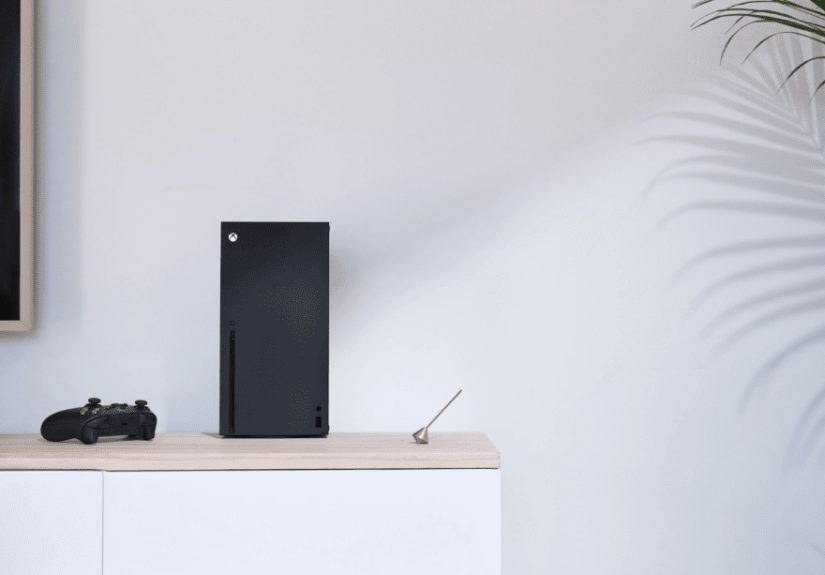
The Xbox Series X looks like a minimalist monolith. I mean that as a compliment. It doesn’t scream “GAMER” in the way some hardware does. It’s more like, “I’m an appliance, but I could also run a space program.”
Cooling and noise: underrated until you’ve lived through a jet-engine console
Multiple reviews have praised the Series X’s cooling design and relatively quiet operation. And that matters. A powerful console that runs cool and quiet is the difference between immersion and constantly noticing the machine doing its best impression of a leaf blower.
Disc drive flexibility still matters to me
I buy digital games. I also own discs. I also borrow games. I also sometimes find old games in a drawer and feel like I discovered ancient treasure. Having a disc drive in a high-end console keeps options open, and I like that the Series X doesn’t force me into one purchasing lifestyle.
Who the Xbox Series X Feels Perfect For
If you’re the type who only plays the newest exclusives the second they drop, your priorities might lean elsewhere. But if you’re like mesomeone who wants performance, convenience, and a huge playable historythis console makes an absurd amount of sense.
- The multi-game juggler: Quick Resume was basically made for you.
- The backlog archaeologist: Backward compatibility, Auto HDR, and FPS Boost make old games feel fresh.
- The “I just want it to work” player: Fast storage, stable performance, and modern display features reduce friction.
- The value hunter: Game Pass can turn a console purchase into a long-term library strategy.
Conclusion: My Hype Is Practical (But Still Loud)
I can’t wait to get the Xbox Series X because it aligns with how I actually game in real life: I bounce between titles, I revisit favorites, I want smooth performance, and I refuse to spend a chunk of my limited free time watching loading screens do interpretive dance.
The Series X’s strengthsXbox Velocity Architecture, Quick Resume, high-end performance features, backward compatibility enhancements, and the Game Pass ecosystemadd up to a console that feels less like a single purchase and more like an upgrade to my entire gaming routine.
And yes, I also want it because I enjoy pressing “Resume” and immediately being back in the action like I’m a time traveler with excellent priorities.
My 500-Word Countdown Diary: The Real-Life Reasons I’m So Ready
Here’s the honest version: my excitement isn’t just about teraflops and acronyms (although “teraflops” is a phenomenal word and deserves more respect). It’s about the tiny moments that make gaming feel effortless again.
Like the night I sat down to play after a long day, launched a game on my current setup, and realized I could either (A) wait through a load screen long enough to develop a minor interest in home gardening, or (B) give up and scroll on my phone. I chose option B. The console didn’t lose because the game was badit lost because the friction was too high. The Series X feels like a direct response to that: it’s built to get out of the way.
I keep thinking about weekends. You know the kind: two errands, one social obligation, one pile of laundry, and a heroic attempt at personal wellness that lasts twelve minutes. In those weekends, gaming time comes in short bursts. Quick Resume turns short bursts into real progress. I can dip into a story mission, jump out to play something co-op with friends, and hop back in without “restarting my brain” every time the dashboard boots something from scratch. That’s not a luxury feature for meit’s the difference between actually finishing games and just admiring them from a distance like museum exhibits.
I’m also nostalgic in a specific way: I don’t just miss old games, I miss how they felt. Some older titles are still brilliant, but going back can be rough when frame rates wobble and visuals look dim on modern TVs. The idea of loading up a classic and seeing it look brighter (Auto HDR) or feel smoother (FPS Boost) is genuinely exciting. It’s like finding a favorite jacket and realizing it somehow fits better than it did ten years ago.
Then there’s the “new TV features” rabbit hole. I’ve already caught myself reading about 120Hz, VRR, and ALLM like I’m studying for a final exam called Adult Money Decisions. I’m not even mad about it. I like the idea that the Series X can scale with my setupgreat now, even better laterwithout forcing me to rebuild everything at once.
And finally, there’s Game Pass energy. Not the corporate slogan versionthe real version. The version where you try a game you’d never buy outright and end up obsessed. The version where your friends say “Download this, trust me,” and you can actually do it without buying a $70 ticket to the conversation. The Series X, paired with that kind of library access, feels like an always-ready gaming hub. That’s why I’m impatient. Not because I need a new boxbecause I want the smoother, faster, lower-friction gaming life that comes with it.