Table of Contents >> Show >> Hide
Say the words neon lamp and most people picture one tiny orange dot glowing on an old power strip, a stove switch, or the kind of appliance that looks like it could survive a meteor strike. Fair enough. For decades, neon lamps were the kings of the humble pilot light. But that is only the appetizer. These little glow lamps have lived several careers: status indicators, voltage testers, surge protectors, oscillator parts, night-light helpers, display elements, and full-on cultural icons once their larger cousins started bending themselves into diner signs and motel poetry.
In other words, neon lamps are not just old-school electrical confetti. They are one of those technologies that look simple until you realize engineers kept finding weirdly clever jobs for them. And once you understand how they work, their long career starts to make perfect sense. They are cheap, visible, rugged in the right applications, and blessed with electrical behavior that is a little strange in the best possible way. LEDs may dominate modern indicators, but neon lamps still occupy a very specific corner of the lighting and electronics universe where “old” does not necessarily mean “useless.”
What a Neon Lamp Actually Is
A neon lamp is a small, low-pressure gas-discharge lamp built around two electrodes sealed inside a glass envelope. Apply enough voltage, the gas ionizes, and the lamp glows. In the classic miniature style, that glow is usually the warm orange-red color people associate with vintage gear, midnight hallways, and that one appliance in your grandparents’ kitchen that always looked faintly alive.
Unlike incandescent bulbs, neon lamps do not make light by heating a filament until it throws a tantrum and glows. Unlike LEDs, they are not semiconductor junction devices. They work by ionizing gas. That means they have a starting voltage that gets the glow going, and then a lower maintaining voltage that keeps it going. This difference matters a lot, because it gives neon lamps one of their most interesting traits: electrical hysteresis. In plain English, they need one voltage to wake up and a lower one to stay awake.
That quirk is exactly why neon lamps earned a reputation for being more than indicators. They are not just light sources. They are also circuit characters. Slightly dramatic, admittedly, but useful.
Why Neon Lamps Became the Go-To Pilot Light
Let’s give pilot lights their due before we move on. Neon lamps became famous in this role for good reasons. They operate happily in high-voltage AC applications, can use very little current, and often need only a series resistor rather than a bunch of extra circuitry. In many line-voltage applications, that made them simple and economical. If an engineer wanted a visible “power is on” signal without designing a tiny light show from scratch, the neon lamp was ready for duty.
They also had excellent visibility for their size. A little orange point on a dark panel says, “Yes, this thing is live,” in a tone that is polite but firm. In illuminated wall switches and appliance panels, that made them especially practical. They could help users locate a switch in the dark or confirm that a device was energized. Not flashy. Not glamorous. Just useful in the deeply satisfying way old industrial design often was.
And because these lamps can appear visually continuous on standard AC line frequency, they look steady enough to the eye in many ordinary applications. No drama. Just glow.
So What Else Can Neon Lamps Do?
1. Power and Status Indication Beyond the Obvious
The first big misconception is that a pilot light is the whole story. It is not. Neon lamps have long been used anywhere designers needed a simple status indicator on line voltage. Think industrial control panels, older test equipment, aviation and instrumentation panels, power strips, illuminated switches, and legacy consumer electronics. They became visual shorthand for on, armed, ready, or careful, this thing bites.
That ability to operate across a wide range of voltages, temperatures, and panel designs helped neon lamps spread far beyond the kitchen appliance world. They showed up in places where reliability mattered more than trendiness and where line-voltage indication needed to be simple, visible, and cost-effective.
2. Voltage Testers and “Is This Line Live?” Tools
Because neon lamps can glow with very little current once properly driven, they became natural candidates for voltage indication and tester tools. Classic neon voltage testers made use of the lamp’s ability to respond to electrical potential with a visible glow. They did not need a dramatic display. They only needed to answer one useful question: Is there voltage here?
That made neon lamps practical in simple test devices and specialty indicators, including some high-voltage fence testers and legacy service tools. They were not fancy. They were readable, tough enough for the job, and very easy to understand. If it glows, pay attention.
3. Relaxation Oscillators and Timing Tricks
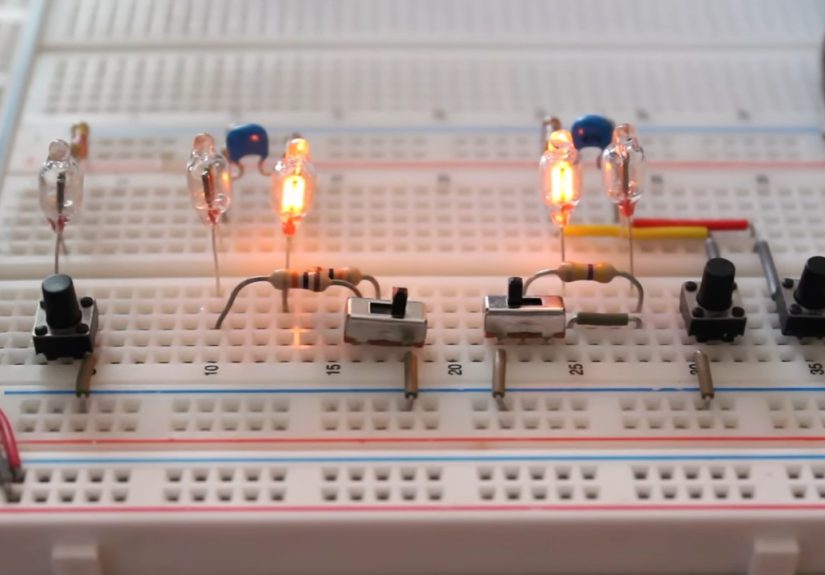
Now we get to the part that makes electronics people grin into their coffee. Because neon lamps have a distinct striking voltage and a lower maintaining voltage, they can work in relaxation oscillator circuits. A capacitor charges through a resistor until the lamp reaches its starting voltage. Then the lamp conducts, the capacitor discharges, and the process repeats. The result is a repeating blink or pulse.
This was not just a lab curiosity. Neon-lamp oscillator behavior showed up in practical circuits, including flashers, trigger circuits, and older pulsing systems. In a world before cheap modern timing chips ruled everything, the neon lamp could help create periodic action with delightfully minimal hardware. Tiny bulb, big attitude.
4. Surge Protection and Voltage Reference Roles
Another overlooked use is protection. Neon lamps and related gas-discharge devices can be used as low-voltage surge protectors or overvoltage elements, taking advantage of their predictable turn-on behavior. Once the voltage rises above a threshold, the lamp can conduct and help clamp or divert the event depending on the circuit design.
That does not make every neon lamp a superhero cape for your electronics, but it does explain why engineers have used them in protection and voltage-reference roles. The same property that makes them interesting in oscillators also makes them useful when a circuit needs a threshold with a visible side effect: glow.
5. Displays, Digits, and the Nixie Connection
If you think neon lamps only sat quietly on panels, meet the Nixie tube. Nixies are neon-filled glow displays that illuminated numerals, letters, and symbols in scientific, industrial, and early computing equipment. They became iconic in the 1950s and 1960s, displaying measurements, counts, prices, and mission-critical information with a glow that still makes retro-tech fans weak in the knees.
Nixie tubes prove the point beautifully: neon technology was not just about “power on.” It was about information. It helped machines speak in light before LCDs and modern LEDs took over the conversation. Today, collectors and makers still love Nixies because they look like the future as imagined by the past, which is a very specific and very charming aesthetic.
6. Signs, Art, and the Big-City Glow
Step outside the chassis and neon goes theatrical. Large neon signs took the same gas-discharge idea and scaled it into advertising, architecture, nightlife, and urban identity. In the United States, neon signage exploded from the 1920s through the mid-20th century, transforming streetscapes with color, motion, and unmistakable personality.
Historic preservation experts now treat many neon signs as cultural landmarks, not just commercial leftovers. That makes sense. A good neon sign does more than advertise. It brands a block, anchors a memory, and tells you exactly what kind of story a place wants to tell after sunset.
How Neon Lamps Compare With LEDs
It would be silly to pretend neon lamps beat LEDs at everything. They absolutely do not. LEDs win on efficiency, low-voltage compatibility, color control, longevity in many designs, miniaturization, and modern manufacturing convenience. If you are designing a new consumer gadget in 2026, you are probably not reaching for a neon lamp unless you are chasing a very particular look or function.
But neon lamps still have traits that engineers historically valued and occasionally still do:
| Feature | Neon Lamp | LED |
|---|---|---|
| Line-voltage indication | Often simple and direct | Usually needs more support circuitry |
| Glow character | Warm, vintage, unmistakable | Crisp, varied, modern |
| Electrical behavior | Useful threshold and hysteresis effects | More straightforward as a diode light source |
| Low-voltage systems | Not ideal | Excellent |
| Modern mass adoption | Niche | Everywhere |
So the better question is not “Which is better?” It is “Which one fits the job?” Neon lamps survived this long because, in certain high-voltage indicator and specialty roles, they made design sense.
Strengths, Limits, and Why They Still Matter
What Neon Lamps Do Well
Neon lamps are small, simple, visually distinctive, and capable of operating at low current once ionized. Some versions offer long service life, and many classic panel or indicator applications made excellent use of that combination. They are also surprisingly expressive. A neon lamp does not merely emit light; it emits mood. Put one behind an old switch plate and suddenly the room feels like it belongs in a detective movie.
Where They Fall Short
They need relatively high voltage. They are not ideal for modern low-voltage electronics. They are limited in brightness compared with many contemporary lighting solutions. Their warm orange glow, while lovable, is not exactly a universal branding palette. And while they are elegant in some circuits, modern solid-state parts can replace them in many functions with greater efficiency and tighter control.
Why They Keep Showing Up Anyway
Because technologies do not vanish just because something newer exists. They stick around where they solve a problem in a simple, memorable, or economical way. Neon lamps still matter in restoration work, legacy equipment, specialty indicators, artistic design, retro electronics, and a handful of practical high-voltage applications. They also matter because they remind us that good engineering often means using the character of a component, not fighting it.
Real-World Experiences With Neon Lamps
Spend enough time around older electronics, industrial panels, or vintage household gear and neon lamps start to feel less like components and more like tiny witnesses. They have a way of telling you that a machine has a history. An old amplifier with a faint orange indicator does not just say “power on”; it says, “I have seen some things.” The same is true for workshop tools, lab gear, and line-voltage switches that still carry the soft neon glow instead of a modern blue LED sharp enough to interrogate your retinas.
One of the most memorable things about neon lamps is how they change the mood of a device. A pilot light LED is informative. A neon lamp is informative and atmospheric. It feels warm, analog, and just a little mysterious. That is why people restoring vintage radios, jukeboxes, arcade equipment, and mid-century control panels often try to keep the original neon indicators when they can. Replacing them with LEDs may be practical, but it can also flatten the personality of the object. The machine still works, but it no longer tells the same story.
Neon lamps also show up in places where people do not expect them. Open an illuminated wall switch from an older home and there is a good chance a tiny neon lamp was helping people find that switch in the dark long before smart homes started bragging about it. Walk through an older motel district, a classic downtown theater area, or a roadside strip with surviving signage, and you can still see how gas-discharge lighting shaped nighttime identity. It is not just light. It is wayfinding, branding, memory, and atmosphere all rolled into one glowing line.
Electronics enthusiasts often remember their first encounter with a blinking neon relaxation oscillator because it feels like discovering a secret. A resistor, a capacitor, a lamp, and suddenly the thing pulses as if it has a tiny heartbeat. That is the charm of neon technology in miniature: it makes invisible electrical behavior visible. Even when people first meet neon lamps through Nixie clocks or test equipment, the reaction is often the same. There is a pause, followed by a smile, followed by the urge to lean closer.
Then there is the reliability angle. In many old appliances and line-voltage indicators, these lamps just kept going. Not forever, of course, but long enough to earn respect. They were simple, serviceable, and easy to read. And when they failed, users often noticed immediately because the familiar glow was gone. A missing neon light can make a device feel strangely lifeless, like a storefront after the sign goes dark.
Perhaps that is the real reason neon lamps still attract affection. They are functional, yes, but they also create presence. They make technology visible without shouting. They turn a plain switch, tester, or panel into something with character. In a world filled with silent, anonymous black boxes, that little orange glow still feels wonderfully human.
Conclusion
Neon lamps earned their reputation as pilot lights, but stopping there misses the whole adventure. They are part light source, part threshold device, part design statement, and part historical artifact. They helped engineers indicate power, sense voltage, generate pulses, protect circuits, and display information. Their larger relatives shaped American streetscapes, while their miniature cousins quietly glowed inside switches, meters, and machines for decades.
That is a pretty respectable career for a tiny gas-discharge lamp. So yes, neon lamps are great for pilot lights. They are also proof that a modest component can have an unexpectedly colorful résumé. Literally.