Table of Contents >> Show >> Hide
- The Photo That Made the Internet Stop Scrolling
- Why a Thunderstorm Looks So Unreal at 37,000 Feet
- Why Pilots Respect Thunderstorms Even When the View Is Gorgeous
- How a Pilot Captures a Storm Photo Like This
- Why the Story Became So Popular Online
- What Travelers, Aviation Fans, and Photographers Can Learn From It
- Extended Experiences Related to Flying Above a Thunderstorm at 37,000 Feet
- Conclusion
Some photos make you pause. This one makes you question whether Mother Nature hired a Hollywood lighting crew. In the now-famous image often described as a pilot flying above a thunderstorm at 37,000 feet, the storm glows with electric drama while the sky around it looks eerily calm. It is the kind of shot that seems fake until you realize it is not fake at all, which somehow makes it even wilder.
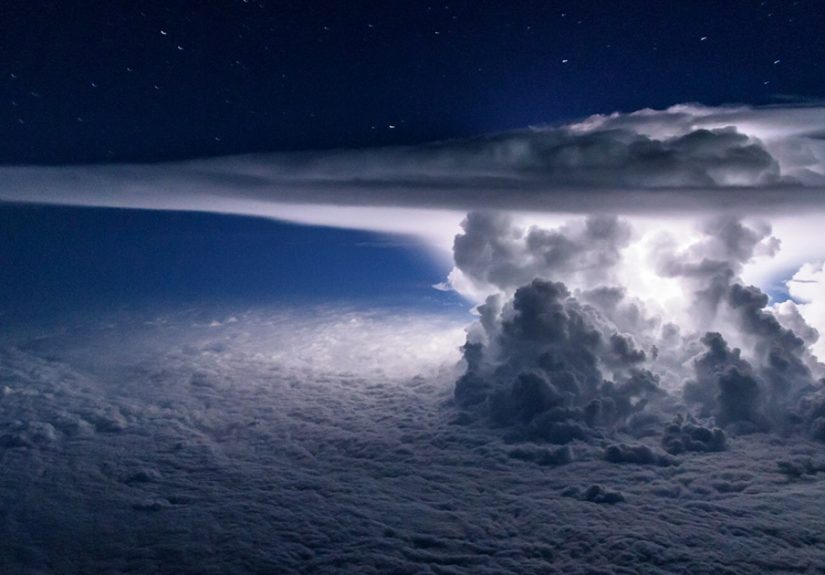
The image is tied to pilot and photographer Santiago Borja, who captured a thunderstorm from the cockpit of a Boeing 767-300 while cruising over the Pacific south of Panama. The internet loved it for obvious reasons. It has scale. It has danger. It has beauty. And it has that rare quality every great aviation image needs: it makes people on the ground realize that pilots do not just travel through the sky. Sometimes, they get front-row seats to the atmosphere showing off.
But this story is bigger than one incredible frame. It is also a story about storm structure, flight safety, cockpit photography, and why a thunderstorm seen from cruising altitude looks less like weather and more like a living mountain. If you have ever stared out an airplane window and thought, “Wow, that cloud looks angry,” this article is for you. That cloud may have been angry. It may also have been building a towering cumulonimbus palace with lightning in the basement.
The Photo That Made the Internet Stop Scrolling
The headline says a pilot flew above a thunderstorm to get the perfect shot, and that is how many people remember the moment. In reality, what makes the image so remarkable is not some reckless joyride through bad weather. It is the perspective. Borja described the photo as being taken while flying around the storm in still air, not charging through the heart of it like an action movie hero with a coffee and a checklist.
That distinction matters. Commercial pilots do not treat thunderstorms like scenic overlooks. They avoid them. Official aviation guidance is crystal clear: thunderstorms can create severe turbulence, wind shear, lightning, hail, icing, low visibility, and other hazards not just inside the cloud but above, below, and around it. So the magic of the image comes from smart distance, good timing, and a pilot who knew how to respect the storm while appreciating its beauty.
And what a storm it was. The famous frame looks as if the cloud is boiling upward, lit from within by lightning, with a bright, sculpted crown at the top and a dark, muscular body below. It is one of those rare weather photographs that feels cinematic and scientific at the same time. You can enjoy it as art, but you can also read it like a weather diagram with extra drama.
Why a Thunderstorm Looks So Unreal at 37,000 Feet
A New Angle Changes Everything
Most people experience thunderstorms from below. From the ground, storms are walls. From a jet at cruising altitude, storms become architecture. You can see the upper reaches of the cloud, the flattened anvil, and the way the tower punches into the atmosphere. That change in perspective is why the image feels almost alien. You are not looking up at weather anymore. You are looking across at it.
At around 37,000 feet, the world outside an airliner often appears smooth and detached from whatever chaos is happening lower down. That contrast is part of what makes cockpit thunderstorm photography so mesmerizing. One moment the flight deck is stable, instrument lights are glowing softly, and the horizon looks controlled. The next moment there is a massive electrical skyscraper out the window reminding everyone that the sky is not empty. It is busy. Very busy.
There is also a psychological twist here. We tend to think altitude equals safety and distance equals calm. Usually that is true. But thunderstorms are vertical beasts. They do not politely stay in one layer of the atmosphere. Strong cells can build upward with astonishing force, spread anvils outward, and generate dangerous conditions far from the darkest part of the cloud. So when a pilot captures a storm from high altitude, the image is beautiful precisely because it sits on the border between serenity and enormous power.
The Science Behind the Shape
The storm in a photo like this is typically associated with cumulonimbus development, the classic thunderstorm cloud family. These clouds grow vertically when warm, moist air rises quickly, cools, condenses, and keeps climbing. If enough instability, lift, and moisture are present, the cloud can build into a towering storm cell complete with heavy rain, lightning, and strong updrafts.
One of the visual clues people love in these photos is the anvil top. That broad, flattened cap forms when the rising air reaches a level where it can no longer keep climbing easily, so it spreads outward. Sometimes a particularly intense updraft punches above that general level, producing what meteorologists call an overshooting top. In plain English: the storm is flexing. Hard.
That is why the photo looks less like a fluffy cloud and more like a frozen explosion. You are seeing the atmosphere in motion, caught in a single frame. It is the weather equivalent of snapping a picture of a wave just before it crashes, except the wave is miles high and full of lightning.
Why Pilots Respect Thunderstorms Even When the View Is Gorgeous
Beauty Does Not Cancel Risk
Here is the important part that every thunderstorm article should underline, bold, circle, and maybe tape to the refrigerator: a stunning storm photo does not mean thunderstorms are safe to approach casually. Aviation guidance warns pilots not to rely on visual appearance alone, because the hazards of a thunderstorm are not always obvious. A cloud that looks majestic from one angle can still produce severe turbulence, hail, lightning, or violent shifts in wind.
This is why pilots and dispatchers use a stack of weather tools rather than vibes. They work with radar, forecasts, pilot reports, air traffic control, and hazard products such as Convective SIGMETs. These advisories are issued for thunderstorm-related aviation hazards and help crews route around dangerous convection. In other words, while passengers are admiring the sunset, someone up front is quietly making sure the aircraft does not audition for a washing machine.
That tension between beauty and discipline is one reason the photo resonates with aviation fans. The pilot is not simply an artist. He is an artist working inside a profession built on procedure. The image feels spontaneous, but the conditions that made it possible depended on judgment, distance, and situational awareness.
Why Storms Can Be Dangerous Beyond the Cloud Itself
People who do not follow aviation closely sometimes imagine the danger is only inside the dark core of a thunderstorm. The problem is that storms influence the air around them. Turbulence can extend outside the visible cloud. Wind shear can shift conditions fast. Gust fronts can disturb air far from the prettiest lightning. Even weakening storms can remain hazardous.
That matters for understanding the famous 37,000-foot image. The calm feel of the scene does not mean the storm is tame. It means the airplane was positioned in a relatively stable area while the storm itself was doing what storms do: rising, flashing, expanding, and making meteorologists nod like, “Yep, that one means business.”
How a Pilot Captures a Storm Photo Like This
It Is Harder Than Instagram Makes It Look
Taking a thunderstorm photo from a cockpit at night is not easy. Borja himself noted the challenges: lightning is fast, reflections inside the cockpit are annoying, and there is no tripod waiting politely beside the instruments. Add darkness, vibration, and the simple fact that pilots have actual aviation responsibilities, and the photo becomes even more impressive.
Great storm photography in the air requires timing more than brute force. The photographer has to anticipate flashes, manage reflections, work around low light, and shoot through glass without turning the whole frame into a shiny portrait of the instrument panel. That is why the best cockpit storm images feel lucky even when they are made by skilled people. They depend on skill, yes, but also on a fleeting alignment of angle, light, weather, and timing.
It also helps when the photographer understands what the storm is doing. A pilot who regularly reads the sky notices structure in a way most passengers do not. Where someone else sees “big scary cloud,” an experienced pilot or weather-aware photographer sees tower growth, anvil spread, lightning placement, and the kind of contrast that might produce a once-in-a-career image.
The Cockpit View Adds a Human Element
Part of the photo’s power is the implied point of view. You are not looking at the storm from a satellite or from a mountaintop. You are looking at it from the front office of a jetliner. That changes the emotional tone completely. The image suddenly becomes less abstract. It feels inhabited. Someone was there, thousands of feet above the ocean, watching a living storm tower out the side of the aircraft.
That cockpit perspective is why storm images from commercial aviation often travel so far online. They combine three things people already love: planes, weather, and a little bit of existential awe. It is hard to beat that combination. Add lightning, and the internet practically does the sharing for you.
Why the Story Became So Popular Online
The viral appeal of “pilot flies above the thunderstorm to get a perfect shot” is not just about the image itself. It is about what the image represents. It captures the modern fascination with seeing familiar things from unfamiliar places. We all know thunderstorms. We all know airplanes. But very few people know what a mature thunderstorm looks like from cruise altitude near the cockpit, over the open ocean, at the exact instant lightning illuminates the cloud body.
That sense of rarity is online gold. The photo is not just pretty. It feels privileged, as if the viewer has been invited into a part of the world that usually stays hidden behind cockpit doors and weather radar screens. It gives ordinary readers a glimpse of the professional pilot’s world without requiring them to learn a hundred acronyms first.
It also speaks to a deeper human response: thunderstorms scare us, but they also fascinate us. We love controlled danger. We love seeing power from a place of safety. That is the same reason people watch giant waves from a cliff or lava from a helicopter. We want to witness force without being flattened by it. The 37,000-foot thunderstorm photo delivers exactly that emotional mix.
What Travelers, Aviation Fans, and Photographers Can Learn From It
First, the photo is a reminder that commercial aviation is full of invisible decision-making. When a flight bends around a weather system, climbs, descends, or arrives late because of convective activity, that is not random inconvenience. That is the system doing its job. Storm avoidance may not look glamorous on an app, but it is one of the reasons passengers get home safely.
Second, weather literacy makes travel more interesting. Once you know what an anvil cloud is, why storms grow vertically, and how pilots think about thunderstorm hazards, your next window-seat flight becomes much more than transportation. It becomes live atmospheric theater with legroom that may or may not be disappointing.
Third, for photographers, the lesson is simple: unforgettable images often come from patience and perspective, not from forcing the moment. Borja’s famous storm image worked because he was in the right place, understood the scene, and was ready when the sky delivered one perfect flash. That is photography in a nutshell, except with more altitude and slightly better snacks.
Extended Experiences Related to Flying Above a Thunderstorm at 37,000 Feet
To understand why this kind of photo stays in people’s minds, it helps to imagine the experience around it. Picture a long-haul cockpit at night. The instruments glow softly, the radios crackle now and then, and outside the windshield the sky looks almost empty. Below, the ocean is invisible. Ahead, the horizon is dark enough to erase the line between Earth and space. Then, off in the distance, a storm begins to reveal itself. At first it is just a shape. A darker darkness. A hint of vertical mass. Then lightning flashes inside the cloud and, for a split second, the storm turns into sculpture.
From the cabin, passengers might notice only a strange bright pulse through their window shades. Maybe someone wakes up, looks outside, and thinks the sky has a heartbeat. Maybe another traveler misses the whole thing because they are arguing with the tray table or losing a noble battle against a neck pillow. But in the cockpit, the moment lands differently. Pilots are trained to read weather with respect. They do not just see beauty. They see structure, distance, escape options, and the personality of the air ahead.
There is also a strange calm to these encounters when the aircraft is clear of the storm. That is the part many people find surprising. The image suggests chaos, but the airplane may be sitting in relatively smooth air while the storm rages off to one side. It is like watching fireworks from a quiet hilltop, except the fireworks are building themselves in real time and could absolutely ruin your evening if you got too close. That contrast between peaceful cockpit and explosive cloud is what gives the experience its emotional punch.
Pilots, dispatchers, and frequent flyers all know some version of this feeling. You are high above the world, following a carefully planned route, and then the atmosphere reminds you that plans are always provisional. Storms reroute traffic. They delay arrivals. They create lines on radar that everyone wants to avoid. And yet, from the right distance, they can also produce scenes of incredible elegance. The cloud tops glow silver in moonlight. Lightning sketches hidden chambers inside the storm. The anvil spreads outward like the roof of a cathedral built by chaos.
For aviation enthusiasts, moments like these are part of what makes flight feel larger than transportation. Air travel is often discussed in terms of boarding groups, overhead bins, and whether the middle seat should be considered a violation of human rights. But above the routine there is still wonder. A cockpit storm photo at 37,000 feet reminds us that the sky is not just a highway. It is an environment with texture, mood, danger, and scale. The airplane is not floating through emptiness. It is navigating a layered, active atmosphere that can look calm one minute and biblical the next.
For ordinary travelers, the lesson is oddly comforting. The reason thunderstorm views from airliners feel rare is that crews work hard to keep them from becoming close encounters. When you see a giant cloud tower from your seat, what you are often witnessing is good decision-making in action: a route adjusted, a cell avoided, a safe buffer maintained. That means the beauty is not evidence of recklessness. It is often evidence of professionalism. The plane is there, the storm is there, and the important thing is that they are not trying to become roommates.
And for anyone who loves weather, the experience speaks for itself. Some landscapes are impressive because they are ancient. Thunderstorms are impressive because they are alive right now. They rise, spread, flash, collapse, and change shape before your eyes. To see one from 37,000 feet is to watch the atmosphere think out loud. No wonder one well-timed image could travel the internet for years.
Conclusion
The story behind Pilot Flies Above The Thunderstorm To Get A Perfect Shot Of It At 37,000 Feet endures because it combines everything people love about aviation and weather: skill, scale, timing, danger, and awe. The famous image is not just a viral photo. It is a reminder that the sky can be both disciplined and dramatic, and that the people who work in it often witness scenes the rest of us can barely imagine.
Seen from cruise altitude, a thunderstorm stops looking like a rainy inconvenience and starts looking like a living monument. That is what Borja’s photo captured so well. Not just lightning. Not just cloud structure. A relationship between human technology and atmospheric power. A jet flies steadily onward, instruments humming, while outside the window a storm the size of a city lifts itself into the night. That is not the kind of thing people forget.