Table of Contents >> Show >> Hide
- The Documentary’s Central Hook Is Pure Pandemic Chaos
- Why Ventilators Became the Icon of the COVID Emergency
- What the Film Seems to Understand About Engineering Under Pressure
- America Had Its Own Version of the Same Story
- The Plot Twist: A Ventilator Was Never the Whole Story
- Why the Documentary Matters Now
- What We Should Learn Before the Next Crisis Arrives Uninvited
- Conclusion
- Experiences Related to the Topic: What the Ventilator Rush Felt Like From the Inside
Few phrases capture the sheer anxiety of early 2020 quite like ventilator shortage. It was the kind of term that turned nightly news into a stress workout. Hospitals were bracing for waves of critically ill patients, governments were counting machines like they were gold bars, and engineers suddenly found themselves in the middle of a race that felt part medical emergency, part manufacturing thriller, part “who among us actually understands fluid dynamics before breakfast?”
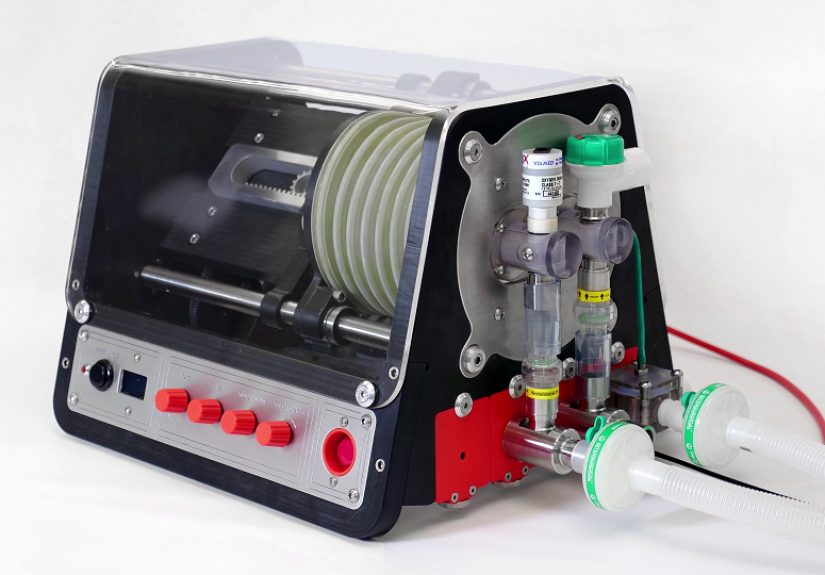
A recent documentary, Breathe For Me: Building Ventilators for a COVID Apocalypse, revisits that frantic moment through the lens of a team in South Wales tasked with an almost absurd challenge: design and build a clinically useful ventilator in just 10 days using locally sourced parts. That premise alone tells you nearly everything about the mood of the time. Global supply chains looked shaky, medical demand forecasts were terrifying, and the world was still learning what severe COVID actually required at the bedside.
But the most interesting thing about this documentary is not just that it tells a high-pressure engineering story. It also helps explain why ventilators became the symbol of pandemic-era urgency, why governments and innovators moved so fast, and why many experts later concluded that the real problem was bigger than the machines themselves. In other words, the documentary is not only about building hardware. It is about what happens when fear, science, policy, logistics, and human improvisation all collide at once.
The Documentary’s Central Hook Is Pure Pandemic Chaos
The film reportedly centers on a local government challenge issued at the start of COVID: build a ventilator fast, build it from local parts, and build it under conditions where failure was not really a fun option. That assignment came from a grim assumption that existing supplies could be overwhelmed within weeks. In the documentary’s telling, the team’s work becomes a snapshot of a moment when nobody knew whether the worst-case scenario was coming next Tuesday.
That uncertainty matters. It is easy, years later, to look back and reduce the ventilator rush to a kind of overreaction story. But in March 2020, Italy’s hospitals had already shown what uncontrolled respiratory collapse could look like, vaccines did not exist, treatment protocols were still evolving, and the virus had a habit of making healthy-looking planning documents curl up and cry in the corner.
So the documentary’s strength appears to be its refusal to treat ventilator development as a neat innovation case study. This was not a relaxed product launch with a polished pitch deck and a catered lunch. This was emergency engineering under moral pressure. Teams were not asking how to dominate a market in 18 months. They were asking how to make something safe enough, reliable enough, and manufacturable enough before hospitals ran out of time.
Why Ventilators Became the Icon of the COVID Emergency
Ventilators quickly became the most dramatic object in the pandemic conversation because they sat at the intersection of medicine and fear. Severe COVID could trigger acute respiratory distress, and mechanical ventilation represented the line between supportive care and critical rescue. Once public officials and hospital leaders began warning that supply might not meet demand, the machine took on a symbolic role far beyond its actual mechanical footprint.
That symbolism also made ventilators politically potent. If masks represented prevention and vaccines later represented hope, ventilators represented the grim middle chapter: the point at which a patient was sick enough that medicine needed hardware, trained staff, sedation, monitoring, oxygen, tubing, alarms, infection control, and a lot of hard-earned ICU expertise just to keep the body going.
The documentary arrives as a reminder that this symbol was not abstract. Behind every headline about a projected shortage were real discussions about triage, capacity, staffing, and what hospitals might do if too many people arrived needing advanced respiratory support at the same time. Universities, startups, federal agencies, and major manufacturers all entered the story because no one wanted to find out what “not enough ventilators” looked like in practice.
What the Film Seems to Understand About Engineering Under Pressure
Constraint Was the Whole Assignment
The most compelling part of the ventilator story is that teams were never solving a single problem. They were solving several ugly ones at once. A ventilator had to work mechanically, but it also had to use available components, fit clinical needs, conserve oxygen where possible, operate safely around infectious patients, and be buildable at speed. That is not one engineering challenge. That is an engineering stress sandwich with regulation for bread.
By focusing on locally sourced parts, the documentary highlights a truth many industries learned the hard way during COVID: a brilliant design is not very helpful if half the parts are stuck in another country and the other half have been bought by five governments before lunch.
Speed Was Necessary, but So Were Guardrails
Emergency device development is never just about cleverness. The machine has to interact with fragile lungs, oxygen delivery systems, pressure limits, infection-control routines, and clinicians who cannot stop during a crisis to decode a whimsical interface designed by an engineer having a creativity moment. Good emergency design is fast, yes, but also humble. It assumes users are exhausted, supplies are inconsistent, and mistakes are expensive.
That is one reason the best ventilator efforts during COVID often involved close collaboration between engineers and clinicians. The documentary reportedly leans into struggle, frustration, and iteration, and that feels right. Devices built in panic still had to function in reality, where patients are not prototypes and the ICU is not a hackathon.
America Had Its Own Version of the Same Story
Although the documentary is rooted in the United Kingdom, its themes map neatly onto the United States. Across the U.S., a remarkable assortment of institutions tried to answer the same question: how do you rapidly expand ventilator capacity without turning the solution into a new problem?
NASA Turned Space Engineering Into ICU Support
One of the most famous examples came from NASA’s Jet Propulsion Laboratory, where engineers developed the VITAL ventilator prototype in just 37 days. The goal was not to replace every conventional ventilator in a hospital. It was to create a high-pressure ventilator tailored to a subset of COVID patients so that more traditional ICU ventilators could be reserved for the most severe cases. That distinction matters because it shows smart crisis design in action: solve for a practical gap, not for cinematic hero points.
The NASA story also demonstrated that speed and seriousness could coexist. The prototype underwent testing with clinicians at Mount Sinai, which underscored a key lesson repeated throughout the pandemic: cross-disciplinary cooperation was not a bonus feature. It was the whole engine.
MIT Revived an Open-Source Emergency Path
At MIT, the E-Vent effort revived an earlier low-cost concept and pushed it toward emergency deployment. The appeal was obvious. Open-source thinking, simpler architecture, and globally replicable designs offered a possible answer for places that might not get access to conventional machines quickly enough. In the early months of COVID, that kind of approach felt less like academic experimentation and more like civic duty with a schematic attached.
The promise of open design was not that it would magically erase regulatory and clinical complexity. It was that it could widen the field of contributors. More minds, more prototypes, more testing, more contingency plans. During a global emergency, that mattered.
GM and Ventec Showed What Scale Actually Looks Like
If university and lab projects represented ingenuity, the GM-Ventec partnership represented industrial muscle. It is one thing to design a device under pressure. It is another thing entirely to make tens of thousands of them. That requires supply chains, factory retooling, procurement discipline, workforce coordination, and the sort of operational choreography that usually takes much longer than a panic-filled spring season.
That effort became one of the clearest examples of the U.S. using large-scale manufacturing to address medical scarcity. It also revealed something the documentary’s smaller team story helps illuminate from the other direction: crisis response needs both garage-level creativity and factory-floor discipline. Inspiration is wonderful, but eventually somebody has to source valves in bulk and get the boxes out the door.
Johns Hopkins Captured the Backup-Plan Mindset
Johns Hopkins teams explored multiple strategies, including mechanically simpler devices and even ventilator splitters. Some of these ideas were stopgaps, some were controversial, and some were designed with the clear understanding that they were emergency tools rather than ideal long-term solutions. But that is exactly what a real crisis looks like. It is not one elegant answer floating down from the heavens in a lab coat. It is layers of contingency stacked on top of one another while everyone hopes the primary plan holds.
The Plot Twist: A Ventilator Was Never the Whole Story
One of the biggest takeaways from later analysis is that the pandemic ventilator story did not end where it started. Early on, the dominant fear was too few machines. Later, many clinicians and researchers argued that staffing, sedation drugs, ICU capacity, respiratory therapists, oxygen systems, tubing, training, and patient selection were just as important, and sometimes more important, than the sheer number of ventilators in storage.
That does not make the early scramble foolish. It makes it incomplete. In emergencies, people often optimize for the most visible bottleneck. The ventilator was visible. It had a shape, a price tag, and a headline-friendly name. But a machine without trained staff is not care. It is furniture with a power cord.
Clinical practice evolved, too. Some hospitals and physicians began questioning whether all struggling COVID patients should be intubated as early as initially feared. Alternative respiratory support strategies gained more attention. Mount Sinai physicians, for example, reported using converted BiPap devices for some patients, illustrating how bedside practice adapted in real time. In hindsight, the ventilator was essential for many patients, but it was not the universal answer it sometimes appeared to be in early public debate.
Why the Documentary Matters Now
What makes this documentary timely is not nostalgia. It is memory correction. Pandemic history has a bad habit of flattening into slogans. We remember shortages, heroism, lockdowns, vaccines, and maybe a few graphs that ruined everyone’s spring. But the middle layer of the storythe technical scramble, the design compromises, the frantic interviews, the ugly uncertaintycan disappear fast.
Breathe For Me appears to preserve that middle layer. That matters because future emergencies will create the same temptation to simplify. People will want one villain, one miracle technology, one procurement fix, and one clean lesson. Real emergencies do not work like that. They are messy, iterative, political, emotional, and full of halfway solutions that matter precisely because they are halfway solutions.
There is also something deeply useful about seeing engineering presented as lived experience rather than abstract triumph. The documentary does not seem to say, “Look how brilliantly everyone solved it.” It seems to say, “Look what it felt like to try.” That is a more valuable historical record. It captures uncertainty, which is usually the first casualty of hindsight.
What We Should Learn Before the Next Crisis Arrives Uninvited
Build for Manufacturability, Not Just Invention
Emergency design should start with realistic parts, real workflows, and practical manufacturing constraints. The prettiest prototype in the room is not the winner if it depends on unavailable components or requires a Ph.D. in interpretive menu navigation.
Put Clinicians in the Room Early
COVID reinforced that devices must match bedside reality. Engineers bring creativity; clinicians bring consequences. The best outcomes happen when those groups collaborate from day one rather than meeting later at the awkward stage where someone says, “Great machine, but no nurse on Earth can use that safely at 3 a.m.”
Plan for Systems, Not Just Objects
The U.S. later learned that buying huge numbers of ventilators did not automatically create readiness. Future preparedness has to cover staffing, training, supply chains, drug availability, maintenance, data sharing, and oxygen support, not just the machine count on a spreadsheet that makes everyone feel briefly accomplished.
Document the Process While It Is Still Messy
This may be the documentary’s most underrated contribution. If you wait until history is tidy, you miss the truth. You miss the confusion, the false starts, the pressure, the workarounds, and the emotional weather of the moment. That is exactly the material future planners need.
Conclusion
New Documentary Details Ventilator Development Efforts During COVID is more than a story about one machine category during one brutal chapter of modern history. It is a reminder that crisis innovation rarely looks polished from the inside. It looks rushed, imperfect, collaborative, and very human.
The documentary’s real achievement is that it appears to capture both the urgency and the ambiguity of the ventilator race. Yes, people built impressive machines quickly. Yes, institutions moved with remarkable speed. But the deeper lesson is that technology alone never carries a health emergency. Systems do. People do. Training does. Good judgment does. Memory does, too.
That is why this film matters. It takes a piece of pandemic history that could have been reduced to a procurement footnote and restores its texture. It reminds us that the ventilator scramble was not just about hardware. It was about fear, responsibility, improvisation, and the strange courage of trying to build something lifesaving while the world was still figuring out what, exactly, it was up against.
Experiences Related to the Topic: What the Ventilator Rush Felt Like From the Inside
One of the most powerful ways to understand ventilator development during COVID is to think about how it felt for the people caught inside the effort. For engineers, the experience was often described less like ordinary product development and more like standing in a storm while trying to assemble a parachute for someone else. Deadlines were counted in days, not quarters. Meetings blurred into emergency calls. Supply lists changed hourly. A part that looked easy to source in the morning could become unobtainable by dinner. Teams that normally worked in very separate worlds suddenly found themselves on the same call: doctors, machinists, procurement specialists, software developers, respiratory therapists, regulators, and manufacturers all trying to translate their own language into something useful before the next surge.
For clinicians, the ventilator conversation carried an entirely different weight. To the public, a ventilator could sound like a machine you either had or did not have. Inside the hospital, it was never that simple. A ventilator meant sedation, settings, tubing, alarms, oxygen supply, infection precautions, and constant monitoring. It meant judgment calls about who needed intubation, who might do better with less invasive support, and whether staff could safely manage another critically ill patient. During the worst stretches, the emotional toll came not only from exhaustion but from the awareness that every equipment discussion was really a patient discussion wearing industrial clothes.
Manufacturing teams lived through their own version of whiplash. Factories designed for one purpose had to rethink processes, components, training, and quality control at remarkable speed. People who had spent years making automotive parts or industrial products suddenly had to adapt to medical-grade expectations under national pressure. That is a profound shift. It is one thing to hear “ramp production.” It is another to realize that the object being rushed through the system will be attached to a critically ill human being. The stakes changed the atmosphere. Precision was no longer a selling point. It was an ethical requirement.
There was also the quieter experience of uncertainty, which documentaries often capture better than headlines do. Many participants were working hard without knowing whether their specific solution would ever be used at scale. Some prototypes were stepping stones. Some were backups to backups. Some helped shape better designs even if they never became the final answer. That can feel frustrating in the moment, but it is also how real emergency innovation works. Not every effort becomes the hero product. Sometimes the value is in widening the options, buying time, or teaching other teams what not to do.
Families and the public experienced the ventilator rush differently again. For many people, the word ventilator became synonymous with fear. It was no longer just a medical device. It was the machine mentioned in grim updates, tense press conferences, and heartbreaking ICU stories. That public fear put even more pressure on the development race, because teams were not only solving technical problems. They were working inside a culture of dread, where every delay felt personal and every breakthrough carried emotional weight far beyond the lab or factory.
What remains, years later, is a memory of collective effort that was messy but meaningful. People built, tested, argued, improvised, revised, and kept going. Some of the assumptions changed. Some of the machines were ultimately less central than first feared. But the experience still matters because it revealed what emergency response really looks like when theory meets human limitation. It is long hours, incomplete information, teamwork under stress, and a stubborn refusal to stop trying. That is the emotional truth the best pandemic documentaries preserve, and it is why the ventilator story still deserves attention now.