Table of Contents >> Show >> Hide
Some TV casting announcements are mildly interesting. You nod, sip your coffee, and move on with your life. Then there are the ones that make drama fans sit up like they just heard the kettle whistle from three rooms away. The third series of Time belongs firmly in that second category. A show already praised for its emotional weight, moral complexity, and zero-interest approach to fluff is returning with a new setting, a new crisis, and a duo that instantly raises expectations: Siobhan Finneran of Happy Valley and David Tennant of Broadchurch.
That pairing alone is enough to get people talking, but the real story is bigger than star power. Time has built its reputation by refusing to treat prison drama as sensational entertainment. It is not interested in cheap twists, macho posturing, or the usual “gritty” wallpaper. Instead, it asks harder questions. What does punishment do to the punished? What does the system do to the people who run it? And how much damage can a life carry before it buckles?
Now, with a third series set inside a young offenders institution, the BBC drama looks ready to push those questions into even more painful and urgent territory. If the first season was devastating and the second season was quietly furious, the third has all the ingredients to be something even sharper: a story about youth, guilt, authority, and the terrible speed at which one bad decision can rearrange a life.
Why Time still feels essential
Calling Time one of the BBC’s best dramas does not feel like empty hype anymore. It feels earned. The first season, led by Sean Bean and Stephen Graham, stood out because it never forgot that prison is not just a backdrop. It is a machine. It shapes language, behavior, fear, and survival. Every conversation matters because every silence matters too. One wrong word can start a chain reaction. One kind gesture can feel revolutionary.
The second season proved that the show was not a one-hit wonder wearing a prison uniform. By shifting into a women’s prison and following characters played by Jodie Whittaker, Tamara Lawrance, Bella Ramsey, and Siobhan Finneran, the series showed real anthology muscle. Same emotional DNA, different perspective. Same institutional cruelty, different social pressures. The series widened its lens without losing its nerve.
That is the trick Time keeps pulling off. It feels intimate and systemic at once. Viewers are drawn into individual lives, but the show never lets anyone forget that these lives are colliding with bureaucracy, policy, class, trauma, and neglect. In other words, it is the kind of television that trusts the audience to think while also making them feel like their chest has been hit with a sandbag.
What we know about the third series of Time
David Tennant and Siobhan Finneran are a seriously strong combination
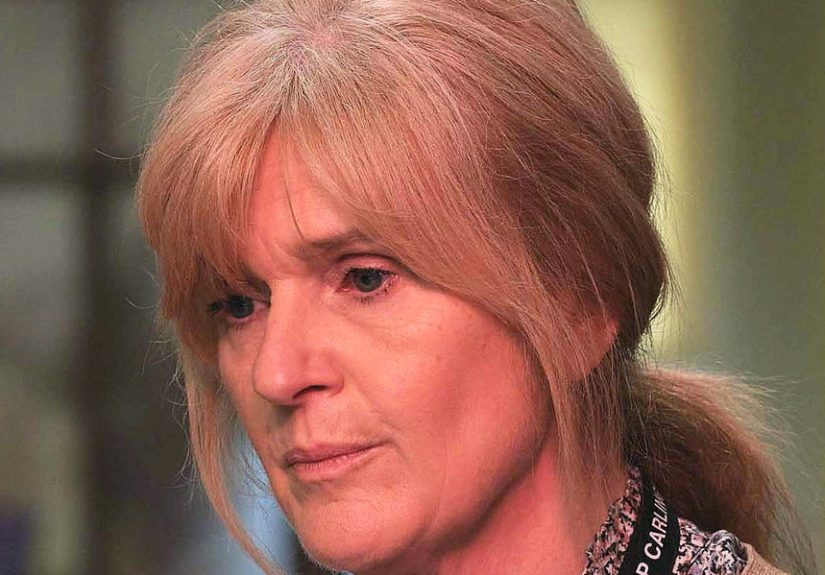
Season three arrives with David Tennant joining the series as veteran prison officer Bailey, while Siobhan Finneran returns as prison chaplain Marie-Louise. That matters for more than marketing reasons. Marie-Louise has become the nearest thing this anthology has to a moral thread, a figure who moves through the machinery of incarceration carrying empathy, fatigue, and just enough hope to be dangerous.
Finneran has always been brilliant at playing characters who look steady on the surface while carrying entire weather systems underneath. That was true in Happy Valley, and it has been just as true in Time. She can communicate concern, skepticism, heartbreak, and authority in one look. Not many actors can make compassion feel this unsentimental.
Tennant, meanwhile, brings an entirely different but equally useful energy. The best Tennant performances have a nervous intelligence to them. He can play sharp, wounded, impatient, compassionate, and unraveling sometimes all before the scene has finished clearing its throat. His work in Broadchurch proved how powerful he is when he is allowed to sit in discomfort rather than perform around it. That is exactly the skill set Time needs.
A young offenders institution raises the emotional stakes
The new setting is crucial. By moving into a young offenders institution, the third series shifts the conversation from consequences to formation. Adult prison stories ask what people have become. Youth custody stories ask what they might still become, and whether the system gives them any realistic chance at change. That is heavier, sadder, and arguably more explosive.
This is where Time becomes more than prestige TV with excellent lighting. A drama about incarcerated teenagers forces viewers into uncomfortable territory. Youth does not erase harm, but it changes the emotional equation. The audience is no longer looking only at guilt and punishment. It is also looking at immaturity, manipulation, fear, inherited damage, and the terrifying possibility that a person can be written off before they fully understand themselves.
That setting should also deepen the tension between institutional order and human vulnerability. Officers are not just maintaining rules. Chaplains are not just offering comfort. Everyone is confronting children who have done adult harm, or who have been shaped by adult failures. That is the kind of dramatic material that does not fade after the credits. It lingers. Rudely.
The wider cast suggests a bigger world, not a busier one
Additional names joining the season, including Vinette Robinson, Jo Joyner, Daniel Ryan, Warren Brown, and Louis McCartney, signal that the third series is not shrinking its world. That is good news. Time works best when the prison ecosystem feels layered: officers, families, administrators, vulnerable inmates, hard cases, and people stuck in the gray area between care and control.
What makes this exciting is that Time rarely wastes a supporting role. A character can walk on screen for two scenes and still leave a bruise on the episode. The show understands that institutions are built not just through leads but through corridors of people making tiny decisions, compromises, and betrayals. That design makes the drama feel lived in rather than staged.
Why the Happy Valley and Broadchurch connection works so well
On paper, linking Happy Valley, Broadchurch, and Time sounds like catnip for British drama fans. In practice, it works because these shows share a certain seriousness about consequences. They all understand that crime is never just plot. It is aftermath. It is damage that ripples through homes, institutions, friendships, marriages, and personal identity.
Broadchurch was never simply about solving a case. Its power came from how grief infected an entire town. Happy Valley never reduced its characters to heroes and villains. It looked hard at addiction, family, anger, duty, and exhaustion. Time belongs in that same family of dramas that refuse to offer easy moral exits.
That is why Tennant and Finneran feel like more than recognizable faces. They feel like tonal matches. Each actor comes with a built-in history of doing emotionally intelligent television that does not insult the audience. They know how to play people who are trying to function while privately falling apart, and that may be the most valuable currency in a drama like this.
Put simply: if season three wants performers who can turn a hallway conversation into a crisis of conscience, it has hired very well.
What could make season three truly memorable
For all the excitement around casting, Time will only stick the landing if it does what the best previous episodes did so well: resist simplification. A young offenders story can easily slide into sermon or stereotype. It can become too eager to explain, too eager to excuse, or too eager to condemn. Time has to stay in the harder middle ground.
That means giving its younger characters full humanity without scrubbing away accountability. It means showing staff members as flawed people rather than symbolic uniforms. It means allowing Marie-Louise and Bailey to be more than the “good conscience” and the “hard realist.” The strongest version of this season will let both characters carry contradictions. Compassion can fail. Authority can crack. Faith can wobble. Experience can make a person wiser or just more tired.
The third series also has an opportunity to say something meaningful about modern punishment. Not in speech form. Not in lecture form. In story form. That is where Jimmy McGovern’s work tends to hit hardest. He is at his best when institutions are exposed through everyday moments: intake procedures, family visits, small humiliations, split-second decisions, conversations that seem ordinary until you realize they are life-changing.
If season three can keep that precision while expanding the scope to younger lives, it will not just be memorable. It will be the sort of television people keep recommending with the same warning every serious drama deserves: “It’s excellent. It is also emotionally not messing around.”
The viewer experience: why Time hits differently
Watching Time is a strange experience because it does not behave like most prestige drama. It does not seduce the viewer with glamor. It does not flatter them with cleverness. It does not make suffering look stylish. Instead, it creates a kind of moral claustrophobia. You are not simply watching bad things happen. You are watching systems normalize them. That is what makes the series feel so memorable.
One of the most striking experiences of watching this show is how quickly your attention sharpens. A slammed door matters. A delayed response matters. An officer pausing before speaking matters. The writing trains you to notice the emotional temperature in a room the way the characters have to. That makes the audience feel less like passive viewers and more like anxious witnesses, which is not exactly relaxing, but it is riveting.
Another reason the series stays with people is that it understands shame. A lot of TV understands guilt. Much less TV understands shame. Time gets that shame is social. It is felt in front of other people. It changes posture, voice, eye contact, and silence. The show knows that prison is not only about punishment from above. It is also about being trapped in constant relation to other people who can judge you, expose you, threaten you, pity you, or ignore you. That creates a pressure cooker effect the series uses brilliantly.
There is also the experience of watching performers who trust stillness. This matters more than viewers often realize. So many dramas are terrified of quiet. They explain too much, score too heavily, and spell out emotional beats like they are writing notes for the back row. Time does the opposite. It lets silence accuse people. It lets pauses reveal fear. It lets faces do the work. That creates a deeper, more adult form of engagement. You are not being dragged through a plot. You are reading emotional evidence.
For many viewers, the series also creates an odd form of self-interrogation. You start by judging characters quickly, then find yourself backing up. You think someone is hardened, and then a crack appears. You assume someone is decent, and then a compromise changes the picture. The experience becomes less about deciding who is good or bad and more about asking what pressure does to people. That is uncomfortable, but it is also the point.
And then there is the after-effect. Time is not always the show you enjoy in the moment in the way you might enjoy a twisty thriller or a slick procedural. Sometimes it sits on you a little. You finish an episode and do not immediately want another. Not because it failed, but because it worked. It leaves emotional residue. You carry the tension into the next hour of your day. You think about the people inside the story, then the people outside it, then the real systems that inspired it. Suddenly the show is no longer just a show. It has become a conversation you are having with yourself.
That is why season three feels so promising. If it can deliver that same experience through a younger, more volatile environment, it could become the most haunting chapter yet. Not louder. Not flashier. Just sharper, sadder, and more difficult to shake off. In television terms, that is usually the sign you are watching something special.
Final thoughts
The third series of Time arrives with exactly the right combination of momentum and risk. The show has already proven it can reinvent itself without losing its identity. Now it is bringing back Siobhan Finneran, adding David Tennant, and stepping into one of the most emotionally volatile settings the anthology has tackled so far.
That is why the new season already feels important. Not because of hype. Not because viewers love a familiar face in a heavy coat looking troubled in promotional stills, although let us be honest, that does not hurt. It feels important because Time has earned trust. Audiences know this series does not pick difficult subjects just to look serious. It picks them because it has something to say.
If season three lives up to its premise, it could become another major entry in the BBC’s modern drama lineup: intelligent, bruising, humane, and impossible to watch casually while organizing your sock drawer. For fans of Happy Valley, Broadchurch, and uncompromising British television at its best, that is a very promising sign.