Table of Contents >> Show >> Hide
- Who Is Zahra, Really?
- The “Photoshop Battle” That Wasn’t Really a Battle
- Why These Images Hit So Hard: The Psychology of “I’ve Seen Too Much”
- The Ethics Question: Is Photoshopping a Refugee Child Okay?
- What This Trend Gets Right
- What This Trend Risks Getting Wrong
- So What Actually Helps Refugees?
- How to Share (or Create) Zahra-Style Edits Without Being Weird About It
- Experiences That Echo This Story (Why It Feels So Personal to So Many)
- Conclusion: Keep the Imagination, Upgrade the Follow-Through
The internet has a lot of hobbies. Some are wholesome (sourdough starters). Some are chaotic (arguing about the correct way to load a dishwasher).
And somerarely, beautifullyare weirdly human in a way that sneaks up on you.
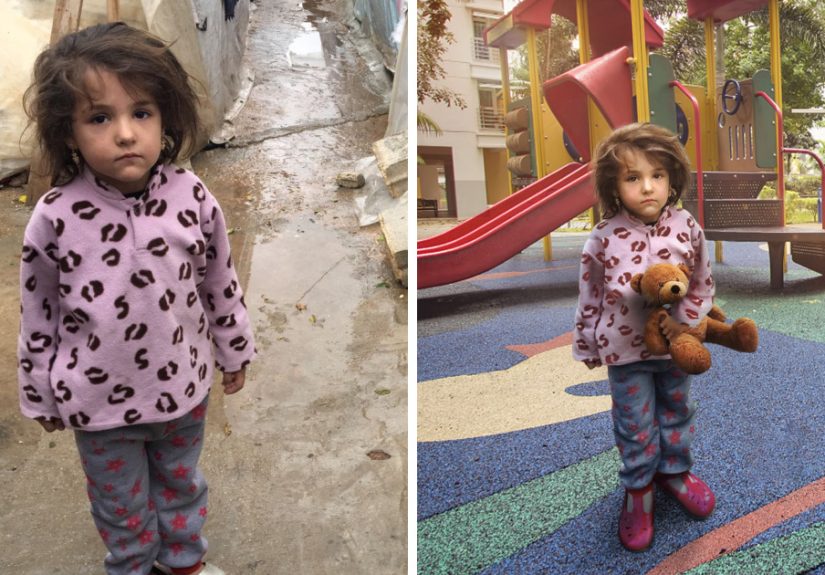
That’s what happened when people started photoshopping a refugee child named Zahra into “different realities.” Not as a joke, not as a dunk, not as a flex.
More like a collective what if? What if she were safe. What if she were warm. What if her biggest problem today was homework, not survival.
The results are visually striking, sure. But what makes them heartbreaking is the subtext: the “different realities” are mostly just… normal life.
A classroom. A bedroom with clean sheets. A winter coat that actually works. A playground. A parent who isn’t doing mental math on how long the heating will last.
When an image edit makes you feel a lump in your throat, it’s usually because it reveals what should have been true all along.
In this article, we’ll unpack who Zahra is, why this Photoshop trend hit so hard, what it gets right (and wrong), and how to turn digital empathy into real-world impactwithout
turning a child’s life into a shareable aesthetic. [1]
Who Is Zahra, Really?
Zahra isn’t a fictional symbol or a stock photo pulled from a “sadness” folder. Reporting has identified her as Zahra Mahmoud, a young Syrian refugee who lived with her family
in an informal settlement near Mafraq, Jordan. In coverage that introduced many readers to her story, she talked about never having gone to school and spending her days inside
and around a tent, with little structured opportunity to learn or play. [1]
That detail matters, because the internet is fast at turning real people into “content,” and kids into shorthand. Zahra is a child with a family, siblings, routines, fears,
and a future that shouldn’t depend on whether strangers feel moved for ten seconds between a meme and a lunch order.
When people Photoshop her into a classroom, they aren’t merely “making something up.” They’re reacting to something painfully concrete: displacement can interrupt education,
safety, health, and stabilityespecially for childrenat precisely the age when development is most fragile. [1]
The “Photoshop Battle” That Wasn’t Really a Battle
The Zahra images didn’t come out of nowhere. They’re closely associated with a humanitarian fundraising concept often described as a “Photoshop Battle for Good,” created to fight
donor apathy and spark renewed attention for refugee supportspecifically winter assistance needs like heating, blankets, and other essentials. [2]
If you’ve ever wandered into the internet’s Photoshop corners, you know the usual vibe: people remix photos into absurd, hilarious alternate universes. But this time, the alternate
universes weren’t about comedy. They were about dignity.
Participants reimagined Zahra’s worldplacing her in scenes that suggested safety, education, and normal childhood milestones. The emotional punch lands because the edits aren’t
“luxury fantasies.” They’re the baseline of what children should get by default.
And here’s the quiet genius: the trend doesn’t just ask you to feel bad. It asks you to imagine something better. That’s a different kind of psychological doorway.
Feeling bad is easy. Building a mental picture of a better outcome is harderand more motivating.
Why These Images Hit So Hard: The Psychology of “I’ve Seen Too Much”
There’s a grim reality of modern life: we’re exposed to suffering at scale. Wars, disasters, displacementscroll, scroll, scroll. Even when we care deeply, our brains have limits.
That emotional shutdown has a name you’ve probably heard: compassion fatigue (and its close cousins, burnout and secondary traumatic stress). [3]
When audiences see repeated imagery of pain, they may disengagenot because they’re monsters, but because constant distress is hard to metabolize. The result can look like apathy,
even when it’s really overload. [3]
Research also suggests desensitization can show up as reduced helping behavior after exposure to certain kinds of violent media. In other words: repeated exposure can make us slower
to respond when someone needs help. That doesn’t mean “movies cause cruelty” in a simplistic way, but it does highlight a real mechanism: numbing is a thing. [4]
The Zahra Photoshop trend punches through numbness by changing the frame. It doesn’t only show what’s wrong; it visualizes what’s missing. It invites the viewer to move from
passive sympathy (“that’s sad”) to active imagination (“that could be different”).
It’s Not Just HeartbreakIt’s Contrast
Human brains respond strongly to contrast. A photo of hardship can make you sad. But a photo of hardship next to a plausible “normal” scene can make you feel something sharper:
injustice. And injustice tends to provoke action more than vague sadness.
Put simply: the edits don’t let you mentally file Zahra away as “a faraway problem.” They pull her into a world you recognizeyour worldand the gap becomes intolerably obvious.
The Ethics Question: Is Photoshopping a Refugee Child Okay?
The uncomfortable truth is that good intentions don’t automatically equal good ethics. Working with images of real peopleespecially childrendemands extra care.
Photojournalism ethics codes emphasize accuracy, context, and avoiding manipulation that misleads. In journalism, altering a factual image can violate trust unless it’s clearly labeled
as an illustration. [5]
But this trend sits in a gray zone: it isn’t trying to claim “this happened.” It’s explicitly saying, “this is what should happen.” That’s closer to advocacy art than reporting.
Still, there are real risks:
- Dignity risk: Does the edit respect Zahra as a personor treat her as a canvas?
- Consent risk: A child can’t truly consent to global remix culture. Even guardian consent doesn’t erase future privacy consequences.
- Misrepresentation risk: Viewers may misunderstand the context if the edits spread without explanation.
- “Savior” risk: If the story becomes “look how the internet saved her,” it can erase the structural reality that displacement isn’t fixed by vibes.
The ethical move is not “never remix.” It’s “remix responsibly.” That means labeling edits as illustration, keeping the focus on support rather than spectacle, and connecting the emotional
moment to credible action.
A Quick Litmus Test
Before sharing or creating an edit, ask:
Is this centered on Zahra’s humanityor on my cleverness?
If the edit primarily showcases your skills, you might be drifting from advocacy into aesthetic extraction.
What This Trend Gets Right
Despite the ethical tightrope, the Zahra edits highlight a few powerful truths.
1) It fights “donor apathy” with imagination
Many humanitarian campaigns struggle when crises become “old news.” Reframing suffering into solvable needslike winterization supportcan cut through audience fatigue and make
help feel immediate and concrete. [2]
2) It’s a gateway from awareness to action
Awareness alone is cheap. The most meaningful versions of this trend point toward tangible support: winter supplies, emergency medical care, cash assistance, shelter repairs,
and other basics that keep families alive through harsh seasons. [6]
3) It makes the “normal” visible again
Refugees are often portrayed only at their worst moment. Imagining Zahra in ordinary settings pushes back against that one-note narrative and reminds viewers that refugees are people
with skills, preferences, humor, and long lives ahead of them.
What This Trend Risks Getting Wrong
1) “A better background” isn’t the same as a better life
A Photoshop classroom is not school access. A cozy bedroom edit is not a stable lease, legal protection, or health care. If the trend stops at “feels,” it can accidentally become a form of
emotional tourism: you visited sadness, you left a like, you moved on.
2) Virality can flatten complexity
Displacement is shaped by conflict, persecution, policy, economics, climate pressures, and more. Global forced displacement has reached staggering levels in recent years, and humanitarian
systems are strained. It’s important not to let a single image stand in for a whole world. [7]
3) The child becomes a symbol first, a person second
When millions recognize Zahra’s face, her privacy can quietly disappear. Even well-meaning attention can become a burden.
So What Actually Helps Refugees?
If this story moved you, here are impact paths that go beyond sharing an image.
Support immediate needs (especially winter)
Winter can be brutal for displaced families. Support often includes heaters, fuel, blankets, insulation, shelter repairs, and cash assistance for heating costspractical help that reduces
illness and risk. [6]
Back organizations that do long-term work
Refugee support isn’t only emergency relief. It’s education, legal services, health care, livelihoods, language classes, and community integration. Groups working globally and in the United States
focus on these “boring but life-changing” layers. [6]
Understand how resettlement works (and why it’s limited)
Only a small fraction of the world’s refugees are resettled to third countries. The U.S. resettlement process involves multiple steps, including vetting, screenings, and coordination with sponsors.
Knowing the basics helps you spot misinformation and advocate more effectively. [8]
Pay attention to public opinionand talk about it like a human
Surveys show many Americans express support for taking in refugees, but opinions vary by politics and demographics. Conversations that are specific (needs, vetting, integration, local benefits) tend to be
more persuasive than vague moral yelling. [9]
How to Share (or Create) Zahra-Style Edits Without Being Weird About It
- Add context: Explain that the image is a photo illustration, and why it exists.
- Point to credible action: Link sharing to support options (donation, volunteer, advocacy) through reputable orgs.
- Avoid “before/after” language: Refugee life isn’t a makeover show.
- Don’t romanticize suffering: Keep the tone respectful; the goal is dignity, not aesthetic tragedy.
- Protect identity when possible: If you’re making new advocacy content, consider privacy-preserving storytelling approaches.
The internet can be a megaphone or a microscope. Use it as a megaphone for resources and realitynot a microscope that zooms in on a child’s pain for clicks.
Experiences That Echo This Story (Why It Feels So Personal to So Many)
Even if you’ve never met Zahra, the emotional response to this trend often comes from experiences people recognize in their own lives: the feeling of being stuck, the fear of winter,
the craving for normalcy, the exhaustion of being seen only at your worst moment. And when you zoom out, you can see how different roles collide in one viral image.
For photographers and storytellers, there’s a constant tension between visibility and exploitation. A powerful portrait can make the world lookand sometimes help.
But attention is fickle. One widely reported detail about Zahra’s life is that her father’s “biggest priority” as winter approached was keeping the children warm. That’s not a metaphor;
it’s a practical, daily worry. When a photo goes viral, it doesn’t automatically deliver heat, rent, school, or protection. Storytellers often describe the burden of wanting an image
to change a life while knowing the real levers are policy and sustained support. [1]
For aid workers and volunteers, winter is not a seasonit’s a checklist. Blankets. Fuel. Insulation. Medical care for respiratory illnesses. Safe shelter.
Many organizations emphasize that cash assistance can be especially effective because families know their most urgent needs (heat, clothes, rent, medicine) better than any outsider.
It’s unglamorous work, and it rarely trends, but it’s the difference between coping and catastrophe. [6]
For people who have fled their homes, the hardest part is often the endless “temporary.” Temporary housing that lasts years. Temporary schooling that gets interrupted.
Temporary legal status that shapes every decision. In the U.S., resettlement is structured and procedural, which can be stabilizingbut it’s also slow, limited, and available to only a
small portion of those displaced. That gap between “what people assume happens” and “what is actually possible” is where a lot of heartbreak lives. [8]
For the rest of usthe viewers, the sharers, the commenters the experience is often a fight with our own attention. We want to care, but we are saturated.
Psychology professionals describe compassion fatigue and news overload as real stress responses, especially when exposure is constant and solutions feel distant. That can lead to disengagement,
even among people with strong values. The Zahra edits feel like a workaround: instead of asking you to absorb more pain, they ask you to imagine a fix. [3]
And then there’s a final, quieter experience: the discomfort of recognizing that what moves us most isn’t the scale of displacement, but the face of one child.
Recent reporting notes forced displacement numbers that are hard to comprehendwell into the hundreds of millions in combined categories of refugees, internally displaced people,
and others forced to flee. Big numbers can make us feel powerless. One face can make us feel responsible. [7]
That’s why this Photoshop trend isn’t “just internet stuff.” It’s a mirror. It shows how badly we want to helpand how easily we drift into numbness when we don’t know what to do.
The best version of this story is not a viral gallery of edits. It’s a cultural nudge: keep your imagination, but attach it to action.
Conclusion: Keep the Imagination, Upgrade the Follow-Through
Photoshopping Zahra into different realities is heartbreaking because it highlights an avoidable gap: the distance between what children deserve and what displaced children often endure.
But it’s also a rare example of the internet using creativity to fight apathy.
If you take one thing from this story, let it be this: empathy is a spark, not a plan. Let the image move youbut let the next step support real people in real winters, through real
organizations and real policies. That’s how a “different reality” stops being an edit and starts being a life.