Table of Contents >> Show >> Hide
- What Is a Product Funnel?
- Product Funnel vs. Marketing Funnel vs. Sales Funnel
- Why a Product Funnel Matters
- Main Stages of a Product Funnel
- How to Create a Product Funnel Step by Step
- Product Funnel Example
- Common Product Funnel Mistakes
- Best Practices for a High-Converting Product Funnel
- Experience-Based Insights: What Building a Product Funnel Really Feels Like
- Conclusion
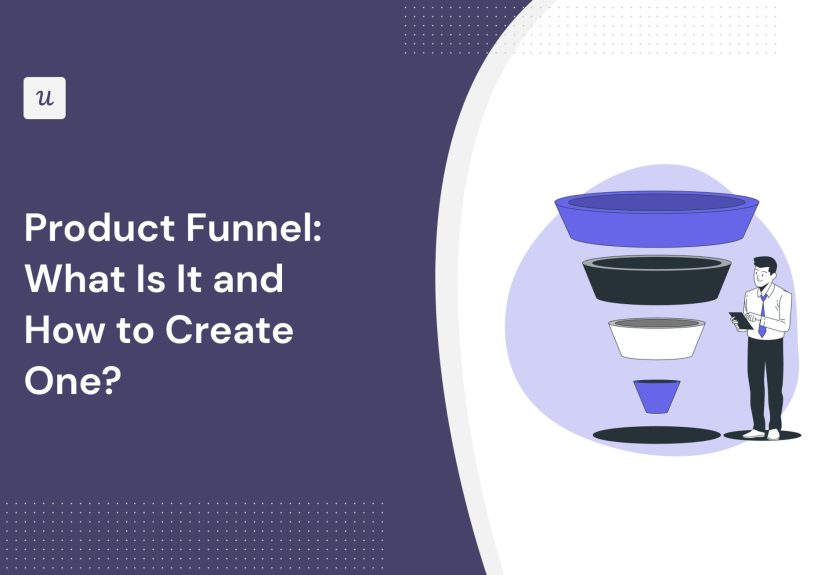
A product funnel is the path people take from “Who are you?” to “Take my money,” and, ideally, “I love this so much I’m telling my friends.” It is part marketing map, part product strategy, part detective board with sticky notesminus the crime scene, unless your onboarding flow is really that confusing.
In simple terms, a product funnel shows how users discover your product, try it, experience value, become customers, keep using it, and possibly upgrade or refer others. Unlike a basic sales funnel that often focuses mainly on leads and purchases, a product funnel pays close attention to what happens inside the product. Do users reach the “aha moment”? Do they return? Do they adopt key features? Do they become loyal customers or vanish into the digital fog?
For SaaS companies, ecommerce brands, apps, marketplaces, and subscription businesses, a strong product funnel is not optional decoration. It is the operating system for growth. It helps teams understand where users drop off, which actions predict conversion, and what changes can improve acquisition, activation, retention, revenue, and referrals.
What Is a Product Funnel?
A product funnel is a structured view of the customer journey from initial awareness to long-term product value. It connects marketing, sales, onboarding, product experience, customer success, analytics, and retention into one measurable path.
Think of it as a guided journey. At the top, many people may hear about your product through search, ads, social media, referrals, reviews, or content. In the middle, a smaller group signs up, requests a demo, starts a free trial, downloads an app, or adds a product to a cart. Near the bottom, some users convert into paying customers. After that, the best funnels continue into retention, expansion, loyalty, and advocacy.
The word “funnel” can be slightly misleading because real customers do not always move in a neat straight line. People compare options, leave tabs open for six weeks, forget passwords, watch a YouTube review at midnight, ask a coworker, then suddenly buy while eating cereal. Still, the funnel is useful because it gives teams a practical framework for measuring behavior and improving each stage.
Product Funnel vs. Marketing Funnel vs. Sales Funnel
A product funnel overlaps with marketing and sales funnels, but it is not exactly the same thing.
Marketing Funnel
A marketing funnel focuses on attracting and nurturing potential customers. Its common stages include awareness, consideration, and decision. Content, SEO, email campaigns, paid ads, webinars, landing pages, and lead magnets all play major roles here.
Sales Funnel
A sales funnel usually tracks how prospects become customers through stages such as lead capture, qualification, discovery, proposal, negotiation, and closing. It is especially important in B2B businesses, enterprise software, agencies, and high-ticket services.
Product Funnel
A product funnel goes deeper into user behavior. It asks: What did users do after signing up? Did they complete onboarding? Did they use the core feature? Did they return next week? Did they invite teammates? Did they upgrade? In a product-led growth model, the product itself becomes a major driver of acquisition, activation, retention, and revenue.
Why a Product Funnel Matters
A product funnel matters because growth without measurement is mostly expensive guessing. You may be spending money on ads, writing blog posts, improving features, and sending emails, but without a funnel, you may not know which step is actually broken.
For example, imagine 20,000 people visit your website every month, but only 1% sign up. That may suggest a messaging, landing page, pricing, or audience-fit problem. Now imagine signups are strong, but only 12% complete onboarding. That points to an activation issue. If users activate but cancel after one month, the problem may be retention, product value, customer expectations, or support.
A clear product funnel helps you identify the leak before you buy a bigger bucket.
Main Stages of a Product Funnel
There is no single perfect product funnel for every business. A mobile fitness app, B2B analytics platform, ecommerce store, and project management tool all need different steps. However, most product funnels include the following core stages.
1. Awareness
Awareness is where potential users first discover your product. They may find you through Google search, social media, paid advertising, app store listings, podcasts, comparison articles, influencer recommendations, or word of mouth.
At this stage, people are often problem-aware but not product-ready. They may search for “how to manage remote teams,” “best invoicing software,” or “why is my customer churn so high?” Your job is not to shout “Buy now!” like a pop-up from 2007. Your job is to educate, attract, and earn trust.
2. Acquisition
Acquisition happens when someone takes a measurable first step toward your product. This may include signing up for a free trial, creating a free account, downloading an app, joining a waitlist, booking a demo, subscribing to a newsletter, or adding an item to a cart.
Strong acquisition depends on clear positioning. Visitors should quickly understand what your product does, who it is for, what problem it solves, and why it is better or easier than alternatives.
3. Activation
Activation is one of the most important stages in the product funnel. It occurs when a new user experiences meaningful value for the first time. This is often called the “aha moment.”
For a project management tool, activation might happen when a user creates a project, assigns a task, and invites a teammate. For an email marketing platform, it may be importing contacts and sending the first campaign. For a budgeting app, it could be connecting a bank account and viewing a personalized spending breakdown.
If users sign up but never activate, your funnel is basically a hotel lobby with no rooms. Nice entrance, but nobody stays.
4. Conversion
Conversion is when a user becomes a paying customer or completes the primary revenue action. In SaaS, that may mean upgrading from free to paid, starting a subscription, or accepting a sales proposal. In ecommerce, it is usually a purchase. In a marketplace, it might be a booking, transaction, or completed order.
Conversion is influenced by pricing, trust, timing, feature limits, product value, urgency, social proof, and perceived risk. Free trials, freemium plans, demos, money-back guarantees, testimonials, case studies, and comparison pages can all help users make a confident decision.
5. Retention
Retention measures whether customers keep using your product over time. This is where many businesses either build a growth engine or discover they have a very fancy revolving door.
Retention depends on continued value. Users stay when the product becomes part of their routine, solves recurring problems, saves time, makes money, reduces stress, or helps them achieve something important. Helpful onboarding, lifecycle emails, in-app guidance, support, feature education, and customer success programs can all improve retention.
6. Revenue Expansion
Expansion happens when existing customers spend more. This may include plan upgrades, additional seats, premium features, usage-based billing, add-ons, cross-sells, or larger contracts.
A healthy product funnel does not pressure users into upgrades before they are ready. Instead, it connects expansion offers to real product value. The best upgrade prompt feels less like a sales trap and more like a useful next step.
7. Referral and Advocacy
Referral and advocacy occur when happy customers recommend your product to others. This may happen through formal referral programs, customer reviews, testimonials, social sharing, community conversations, or simple word of mouth.
Advocacy is powerful because people trust other people more than they trust polished brand promises. A satisfied customer explaining how your product solved a real problem can do more than a beautiful landing page with seventeen gradients.
How to Create a Product Funnel Step by Step
Step 1: Define Your Ideal Customer
Before building a funnel, define who the funnel is for. A product funnel built for “everyone” usually converts “almost no one.” Identify your ideal customer profile, target personas, pain points, goals, buying triggers, objections, and success criteria.
Ask practical questions: Who has the problem your product solves? How urgent is that problem? What alternatives are they using now? What would make them switch? What does success look like for them after 30, 60, or 90 days?
Step 2: Map the Customer Journey
Write down each step a user takes from first touch to long-term success. Include marketing touchpoints, signup steps, onboarding screens, product actions, payment events, support interactions, upgrade paths, and cancellation points.
This journey map does not need to be beautiful at first. A spreadsheet, whiteboard, or simple diagram is enough. The goal is to see the whole path clearly so you can identify friction.
Step 3: Identify the Activation Event
Your activation event is the action or set of actions that shows a user has experienced real value. This should be specific and measurable. “User likes the product” is not measurable. “User creates three reports within the first seven days” is measurable.
Look at your best customers. What did they do early in their journey? Did they invite teammates? Upload data? Complete a profile? Use a key feature? Your activation event should be closely connected to future retention or payment.
Step 4: Choose Metrics for Each Funnel Stage
A product funnel needs metrics, but not a metric buffet where everyone leaves confused. Choose a few meaningful numbers for each stage.
- Awareness: organic traffic, impressions, branded searches, social reach, content engagement.
- Acquisition: signup rate, demo requests, app installs, lead conversion rate, trial starts.
- Activation: onboarding completion, first key action, time to value, feature adoption.
- Conversion: trial-to-paid rate, checkout conversion rate, demo-to-close rate, revenue per user.
- Retention: churn rate, repeat usage, cohort retention, renewal rate, active users.
- Expansion: upgrade rate, expansion revenue, average revenue per account, seat growth.
- Referral: referral rate, reviews, invite rate, net promoter-style feedback, customer testimonials.
Step 5: Build Stage-Specific Content and Experiences
Each funnel stage needs different content and product experiences. A visitor at the awareness stage may need educational blog posts, guides, videos, or checklists. A user in the consideration stage may need comparison pages, case studies, product demos, webinars, or ROI calculators. A trial user may need onboarding emails, templates, tooltips, and quick-start guides.
Do not send every person the same message. Someone researching a broad problem is not ready for a hard sales pitch. Someone who has used your product every day for two weeks may be ready for an upgrade offer. Timing matters.
Step 6: Reduce Friction
Friction is anything that slows users down, confuses them, or makes them question whether your product is worth the effort. Common friction points include unclear pricing, long forms, weak calls to action, complicated onboarding, missing trust signals, slow load times, too many required steps, and feature overload.
Review every important funnel step and ask: Is this necessary? Is it clear? Can we make it easier? Can we remove one click, one field, one confusing sentence, or one tiny obstacle that feels like stepping on a Lego?
Step 7: Use Analytics to Find Drop-Offs
Analytics tools can show where users succeed or fail at each step. Funnel reports, path exploration, cohort analysis, heatmaps, session recordings, product analytics, CRM data, and customer interviews all help reveal the truth.
For example, if many users start onboarding but abandon the process at step three, investigate that step. Maybe the copy is unclear. Maybe the integration is too hard. Maybe users do not understand why the information is required. Data tells you where to look; user research tells you why it is happening.
Step 8: Test and Optimize
A product funnel is not a “set it and forget it” machine. It is a living system. Run experiments on landing pages, onboarding flows, pricing pages, email sequences, feature prompts, empty states, upgrade messages, and retention campaigns.
Good tests start with a clear hypothesis. For example: “If we add a guided checklist to onboarding, more new users will complete the activation event within 24 hours.” Then measure the result. If it works, keep improving. If it fails, congratulationsyou learned something without betting the entire company on a hunch.
Product Funnel Example
Imagine a SaaS company that sells a simple project management tool for small marketing teams.
At the awareness stage, the company publishes SEO articles such as “How to Manage Content Calendars” and “Best Project Management Workflows for Small Teams.” These attract people who have a messy workflow problem.
At the acquisition stage, readers are invited to download a free content calendar template or start a 14-day free trial. The landing page promises faster planning, fewer missed deadlines, and easier collaboration.
At the activation stage, new users are guided to create their first project, add three tasks, set deadlines, and invite one teammate. The product includes a checklist, sample project, and friendly tooltips.
At the conversion stage, users who complete key actions see upgrade prompts tied to value, such as unlimited projects, advanced reporting, and team permissions. Case studies and customer testimonials support the decision.
At the retention stage, users receive helpful workflow tips, monthly product updates, and reminders about underused features. The company tracks whether teams return weekly and complete projects on time.
At the expansion stage, growing teams upgrade for more seats and premium automation. At the advocacy stage, happy users are invited to review the product or refer another team.
Common Product Funnel Mistakes
Mistake 1: Focusing Only on Acquisition
Many teams obsess over traffic and signups while ignoring activation and retention. More visitors will not fix a confusing product experience. It only creates a bigger pile of disappointed users.
Mistake 2: Treating All Users the Same
Different users have different goals, use cases, company sizes, and readiness levels. Segment your funnel by persona, behavior, traffic source, plan type, or lifecycle stage when possible.
Mistake 3: Measuring Too Much and Learning Too Little
Dashboards can become digital wallpaper. Choose metrics that help teams make decisions. A smaller set of useful metrics beats a giant report nobody reads.
Mistake 4: Forgetting Post-Purchase Growth
The funnel does not end at purchase. Retention, expansion, and advocacy often create the most profitable growth. Existing customers are not the credits after the movie; they are the sequel.
Mistake 5: Copying Another Company’s Funnel
Studying successful companies is smart. Copying them blindly is risky. Your audience, pricing, product complexity, sales cycle, and market position are unique. Use best practices, but build for your real customers.
Best Practices for a High-Converting Product Funnel
Start with customer research before you redesign anything. Talk to new users, active customers, churned customers, and people who almost bought but did not. Their answers will often reveal funnel problems faster than another meeting called “Growth Brainstorm V4 Final Final.”
Make the first product experience fast and rewarding. The sooner users reach value, the better your chance of activation. Use templates, demo data, checklists, progress indicators, and smart defaults to reduce effort.
Align marketing promises with product reality. If your landing page promises “setup in five minutes,” but onboarding requires three integrations, a spreadsheet import, and emotional resilience, users will notice.
Create feedback loops between product, marketing, sales, and support. Marketing knows what attracts users. Sales knows objections. Product knows behavior. Support knows frustration. Customer success knows retention. A strong product funnel brings these insights together.
Finally, review your funnel regularly. Markets change, competitors change, user expectations change, and your product changes. Your funnel should evolve with them.
Experience-Based Insights: What Building a Product Funnel Really Feels Like
Creating a product funnel looks clean on paper. In real life, it often feels like assembling furniture with half the instructions missing and one screw that definitely belongs somewhere important. The good news is that this messy process is normal. A useful product funnel is rarely born perfect. It is discovered through customer conversations, analytics, experiments, and a generous amount of “Oh, that’s why people are leaving.”
One of the most practical lessons is that assumptions are expensive. Teams often believe they know why users sign up, what feature they want first, and why they convert. Then the data tells a different story. For example, a company may assume users upgrade because of advanced features, but interviews reveal that people pay because they need team permissions for compliance. That insight changes pricing pages, onboarding, email messaging, and sales conversations.
Another real-world lesson is that onboarding is not just a tutorial. It is the bridge between interest and value. Many products overwhelm users with every feature at once, as if the interface is giving a museum tour at double speed. Better onboarding focuses on one meaningful outcome. Help users complete the first valuable action before showing them the whole kingdom.
It is also important to watch what users do, not only what they say. A user may say the product is “interesting,” which is polite business language for “I may never return.” Behavior is clearer. Did they invite a teammate? Did they complete setup? Did they come back three days later? Did they use the feature connected to long-term success? These actions are stronger signals than compliments.
In practice, the best funnel improvements are often surprisingly small. A clearer headline can improve signup quality. A shorter form can increase trial starts. A better empty state can help users take the next step. A timely email can bring someone back before they forget why they signed up. A simple checklist can turn confused new users into activated customers.
However, small changes work best when they are connected to a clear strategy. Random testing can become a hobby instead of a growth process. Before changing button colors or rewriting every email, identify the biggest bottleneck. If activation is the problem, do not spend all month polishing top-of-funnel ads. If retention is weak, do not celebrate a record number of signups too loudly. More water flowing into a leaky pipe is still a plumbing problem.
A good product funnel also teaches patience. Not every experiment wins. Some ideas that look brilliant in a meeting do absolutely nothing in the real world. That does not mean the work failed. It means the funnel gave you feedback. The teams that improve fastest are not the teams that are always right. They are the teams that learn quickly, document clearly, and keep testing the next reasonable idea.
The most valuable experience is this: a product funnel is not really about pushing people through stages. It is about helping the right people succeed with your product. When users understand the value, reach it quickly, trust the experience, and continue getting results, conversion becomes a natural outcome. That is when the funnel stops feeling like a marketing diagram and starts behaving like a growth engine.
Conclusion
A product funnel helps businesses understand how people discover, try, buy, use, and recommend a product. It connects the entire journey, from awareness and acquisition to activation, conversion, retention, expansion, and advocacy.
To create an effective product funnel, start with your ideal customer, map the journey, define the activation event, choose meaningful metrics, build stage-specific experiences, reduce friction, analyze drop-offs, and keep optimizing. The goal is not to force users through a rigid path. The goal is to help them experience value as quickly and consistently as possible.
When built well, a product funnel becomes more than a chart. It becomes a practical growth system that helps teams make smarter decisions, improve customer experience, and create a product people actually want to keep using. And in a world full of abandoned trials, forgotten apps, and dusty “maybe later” purchases, that is a pretty beautiful thing.