Table of Contents >> Show >> Hide
- What the Video Really Shows (And Why It’s Not “Just a Flyby”)
- Meet the U.S. Navy Jet in the Spotlight: The P-8A Poseidon
- Why “Buzzing” Is Dangerous Even If Nobody Touches
- So What Counts as an “Unsafe and Unprofessional” Intercept?
- Real Examples: When the Navy Has Publicly Called Out “Buzzing”
- Black Sea: The EP-3 “Five Feet” Moment
- Black Sea: High-speed passes and afterburner drama
- Mediterranean: Three intercepts, one too spicy
- Mediterranean: The 25-foot inverted maneuver (April 2020)
- Mediterranean: Two intercepts in one flight (April 2020)
- Mediterranean: Two Su-35s, both wings, long duration (May 2020)
- More recently: Intercepts keep happeningsometimes with new tech in view
- Why Russia Buzzes (And Why the U.S. Keeps Flying Anyway)
- Rules of the Road: What’s Supposed to Prevent This From Going Sideways?
- What the Video Means Beyond the Headlines
- How to Watch “Buzz” Videos Without Getting Played
- Conclusion: The Sky Shouldn’t Be a Place for Dares
- Experiences: What “Buzzing” Feels LikeFrom the Cabin to Your Couch (About )
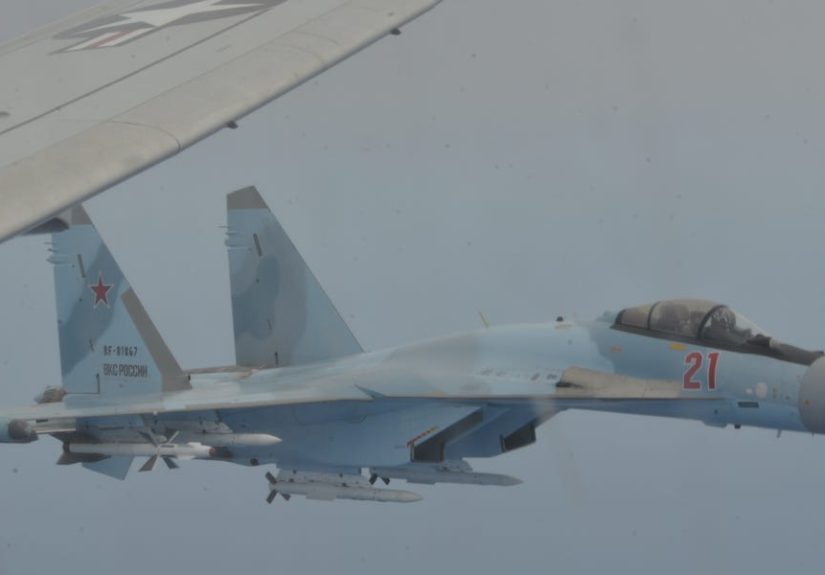
If you’ve seen the clip, you know the vibe: a U.S. Navy jet cruises along doing its thing, and thenlike an uninvited guest at a backyard barbecueRussian fighter jets slide into frame way too close for comfort. The video feels less like “routine military aviation” and more like a reminder that at 30,000 feet, personal space is measured in seconds and wingspans.
But here’s the twist: interceptions themselves aren’t unusual. They happen all the time in international airspace, especially around busy geopolitical neighborhoods like the Black Sea and the Mediterranean. What makes people sit up straight (and what tends to get videos released) is when an intercept stops being a professional “identify-and-monitor” and starts looking like a dangerous flexhigh-speed passes, crossing flight paths, hanging on a wing, or pulling stunts that create turbulence and limit safe maneuvering.
What the Video Really Shows (And Why It’s Not “Just a Flyby”)
“Buzzing” is the popular word because it captures the feeling: a jet suddenly appearing close enough to make you wonder if the pilots can see each other’s helmet stickers. In several publicly documented incidents, U.S. Navy aircraft reported Russian fighters closing to very small distances, crossing directly ahead of the Navy plane, or positioning so close that the U.S. aircraft had limited room to safely adjust course or altitude.
In other words, it’s not the mere presence of a Russian fighter that’s the headline. It’s the geometry, the closure rate, and the “hey, we’re right here” theatrics that raise the safety stakes.
Intercepts are normal. “Unsafe intercepts” are the problem.
Think of an intercept like a traffic stop in the skyexcept the “traffic officer” is doing 500+ mph and the “driver” is a large, sensor-heavy patrol aircraft that isn’t built to dogfight. Done professionally, an intercept is predictable: identify the aircraft, maintain safe separation, communicate if necessary, and depart.
Done recklessly, it turns into aviation Russian roulette (and yes, the pun is doing too much, but so are the passes).
Meet the U.S. Navy Jet in the Spotlight: The P-8A Poseidon
Many of the most publicized “buzz” videos involve the U.S. Navy’s P-8A Poseidon, a maritime patrol and reconnaissance aircraft. Picture a Boeing-style airframe built for long flights over water, packed with sensors for intelligence, surveillance, and reconnaissanceplus anti-submarine tools when needed. It’s not out there because it got lost on the way to spring break; it’s out there because maritime awareness matters, especially near contested waters.
The P-8A’s job is often to watch ships, track submarines, and collect datamissions that can take it near regions where Russia closely monitors NATO and U.S. activity. From Russia’s perspective, these flights are a persistent spotlight. From the U.S. perspective, they’re legal operations in international airspace. The friction point is what happens when those perspectives collide at jet speed.
Why “Buzzing” Is Dangerous Even If Nobody Touches
Modern aircraft are engineered for safety, but physics doesn’t care about your feelingsor your diplomatic notes. When a fighter jet passes close to a larger aircraft, several risks spike fast:
1) Wake turbulence and jet wash are not cute
Large aircraft generate wake turbulence; fighters generate jet wash and can create intense disturbed air, especially during high-power maneuvers. Several Navy accounts of unsafe intercepts include crews reporting turbulence or vibrations after close passes. Even a brief upset can be a problem when you’re in proximity to another aircraft and operating with minimal margin.
2) Closure rate shrinks reaction time to basically nothing
A fighter approaching from behind or crossing in front at high speed compresses decision-making into a heartbeat. If either pilot misjudges distance, angle, or speed by a small amount, you’re suddenly in “midair collision risk” territoryno do-overs, no pause button, no “my bad” that fixes the situation.
3) Close stationing can box in the larger aircraft
One particularly concerning pattern is when fighters take positions near both wings of the patrol aircraft at the same time. Even if nobody bumps metal, it restricts safe maneuvering. The patrol aircraft can’t easily turn away, climb, or descend without risking getting closer to one of the fighters. That’s not just riskyit’s an intentional squeeze.
So What Counts as an “Unsafe and Unprofessional” Intercept?
The U.S. military usually doesn’t publish footage of intercepts that stay professional. The videos tend to come out when officials believe the intercept violated accepted standards of safe airmanship and increased the chance of miscalculation.
Based on official descriptions from past incidents, behaviors that tend to trigger the “unsafe” label include:
- High-speed passes directly in front of the U.S. aircraft (especially when crossing the flight path).
- Very close separation measured in feet rather than yards or miles.
- Inverted or aerobatic maneuvers near the aircraft, increasing unpredictability.
- Prolonged close stationing alongside wings that limits the aircraft’s ability to maneuver safely.
- Use of afterburner or aggressive power changes near the other aircraft that can intensify turbulence and vibration.
The key word here is predictability. In aviation safety, predictability is basically oxygen. When one party gets unpredictable on purpose, everyone’s risk meter goes red.
Real Examples: When the Navy Has Publicly Called Out “Buzzing”
The “buzz” video genre didn’t appear out of nowhere. Over the past decade, the U.S. has publicly documented multiple intercepts involving Russian fighters and Navy surveillance aircraftespecially over the Black Sea and Mediterranean Seawhen officials believed safety was compromised.
Black Sea: The EP-3 “Five Feet” Moment
One widely reported incident involved a Russian Su-27 closing to extremely short distance from a U.S. Navy EP-3E Aries II surveillance aircraft over the Black Sea. In that case, U.S. officials said the fighter crossed directly through the EP-3’s flight path, causing the Navy aircraft to fly through the fighter’s jet wash. The intercept reportedly lasted for hourslong enough to go from “tense” to “emotionally exhausting.”
Black Sea: High-speed passes and afterburner drama
In another documented Black Sea encounter, an Su-27 was described as making a high-speed pass in front of an EP-3 and then closing again, using afterburner while turning away. The reported effects included turbulence and vibrationsphysical reminders that “close” in the sky is not the same as “close” in a selfie.
Mediterranean: Three intercepts, one too spicy
In a June 2019 event described by U.S. officials, a Russian fighter intercepted a Navy P-8A multiple times over a long encounter. Even when some passes were deemed “safe,” one high-speed pass directly in front of the P-8A was called out as unsafe. This patternmixing “normal” with “provocative”can be part of signaling: “We can be professional… or we can make a point.”
Mediterranean: The 25-foot inverted maneuver (April 2020)
In April 2020, U.S. Naval Forces Europe/Africa described an intercept in which a Russian Su-35 performed a high-speed inverted maneuver about 25 feet in front of a Navy P-8A Poseidon. The P-8A crew reported wake turbulence afterward. That’s the kind of detail aviation people read as: “This was not a misunderstanding.”
Mediterranean: Two intercepts in one flight (April 2020)
Just days later, another P-8A flight was intercepted twice over a relatively short period. One intercept was described as safe; the other involved a high-speed, high-powered maneuver that reduced separation to within roughly 25 feet directly in front of the P-8A, exposing it to wake turbulence and jet exhaust. In response, the Navy aircraft reportedly changed altitude to create separation.
Mediterranean: Two Su-35s, both wings, long duration (May 2020)
The May 2020 video that many people think of when they hear “Russian jets buzz a Navy plane” features two armed Russian Su-35 fighters simultaneously flying close to each wing of a Navy P-8A for over an hour. U.S. officials said this restricted the P-8A’s ability to maneuver safely and labeled the interaction unsafe and unprofessional.
More recently: Intercepts keep happeningsometimes with new tech in view
In later reporting and analysis, intercept videos have also been discussed in the context of evolving surveillance techlike specialized sensor pods on P-8 aircraft operating near high-interest regions. Even when an intercept ends without incident, the frequency of close encounters in tense theaters raises the odds that someday a “near miss” won’t stay near.
Why Russia Buzzes (And Why the U.S. Keeps Flying Anyway)
In most cases, both sides can predict the other’s argument before the press statement is even drafted:
- Russia’s likely motivation: identify the aircraft, demonstrate presence, gather intel, and signal “we’re watching you.” Close intercepts can also be a form of pressureturning a routine patrol into an uncomfortable event.
- The U.S. motivation: maintain lawful operations in international airspace, reassure allies, collect maritime and electronic intelligence, and avoid conceding access to contested regions through intimidation.
This is why these encounters tend to repeat. Neither side wants to “blink,” and the patrol aircraft’s very purposewatching activity near strategic watersputs it in the path of interception.
Rules of the Road: What’s Supposed to Prevent This From Going Sideways?
There are international norms and agreements intended to reduce dangerous incidents. One of the most cited in U.S. statements is the 1972 U.S.-Soviet Agreement on the Prevention of Incidents On and Over the High Seas (INCSEA), whichamong other thingsaims to reduce risky behavior involving ships and military aircraft operating near each other.
The tricky part is that “rules” don’t fly the aircraftpilots do. And even when agreements exist, enforcement is mostly political and diplomatic. There’s no sky-cop handing out tickets mid-maneuver. The strongest practical guardrails are professionalism, training, and a mutual preference for not turning a video clip into a tragedy.
What the Video Means Beyond the Headlines
It’s tempting to treat intercept videos like sports highlights“Did you see that pass?”but the stakes are higher than bragging rights. Unsafe intercepts matter because:
- They increase the chance of miscalculation (one mistake, one collision, one rapidly escalating crisis).
- They normalize risk (if risky behavior becomes routine, “routine” becomes a mask for danger).
- They complicate crisis management (leaders may have fewer off-ramps if an incident becomes public and politically charged).
And even if the intercept happens over international waters far from commercial routes, the broader effect is destabilizing: it’s another signal that military-to-military contact is operating with thinner margins for error.
How to Watch “Buzz” Videos Without Getting Played
Intercept clips are some of the most shareable “real-life aviation” videos onlinewhich also means they’re ripe for misunderstanding or mislabeling. If you want to be the person who adds clarity instead of chaos, here’s a quick viewer checklist:
Look for context clues
- Is the footage an official release (Navy/DoD) or reposted from unknown accounts?
- Do you know the aircraft type (P-8A vs. EP-3 vs. something else)?
- Where did it happen (Black Sea, Mediterranean, Baltic, near Alaska)?
Understand camera distortion
Wide-angle lenses can make distances look bigger or smaller than they are. But official statements often include details like approximate separation and duration. If those aren’t present, treat the clip like a trailer, not the full movie.
Don’t confuse “intercept” with “attack”
Most intercepts are not attacks. The danger is the thin line between aggressive signaling and an accident that forces leaders to respond as if it were intentional.
Conclusion: The Sky Shouldn’t Be a Place for Dares
The video of Russian fighter jets buzzing a U.S. Navy aircraft is compelling because it’s visually simple: a big Navy jet, a fast fighter, and a pass that looks too close. But the story behind it is complexand repetitive. Intercepts are normal. Unsafe intercepts are a choice.
The good news is that most of these encounters end with nothing more than a tense cockpit and a spicy press release. The bad news is that repeated risk-taking is how “nothing happened” eventually turns into “something happened,” and then everyone has to pretend they didn’t see it coming.
In the end, professional airmanship isn’t just about pride. It’s crisis prevention at Mach speed.
Experiences: What “Buzzing” Feels LikeFrom the Cabin to Your Couch (About )
Even if you’ve never worn a flight suit or sat behind a wall of glowing sensors, these videos still create a weirdly personal reaction. Your brain does a fast calculation: “That’s close. That’s REALLY close.” And then it adds a bonus layer of anxiety because the whole thing is happening in a place where humans are not naturally supposed to existat altitude, at speed, inside metal tubes that only behave if everyone plays by the rules.
If you imagine what it’s like onboard a patrol aircraft like a P-8A, the “experience” isn’t a cinematic dogfight. It’s more like an intense exercise in staying boring. The crew’s best move is usually to remain steadyhold altitude, hold airspeed, and avoid sudden changes that could create a surprise for the other aircraft. That sounds simple until you picture a fighter jet sliding in close, then accelerating, then crossing your path. Your body wants to tense up. Your inner voice wants to yell, “Sir, this is not a merge, please step away from the wing.”
Inside the aircraft, it can also feel oddly procedural. Crew members are trained for unexpected events: you log the time, note the aircraft type, record headings, and coordinate internally. Someone is likely monitoring radios and cockpit callouts. Someone else may be capturing video or sensor data. The paradox is that the more “unprofessional” the intercept feels outside, the more disciplined the response must be inside. The goal is to reduce variables. When another aircraft is acting like a variable generator, your job is to become the constant.
And then there’s the physical sensation. When official reports mention wake turbulence, jet wash, or vibrations, that’s not abstract. It can mean a sudden bump, a roll tendency, or a shudder that makes every loose item in the cabin briefly consider a new career in zero-gravity gymnastics. Even a small upset can feel big when you know another aircraft is nearby and moving fast. The crew doesn’t need to see a rivet bend to understand the risk; the aircraft “talks” through motion.
Now flip to the viewer experience: watching the clip online. The first watch is adrenaline. The second is analysis. By the third watch, the comment section has discovered aviation law, foreign policy, and the concept of “FAA violation” (which, to be fair, is not exactly the governing authority over a Russian fighter jet in international airspace). This is where videos can become gasoline: short, dramatic clips make it easy for people to jump straight to outrage without the boring context that actually explains what’s happening.
The healthiest “experience” you can have as a viewer is to treat the video like a safety case study, not a hype reel. Ask: What behavior increased risk? What would “professional” have looked like instead? Why do these flights happen at all? The goal isn’t to drain the emotion out of itanyone with a pulse will react to a near pass at speed. The goal is to channel that reaction into understanding why aviation professionals keep saying the same thing: close encounters aren’t impressive. They’re preventable.