Table of Contents >> Show >> Hide
- SVB in Plain English: What Kind of Bank Was It?
- The Timeline: How SVB Went Down (Fast)
- Why SVB Collapsed: The Real Causes (No Single Villain, Plenty of Mistakes)
- 1) A customer base that moved like a flock of birds
- 2) Too many uninsured deposits (meaning: very skittish money)
- 3) Interest-rate risk: the bond math SVB couldn’t out-run
- 4) Liquidity planning that didn’t match the speed of a modern run
- 5) Messaging and momentum: confidence can’t be patched with a press release
- “Second Largest All-Time Failure”: What That Actually Means
- What Regulators Did (And Why You Heard the Phrase “Systemic Risk”)
- What Happened After: The Cleanup and the Ripple Effects
- Lessons You Can Actually Use (Even If You Don’t Own a Patagonia Vest)
- 1) If you’re a household: know what FDIC insurance does (and doesn’t) cover
- 2) If you’re a business: diversify operating cash like your payroll depends on it (because it does)
- 3) If you’re an investor or finance nerd: SVB was a case study in duration and funding concentration
- 4) If you’re a regulator (or just enjoy yelling at PDFs): supervision has to match the risk profile
- Quick FAQ: SVB Collapse Questions People Still Ask
- Experiences From the SVB Week: The Moment Everyone Became a Treasury Expert (500+ Words)
- Conclusion: The SVB Collapse Was a Speed TestAnd a Lesson in Basics
Silicon Valley loves a good disruption storyuntil the disruption is your bank account on a Friday morning.
In March 2023, Silicon Valley Bank (SVB) went from “preferred lender to the startup universe” to “FDIC receivership”
in what felt like a single news cycle. It was the second-largest bank failure in U.S. history, and it didn’t happen
because SVB’s customers suddenly forgot their passwords. It happened because a modern bank run met old-school balance-sheet
mistakesat smartphone speed.
This deep dive breaks down what happened, why it happened, why it mattered beyond tech, and what regular humans (and businesses
with payroll on Monday) can learn from it. And yes, we’ll keep the jargon on a tight leash.
SVB in Plain English: What Kind of Bank Was It?
SVB wasn’t your neighborhood bank that sponsors the Little League team and hands out free pens shaped like houses.
It was a niche powerhouse, built to serve the innovation economyventure capital firms, startups, founders, and
life sciences companies. When venture funding boomed, SVB’s deposits surged. And when tech cooled off, that same customer
base became a very synchronized crowd heading for the exits.
That specialization mattered because banking is basically a confidence business. If your depositor base is concentrated
in one industry, connected to the same investors, reading the same group chats, and reacting to the same headlines,
your “diversification” can start to look like a group project where everyone panics at the same time.
The Timeline: How SVB Went Down (Fast)
1) The setup: deposit boom meets interest-rate reality
During the 2019–2021 era, deposits poured in as venture funding and tech growth surged. SVB invested a large share of those
deposits in longer-term securities (think U.S. Treasuries and mortgage-backed securities), a common move for banks that need
to park money somewhere. The problem: interest rates rose sharply in 2022 and early 2023, and the market value of those
longer-term bonds fell. Suddenly, SVB was sitting on big unrealized losses.
2) March 8, 2023: the announcement that lit the fuse
On March 8, SVB announced major balance sheet actionsselling a large securities portfolio at a loss and planning to raise
capital. In normal times, raising capital is boring. In anxious times, it’s interpreted as “something is wrong, and it’s
wrong enough to require a megaphone.”
3) March 9, 2023: the bank run goes viral
Depositors began pulling funds rapidly. What made this run different wasn’t just speedit was coordination. Many SVB customers
were companies with millions (or hundreds of millions) in operating cash. They weren’t withdrawing $200 to avoid overdraft fees;
they were moving eight-figure balances to keep payroll alive.
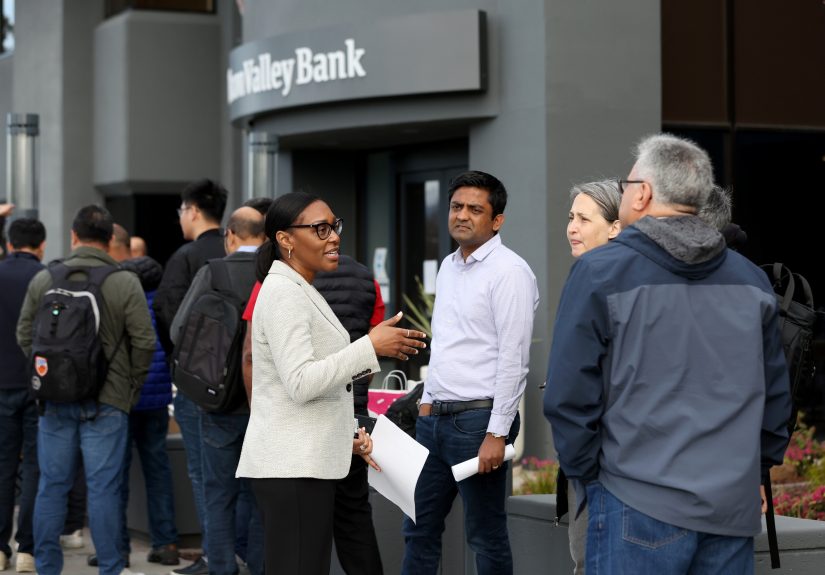
4) March 10, 2023: regulators close the bank
California regulators closed SVB, and the FDIC was appointed receiver. SVB had roughly $209 billion in total assets and about
$175 billion in total deposits as of December 31, 2022big enough that its failure immediately raised “contagion” questions,
even for people who thought “contagion” was just something you caught at daycare.
5) March 12–13, 2023: the emergency response
Over that weekend, U.S. regulators announced steps designed to prevent panic from spreading. Customers got access to funds as
operations stabilized, and a new liquidity program was introduced to reduce the chance that other banks would need to sell
high-quality securities at steep losses just to meet withdrawals.
Why SVB Collapsed: The Real Causes (No Single Villain, Plenty of Mistakes)
1) A customer base that moved like a flock of birds
SVB’s depositor base was heavily concentrated in tech and venture-backed businesses. That sounds fine when the industry is booming.
But when venture funding slows, startups burn cash, and deposits flow out. SVB’s customers weren’t just correlated economically
they were socially and professionally connected, which can turn “a few withdrawals” into “everyone leaves at once.”
2) Too many uninsured deposits (meaning: very skittish money)
FDIC insurance generally covers up to $250,000 per depositor, per insured bank, per ownership category. That’s meaningful for households.
It’s almost decorative for businesses running payroll, paying vendors, and holding operating reserves.
By year-end 2022, roughly 94% of SVB’s deposits were uninsured. When confidence wobbles, uninsured depositors don’t wait around to see
how the story ends. They try to become a “former depositor” as quickly as the wire system allows.
3) Interest-rate risk: the bond math SVB couldn’t out-run
When interest rates rise, the market value of existing bonds falls. That’s Finance 101, not wizardry.
SVB held a lot of long-duration securities. Even if a bank intends to hold them to maturity, those unrealized losses can still
become painfully real if the bank needs to sell assets quickly to meet withdrawals.
SVB’s March 8 securities sale crystallized this issue. It sold a large portfolio of available-for-sale securities for proceeds below
book value, producing an after-tax loss of about $1.8 billionan “uh-oh” number that traveled fast.
4) Liquidity planning that didn’t match the speed of a modern run
Banks don’t keep all deposits as cash. They lend, invest, and rely on multiple sources of funding. When withdrawals come in faster than
the bank can raise cash (without dumping assets), liquidity breaks. Reports reviewing SVB’s failure highlighted weaknesses in how the bank
prepared to access contingency funding quickly.
5) Messaging and momentum: confidence can’t be patched with a press release
Once depositors believe a bank might be forced to sell assets at lossesor might not have enough liquidity tomorrowfear becomes its own fuel.
In SVB’s case, the combination of a concentrated depositor network and rapid online communication accelerated the run. If traditional bank runs
were a line outside a branch, this one was a spreadsheet plus a “wire now?” message.
“Second Largest All-Time Failure”: What That Actually Means
SVB’s collapse was considered the second-largest bank failure in U.S. history by asset size at failurebehind Washington Mutual’s 2008 collapse,
which remains the largest. That ranking matters because large failures test confidence in the banking system and force regulators to balance two goals:
protecting depositors and preventing “moral hazard” (rewarding risky behavior by making everyone whole no matter what).
SVB was also the biggest bank failure since the 2008 financial crisis era, which is why it instantly triggered comparisonseven though the
underlying problems were different. In 2008, the storyline centered on credit risk and toxic mortgages. With SVB, it was classic asset-liability
mismatch and interest-rate riskplus the modern ability to move billions with a few clicks.
What Regulators Did (And Why You Heard the Phrase “Systemic Risk”)
FDIC receivership and bridge bank mechanics
When SVB was closed, the FDIC stepped in as receiver. The immediate goal in a bank failure is operational continuityso customers can access insured
funds and the bank’s assets can be resolved in an orderly way. SVB’s branches reopened under FDIC arrangements shortly after.
Protecting depositors to stop a wider panic
Regulators’ emergency actions were focused on preventing fear from spreading to other banksespecially those with similar profiles (large unrealized
losses on securities, high uninsured deposits, or specialized customer bases). The goal wasn’t to “save SVB.” It was to keep SVB from becoming a
template for a chain reaction.
The Bank Term Funding Program (BTFP): a pressure-release valve
One key tool announced during the response was the Federal Reserve’s Bank Term Funding Program (BTFP). In plain terms: it let eligible institutions
borrow for up to a year using high-quality collateral valued at par (not depressed market value). That matters because it reduces the need for banks to
sell Treasuries or agency mortgage-backed securities at losses just to raise cash during stress.
The cost: big numbers, complicated plumbing
The FDIC estimated the cost of SVB’s failure to the Deposit Insurance Fund at roughly $20 billion (with final costs determined after the resolution process
completes). Deposit insurance funds aren’t a magic money tree; they’re built from assessments on insured banks, and extraordinary events can lead to special
assessments later.
What Happened After: The Cleanup and the Ripple Effects
SVB’s operations found a new home
After the failure, SVB’s core operations didn’t just vanish into the Silicon Valley fog.
First Citizens Bank & Trust Company reached an agreement to acquire a large portion of the Silicon Valley Bridge Bank operations, bringing many former
SVB branches under a new owner and helping stabilize customer access.
Knock-on anxiety across the banking sector
SVB’s collapse was quickly followed by stress at other banks (including additional failures and rescues), not because they were all identical, but because the
market began stress-testing bank business models in real time. Once depositors learn they can move money instantly, they may do it preemptivelyespecially if
their balances exceed FDIC limits.
Deposit insurance debates moved from “sleepy policy” to “front-page topic”
SVB put a bright spotlight on a question most people ignore until it’s urgent: should deposit insurance be expanded, especially for business transaction accounts?
The tension is real: broader coverage can reduce runs, but it can also encourage risk-taking if depositors no longer care where they park money.
Lessons You Can Actually Use (Even If You Don’t Own a Patagonia Vest)
1) If you’re a household: know what FDIC insurance does (and doesn’t) cover
- Know the limit: $250,000 per depositor, per FDIC-insured bank, per ownership category.
- Understand categories: single accounts, joint accounts, certain retirement accounts, trusts, and more can have separate coverage rules.
- Don’t assume “multiple accounts = multiple coverage” if they’re the same ownership category at the same bank.
2) If you’re a business: diversify operating cash like your payroll depends on it (because it does)
Businesses often keep far more than $250,000 at a banksometimes because switching is annoying, and sometimes because no one updated the treasury policy since
the company had three employees and a coffee budget. SVB reminded everyone that “convenient” is not the same as “risk-managed.”
- Use multiple banks for operating cash and reserves.
- Consider deposit placement services or cash management solutions that spread deposits across multiple FDIC-insured institutions (where appropriate).
- Map your cash needs by timing: payroll, taxes, vendor payments, and emergency buffersthen structure accounts accordingly.
- Operational readiness matters: have wires, ACH, and signers set up in advance so you’re not “adding an approver” during a panic.
3) If you’re an investor or finance nerd: SVB was a case study in duration and funding concentration
The phrase “unrealized losses” sounds like a gentle shruguntil you need cash now. Rising rates hammered long-duration securities. Combine that with a deposit base
dominated by uninsured commercial accounts, and you get a bank that can look fine on paper right up until it doesn’t.
4) If you’re a regulator (or just enjoy yelling at PDFs): supervision has to match the risk profile
Post-mortem reviews emphasized that SVB’s growth and risk profile required stronger, faster supervisory action and sharper attention to liquidity and interest-rate risk.
The broader takeaway is uncomfortable but clear: a fast-growing bank with a niche customer base can become complex before its risk controls catch up.
Quick FAQ: SVB Collapse Questions People Still Ask
Was SVB “broke,” or was it a liquidity problem?
It was primarily a liquidity crisis triggered by loss of confidencemade worse by interest-rate losses on securities and a depositor base capable of withdrawing
enormous sums quickly. A bank can be solvent in the long run and still fail if it can’t meet withdrawals today.
Did this mean all banks were unsafe?
No. But it did highlight that banks with high uninsured deposits, concentrated customer bases, and significant interest-rate exposure can be more vulnerable during
rapid rate increases and industry downturns.
How could a bank run happen so fast?
Digital banking plus concentrated networks. When depositors are businesses moving millions, and the “line” is an app, panic can scale instantly.
Experiences From the SVB Week: The Moment Everyone Became a Treasury Expert (500+ Words)
For people outside finance, SVB’s collapse felt like waking up to discover your fridge has been open all nightand the milk didn’t just spoil; it called your boss,
scheduled a meeting, and invited your entire team. The anxiety wasn’t abstract. It was operational. It was human. And for a lot of businesses, it was measured in
“How many hours until payroll?”
The startup CFO’s weekend: One of the most common experiences reported in the startup world was the frantic cash triage drill. CFOs and finance leads
were suddenly running a playbook they hoped they’d never need: identifying how much cash was at SVB, what portion was insured, which payments were scheduled, and
what backup bank accounts could be activated. Companies that had diversified banking relationships felt bruised but functional. Companies that didn’t were improvising
at full speedopening new accounts, begging for higher transfer limits, and trying to coordinate approvals while everyone’s phone was exploding.
Payroll panic was real: A bank failure doesn’t just threaten balance sheets; it threatens Monday morning. Many SVB clients were businesses with large,
uninsured deposits used for payroll and vendor payments. When SVB was seized, some companies worried employees might not get paid. That’s why the deposit guarantee
decisions mattered so much: it wasn’t about protecting “rich tech people.” It was about preventing a sudden wave of missed paychecks, layoffs, and frozen operations.
Public-company wake-up calls: SVB’s collapse also created immediate disclosure moments. Some companies publicly stated they held substantial cash at SVB
for example, reports noted that Roku had hundreds of millions of dollars at the bank, much of it uninsured. For ordinary investors, this was a reminder that “cash”
isn’t always a simple line item; where it’s held and how it’s structured can change risk dramatically in a crisis.
Founders learned what “counterparty risk” means: Many founders had treated banking as plumbing: necessary, invisible, and not worth thinking about unless
something leaks. SVB week made banking visible. Founders compared notes on wire cutoff times, sweep accounts, money market alternatives, and how long it takes to open a
new business account when every other founder is trying to do the same thing. Some learned the hard way that a “backup bank” isn’t a backup if it isn’t fully set up
with signers, online access, and verified transfer pathways.
Individuals had their own version of panic: While SVB was a business-focused bank, the story triggered anxiety for everyday depositors elsewhere. People
started asking: “If my bank failed, what would I actually get back, and how fast?” That led to a wave of deposit insurance education. Many people learned (for the first
time) that FDIC coverage is per depositor, per bank, per ownership categoryand that spreading funds across categories or institutions can materially change coverage.
Bank employees and relationship managers were in the blast radius: Another overlooked experience was what it felt like inside the institution and adjacent
organizations. Relationship managers who had spent years building trust were suddenly fielding fear, anger, and urgent logistical questions. People weren’t just worried
about “money”; they were worried about the consequences of not having money: payroll failures, vendor disputes, missed rent, broken contracts, and reputational damage.
In a crisis, banking becomes emotional, because it’s tied directly to people’s livelihoods.
The lasting behavior change: Even after the immediate crisis passed, many businesses rewrote treasury policies. They created bank diversification rules,
set maximum balances per institution, used multiple liquidity tiers (operating cash vs. reserves), and built “rapid transfer” readiness into their controls. The SVB
lesson wasn’t that every bank is about to fail. The lesson was that the cost of being unprepared is not theoreticaland modern bank runs move too fast for slow
governance.
Conclusion: The SVB Collapse Was a Speed TestAnd a Lesson in Basics
The collapse of Silicon Valley Bank wasn’t a mystery wrapped in a derivative inside an accounting footnote. It was a fast-moving collision of concentrated, uninsured
deposits and classic interest-rate and liquidity risk. When the bank signaled stress, depositors bolted. When depositors bolt at internet speed, even a large bank can
topple in days.
The biggest takeaway is refreshingly practical: don’t let convenience become a risk strategy. If you’re a household, understand FDIC limits and structure accounts with
intention. If you’re a business, diversify banking relationships and treat operational readiness as part of financial resilience. SVB was the second-largest bank failure
in U.S. historybut for many people, it was also the first time they realized their “cash” could come with a plot twist.