Table of Contents >> Show >> Hide
- What Makes a Great Utility Knife?
- Best Overall: Gerber Gear EAB Lite Pocket Knife
- Best Budget Pick: Pacific Handy Cutter S4R Safety Cutter
- Best Heavy-Duty Utility Knife: FC Folding Pocket Utility Knife
- Best Fast-Access Utility Knife: Milwaukee FASTBACK Compact Folding Utility Knife
- Best Utility Knife with Blade Storage: WORKPRO Retractable Utility Knife
- Best Utility Knife for Hand Protection: Home Planet Retractable Box Cutter
- How to Choose the Best Utility Knife for Your Needs
- Utility Knife Safety Tips
- Best Overall Recommendation
- Conclusion
- Experience Notes: What It Feels Like to Use a Good Utility Knife
- SEO Tags
A good utility knife is the kind of tool you do not fully appreciate until you are standing in the garage with a sealed box, a stubborn zip tie, a sheet of drywall, and absolutely no patience left. Then suddenly, that little blade becomes the hero of the afternoon. The best utility knives are not just “box cutters.” They are compact cutting tools designed for safer, cleaner, and more controlled work around the home, shop, warehouse, or jobsite.
Bob Vila’s hands-on testing of utility knives focused on the details that matter in real life: safety, blade control, durability, comfort, ease of blade changes, and how well each knife handled common materials such as cardboard, tape, plastic packaging, cords, and tougher construction tasks. That approach is useful because a utility knife can look excellent in the package and still feel like a wobbly drawer handle once you actually put pressure on it.
This guide breaks down the best utility knives tested by Bob Vila, explains what makes each model stand out, and helps you choose the right one for your daily cutting needs. Whether you want a folding utility knife for everyday carry, a retractable box cutter for warehouse work, or a heavy-duty model for renovation projects, the goal is simple: sharp cuts, fewer headaches, and all fingers remaining exactly where they started.
What Makes a Great Utility Knife?
The best utility knife should feel secure in your hand, hold the blade firmly, retract or fold safely, and make blade changes simple. A dull blade is not just annoying; it can be more dangerous because it encourages users to push harder. More pressure means less control, and less control is how “quick project” turns into “where are the bandages?”
Modern utility knives usually fall into three main categories: folding, retractable, and fixed-blade designs. Folding knives are compact and pocket-friendly. Retractable knives allow users to adjust blade exposure and slide the blade back into the handle. Fixed-blade utility knives are strong, but because the blade stays exposed, they are usually better suited for controlled jobsite use than casual home storage.
Best Overall: Gerber Gear EAB Lite Pocket Knife
Why it stands out
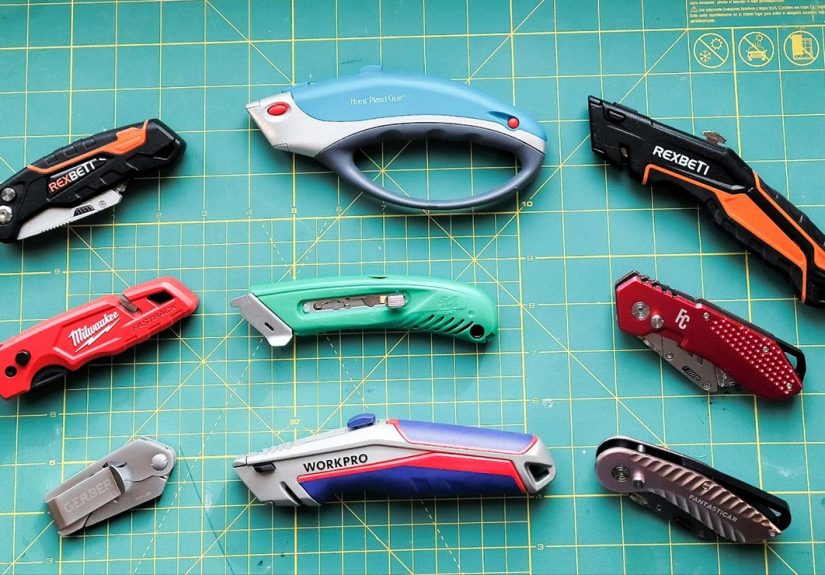
The Gerber Gear EAB Lite Pocket Knife earned Bob Vila’s best overall spot because it combines compact everyday carry design with the practicality of a replaceable utility blade. It looks more like a sleek money clip than a rugged cutting tool, but do not let the polished stainless steel body fool you. This little knife is built for real work.
Its folding design makes it easy to carry in a pocket, tool pouch, or glove compartment. The blade locks firmly open, which helps reduce wobble while cutting cardboard, tape, plastic clamshell packaging, zip ties, and cord. The handle is small, but the finger grooves and stainless steel construction give it a surprisingly confident feel.
Best for
This is a smart pick for homeowners, DIYers, delivery-heavy households, and anyone who wants a compact utility knife that does not feel cheap. It is especially useful for everyday tasks such as opening packages, trimming light materials, and keeping a reliable blade close without carrying a bulky tool.
Possible drawbacks
The Gerber EAB Lite does not include onboard blade storage, and changing the blade requires a flat-head screwdriver. That is not a dealbreaker for casual users, but contractors who swap blades constantly may prefer a quick-change model.
Best Budget Pick: Pacific Handy Cutter S4R Safety Cutter
Why it stands out
The Pacific Handy Cutter S4R Safety Cutter is designed with safety at the center of the conversation. It is not trying to win a beauty contest, unless the contest is judged by warehouse managers who enjoy fewer cut injuries and fewer damaged boxes. Its retractable blade, molded plastic body, thumb shield, and guarded design make it especially useful for repetitive box opening.
One standout feature is its controlled cutting depth. For retail, shipping, and receiving work, that matters. A blade that cuts deeply into a carton can damage the product inside, and nobody wants to explain why the new curtains now have racing stripes. The S4R helps limit that risk while still cutting tape, cardboard, and packaging efficiently.
Best for
This knife is ideal for warehouses, stockrooms, retail back rooms, moving days, and households that receive enough online orders to make the porch look like a small distribution center.
Possible drawbacks
It is more of a safety cutter than a sleek everyday carry knife. If you want a compact folding utility knife for your pocket, the Gerber or Milwaukee may feel more natural.
Best Heavy-Duty Utility Knife: FC Folding Pocket Utility Knife
Why it stands out
The FC Folding Pocket Utility Knife impressed testers with its solid construction, secure locking system, and substantial feel. It has a red aluminum body, a stainless steel blade holder, and a locking mechanism that keeps the knife secure when open and closed. That double-lock confidence is exactly what you want when cutting tougher materials.
This knife feels heavier and more robust than lightweight box cutters. The quick-change blade system also makes it practical for longer work sessions. When a blade gets dull, you can swap it out quickly instead of pretending that sawing through cardboard with a tired edge counts as “efficiency.”
Best for
Choose this one for garage work, remodeling tasks, cutting heavy cardboard, trimming plastic, and general construction-style use where a light-duty cutter may feel underpowered.
Possible drawbacks
The main downside is the lack of onboard blade storage. For heavy-duty users, spare blades matter. Keep a small blade dispenser nearby if this becomes your go-to knife.
Best Fast-Access Utility Knife: Milwaukee FASTBACK Compact Folding Utility Knife
Why it stands out
The Milwaukee FASTBACK Compact Folding Utility Knife is one of the most popular modern utility knives for a reason. Its press-and-flip opening allows fast one-handed access, and the knife locks securely when open. That makes it convenient for users who need to cut, fold, clip, move, and repeat throughout the day.
Milwaukee also adds practical jobsite details: a durable wire belt clip, quick tool-free blade changes, a compact folding body, and a blade holder designed for scoring. Some models in the FASTBACK line include onboard blade storage, wire stripping features, or cord-cutting grooves. In plain English, Milwaukee looked at a regular utility knife and said, “What if this thing actually kept up with people who are busy?”
Best for
This is a top choice for contractors, electricians, remodelers, DIYers, and homeowners who want fast access without carrying a full-size retractable knife. It is also excellent for people who misplace tools because the pocket clip makes it easier to keep the knife attached to you instead of hiding under a pile of lumber.
Possible drawbacks
Some users may notice slight blade play compared with a fixed-blade knife. For most cutting tasks, that is not a major problem, but ultra-precise scoring may feel better with a more rigid design.
Best Utility Knife with Blade Storage: WORKPRO Retractable Utility Knife
Why it stands out
The WORKPRO Retractable Utility Knife is practical, affordable, and well suited for people who want spare blades built into the handle. Onboard storage is one of those features you do not care about until the blade gets dull halfway through a project. Then it becomes the greatest invention since the cordless drill.
Its retractable design makes it easy to adjust blade exposure, while the heavy-duty handle gives it enough strength for regular shop and home use. Quick-change functionality adds convenience, especially for users cutting abrasive materials that dull blades quickly.
Best for
This is a strong option for home improvement projects, cardboard breakdown, garage work, and users who want a reliable utility knife without spending much.
Possible drawbacks
It is not as pocket-friendly as compact folding models. If daily carry is the priority, a folding utility knife may be more comfortable.
Best Utility Knife for Hand Protection: Home Planet Retractable Box Cutter
Why it stands out
The Home Planet Retractable Box Cutter stands out because of its knuckle guard and ergonomic fist-style grip. Anyone who has scraped their knuckles while cutting carpet backing, cardboard, or rough packaging understands why this matters. A blade may do the cutting, but your hand has to survive the journey.
The larger grip spreads pressure across the hand and can reduce fatigue during repetitive cutting. The guard also gives users a physical barrier between the hand and the material being cut.
Best for
This knife is useful for cutting carpet, heavy cardboard, shipping materials, and other surfaces where hand protection is important.
Possible drawbacks
Because it is bulkier than a typical utility knife, it may feel less precise for small trimming jobs. It is a protective workhorse, not a delicate craft knife.
How to Choose the Best Utility Knife for Your Needs
Choose folding for portability
A folding utility knife is best if you want something compact and easy to carry. Models like the Gerber EAB Lite and Milwaukee FASTBACK are excellent for users who want pocket-friendly convenience with the advantage of replaceable blades.
Choose retractable for adjustable blade depth
Retractable knives are ideal when you want to control how much blade is exposed. This is especially helpful when opening boxes because you can cut tape without slicing into the product inside. For warehouse and retail work, retractable safety cutters are often the smarter choice.
Choose heavy-duty for construction tasks
For drywall, flooring, roofing materials, thick cardboard, or renovation debris, choose a sturdier knife with a solid handle and strong blade lock. A flimsy knife may handle gift wrap, but construction materials will expose its weaknesses quickly.
Look for quick blade changes
A quick-change mechanism saves time and encourages safer habits. If replacing the blade requires a screwdriver, a prayer, and three minutes of squinting, many users will keep cutting with a dull blade longer than they should. Tool-free blade changes make it easier to stay sharp.
Prioritize grip and comfort
The handle should fit your hand naturally. Rubberized or textured grips help prevent slipping, especially when hands are dusty, sweaty, or gloved. A finger guard or handle contour can also help keep your hand from sliding toward the blade.
Utility Knife Safety Tips
Even the best utility knife deserves respect. Always cut away from your body, keep your free hand out of the cutting path, and retract or fold the blade immediately after use. Do not leave an open knife on a bench, in a drawer, or under a pile of packaging unless your goal is to create a tiny household trap.
Replace dull, chipped, rusty, or bent blades. Use the right blade for the material. Standard utility blades work well for cardboard and general cutting, while hook blades are better for materials such as roofing, carpet, or sheet goods where you want to avoid cutting too deeply. Wear cut-resistant gloves for repetitive or heavy-duty work, and use eye protection when snapping segmented blades or cutting brittle materials.
Best Overall Recommendation
For most users, the Gerber Gear EAB Lite Pocket Knife is the best all-around utility knife because it is compact, durable, attractive, and easy to carry. It handles everyday cutting jobs with confidence and feels more refined than the average box cutter.
For jobsite speed, the Milwaukee FASTBACK Compact Folding Utility Knife is hard to beat. For repetitive box opening, the Pacific Handy Cutter S4R Safety Cutter makes excellent sense. For heavier work, the FC Folding Pocket Utility Knife offers more substance and a secure locking feel.
Conclusion
The best utility knife is not always the sharpest-looking one on the shelf. It is the one that fits your hand, suits your work, holds the blade securely, and makes safe cutting easier. Bob Vila’s testing shows that different models shine in different situations: the Gerber EAB Lite is excellent for everyday carry, the Pacific Handy Cutter S4R is built for safety-focused box cutting, the Milwaukee FASTBACK wins on quick access, and the FC Folding Pocket Utility Knife brings heavy-duty confidence.
If you only need to open the occasional package, a compact folding knife will do the job beautifully. If you cut boxes all day, prioritize safety features and controlled blade depth. If you are remodeling, scoring drywall, trimming carpet, or breaking down heavy materials, choose a sturdier knife with a strong lock and comfortable grip. In every case, keep fresh blades nearby. A sharp blade, used carefully, is safer and cleaner than a dull one forced through a job it no longer wants to do.
Experience Notes: What It Feels Like to Use a Good Utility Knife
After using different styles of utility knives around the home and workshop, the biggest lesson is that comfort matters more than most people expect. A cheap cutter can open one box just fine, but after thirty boxes, a flimsy handle starts to feel like a personal insult. The better knives have a certain calmness to them. The blade does not chatter, the handle does not twist, and your hand does not feel like it is negotiating with the tool.
The Gerber-style compact folding utility knife is the kind of tool that disappears into a pocket until you need it. It is especially satisfying for everyday tasks: slicing packing tape, trimming a loose rug pad, cutting twine in the garden, or opening that plastic clamshell package that seems to have been designed by someone with a grudge against humanity. Its small size makes it convenient, but for long cutting sessions, a larger handle is usually more comfortable.
The Milwaukee FASTBACK type of knife feels faster and more jobsite-oriented. One-handed opening is not just a flashy feature; it is genuinely useful when your other hand is holding cardboard, ladder tape, wire, or a piece of material that refuses to behave. The pocket clip also matters. A knife clipped to your pocket gets used. A knife tossed somewhere in the garage enters the same mysterious dimension as missing tape measures and single socks.
Retractable safety cutters are less exciting, but they are extremely practical. For repetitive box opening, controlled blade depth is a blessing. You can slice tape without digging into what is inside the carton. That makes them ideal for retail work, moving, shipping rooms, and anyone who has ever accidentally cut into a product and immediately whispered, “Well, that was expensive.”
For heavier work, weight can be a good thing. A substantial folding or retractable knife gives more leverage and control when cutting thick cardboard, carpet backing, roofing felt, or drywall paper. However, bigger is not always better. A bulky knife can feel clumsy when making small, precise cuts. That is why many people eventually keep two utility knives: a compact one for everyday use and a heavier one for rough projects.
The most important experience-based advice is simple: change blades earlier than you think. Many people use a utility blade until it is practically begging for retirement. Fresh blades cut cleaner, require less force, and reduce the chance of slipping. Keep a blade dispenser in the toolbox and a safe container for used blades. That tiny habit makes every utility knife better.
Note: This article is written as original publishing content based on real utility knife testing themes, product features, safety guidance, and buyer considerations from reputable U.S. home improvement, tool, retailer, and safety resources.