Table of Contents >> Show >> Hide
- Why Parents Still Love Glass Baby Bottles
- The Best Glass Baby Bottles at a Glance
- The Best Glass Baby Bottles, Ranked
- How to Choose the Right Glass Bottle
- Care and Safety Tips for Glass Baby Bottles
- Who Should Buy Glass Baby Bottles?
- What the Experience Is Really Like With Glass Baby Bottles
- Final Verdict
- SEO Tags
If you are shopping for the best glass baby bottles, you are probably trying to solve at least one of three problems: you want something easy to clean, you want less plastic in your feeding routine, or you are simply tired of bottles that end up cloudy, scratched, or vaguely haunted by the ghost of old formula. Fair enough.
Glass baby bottles have made a very real comeback, and not just because they look nice in a diaper bag photo. Parents like them because they feel sturdy, clean up beautifully, and do not hold onto odors the way some materials can. That said, not every glass bottle is a dream. Some are heavy. Some have too many parts. Some are great for breastfed babies, while others are better for babies who swallow a lot of air and turn every feeding into a tiny gas-powered protest.
The good news is that there are several genuinely excellent options on the market right now. After reviewing current pediatric safety guidance, parent-tested rankings, and product specs, these are the glass baby bottles that stand out most for real families, real routines, and real 3 a.m. feeds.
Why Parents Still Love Glass Baby Bottles
Before we rank the bottles, it helps to answer the obvious question: why choose glass at all? Modern baby bottles sold in the United States are already made without BPA, so buying glass is not the only way to buy a safer bottle. Still, many families prefer glass because it is naturally resistant to staining, does not tend to hang onto smells, and usually handles repeated washing and sterilizing very well.
Glass also feels reassuringly simple. There is no flimsy squeeze, no mysterious discoloration after a few weeks, and no wondering whether this bottle has reached the point where it should retire and start writing its memoir. Many parents say glass feels cleaner for daily milk storage and reheating, especially if they pump, refrigerate, and reuse bottles often.
Of course, there are trade-offs. Glass bottles are typically heavier than plastic bottles, and that matters once your baby starts trying to hold one solo like a very determined little gym rat. They are also more breakable, though many brands now sell silicone sleeves or use tougher glass designs to reduce the drama.
The Best Glass Baby Bottles at a Glance
- Best Overall: Philips Avent Natural Response Glass Baby Bottle
- Best for Anti-Colic Support: Dr. Brown’s Natural Flow Anti-Colic Options+ Glass Bottle
- Best for Breastfed Babies: Lansinoh Glass Feeding Bottles
- Best Budget Pick: Evenflo Feeding Classic Glass Bottle
- Best Hybrid Alternative: Chicco Duo Hybrid Baby Bottle
The Best Glass Baby Bottles, Ranked
1. Philips Avent Natural Response Glass Baby Bottle
Best overall
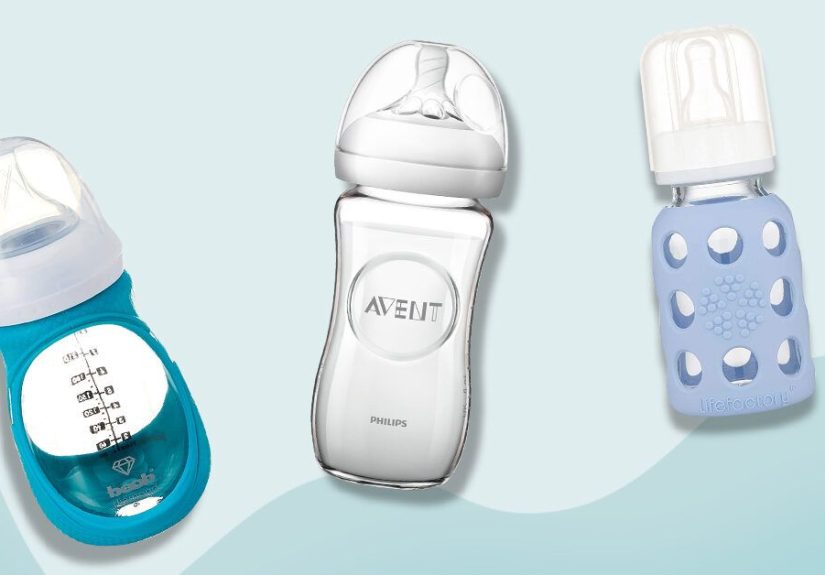
If you want the safest all-around recommendation for most families, this is it. The Philips Avent Natural Response Glass Bottle keeps showing up on trusted parenting lists for good reason: it is easy to find, easy to clean, and thoughtfully designed for babies who switch between breast and bottle. The wide neck helps with filling and washing, and the nipple is designed to release milk only when baby actively drinks, which can make feeds feel a little more paced and controlled.
This bottle is also a strong choice for parents who hate complicated assembly. At 2 a.m., a bottle with fewer parts is not a luxury; it is a survival feature. The glass design feels durable, the anti-colic valve adds reassurance, and the overall system is intuitive enough that even a sleep-deprived adult can put it together without negotiating with the universe.
Why it wins: strong balance of quality, ease of cleaning, brand availability, and a nipple design that works well for many families.
Best for: parents who want one reliable, all-purpose glass bottle without a steep learning curve.
2. Dr. Brown’s Natural Flow Anti-Colic Options+ Glass Bottle
Best for gassy babies and anti-colic support
Dr. Brown’s is practically a household name in the anti-colic bottle category, and the glass version is the pick for parents who want that vented system without using a standard plastic bottle. Its signature internal vent is designed to reduce air intake during feeds, which may help babies who struggle with gas, fussiness, or frequent burping marathons.
The biggest advantage here is flexibility. Many parents start with the full vent system in place, then remove it later as feeding becomes easier. That means you do not necessarily need to buy a whole new bottle system as your baby grows. The glass itself is built to handle hot and cold temperatures, and the brand is widely available in common sizes.
The downside is also very Dr. Brown’s: more parts. If your idea of fun is washing tiny components before coffee, you are in luck. Everyone else should know that this bottle works best for families who truly need its anti-colic design. When it helps, it really helps. But it is not the simplest bottle on the shelf.
Why it wins: one of the strongest options for reducing swallowed air and supporting babies with feeding discomfort.
Best for: babies with gas issues, reflux-style fussiness, or parents who specifically want a vented glass bottle.
3. Lansinoh Glass Feeding Bottles
Best for breastfed babies
Lansinoh’s glass bottles are especially appealing for families who are combining breastfeeding and bottle-feeding. The standout feature is the NaturalWave nipple, which is shaped to encourage a wide latch and a slower, more natural rhythm. In plain English, that means it is trying very hard not to feel like a totally different feeding universe from the breast.
That makes Lansinoh a smart pick for parents who are introducing a bottle carefully and want to avoid a baby deciding that one method is clearly superior and the other is an insult. The bottle is simple enough to clean, the glass feels premium, and the anti-colic air ventilation is a nice extra.
This is one of those bottles that tends to make the most sense when your feeding routine is a mix of nursing, pumping, and occasional bottle use. It is not the cheapest choice, but for many families the smoother breast-to-bottle transition is worth paying for.
Why it wins: nipple design is especially friendly for mixed-feeding families.
Best for: breastfed babies, combo-feeding households, and parents who want a bottle that does not feel too fast or too different.
4. Evenflo Feeding Classic Glass Bottle
Best budget glass bottle
Sometimes the best bottle is the one that does the job, costs less, and does not act like it deserves its own unboxing video. That is the Evenflo Classic Glass Bottle. It is straightforward, affordable, and refreshingly no-frills. If you want a set of glass bottles without spending like you are furnishing a boutique nursery, this is the practical choice.
The design is simple, and that simplicity is part of the appeal. Fewer parts mean easier cleaning, quicker assembly, and less opportunity for one microscopic valve piece to disappear into the dishwasher and begin a new life. The included silicone nipple features integrated venting, so it still offers some help with air intake, but this is not a deluxe anti-colic system.
What you are getting is value. These bottles are excellent for parents who want glass on a budget, for grandparents keeping bottles at their house, or for families who need backup bottles that are dependable and easy to use.
Why it wins: affordable, simple, and ideal for families who want glass without premium pricing.
Best for: budget-conscious parents and anyone who prefers a classic, uncomplicated bottle setup.
5. Chicco Duo Hybrid Baby Bottle
Best hybrid alternative
This one comes with an asterisk, but it is an interesting and useful asterisk. The Chicco Duo is not a traditional all-glass bottle. Instead, it has a pure glass inner layer bonded to a plastic outer shell. The result is a bottle that gives you milk contact with glass while feeling much lighter and more durable in the hand.
Why include it in a glass bottle roundup? Because for many parents, the biggest downside of glass is not cleaning or price. It is weight. A hybrid design helps solve that. The Chicco Duo is especially appealing for parents who like the idea of glass but know they will be handing bottles to caregivers, packing them for daycare, or eventually letting a baby try self-feeding.
If you want a pure glass bottle, this is not your winner. But if you want a practical middle ground between glass purity and everyday convenience, Chicco made one of the smartest compromises in the category.
Why it wins: glass-lined interior with easier handling and better durability for daily life.
Best for: parents who want less plastic contact but are nervous about the weight and breakability of full glass bottles.
How to Choose the Right Glass Bottle
Start with the nipple, not just the bottle body
Parents often focus on the material first, but nipple shape and flow rate matter just as much. A beautiful bottle is still useless if your baby takes one sip, makes an offended face, and refuses further negotiations. Babies who switch between breast and bottle often do best with slower-flow nipples and shapes that encourage a wider latch.
Think honestly about cleaning
Some bottles look brilliant in theory and become annoying in practice. If you know you want minimal parts, prioritize wide-neck bottles with simple assembly. If your baby has serious gas issues, though, a more complex anti-colic system may be worth the extra washing.
Consider who will use the bottle
A newborn does not care how heavy the bottle is. A nine-month-old trying to hold it independently definitely might. If multiple caregivers are involved, choose something intuitive. If you are sending bottles to daycare, durability and leak resistance matter more than marketing poetry.
Do not ignore sleeves and grip
Silicone sleeves are not just cute accessories. They can improve grip, add drop protection, and make a glass bottle feel much less slippery when your hands are damp and your baby is impatient. Which, to be fair, is often.
Care and Safety Tips for Glass Baby Bottles
Whichever bottle you choose, safe use matters more than brand loyalty. Clean bottles by taking all parts apart first, then washing thoroughly by hand or in the dishwasher if the bottle is labeled dishwasher-safe. Let everything air-dry fully before storing it. If your dishwasher has a hot wash and heated dry cycle, that can be a big help.
Do not prop a bottle and walk away. Babies should be held in a semi-upright position during feeds, and the nipple should stay full of milk to reduce swallowed air. Bottle-feeding should never turn into a hands-free science experiment.
Also, do not microwave bottles to warm milk or formula. It can create hot spots and make the liquid unevenly hot. Warm bottles gently in warm water instead. And once a feeding is done, leftover prepared formula is not a “save it for later” situation. Toss it within an hour after the feed. Leftover milk does not get an encore.
Who Should Buy Glass Baby Bottles?
Glass baby bottles make the most sense for parents who want a sturdy, easy-to-sanitize feeding system and do not mind a little extra weight. They are great for newborn feeding stations, pumping routines, at-home bottle use, and parents who appreciate a cleaner-feeling material over time.
They may be less ideal if you travel constantly, want baby to self-hold early and often, or know you will panic every time a bottle clinks against a countertop. In those cases, a hybrid bottle like Chicco Duo or a lightweight BPA-free bottle may be a better fit.
What the Experience Is Really Like With Glass Baby Bottles
Using glass baby bottles in real life is a little different from reading about them online. On paper, the conversation sounds technical: glass versus plastic, anti-colic vents, latch shape, sterilizing methods, and flow rates. In an actual home, the experience is far more human. It is about what feels easiest when your baby is hungry, your coffee is cold, and you are trying to remember whether you already washed that nipple or just thought about washing it.
For many parents, the first thing they notice about glass bottles is emotional, not mechanical. Glass feels reassuring. It feels clean. It feels solid. There is something comforting about seeing milk in a bottle that does not scratch up quickly, turn cloudy, or pick up lingering smells. It can make the whole feeding setup feel calmer and more intentional. That may sound dramatic for a bottle, but new parents know that small things can feel weirdly important when you are feeding a tiny human eight to twelve times a day.
Then comes the second reality: glass is heavier. Not impossibly heavy. Not kettlebell heavy. But enough that you notice it when one hand is holding the baby, the other is holding the bottle, and your third imaginary hand is apparently supposed to grab the burp cloth. At first, the weight is not a big deal. Later, when your baby wants to “help,” it becomes part of the calculation. Some families keep glass bottles for home and lighter bottles for travel. That is not cheating. That is strategy.
Cleaning is where glass often wins people over completely. Many parents say the routine just feels better. Bottles come out looking clearer. Milk residue washes away more easily. Odors do not seem to linger as much. If you pump and store milk often, glass can feel especially satisfying because it moves smoothly through the cycle of fill, chill, warm, wash, repeat. It brings a certain order to a phase of life that is otherwise full of mystery spit-up and time blindness.
There is also the routine factor. Once parents settle into a bottle system that works, they tend to become loyal fast. The bottle that gets accepted by the baby becomes the hero of the kitchen. The one with too many fiddly parts gets side-eyed. The one that leaks into the diaper bag gets demoted immediately. In that sense, choosing the best glass baby bottle is not really about finding a universal champion. It is about finding the bottle that fits your baby’s feeding style and your household’s tolerance for cleanup.
Another common experience is becoming surprisingly opinionated about nipples. Before parenthood, almost nobody expects to have strong feelings about nipple flow levels. Then suddenly you are discussing slow flow versus medium flow like a beverage engineer. But it matters. A bottle that seems perfect can still fail if the flow is too fast, too slow, too stiff, or too unfamiliar for your baby. That is why many experienced parents say the “best” bottle is often the one your baby accepts without turning feeding into an argument.
And yes, there is always the fear of breakage. Most families who use glass bottles regularly will eventually have one slip, tap, or fall in a way that briefly stops everyone’s heart. Silicone sleeves help. Careful routines help. Some glass bottles are impressively durable. But the fear never fully disappears, especially if you have tile floors and a chaotic kitchen. That is where hybrid designs earn their fans. They keep some of the feel of glass while lowering the stress level.
Overall, the experience of using glass baby bottles tends to be very positive for families who value cleanliness, durability, and a less plastic-heavy routine. They are not magical. They do not guarantee better sleep, perfect latching, or a baby who suddenly thanks you for your service. But they can make feeding feel simpler, sturdier, and more satisfying day after day. And in the baby stage, honestly, that is a pretty excellent outcome.
Final Verdict
If you want the best glass baby bottle for most families, go with Philips Avent Natural Response Glass. It is the strongest all-around pick thanks to its smart nipple design, easy cleaning, and dependable everyday usability. If gas is your main issue, Dr. Brown’s Options+ Glass is the specialist pick. If you are combo-feeding, Lansinoh Glass deserves serious attention. If you want value, Evenflo Classic Glass is the practical winner. And if you like the idea of glass but not the heft, Chicco Duo is the clever compromise.
In other words, the best glass baby bottle is not necessarily the fanciest one. It is the one your baby will drink from, you will not hate cleaning, and your household can actually use every day. Parenting rarely rewards perfection. It rewards systems that work.