Table of Contents >> Show >> Hide
- Why the Lotus Became a Symbol in the First Place
- Spiritual Symbolism of the Lotus in Buddhism
- Hindu Lotus Symbolism and Sacred Meaning
- The Lotus in East Asian Art and Cultural Symbolism
- Ancient Egyptian “Lotus” Symbolism and Rebirth
- The Lotus in Nature, Food, and Everyday Culture
- Why the Lotus Still Matters Today
- Conclusion
- Extended Section: Real-Life Experiences and Why Lotus Symbolism Feels So Personal
Some flowers are pretty. The lotus is pretty and philosophical. It rises out of muddy water looking impossibly clean, like it has a personal stylist, a life coach, and a spiritual practice. That visual alone explains why the lotus flower meaning has lasted for thousands of years across religions, kingdoms, artworks, and everyday life.
In spiritual traditions, the lotus often represents purity, rebirth, resilience, and enlightenment. In cultural traditions, it shows up in paintings, temple carvings, textiles, myths, rituals, and even modern design. And in practical life, it's also a real plant with roots, seeds, and rhizomes people grow and eat. That combinationbotany, beauty, and symbolismis what makes the lotus so enduring.
This article explores the lotus flower's spiritual and cultural symbolism through a grounded, real-world lens: what the flower is, why its growing habit matters, how Buddhism and Hinduism use it, how it appears in East Asian and Egyptian art, and why people today still connect with it so deeply.
Why the Lotus Became a Symbol in the First Place
The symbolism starts with the plant itself
The sacred lotus (Nelumbo nucifera) is an aquatic perennial that grows in ponds and still waters. It grows from mud below the surface, sends up sturdy stalks, and produces flowers that open above the waterline. In other words, the metaphor writes itself: messy origin, graceful outcome.
That growth pattern is the foundation of lotus symbolism in many cultures. The flower appears untouched even though it emerges from murky water, so people naturally read it as a symbol of spiritual purity, inner strength, and the ability to rise above difficult conditions. If there were a mascot for “you can grow through this,” the lotus would win by a landslide.
Lotus vs. water lily: the common mix-up
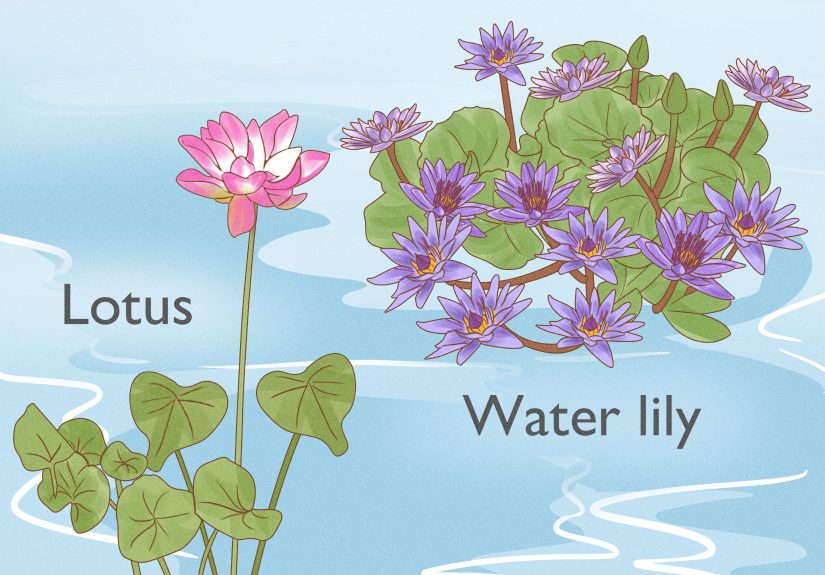
A quick but important note: people often confuse lotus flowers with water lilies. They are different plants, though both are aquatic and visually similar enough to fool most of us on a first glance. In fact, some museum descriptions of ancient Egyptian objects use the word “lotus” for water lilies, because that naming tradition has been used for a long time in art history.
This matters because when you read about “Egyptian blue lotus,” you may actually be reading about a water lily species rather than the sacred lotus. The symbolism is still meaningful, but the botany can be different. That little distinction helps prevent a lot of internet confusionand the internet already has enough hobbies.
Spiritual Symbolism of the Lotus in Buddhism
Purity, awakening, and the path through suffering
In Buddhism, the lotus is one of the most recognizable symbols. It commonly represents purity, awakening, and the journey from ignorance to enlightenment. The reason is beautifully practical: the flower grows in mud, yet blooms clean above the water. That image mirrors the Buddhist idea that wisdom and compassion can arise even in a world full of suffering, attachment, and confusion.
Many Buddhist artworks show Buddhas and bodhisattvas seated on a lotus throne or holding a lotus stem. This is not decorative filler. It visually communicates transcendencebeing fully present in the world without being trapped by it. In museum collections across the U.S., this iconography appears again and again, from Korean paintings of Amitabha to Himalayan sculptures and Tibetan paintings.
The lotus throne and meditative posture
The lotus also shapes Buddhist visual language in two important ways: the lotus throne and the lotus position. A lotus throne places a sacred figure on a stylized flower pedestal, signaling spiritual elevation and purity. Meanwhile, the lotus pose (padmasana) in meditation echoes the flower's layered symmetry and calm geometry.
In spiritual practice, this makes the lotus more than a symbolit becomes a mental anchor. The flower's image helps practitioners focus on clarity, stillness, and transformation. That is one reason the lotus remains so powerful in meditation spaces, temple art, and modern mindfulness culture.
Compassion and the lotus in Buddhist figures
The lotus appears prominently with bodhisattvas, especially Avalokiteshvara (often called Padmapani, meaning “lotus-in-hand” in some traditions). In art, the lotus can signal compassion, mercy, and the promise that wisdom is not cold or distantit is active, generous, and meant to help others.
This is one of the most moving layers of lotus flower symbolism in Buddhism: it is not just about personal enlightenment. It is also about what kind of person you become after you growsomeone steadier, kinder, and more useful to the world.
Hindu Lotus Symbolism and Sacred Meaning
The lotus and divine beauty, prosperity, and order
In Hinduism, the lotus is equally central and deeply layered. It is associated with beauty, auspiciousness, purity, prosperity, and divine presence. Hindu deities are frequently depicted standing on lotuses, seated on lotus thrones, or holding lotus flowers. The symbolism is spiritual, but it is also cosmic: the lotus often suggests sacred order emerging from watery, undifferentiated beginnings.
One of the most famous examples is Lakshmi, the goddess of wealth and prosperity. In art, Lakshmi is often shown standing or seated on a lotus, and lotus imagery appears throughout her iconography. This is not just “pretty flower” symbolism. The lotus supports a whole visual language of abundance, fertility, and graceprosperity with a spiritual center, not just a bigger shopping cart.
Lotus and harvest symbolism
In Himalayan and South Asian art interpretations, the lotus can also connect to seasonal cycles, rain, and harvest. Because lotus plants emerge and flourish in relation to monsoon waters, the flower naturally became linked to life-giving abundance. In this sense, the lotus symbolizes prosperity not as abstract money, but as nourishment, timing, and the rhythms that sustain communities.
That connection helps explain why lotus symbolism in Hindu and Buddhist contexts overlaps so often. The flower carries spiritual meanings, yesbut it also reflects everyday life: water, food, farming, beauty, ritual, and survival.
The Lotus in East Asian Art and Cultural Symbolism
Chinese symbolism: integrity and transcendence
In Chinese cultural and artistic traditions, the lotus is especially admired for rising unsoiled from muddy water. This visual quality made it a natural symbol of purity, moral integrity, and spiritual transcendence. In Buddhist contexts, those meanings blend with the flower's association with enlightenment; in broader Chinese lore, the lotus also carries connotations of virtue and refinement.
You can see this in museum textiles, ceramics, paintings, and decorative arts, where lotus motifs are more than ornament. They act like visual shorthand. A lotus in a composition can quietly signal character, worldview, or sacred intent the way a crown signals royalty or a halo signals holiness.
From sacred object to artistic language
Over time, the lotus became a transregional artistic language across East and Southeast Asia. It appears in Korean Buddhist paintings, Japanese and Chinese decorative arts, and pan-Asian museum exhibitions focused on flower symbolism. That longevity shows how cultural symbolism works: a single image can travel across borders while keeping its core meaningpurity, transformation, and spiritual depth.
Modern curators still use the lotus to help audiences understand older works, but they also show how floral symbols evolve. In contemporary art, the lotus can point to identity, ecology, social memory, and cultural continuity. Translation: the lotus is ancient, but it absolutely did not retire.
Ancient Egyptian “Lotus” Symbolism and Rebirth
A note on naming: often a water lily
Ancient Egyptian symbolism adds a fascinating layer to the lotus story. Many Egyptian artworks and objects refer to the “lotus,” but in botanical terms this often points to water lilies (especially blue or white species) rather than the sacred lotus. Art-historically, though, the symbolic role is clear and widely recognized.
Rebirth, the sun, and renewal
In Egyptian art, the flower's daily cycleclosing at night and opening in the morningwas associated with creation, sunrise, rebirth, and rejuvenation. That made it a natural symbol in funerary art and sacred decoration. The flower's relationship to water also mattered: in a Nile-centered civilization, water plants carried powerful associations with life, fertility, and cosmic renewal.
Some museum interpretations also note the significance of the color blue in Egyptian symbolism, linking the flower not just to the Nile but to creation imagery and precious materials like lapis lazuli. Add fragrance and ritual use to the mix, and the flower becomes more than a motifit becomes a sensory symbol tied to life, death, beauty, and the afterlife.
This is why the lotus/water-lily symbol in Egypt still resonates today. It reflects a universal human instinct: if a flower keeps returning with the sunrise, it starts to look a lot like hope.
The Lotus in Nature, Food, and Everyday Culture
It is sacredand also practical
One reason the lotus has such durable cultural symbolism is that it isn't only symbolic. In many cultures, people eat lotus root and seeds, grow lotus in ponds, and use the flower in offerings and ceremonies. That blend of sacred and practical gives the lotus unusual staying power.
A symbol that lives only in books can feel distant. A symbol that also shows up at the table, in gardens, in festivals, and in daily rituals becomes part of lived culture. The lotus does both. It belongs in scripture and in soup, in paintings and in public gardens. That is rare.
The American context: lotus landscapes and botanical gardens
In the United States, lotus symbolism is often encountered through botanical gardens, museums, and public spaces rather than religious life alone. The American yellow lotus (Nelumbo lutea) is the only lotus native to the U.S., and many American botanic gardens grow or interpret lotus species for visitors.
This creates a fascinating cultural bridge. A visitor may first meet the lotus as a beautiful summer bloom in a pond, then learn about its Buddhist symbolism, Hindu iconography, or Egyptian associations through museum labels and garden education. In that moment, the lotus becomes what it has always been: a flower that connects ecology, art, and meaning.
Why the Lotus Still Matters Today
Modern meanings: resilience, healing, and identity
Today, the lotus is everywhere: tattoos, yoga studios, wellness branding, mindfulness apps, home decor, and social media captions about growth. Yes, some uses are shallow. But many are sincere. People still choose the lotus because the core message remains deeply human: you can come from difficulty and still become something beautiful.
The lotus also speaks to identity and cultural continuity. For many people in Asian diasporic communities, lotus imagery can connect family traditions, religious upbringing, language, and memory. For others, it functions as a broader symbol of peace or self-renewal. Different meanings, same flowerstill doing excellent symbolic work.
A symbol that survives overuse
Plenty of symbols lose their force once they become trendy. The lotus somehow survives that fate. Even after centuries of use in religion, art, philosophy, and modern branding, it still feels meaningful because its image is so direct. Mud below. Bloom above. No lecture required.
And that may be the lotus's greatest strength: it communicates without oversimplifying. It doesn't promise a life without mud. It suggests something betterthat growth and beauty can happen because of where you started, not in spite of it.
Conclusion
The lotus flower's spiritual and cultural symbolism has endured because it is rooted in both nature and human experience. In Buddhism, it represents awakening and transcendence. In Hinduism, it expresses prosperity, divinity, and sacred order. In Chinese and East Asian art, it conveys integrity and refinement. In Egyptian symbolism, it evokes rebirth and the solar cycle. And in modern life, it remains a powerful image of resilience, healing, and hope.
In short, the lotus is not just a flower people admireit is a symbol people live by. It reminds us that difficulty and beauty can exist in the same story, and that transformation often begins in messy places. The SEO metadata you requested is included in JSON format at the end of this article.
Extended Section: Real-Life Experiences and Why Lotus Symbolism Feels So Personal
One of the reasons the lotus flower symbolism stays so powerful is that people don't just read about itthey experience it. You can see this in the way visitors react at botanical gardens. Someone walks up to a lotus pond expecting “nice flowers,” and then they notice the leaves, the height of the stems, the way the bloom rises above the water, and suddenly the metaphor lands. You can practically see the thought bubble form: Ohhh, this is why everyone talks about the lotus.
Museum experiences are another big one. A person may not know every detail of Buddhist or Hindu iconography, but the moment they see a Buddha seated on a lotus throne or Lakshmi standing on a lotus, they understand that the flower is doing symbolic work. It feels intentional. It signals that this figure is not ordinary. Even without reading the full label, viewers usually sense purity, calm, or sacredness right away. Good symbolism works like thatit communicates before language catches up.
In meditation and yoga settings, the lotus often shows up as a quiet visual cue rather than a formal lesson. Maybe it's on a studio wall, maybe it's on a mat, maybe it's in the name of the class. For a lot of people, the lotus becomes a shorthand for “breathe, reset, begin again.” It doesn't require a perfect spiritual backstory. It simply offers a useful reminder: progress can be slow, conditions can be messy, and growth can still be real. That message hits especially hard during stressful seasons of life.
The lotus also appears in deeply emotional moments. Families may include lotus imagery in memorial services, prayer spaces, or keepsakes because the flower expresses continuity and rebirth without sounding cold or clinical. In other settings, people choose lotus motifs for weddings or celebrations because the symbol carries beauty, harmony, and blessing. In both cases, the lotus helps people say something meaningful when ordinary words feel too small.
Then there are the everyday, modern experiences: tattoos, journals, phone wallpapers, and home decor. It is easy to roll your eyes at trendy symbols, but honestly, many people choose lotus imagery for thoughtful reasons. A lotus tattoo might mark recovery, grief, migration, personal change, or a spiritual turning point. A lotus print in a home office might represent calm in the middle of chaos. Even a simple lotus sticker on a water bottle can mean, “I'm trying to stay grounded.” Small object, big message.
What makes these experiences so consistent across cultures is the emotional logic of the flower itself. People understand mud. People understand hard seasons. People understand wanting to rise without pretending life is easy. The lotus symbolizes all of that in one image. It doesn't deny struggle; it reframes it. That is why the lotus keeps showing up in sacred art, public gardens, and personal rituals. It gives people a way to see their lives as a process of becoming, not just enduring.
And maybe that is the most human part of the lotus symbol: it feels both ancient and immediate. You can encounter it in a 14th-century painting, a temple carving, a museum label, a city garden, or a modern mindfulness classand somehow it still says the same thing. Grow where you are. Rise when you can. Bloom anyway.