Table of Contents >> Show >> Hide
- What Made This Husband’s Confession So Disturbing?
- The Bigger Issue: When a Marriage Starts Feeling Like Emotional Trapdoor Theater
- Why Stories Like This Blow Up Online
- When “Maybe He Didn’t Mean It” Becomes a Dangerous Script
- Should She Leave? Why So Many Readers Said Yes
- The Real Takeaway From This Viral Marriage Story
- Experiences Related to This Topic That Many People Recognize
- Conclusion
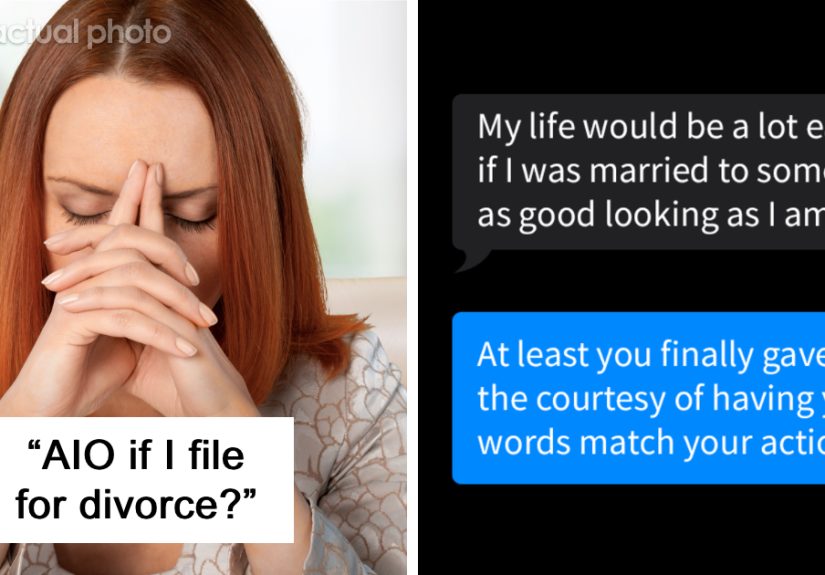
Every so often, the internet coughs up a relationship story so alarming that complete strangers collectively drop their coffee, squint at the screen, and say, “Absolutely not.” This was one of those stories. A woman shared a deeply unsettling account of her husband’s confession and the dynamic inside their marriage, and the response online was swift, blunt, and about as subtle as a fire alarm: run.
At first glance, the story sounded like another viral marriage messhurt feelings, bad communication, and one man who clearly skipped the chapter on basic decency. But the more people read, the less it sounded like a simple argument and the more it sounded like a pattern: manipulation, warped expectations, emotional cruelty, and the kind of hot-and-cold behavior that leaves a person questioning their own reality.
That is what made the story resonate. It was not just about one disturbing confession. It was about what the confession revealed: a marriage built on shaky ground, uneven power, and a husband who seemed to view partnership less like a bond between equals and more like a customer-service arrangement with vows.
And yes, the internet had thoughts. Many of them were variations of, “Girl, the bar is in the basement, and he still brought a shovel.”
What Made This Husband’s Confession So Disturbing?
The viral post centered on a woman who began rethinking her marriage after her husband said the quiet part out loud. In essence, his comments suggested that life would have been easier if he had married someone more attractive and more accommodating to his needs. Not someone more compatible. Not someone kinder. Not someone who shared his values. Just someone who better fit his fantasy.
That distinction matters.
A spouse expressing disappointment is one thing. Marriage is messy, people say dumb things, and not every ugly sentence is proof that a relationship is doomed. But this situation landed differently because the confession did not read like frustration in a rough patch. It read like entitlement with a microphone.
Online commenters picked up on that immediately. They saw a man describing marriage as though he had ordered a premium package and was upset the product came with opinions, needs, and emotional expectations. The idea that a wife should be attractive, low-maintenance, validating, and endlessly givingwhile apparently asking for very little in returnstruck readers as deeply dehumanizing.
In other words, people were not reacting only to what he said. They were reacting to the worldview behind it.
Why the internet called it “psycho”
The strongest reactions came from the fact that his confession did not sound like a man trying to fix his marriage. It sounded like a man revealing what he believed marriage should do for him. That is a huge difference. Healthy conflict sounds like, “We’re disconnected, and I want to work on it.” Unhealthy conflict sounds like, “You are failing to perform the role I assigned you in my head.”
That is why commenters described the dynamic as chilling rather than merely rude. The language pointed to objectification, unrealistic standards, and a profound lack of reciprocity. It painted a picture of a husband who wanted admiration, comfort, and loyalty while giving criticism, instability, and emotional whiplash in return. That is not a partnership. That is a one-man monarchy with very bad customer reviews.
The Bigger Issue: When a Marriage Starts Feeling Like Emotional Trapdoor Theater
Part of the reason this story hit a nerve is because many readers recognized the pattern. Not necessarily the exact words, but the emotional architecture around them. One minute a partner is warm, attentive, even reassuring. The next minute they are dismissive, insulting, or impossible to satisfy. Then comes a soft apology, a sweet text, a normal day, and suddenly the hurt person wonders whether they imagined the whole thing.
That confusion is often the point.
Relationship experts frequently describe this kind of cycle as a pattern that can keep people emotionally stuck long after they have realized something is wrong. When pain and comfort come from the same person, the bond can become hard to break. A spouse may feel rejected, then relieved, then hopeful, then crushed again. It is exhausting. It is destabilizing. And it can make leaving feel far harder than outsiders realize.
That context helps explain why so many people online urged the woman to take the situation seriously. To outsiders, it may seem obvious: if someone talks about you like that, leave. But inside the relationship, things are rarely that clean. There may be history, affection, fear, shared finances, children, shame, self-doubt, or the stubborn hope that the version of your partner from the “good days” is the real one.
Unfortunately, many unhealthy relationships survive on exactly that hope.
The red flags hidden inside one ugly confession
The confession itself was ugly enough, but it also hinted at a cluster of classic warning signs:
First, there was contempt. In relationships, contempt is not just criticism; it is the feeling that the other person is beneath you. It is mockery, belittling, and the subtle suggestion that your partner is lucky you tolerate them. That emotional tone can rot a marriage from the inside out.
Second, there was conditional affection. When a partner’s warmth depends on whether you are flattering them, serving them, or fitting their fantasy, the relationship becomes emotionally unsafe. Love starts to feel like a prize you have to earn instead of a bond you can trust.
Third, there was manipulation through comparison. Comparing a spouse to an imaginary ideal is a clever little cruelty because it creates an impossible test. You cannot compete with a fantasy. The standard keeps moving, and the person setting it gets to stay disappointed forever.
And fourth, there was the potential for control. When someone wants a partner who is attractive, agreeable, self-sacrificing, and low-demand, what they often want is not romance. They want convenience.
Why Stories Like This Blow Up Online
The internet loves outrage, sure. But stories like this do not go viral only because people enjoy rubbernecking. They spread because they activate a strange mix of horror and recognition. Lots of readers have heard some version of these lines before:
“You’re too sensitive.”
“My life would be easier if you were different.”
“Why can’t you just support me without asking for anything back?”
“You’re overreacting.”
On paper, these may sound like isolated comments. In practice, they can form a pattern that erodes a person’s confidence. The target starts managing the other person’s moods, editing their own reactions, and wondering whether asking for basic respect is somehow unreasonable. Spoiler alert: it is not.
That is also why online commenters can sound so intense. They are often responding not only to the posted story, but to their own memories. They recognize the voice of someone who keeps moving the goalposts. They recognize the partner who wants devotion without accountability. They recognize the moment when “this is just how he is” turns into “why do I feel like a shell of myself?”
In that way, internet reactions can serve as a weird but useful mirror. Sometimes strangers see the danger faster than the person living inside it.
A necessary reality check
There is one important wrinkle here: viral relationship posts are not courtroom evidence. They are one-sided snapshots, sometimes incomplete, sometimes exaggerated, and sometimes later challenged. That does not mean the emotional dynamics people discuss are fake. It means readers should separate the specific story claims from the broader relationship patterns the story reflects.
That broader patterncontempt, control, emotional dependence, love-bombing after hurt, and confusion disguised as devotionis very real. It is also why stories like this stick in people’s heads long after they close the tab.
When “Maybe He Didn’t Mean It” Becomes a Dangerous Script
One of the saddest parts of this kind of relationship dynamic is how often the injured partner becomes the translator for the person hurting them. They soften the quote. They add context. They remember the apology. They focus on the stress he is under, the childhood wound he never healed, the one nice weekend after three awful weeks. Before long, the question is no longer, “Was that unacceptable?” It becomes, “Am I being unfair for being hurt?”
That shift is powerful, and not in a good way.
Once a person starts doubting their own reactions, they become easier to manage. They stop trusting their instincts. They stop naming disrespect when they see it. They begin treating emotional injury like a misunderstanding rather than a signal.
That does not mean every painful confession is abuse. Adults say hurtful things in failing relationships all the time. But when the confession exposes a persistent belief that one partner exists to serve, validate, and decorate the other partner’s life, the issue is no longer bad phrasing. It is bad architecture.
You cannot build intimacy on a foundation of contempt. You cannot build trust on humiliation. And you definitely cannot build a healthy marriage with someone who thinks kindness is optional but admiration is mandatory.
What a healthier relationship sounds like
Healthy spouses do not always get it right, but they share a few basic instincts. They take responsibility for their words. They do not punish vulnerability. They do not compare their partner to an idealized fantasy to gain leverage. They do not make love feel conditional on performance. And when they hurt someone, they do not treat that hurt as an inconvenience.
In a stable marriage, conflict may sting, but it does not usually make one person feel erased. There is room for honesty without cruelty, disappointment without degradation, and frustration without emotional demolition.
That is what made the husband’s confession so bleak. It did not merely say, “I’m unhappy.” It suggested, “I expected a different type of person to exist for me.” That is a very different sentence, even when only one of them gets spoken aloud.
Should She Leave? Why So Many Readers Said Yes
Online commenters are famous for recommending breakups the way normal people recommend umbrellas when it looks cloudy. Still, in this case, their alarm made sense. What they heard in the confession was not a temporary marital slump. They heard entitlement, emotional manipulation, and a startling lack of empathy.
Many also pointed to something crucial: it is difficult to repair a relationship when one person does not actually view the other person as a full equal. Counseling can help with communication problems. It can help with conflict habits. It can help with unmet expectations that both people are willing to examine honestly. But therapy is not a magical car wash for contempt.
If a spouse fundamentally believes they deserve a more decorative, more compliant, less human version of a partner, the problem is deeper than “we need to talk better.” That is why commenters urged the woman not to waste years trying to earn humanity from someone who should already know to give it.
And to be fair, that adviceharsh as it soundscomes from a painful truth. Some marriages are not struggling because communication failed. They are struggling because one person benefits from the imbalance.
That is a brutal realization. It is also a clarifying one.
The Real Takeaway From This Viral Marriage Story
The headline-grabbing confession may be what pulled people in, but the bigger lesson is about what happens when disrespect becomes normal. Relationships do not usually collapse in one cinematic moment with thunder, lightning, and a dramatic glass of wine dropped in slow motion. More often, they erode through repeated cuts: the insult disguised as honesty, the comparison disguised as preference, the apology that fixes nothing, the affection that returns just long enough to keep hope alive.
That is why stories like this matter. They give language to patterns that people often struggle to explain. They remind readers that emotional cruelty is still cruelty, even if no one raises a fist. They show that a “disturbing confession” is often only the first moment someone finally hears the truth of what they have been living with all along.
And perhaps most importantly, they remind people that feeling lonely inside a marriage is not the same thing as being loved. Being chosen is not the same thing as being cherished. And staying does not always mean you are committed. Sometimes it just means you are tired, scared, and still hoping the person who hurt you will someday become the person you needed all along.
That hope is human. But it is not always wise.
Experiences Related to This Topic That Many People Recognize
A lot of readers reacted so strongly to this story because it sounded familiar in ways that were almost eerie. Not identical, maybe, but emotionally familiar. Some people know what it feels like to sit across from a spouse and hear a sentence that changes the temperature of the entire marriage. It is not always the loudest sentence. Sometimes it is delivered casually, even lazily, like a person tossing a lit match into a dry field and then acting surprised by the fire.
One common experience is being told, directly or indirectly, that you are valuable mainly when you are useful. Maybe the partner never says, “You are an appliance,” but the feeling lands there anyway. You are adored when you are agreeable, organized, attractive, supportive, sexually available, emotionally calm, and infinitely patient. The second you need care yourself, the mood shifts. Suddenly you are difficult. Needy. Dramatic. Too much. That kind of emotional bargain can make a person feel less like a spouse and more like unpaid staff with romantic branding.
Another familiar experience is the comparison trap. Some partners compare their spouse to exes, influencers, fantasy women, ideal wives, or a made-up person who somehow has perfect hair, endless empathy, no bills, no opinions, and apparently floats through life like a scented candle. Living under that kind of comparison is exhausting because no real human can win. The point is not to evaluate fairly. The point is to keep the other person scrambling.
Many people also recognize the strange emotional whiplash that follows cruel honesty. First comes the hurtful statement. Then comes the denial. Then maybe a partial apology. Then a normal evening, a joke, a hug, a takeout order, a TV show on the couch. That normalcy can be deeply confusing. The injured person starts thinking, “Maybe I made too much of it.” But the body often remembers what the mind tries to rationalize. Sleep gets worse. Anxiety gets louder. Self-esteem gets quieter.
There is also the experience of finally telling friends or strangers what has been happening and being shocked by their reaction. People who have lived in these dynamics for a long time often minimize them. They tell the story gently. They leave out the worst parts. They blame themselves mid-sentence. Then someone else hears it and says, “No, that is not normal.” That moment can be disorienting, but it can also be the first crack in the wall.
And perhaps the most common experience of all is grieving not just the relationship, but the version of it you kept trying to save. The person you hoped they were. The marriage you kept rebuilding in your head. The future you edited over and over so it would stop hurting. That grief is real. It does not mean leaving is wrong. Often, it means you are finally seeing clearly.
Conclusion
“This Is Psycho” may sound like classic internet exaggeration, but the reaction made sense. What shocked readers was not only the husband’s confession. It was the deeper message beneath it: a marriage shaped by entitlement, conditional affection, and a version of love that looked suspiciously like control.
Whether this particular viral story captured every detail perfectly is almost beside the point. The reason it spread is that the emotional logic was recognizable. Too many people know what it is like to be loved only when they are convenient, praised only when they are compliant, and blamed the moment they ask to be treated like a full person.
That is why the internet responded with alarm. Sometimes the crowd is messy. Sometimes it is dramatic. But sometimes it is simply hearing a red flag scream through the walls.