Table of Contents >> Show >> Hide
- Why Hair Turns Gray in the First Place
- The Best Way to Go Gray Depends on Your Goal
- How to Make the Awkward Stage Less Awkward
- The Best Haircuts for Transitioning to Gray Hair
- How to Care for Gray Hair Once You Start the Transition
- Mistakes to Avoid When Going Gray
- When to Talk to a Professional
- The Best Way to Go Gray, Honestly
- Real-Life Experiences with Transitioning to Gray Hair
- Conclusion
Going gray is one of those life milestones that can feel strangely dramatic. One day you spot a few silver strands and think, “Cute, mysterious, maybe even chic.” A few months later, your roots are staging a rebellion and your bathroom lighting has become your sworn enemy. The good news is that transitioning to gray hair does not have to be an awkward, all-or-nothing beauty crisis. With the right plan, the right haircut, and a little patience, going gray can look intentional, polished, and surprisingly freeing.
The best way to go gray depends on your starting color, how much dye you already have on your hair, your maintenance budget, and your tolerance for long salon appointments. Some people love the dramatic “I’m done coloring and I mean it” route. Others prefer a softer blend with highlights, lowlights, glosses, or shorter cuts that make the change look seamless. There is no single perfect formula, but there is a smart one for you.
Why Hair Turns Gray in the First Place
Before we talk strategy, let’s clear up the science. Hair turns gray because hair follicles produce less melanin over time. Melanin is the pigment that gives your hair its natural color. As those pigment-producing cells slow down, strands begin to grow in gray, white, or silver. Genetics plays a huge role, which means if your parents went gray early, your hair may decide to follow the family tradition whether you approve or not.
Stress may also speed up the process, and certain medical issues can contribute to early graying too. That is why sudden or very premature graying, especially when it comes with hair loss or other symptoms, is worth mentioning to a doctor. But for most people, gray hair is simply part of agingnot a personal attack from the universe.
The Best Way to Go Gray Depends on Your Goal
There are a few smart paths to transitioning to gray hair, and each has pros and cons. The best choice is the one that fits your lifestyle, not the one that looks easiest on social media after a ring light and three filters.
1. Grow It Out Naturally
This is the simplest option in theory: stop coloring your hair and let the gray grow in. It costs the least over time and gives you the most authentic result. The downside is the demarcation line, which is the visible line between your dyed ends and your natural gray roots. If your old color is dark and your gray is bright silver, that contrast can be bold. Not bad, just bold.
This approach works best for people who do not mind a visible transition phase, are okay with using temporary camouflage products, or wear styles that can disguise the line as the hair grows out. It also helps if you like the idea of a slower beauty shift instead of a major salon overhaul.
2. Blend Your Gray with Highlights or Lowlights
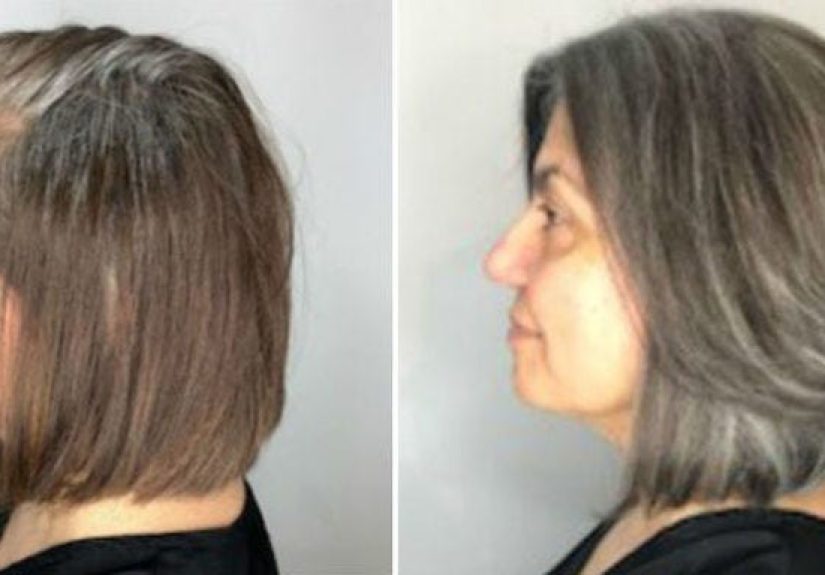
For many people, this is the sweet spot. Instead of continuing all-over permanent color, a stylist can weave in highlights, lowlights, or both to soften the contrast between your dyed hair and your new gray growth. This technique is often called gray blending, herringbone highlighting, or silver blending, depending on the salon and the exact method.
Why does this work so well? Because it breaks up that harsh line at the root. The result is more dimensional, less stripey, and much easier to grow out gracefully. If you have darker hair, lowlights can keep your color from looking flat while your silver comes in. If you are blonde, the transition is often easier because gray can blend into lighter tones with less drama.
3. Go Shorter to Speed Things Up
If patience is not your signature quality, a haircut can be your best friend. Regular trims remove old dyed ends faster, and a bob, lob, or pixie can dramatically shorten the transition timeline. You do not have to buzz your head and reinvent yourself as an avant-garde poet, but taking off a few inches can make the process feel more intentional and less like you are stuck in hair limbo.
Shorter cuts can also give gray hair more bounce and shape, which matters because gray strands may feel coarser, drier, or more wiry than before. A fresh cut helps silver hair look crisp instead of tired.
4. Use Toners, Glosses, or Demi-Permanent Color
If permanent dye has you trapped in a relentless root-touch-up cycle, ask your stylist about demi-permanent or semi-permanent color instead. These formulas can soften the grow-out phase without locking you into a hard color line every few weeks. They are often gentler than permanent dye and can help tone gray hair so it looks brighter, shinier, and less dull.
This is especially helpful if your gray is coming in unevenly or if the ends of your previously dyed hair look warm, faded, or brassy. Think of this route as a graceful step-down strategy rather than a dramatic breakup text to your hair colorist.
How to Make the Awkward Stage Less Awkward
Let’s be honest: the hardest part of transitioning to gray hair is not the gray itself. It is that in-between stage where your hair looks like it cannot decide what decade it belongs to. Fortunately, there are several ways to make that phase look much better.
Use Temporary Root Camouflage
Root powders, sprays, and hairline concealers can blur the line between your roots and your lengths. They are especially helpful around the part, temples, and hairline, which is usually where gray shows up first and most loudly. They will not change your life, but they might save your next brunch photos.
Change Your Part
A sharp center part can spotlight regrowth. Switching to a soft side part or a slightly messy zigzag part makes the contrast less obvious. It is a small trick, but sometimes small tricks do the heavy lifting.
Lean Into Updos and Accessories
Buns, ponytails, claw clips, headbands, scarves, and hats can all help hide the root line while still looking stylish. This is not “covering up” so much as “strategic styling with excellent taste.”
The Best Haircuts for Transitioning to Gray Hair
The right haircut can make the entire process look elevated instead of accidental. In general, the most flattering transition cuts add movement, texture, and shape.
Soft Bob
A bob is classic, chic, and practical. It helps remove old color faster while keeping enough length for versatility.
Layered Lob
If you want something modern but not too short, a long bob with light layers can blend multiple tones beautifully. It also helps prevent gray hair from looking heavy or flat.
Pixie Cut
The pixie is the fastest route to a fully gray result. It is bold, stylish, and low maintenance, but only choose it if you genuinely like short hair. Do not let impatience talk you into a haircut you will resent.
Shag or Textured Cut
If your gray hair is coming in with texture or wave, a shaggy cut can make it look intentional and cool. It also works well with natural volume and can soften the contrast between different tones.
How to Care for Gray Hair Once You Start the Transition
Gray hair often behaves differently than pigmented hair. It may be drier, coarser, more fragile, or more prone to frizz. That means your old routine may need a little retirement package.
Prioritize Moisture
Use a gentle shampoo and a nourishing conditioner. Gray hair tends to appreciate hydration, and dryness can make silver strands look rough or yellowed instead of glossy and bright. A weekly deep-conditioning mask can help restore softness.
Be Smart with Purple Shampoo
Purple or blue-toned shampoos can help cancel yellow or brassy tones in gray, white, or highlighted hair. They are useful, but more is not always better. Overusing them can dry out the hair, so use them when your color actually needs toning rather than every time you panic under fluorescent lights.
Lower the Heat
Gray hair can be more delicate, so daily flat-ironing, aggressive blow-drying, and repeated hot-tool styling may leave it looking brittle. Use heat protectant, keep temperatures moderate, and let your hair air-dry when possible. Your silver strands would like a little less drama, thanks.
Protect from Sun and Chlorine
Sun exposure, pollution, and pool chemicals can make gray hair look dull or yellow over time. Wear a hat in strong sun, rinse your hair before and after swimming, and consider a leave-in product that adds moisture and light protection.
Add Shine Without Weight
A small amount of lightweight oil or serum on the mids and ends can help gray hair look smoother and more reflective. The goal is luminous silver, not “I accidentally deep-fried my hair in argan oil.”
Mistakes to Avoid When Going Gray
Do Not Keep Reapplying Permanent Dye to the Roots
If your goal is to transition, repeatedly coloring the regrowth can trap you in the same cycle you are trying to leave behind. Strategic blending is usually a better bridge than full coverage.
Do Not Pluck Gray Hairs
Plucking does not make more gray hairs appear, but it can irritate the follicle and contribute to thinning over time. In other words, tweezers are not a gray-hair solution. They are just tiny chaos tools.
Do Not Ignore Texture Changes
Gray hair may need different products than your old routine. If your hair suddenly feels rough, flat, or overly fluffy, update your shampoo, conditioner, and styling approach instead of blaming your reflection.
Do Not Expect the Transition to Be Instant
Even with expert help, going gray well usually takes months, not days. The process can take six months to a year depending on your length, color history, and how dramatic a change you want. A realistic timeline prevents panic-booking another all-over dye appointment at week six.
When to Talk to a Professional
A good colorist can make the gray transition dramatically easier, especially if you have years of dark permanent dye, uneven previous color, damaged ends, or a strong contrast between your roots and lengths. Bring photos of gray looks you like, but also ask what will work with your actual hair density, texture, maintenance tolerance, and budget.
You should also talk with a doctor or dermatologist if your graying seems unusually early, appears suddenly, or comes with significant hair loss, scalp symptoms, or other physical changes. Sometimes gray hair is just gray hair. Sometimes it is worth ruling out an underlying issue.
The Best Way to Go Gray, Honestly
The best way to go gray is the one that lets you feel like yourself while making the process manageable. For some people, that means growing it out naturally and celebrating every silver inch. For others, it means blending with highlights, trimming more often, and toning as they go. The smartest plan is usually a customized one: less harsh permanent color, more strategic blending, more moisture, and a haircut that works with the transition instead of fighting it.
Gray hair is not a beauty emergency. It is a color shift, a texture shift, and sometimes an identity shift. But it can also be elegant, striking, modern, and wildly flattering. You are not “giving up” by going gray. You are just changing the palette.
Real-Life Experiences with Transitioning to Gray Hair
One of the most interesting things about going gray is that the emotional transition often turns out to be bigger than the hair transition. Many people start the process thinking the challenge will be strictly cosmetic: roots, salon timing, product choices, maybe a few awkward selfies. But once they begin, they realize the shift is tied to identity, confidence, aging, and how they want to present themselves to the world.
A common experience is hesitation at the beginning. People often say they were not necessarily excited to become gray; they were simply tired. Tired of touch-ups every three or four weeks. Tired of seeing roots appear almost before the salon receipt cooled down. Tired of spending money and time just to maintain a color that no longer felt worth the effort. That fatigue becomes the opening for change.
Then comes the messy middle, and yes, it is very real. Many describe a stage where the line between dyed hair and silver roots feels more dramatic than expected. Some feel tempted to abandon the whole idea and run straight back to permanent dye. Others experiment with hats, buns, scarves, root concealers, or strategically timed trims. This part can feel frustrating, but it also becomes the point where many start to notice their natural pattern of silver, white, and darker strands. Instead of looking like “gray,” it starts looking like dimension.
Another experience people talk about is surprisegood surprise. They expected to feel older, but instead they felt sharper, more authentic, or more modern. Some say their gray came in brighter than they imagined, with silvery streaks that looked almost highlighted. Others realized a fresh cut made the new color look intentional and stylish rather than accidental. Compliments from strangers, coworkers, or family members often helped reinforce that the transition was working, even before they personally felt fully comfortable with it.
There is also a deeper emotional side. For some, going gray becomes a small but meaningful act of self-acceptance. It can mark a shift away from chasing a younger version of themselves and toward choosing what feels honest and sustainable now. That does not mean everyone who goes gray suddenly becomes a mountain sage dispensing wise hair prophecies. It just means the process can be unexpectedly liberating.
At the same time, not every experience is magical, and that is worth saying too. Some people miss their old color. Some still tone, gloss, or blend their gray because they like a polished finish. Some love being silver but hate the dryness and upkeep. Transitioning well does not require loving every stage. It just requires finding a version of gray that feels like you.
The most encouraging pattern in these experiences is this: people who stick with the process often say the hardest phase is temporary, but the payoff feels long-term. Once the old color is gone and the gray is cared for properly, the routine often becomes simpler, the hair looks healthier, and the person feels more at ease. In that sense, the gray-hair journey is less about surrender and more about editingless maintenance, less panic, less pretending, and often a lot more confidence.
Conclusion
If you are thinking about transitioning to gray hair, start with a plan instead of a panic. Decide whether you want a natural grow-out, blended highlights, a shorter cut, or a soft color transition with glosses and demi-permanent formulas. Support the process with moisture, gentle care, and realistic expectations. Most of all, remember that gray hair can be refined, stylish, and completely your own. The best way to go gray is not the fastest or trendiest route. It is the one that helps you feel comfortable, confident, and genuinely good in your own hair.