Table of Contents >> Show >> Hide
- What Is the Trace Line Clock?
- How the Magnetic Mechanism Works
- Why Magnets Are Perfect for This Clock
- The Role of the Quartz Clock Movement
- 3D Printing Makes the Design Possible
- Friction: The Tiny Enemy of Smooth Motion
- Reading the Trace Line Clock
- Design Analysis: Minimalism With a Mechanical Soul
- Why This Clock Stands Out in Modern Timekeeping
- Potential Improvements and Practical Considerations
- Experiences Related to the Trace Line Clock Does It With Magnets
- Conclusion
- SEO Tags
The Trace Line Clock is the kind of object that makes you pause, squint, smile, and then realize you are still technically checking the time. Instead of shouting the hour with big numerals or swinging two ordinary hands around a dial, this clever desk clock draws time as a single moving line. It is minimalist, mechanical, slightly mysterious, and powered by one of the most satisfying tricks in product design: hidden magnets doing useful work while pretending nothing is happening.
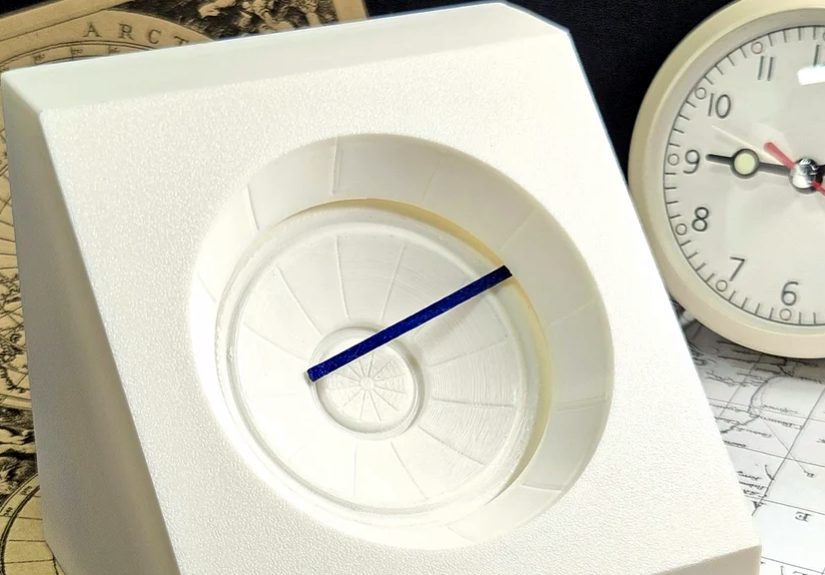
At first glance, the Trace Line Clock looks more like a small kinetic sculpture than a normal clock. Its face is clean, white, and mostly unmarked. Two recessed circular tracks sit on the front, and a colored line stretches between them. That line is the star of the show. One end represents the hour. The other end represents the minute. As time passes, the line changes angle, length, and position, creating a fresh geometric drawing every minute. It is a clock, yes, but it also feels like time has enrolled in art school and decided to major in elegant restraint.
What Is the Trace Line Clock?
The Trace Line Clock is a 3D-printed analog desk clock designed around a simple but unusual idea: show both hours and minutes with one continuous visible hand. The inner circular track works like the hour scale, while the outer circular track works like the minute scale. The visible line connects the two points, forming a constantly shifting bridge between slow time and fast time.
Traditional analog clocks separate the hour hand and minute hand. That system is wonderfully practical, but visually familiar to the point of invisibility. The Trace Line Clock keeps the logic of analog time but redraws the interface. The hour still moves slowly. The minute still travels around the dial once per hour. The difference is that your eye follows one graphic element instead of two separate pointers.
This makes the clock feel alive in a quiet way. It does not flash, beep, glow, or beg for attention like a phone notification doing jumping jacks. It simply shifts. At 3:00, the line has one relationship between the inner and outer tracks. At 3:30, it has another. By 3:45, the line has stretched into a different angle again. The clock turns passing time into a small performance.
How the Magnetic Mechanism Works
The magic of the Trace Line Clock is not magic at all, which is both disappointing and wonderful. Behind the clean face is a fairly normal clock movement. The hidden mechanism rotates internal hands, much like an ordinary analog clock. But instead of attaching visible hands directly through the front face, the clock uses magnets to transfer movement to the visible line.
Magnets allow the front of the clock to stay uninterrupted. There are no obvious sockets, screws, shafts, or visible mechanical fixtures holding the line in place. The internal hands move behind the face, and magnets couple that motion to the blue line on the front. This creates the impression that the line is gliding around the tracks on its own.
The Clever Floating Magnet Trick
The most interesting challenge is that the distance between the hour point and the minute point is not constant. Sometimes the two ends of the line are close together. Sometimes they are far apart. If both magnetic connection points were fixed rigidly in the visible line, the mechanism would bind, scrape, or simply refuse to cooperate. Small clocks are polite until geometry gets involved; then they become tiny drama machines.
To solve this, the design uses a floating magnet captured in a channel under the visible line. This lets one magnetic point slide slightly as the relationship between the hour and minute positions changes. The line can stretch across different distances without physically stretching. It remains a solid piece, but the hidden magnetic contact has room to travel. That is the kind of mechanical detail that makes a design feel simple only after somebody else has done the hard thinking.
Why Magnets Are Perfect for This Clock
Magnets are useful in design because they can transmit force without a direct mechanical connection. In larger engineering systems, magnetic couplings are used to transfer torque across barriers, reduce wear, and isolate moving parts. The Trace Line Clock applies the same basic idea on a tiny, poetic scale. The magnets do not need to move a pump or a heavy shaft. They just need to guide a lightweight line smoothly around a clock face.
This contactless quality is exactly what gives the clock its clean look. A conventional hand needs a center shaft. A conventional two-hand clock usually announces its construction right in the middle of the face. The Trace Line Clock hides that mechanical business behind the dial. The viewer sees a line, two tracks, and motion. The result is calm, tidy, and almost suspiciously elegant.
There is also a practical advantage. Magnets make the visible part easier to remove, adjust, or experiment with during prototyping. For a 3D-printed project, that matters. Designers can test magnet strength, line weight, channel dimensions, and surface friction without redesigning an entire clock movement from scratch.
The Role of the Quartz Clock Movement
Inside the Trace Line Clock is the dependable heart of many modern analog clocks: a quartz movement. Quartz movements are popular because they are accurate, affordable, compact, and easy to power with a small battery. A quartz crystal vibrates at a stable frequency when electricity passes through it. The circuit counts those vibrations and converts them into regular pulses that drive a small motor and gear train.
In a standard wall clock, those gears turn the hour and minute hands directly. In the Trace Line Clock, the same familiar timing principle is used as the hidden engine for a much less familiar display. This is one reason the project is so charming. It does not require futuristic technology to feel futuristic. It uses ordinary clock mechanics, 3D-printed parts, and magnets arranged with uncommon imagination.
3D Printing Makes the Design Possible
The Trace Line Clock also shows why 3D printing has become such a powerful tool for small design experiments. A clock like this needs custom tracks, hidden channels, carefully shaped parts, and a body that supports the movement while presenting a clean front surface. Producing those parts by traditional manufacturing would require more tooling, more cost, and more patience than most makers have before coffee.
With 3D printing, the designer can create the body, line, channels, and support structures as custom parts. If a channel is too tight, it can be adjusted. If the line is too heavy, it can be redesigned. If the face needs a slightly different recess depth, the model can be revised and printed again. This fast iteration is ideal for a project where motion, tolerance, and appearance all have to cooperate.
PLA and similar common 3D-printing plastics are often used for visual prototypes and light-duty functional parts. For a desk clock, the loads are small, so the key issues are not brute strength but accuracy, smoothness, fit, and finish. The Trace Line Clock succeeds because it treats 3D printing not as a gimmick but as a design language. The form looks like something that belongs in a small-batch studio rather than a bargain bin full of novelty clocks shaped like frying pans.
Friction: The Tiny Enemy of Smooth Motion
Whenever small parts slide, friction becomes the villain. In the Trace Line Clock, the visible line needs to move smoothly while following magnetic force from behind the face. If the parts rub too much, the line may lag, stutter, or get stuck. If the parts are too loose, the line may wobble or lose that crisp, intentional feeling.
One beautifully practical detail is the use of candle wax as a dry lubricant. Wax is simple, clean, and well suited to light sliding contact. It can reduce friction without leaving oily residue on the clock face. For 3D-printed parts, that matters because liquid lubricants can attract dust or make a neat object feel messy. Candle wax is the workshop equivalent of a quiet genius wearing an old sweater.
This is a reminder that good design is not only about the big concept. The big concept gets people to click. The small decisions make the object work. Magnet placement, channel clearance, line weight, surface texture, and lubrication all affect whether the clock feels graceful or annoying.
Reading the Trace Line Clock
Reading the Trace Line Clock takes a moment of attention, but it is not as difficult as it first appears. The inner end of the line indicates the hour. The outer end indicates the minute. Imagine a normal clock face hidden beneath the minimal design. The inner track is the slower hour circle, and the outer track is the faster minute circle.
For example, if the inner end points near 2 and the outer end points near the top of the dial, the time is close to 2:00. If the inner end is between 2 and 3 while the outer end points at the 6 position, the time is about 2:30. The line does not remove the logic of analog time; it asks you to look a little more carefully.
That extra second of attention is part of the appeal. A phone gives you the exact time instantly, along with twelve other things you did not ask for. The Trace Line Clock gives you time as a physical relationship. It slows the act of checking the hour just enough to make it pleasant.
Design Analysis: Minimalism With a Mechanical Soul
Minimalist design can sometimes feel cold. Remove too much and an object becomes sterile, like it was designed by a committee of very stylish refrigerators. The Trace Line Clock avoids that problem because it has visible motion and hidden cleverness. It is minimal, but not empty.
The white body gives the clock a gallery-like calm. The colored line adds just enough contrast to guide the eye. The lack of numbers makes the face feel modern, but the analog structure keeps it understandable. The result fits naturally on a desk, shelf, studio table, or sideboard where the owner wants an object that is useful but also conversation-worthy.
It is especially appealing because it does not try to become a smart device. There is no app, no Wi-Fi setup, no firmware update, and no tiny screen asking for your attention. The clock’s intelligence is mechanical. It lives in the relationship between magnets, tracks, and motion.
Why This Clock Stands Out in Modern Timekeeping
We live in an age where time is everywhere. It is on laptops, phones, ovens, dashboards, watches, thermostats, and probably at least one appliance in your house that is blinking 12:00 in quiet protest. Because time displays are so common, a clock must do more than tell time to feel special.
The Trace Line Clock stands out because it reimagines the clock face without making the object useless. Many experimental clocks look fascinating but require the interpretive skills of an archaeologist. This design remains readable once you understand the rules. It is unusual, but not hostile. That balance is difficult to achieve.
It also demonstrates a broader trend in contemporary product design: people still want physical objects, but they want those objects to justify their presence. A desk clock is no longer necessary in the strictest sense. That means it has to offer beauty, tactility, atmosphere, or delight. The Trace Line Clock offers all four, plus magnets, which automatically makes almost anything more fun.
Potential Improvements and Practical Considerations
Like any experimental clock, the Trace Line Clock has trade-offs. It may not be ideal for someone who needs to read the time instantly from across a room. The unmarked face looks beautiful, but hour markers or subtle ticks could improve legibility. A slightly darker track, a higher-contrast line, or optional markings might make the clock more practical without ruining its minimalist personality.
Magnet strength also matters. If the magnets are too weak, the visible line may slip or fail to follow the hidden hands. If they are too strong, friction may increase, and the movement could struggle. The sweet spot is a careful balance between magnetic grip and mechanical freedom.
There are also ordinary magnet safety considerations. Strong magnets should be kept away from people with pacemakers or implanted medical devices, and they should not be placed carelessly near sensitive equipment. In a small desk clock, the magnets are part of a contained mechanism, but responsible handling is still wise during assembly or modification.
Experiences Related to the Trace Line Clock Does It With Magnets
The most memorable experience with a clock like the Trace Line Clock is not simply reading it. It is discovering how it wants to be read. The first glance usually brings mild confusion. There are no numerals. There are no familiar hands meeting at the center. There is just a line, sitting between two circular paths like it knows a secret and is waiting for you to catch up.
After a few minutes, the logic clicks. The inner end is the hour. The outer end is the minute. Suddenly the design changes from puzzling to clever. That little moment of understanding is satisfying in the same way as solving a small mechanical puzzle. You feel rewarded, not because the clock was difficult, but because it invited you to participate.
On a desk, the clock would likely become less of a tool and more of a companion object. You might check it while writing, sketching, coding, or avoiding an email that begins with “Just following up.” Instead of pulling you into a screen, it gives you a quiet visual cue. The line moves slowly enough that it does not distract, but noticeably enough that you can sense the day progressing.
There is also a maker’s pleasure in imagining the assembly. Pressing small magnets into printed parts, testing the hidden hands, adjusting the floating magnet, rubbing wax along the sliding surfaces, and watching the line finally move smoothly would be deeply satisfying. It is the kind of project where the first successful rotation probably feels like a tiny parade. No marching band, unfortunately, but definitely a proud nod at the workbench.
The clock also changes how you think about time as a shape. Most clocks divide time into numbers. Digital clocks turn time into data. The Trace Line Clock turns time into a changing distance. At certain moments, the line feels compact and balanced. At others, it stretches dramatically across the face. The same hour can look calm, tense, playful, or elegant depending on where the minute end happens to be.
That makes the object surprisingly emotional for something powered by a humble clock movement. It reminds you that design does not need to be loud to be expressive. A single line, guided by magnets, can create enough variation to keep the eye interested all day.
If you enjoy mechanical objects, the Trace Line Clock offers the best kind of transparency: not visual transparency, but conceptual transparency. You cannot see every part working, yet you can understand the principle. Hidden hands pull magnets. Magnets guide the visible line. The line maps the hour and minute. The result feels honest, even though the mechanism is concealed.
Living with this clock would probably teach patience. It is not the fastest way to know the time, and that is exactly why it has value. It turns a routine glance into a small act of observation. In a world full of devices optimized for speed, the Trace Line Clock offers a gentler bargain: spend one extra second, and time becomes a drawing.
Conclusion
The Trace Line Clock proves that even one of the oldest household objects can still surprise us. By combining a standard quartz movement, 3D-printed structure, hidden magnetic coupling, and one elegant visible line, it transforms ordinary timekeeping into kinetic design. It is not trying to replace your phone, smartwatch, or wall clock. It is doing something more interesting: reminding us that time can be useful, beautiful, and a little playful at the same time.
What makes the design special is not just the use of magnets. It is the way the magnets disappear into the experience. They solve a mechanical problem while preserving the clock’s clean face. They allow the line to move without visible clutter. They help turn an analog mechanism into a minimalist sculpture. That is good design: the hard work hides, and the delight remains visible.