Table of Contents >> Show >> Hide
- What “Tropical Chic” Actually Means (and Why It’s Trending)
- The Tropical Chic “Ingredient List”
- Modern Maximalist Rules for Layering Tropical Chic
- Room-by-Room Tropical Chic: Specific, Copyable Ideas
- How to Keep Tropical Chic From Looking Like a Theme Party
- Smart Shopping: Where to Spend vs. Save
- Living With Tropical Chic: of Real-World “Experience”
- Conclusion: Tropical Chic, But Make It Yours
Minimalism had a great run. It gave us clean lines, calm spaces, and enough beige to make oatmeal feel overdressed. But if you’ve ever looked at a blank white wall and thought, “This could use a flamingo… and maybe a palm frond… and a little lacquered shine,” welcome. You might be ready for tropical chic decorthe style that takes paradise energy and pairs it with modern maximalism so it feels intentional, not like a souvenir shop exploded.
Tropical chic isn’t about turning your living room into a luau (unless you’re committed; no judgment). It’s a polished, layered look that blends bold color, botanical patterns, natural textures like rattan and bamboo, and plenty of greenerythen finishes it with contemporary restraint. Think: “Palm Beach personality,” not “airport tiki bar.”
What “Tropical Chic” Actually Means (and Why It’s Trending)
Tropical chic decor borrows the best parts of tropical stylelush plants, sun-warmed palettes, breezy materials, and exuberant printsthen edits them through a modern lens. Instead of “theme decor,” it’s more “collected and curated,” with high-contrast pairings: glossy lacquer with woven cane, crisp stripes with leafy botanicals, sculptural lighting with vintage coastal charm.
The reason it works so well for maximalists is simple: tropical chic comes with built-in permission to layer. Pattern-on-pattern? Yes. Color that refuses to whisper? Absolutely. A gallery wall next to a giant palm? Expected. Yet the look can still feel elevated, especially when you anchor it with a consistent palette and a few repeatable materials (hello, rattan).
The Tropical Chic “Ingredient List”
If tropical chic were a recipe, it would be equal parts texture, color, and confidence. Here are the essentials designers lean onplus how to make each one feel current.
1) A happy, sunlit color story (with a neutral “pause button”)
Tropical chic loves saturated hues: leafy greens, ocean blues, coral, sunny yellow, turquoise, even punchy pink. The trick is giving those colors a place to land. Start with a light neutral basewarm white, creamy ivory, sand, or pale greigethen layer color in deliberate zones: textiles, art, one statement wall, or a bold piece of furniture. Your neutral becomes the “pause button” that keeps the room energetic, not exhausting.
2) Botanicals, but make them sophisticated
Tropical prints can look playful or polishedit’s all in scale, placement, and what you pair them with. Oversized palm or banana-leaf wallpaper is iconic, but it reads more grown-up when balanced with solids, clean-lined furniture, and a grounding color like navy, espresso, or deep forest green. If wallpaper feels like a commitment, try a single accent wall, framed panels, or even peel-and-stick in a powder room (small spaces love big drama).
3) Natural textures: rattan, wicker, cane, bamboo, and warm wood
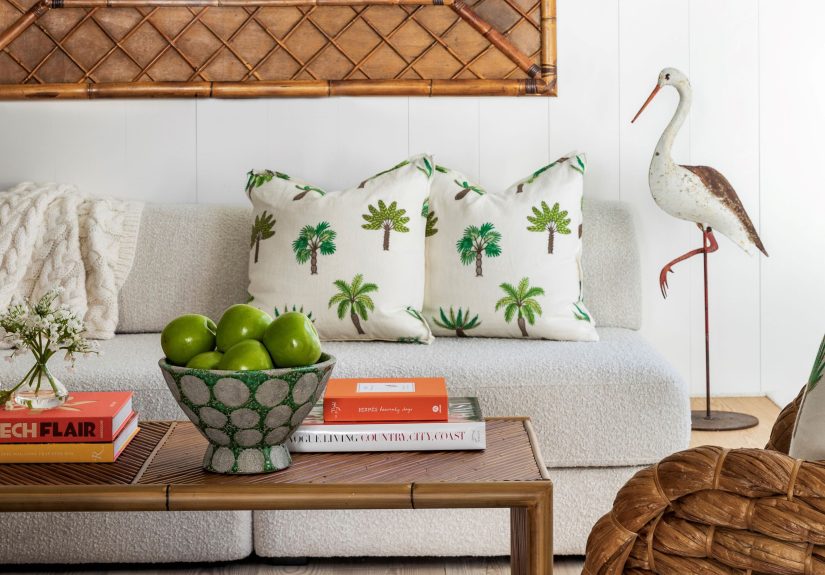
Tropical chic practically has a membership card at the rattan club. Woven textures add instant warmth and dimension, especially alongside smooth surfaces like painted walls and polished stone. Cane-front cabinets, rattan mirrors, bamboo-style details, and woven pendants can all deliver that breezy vibe without screaming “beach house.”
4) Shine and structure: lacquer, brass, and crisp tailoring
Here’s how tropical chic avoids looking costume-y: it adds something tailored. Glossy lacquered side tables, brass accents, structured lampshades, and clean silhouettes bring “city polish” to “island energy.” Even one high-shine piece can elevate a room full of organic texture.
5) Plants that act like decor (because they are)
Tropical chic is basically biophilic design with better accessories. A tall indoor palm, a bird of paradise, or a banana plant creates height and movement. Layer smaller plants on shelves and consoles to build depth. The goal isn’t to turn your home into a greenhouseit’s to make greenery a visual rhythm throughout the space.
Modern Maximalist Rules for Layering Tropical Chic
Maximalism isn’t “add everything.” It’s “add everything with a plan.” Tropical chic shines when you follow a few guardrails that keep the look bold but readable.
Pick a backbone palette, then freestyle around it
Choose 3–5 recurring colors you’ll repeat across the room (or the whole home). For example: cream + deep green + navy + coral + brass. Once your backbone is set, you can introduce smaller accent colors without the space feeling random.
Mix patterns like you mean it
A reliable pattern-mix formula: one large-scale botanical (wallpaper or rug) + one geometric (stripes, trellis, or lattice) + one small-scale “texture pattern” (woven, dotted, or subtle print). Keep at least one pattern in a quieter, tone-on-tone color so your eye gets a breather.
Repeat materials to make the chaos look curated
Want a room that feels “collected” instead of cluttered? Repeat two to three materials across multiple items: rattan + brass + linen, for instance. A rattan mirror, woven chairs, and a basket already build cohesion before you even add art or pillows.
Let one thing be the star at a time
Tropical chic loves a statement momentjust not ten of them in the same corner. If you have bold wallpaper, keep the sofa simpler. If the sofa is patterned, choose a calmer rug. If your art wall is loud, let the accessories whisper.
Room-by-Room Tropical Chic: Specific, Copyable Ideas
Living room: the “vacation, but make it tailored” formula
- Anchor piece: a solid sofa in performance linen (cream, sand, or deep navy).
- Statement layer: a leafy wallpaper on one wall, or a bold botanical rug.
- Texture: rattan accent chairs or a cane-front media console.
- Polish: brass floor lamp or a lacquered side table.
- Greenery: one tall plant plus two smaller “supporting actors.”
Bedroom: tropical, but calm enough to sleep
Maximalist bedrooms can be dreamy, not busy. Try a rattan headboard with crisp white bedding, then bring in tropical chic through patterned shams, a leafy throw, or a small wallpaper moment behind the bed. Add a pleated lampshade or tailored blackout drapes so the room feels finished, not themed.
Kitchen + dining: where cane and color do the heavy lifting
You don’t need palm-print curtains to go tropical. Swap in cane-backed counter stools, add a woven pendant, and choose barware or ceramics in ocean blues and greens. In the dining area, patterned seat cushions or a bold centerpiece (greenery + fruit + sculptural vase) can deliver the vibe without turning dinner into a resort buffet.
Bathroom: the small-space drama zone
Bathrooms are tropical chic’s favorite playground because you can go bold in a tight footprint. Try a statement wallpaper, a bamboo-framed mirror, and punchy towels. Add a small plant if there’s light, or use botanical art if there isn’t. The result feels like a boutique hotel, not a beach rental.
Outdoor spaces: bring the inside-outside connection to life
Tropical chic loves outdoor living: layered textiles, botanical cushions, and lantern-style lighting. If you’re working with a balcony, a planter wall and compact wicker seating can create that lush “mini escape” feeling. Add one patterned outdoor rug to visually “define” the zone.
How to Keep Tropical Chic From Looking Like a Theme Party
Tropical chic is boldso editing matters. These tweaks separate “designer maximalism” from “my aunt’s beach condo in 1997” (again: no judgment, just clarity).
Use real, not novelty, motifs
Lean into botanicals, natural materials, and color. Skip the literal décor: parrots, tiki masks, and plastic palm trees. If you want figurative flair, choose art that feels contemporary or vintagesomething you’d frame, not something you’d win at a carnival.
Balance organic shapes with clean lines
Pair curvy wicker and leafy prints with streamlined silhouettes: a modern sofa, a simple coffee table, a crisp cabinet front. That contrast is what makes the look feel modern.
Be mindful with “colonial” influences
Some tropical-adjacent aesthetics (like “British colonial”) have complicated histories. You can appreciate breezy materials and classic contrast while also being thoughtful: prioritize artisan-made pieces, avoid stereotypical “exotic” props, and focus on timeless craftsmanship over caricature.
Smart Shopping: Where to Spend vs. Save
Spend
- Upholstery: a quality sofa or chair in a durable fabric anchors the whole look.
- Lighting: a woven pendant or sculptural lamp becomes instant tropical chic.
- Rug: go big enough to ground the roommaximalism needs a strong foundation.
Save
- Accessories: trays, vases, baskets, and pillows can be rotated seasonally.
- Art: thrift frames and swap in prints; a gallery wall doesn’t have to be pricey.
- Planters: mix high and lowcohesion comes from repeating shapes or colors.
Living With Tropical Chic: of Real-World “Experience”
Here’s what tends to happen when people actually live with tropical chic decor (as opposed to pinning it, dreaming about it, and then buying one plant and calling it a day). First, the mood shift is immediate. A room with layered greens, a woven pendant, and a bold botanical print feels lightereven if your inbox is still full and your laundry still has opinions. There’s something about that vacation-adjacent palette that changes how you move through the space. You don’t just sit on the sofa; you arrive on the sofa.
Second, you learn quickly that texture is the secret manager of the whole operation. People often start with the “fun” partpatterned pillows, leafy wallpaper, a bright coral throw. Then they realize the room still feels flat until they add rattan, cane, linen, or warm wood. Once texture shows up, everything else looks more expensive, even if half the items came from a thrift store run that began as “just browsing.” Woven materials also behave like visual neutralizers: they calm down bright color and help patterns coexist without starting a civil war.
Third, plants become both joy and responsibilitykind of like pets, but quieter. A tall palm or bird of paradise makes a room feel finished in a way few objects can. But real-life tropical chic means accepting a few truths: you’ll rotate plants to chase the light, you’ll occasionally find a leaf that looks like it’s having a bad week, and you’ll develop strong feelings about drainage holes. The win is worth it. Greenery adds movement and softness that makes maximalist layering feel alive rather than static.
Fourth, the style nudges you into a new level of “editing.” Tropical chic is playful, so it invites collecting but the rooms that look best aren’t the ones that add the most; they’re the ones that repeat the right ideas. People tend to discover their “personal formula” after a little trial and error: maybe it’s brass + rattan + deep green, or navy + white + a hit of pink, or banana-leaf print paired with classic stripes. Once you have that formula, shopping becomes easier because you’re not buying “random cute,” you’re buying “on-theme, but not cheesy.”
Finally, tropical chic has a funny side effect: it makes hosting feel more fun. Even a small apartment can feel like a destination when the lighting is warm, the patterns are lively, and there’s a little jungle energy in the corner. People linger. Conversations stretch. And yes, someone will eventually say, “This place feels like a cool hotel.” That’s basically the tropical chic medal of honorright up there with keeping a fiddle-leaf fig alive for more than a season.
Conclusion: Tropical Chic, But Make It Yours
Tropical chic decor is a modern maximalist dream because it’s joyful and structured at the same time. You get the color, the pattern, the plants, and the personalitybut you also get to keep it polished with tailored shapes, repeated materials, and a backbone palette. Start with one statement (a wallpaper moment, a rattan mirror, a bold rug), repeat a few key colors, and let the room build over time. The best tropical chic homes don’t look “done” in a day. They look collectedlike you live a life that includes sunshine, even when it’s raining.