Table of Contents >> Show >> Hide
- What “Soviet Air Defense Missiles” Means in Ukraine’s Reality
- Why Use Air Defense Missiles for Land Attack at All?
- How a Surface-to-Air Missile Can Hit a Ground Target (Without Becoming a Magic Wand)
- The S-200 Comeback: When a Cold War Giant Gets a New Job
- S-300 and Buk: The Temptationand the Price Tag Ukraine Doesn’t Want to Pay
- What Repurposed SAM Strikes Are Good For (and What They’re Not)
- The Supply Chain Scramble: Interceptors, Innovation, and the Search for “More”
- Strategic Meaning: What This Says About the War (and Future Wars)
- What to Watch Next
- Experiences From the “Improvised Missile” Era (Extra Section)
- Conclusion
If you told someone in 1985 that a Soviet surface-to-air missile (SAM) might one day be fired at a warehouse, a bridge approach,
or an ammo depot instead of an aircraft, they’d probably squint at you over their instant coffee and mutter something about “doctrinal purity.”
Ukraine’s war has not been kind to doctrinal purity. It has, however, been a gold medalist in improvisation.
The phrase “Ukraine using Soviet air defense missiles against land targets” sounds like a headline engineered to make engineers wince.
But it reflects a real, recurring wartime pattern: when precision weapons are scarce, when air-defense inventories are finite, and when
the battlefield is moving faster than supply chains, militaries repurpose what they have. And Ukraine, inheriting a deep bench of Soviet-era
systems, has had strong incentives to do exactly that.
What “Soviet Air Defense Missiles” Means in Ukraine’s Reality
Ukraine entered the full-scale invasion with a large share of its ground-based air defense built around Soviet-designed systemsespecially the S-300
family (longer-range) and Buk (medium-range). These systems were made to swat down aircraft and cruise missiles, not to play substitute for a
purpose-built surface-to-surface strike missile.
But Soviet hardware has a distinctive wartime advantage: there’s a lot of it across the former Soviet sphere, crews have decades of familiarity,
and “creative adaptation” has basically been part of the operating manual since the day it rolled off the factory floor.
Two missiles you’ll hear about most
- S-200 (very long-range, older, bulky): a Cold War system that can be reactivated and, according to reporting and released footage, used in novel roles.
- S-300 (workhorse long-range SAM family): crucial for air defense, difficult to replace, and therefore a painful candidate for repurposing.
Why Use Air Defense Missiles for Land Attack at All?
In a perfect world, you don’t. In a perfect world you have enough modern, accurate strike missiles to hit what matters, and enough interceptors
to protect your cities, and enough manufacturing capacity to replace both before you finish your morning coffee.
Ukraine does not live in that world.
There are three big drivers behind the temptation to use air-defense missiles against land targets:
1) The “missile math” problem
Air defense is a math test you can’t study for the night before. Every interception consumes a round. Large barrages force defenders to choose
what to protect, what to let go, and what to save for later. When attacks are frequent, expensive interceptors get burned quickly, and stockpiles
become strategy. That pressure creates interest in any alternative that can deliver effects at range without consuming a premium Western missile.
2) Range is hard to improviseunless you already own it
Long-range strike capability is one of the hardest things to conjure from scratch. It requires propulsion, guidance, testing, training, logistics,
and a lot of patience. Soviet-era SAMs already have the rocket motor and the reach. Even if they aren’t optimized for accuracy on land, they can
extend a country’s options when other inventories are constrained.
3) War rewards “good enough” more often than people admit
Precision is ideal, but “good enough” can still matter when targets are large, time-sensitive, or located in areas where even imperfect strikes
create operational disruption. That’s not an argument for indiscriminate useit’s an explanation for why militaries keep trying to squeeze utility
out of systems that were never meant to do the job.
How a Surface-to-Air Missile Can Hit a Ground Target (Without Becoming a Magic Wand)
A SAM is designed to chase moving targets in the sky. Its guidance, seeker logic, and flight profile generally assume an aerial intercept geometry.
So how does it become a land-attack weapon?
At a high level (and without getting into “how-to” details), it can work like this:
the missile is launched, follows a trajectory that can be made to intersect a point on the ground, and detonates on impact or near impact.
If the missile’s guidance is not meant for ground coordinates, accuracy can be limited. That often makes these weapons more suitable for
area effects than pinpoint strikes.
Think of it like using a fire extinguisher to wash your car. Yes, something will happen. No, it won’t be the thing you wanted.
In combat, though, “something happened” can still change decisions, force dispersal, or complicate logistics.
Key limitation: accuracy isn’t a bonus feature you can wish into existence
Purpose-built land-attack missiles prioritize navigation and terminal accuracy. Many air-defense missiles prioritize speed, maneuvering, and
target-tracking against aircraft. When repurposed, the result can be a weapon that reaches far but lands with less predictabilityespecially
compared with modern precision systems.
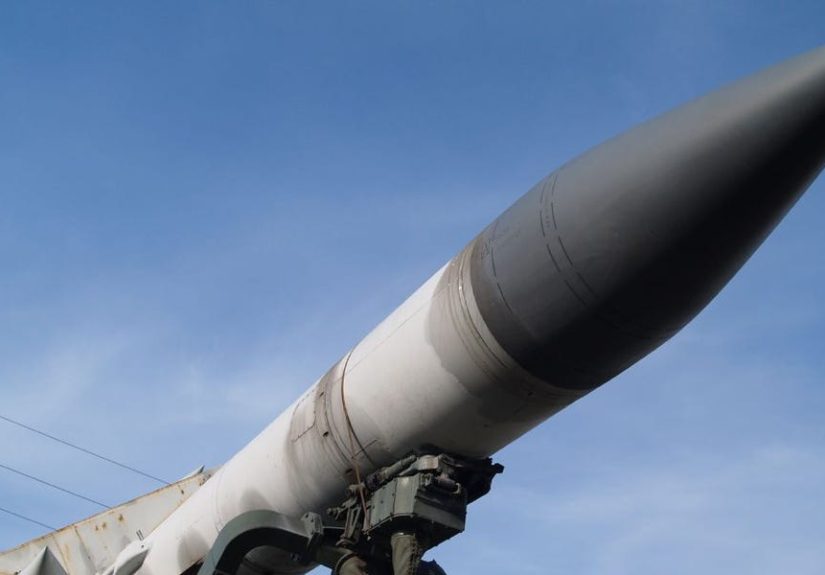
The S-200 Comeback: When a Cold War Giant Gets a New Job
If the S-300 is the practical, indispensable work boot of Soviet air defense, the S-200 is the vintage motorcycle that’s been sitting in a garage
under a tarp for decadesimpressive, loud, and not exactly easy to maintain. Yet reporting and released imagery have pointed to Ukraine reviving
the S-200 system, a long-range SAM originally designed to engage high-altitude targets.
The significance isn’t just nostalgia. A reactivated S-200 represents a form of “deep inventory leverage”: taking a retired system, rebuilding
capability, and using its range to create strategic dilemmas for an opponent.
Why S-200 is a plausible candidate for repurposing
- Long reach: It was built for long-range engagements, which matters when you need effects at distance.
- Legacy stockpiles and familiarity: Even if retired, components, documentation, and institutional memory can still exist.
- Different opportunity cost: If a system is not the frontline shield over major cities anymore, using it creatively may feel less risky than consuming scarce modern interceptors.
None of this makes it a precision scalpel. But in a war where both sides constantly probe for weak points in logistics and air-defense posture,
a revived long-range SAM can complicate planningespecially if it forces additional air-defense allocation or changes basing behavior.
S-300 and Buk: The Temptationand the Price Tag Ukraine Doesn’t Want to Pay
When people hear “Soviet air defense missiles used against land targets,” they often jump straight to the S-300 because it’s widely known,
widely deployed, and frequently discussed in the context of missile supply pressure.
But for Ukraine, the S-300 is also part of the protective roof over critical infrastructure and population centers. That reality creates a brutal trade-off:
every missile fired in a non-air-defense role is one less interceptor available for the next barrage.
Analysts have long emphasized that Ukraine’s Soviet-era air-defense interceptors are hard to replace at scale, because production is limited,
stockpiles are scattered, and compatible rounds aren’t as easy to source as Western artillery shells. That scarcity is why outside support
discussions frequently circle back to “where do the missiles come from?” rather than only “where do the launchers come from?”
So why would Ukraine ever consider it?
Because war forces choices that feel irrational in peacetime. If a particular SAM inventory is constrained, if certain batteries are at high risk of being
hunted, or if a specific moment offers high payoff against a critical target, commanders may explore options that would otherwise be filed under
“please don’t.” The point isn’t that it’s routine; the point is that it becomes thinkable when the alternative is strategic helplessness.
What Repurposed SAM Strikes Are Good For (and What They’re Not)
Potential advantages
- Range without waiting years: Leveraging existing propulsion and launch infrastructure can extend strike reach sooner.
- Operational disruption: Even imperfect strikes can force dispersal, delay logistics, or trigger defensive redeployments.
- Signaling: Demonstrating reach can shape deterrence and public messaging, even when details are deliberately kept vague.
Hard constraints
- Lower precision versus modern land-attack missiles: Limiting target sets and raising the importance of careful selection.
- Opportunity cost: Missiles used for strike roles can’t intercept incoming threats.
- Maintenance and reliability challenges: Older systems can be demanding, especially after long storage periods.
In other words: repurposed Soviet SAMs can be a tool, but not a solution. They complement broader strike options; they don’t replace them.
The Supply Chain Scramble: Interceptors, Innovation, and the Search for “More”
Ukraine’s air defense story since 2022 has been a relay race between adaptation and resupply. Western systems improved capability,
but the volume of attacks forces constant consumption. That’s why the discussion around Soviet-era missiles doesn’t end with
“Ukraine has launchers,” but continues with “Ukraine needs rounds.”
This is also why international efforts to locate compatible interceptors have stayed relevant, and why Ukraine has invested heavily in
alternativesespecially drones and lower-cost intercept conceptsto reduce the need to spend premium missiles on every incoming threat.
Why this matters to the “land target” story
When interceptors are scarce, you get triage. When you get triage, you get innovation. And when you get innovation, old systems
get new job descriptionssometimes because they’re brilliant, sometimes because they’re available.
Strategic Meaning: What This Says About the War (and Future Wars)
The deeper lesson in “Ukraine using Soviet air defense missiles against land targets” is not simply that Ukraine can make old things fly.
It’s that modern warfare is increasingly shaped by industrial capacity and adaptation speed. Whoever can replenish faster, improvise safer,
and integrate new layers (drones, decoys, electronic warfare, sensors) gains options.
In that environment, the line between “air-defense weapon” and “strike weapon” becomes less like a wall and more like a sliding door.
Not because physics changed, but because necessity is an aggressive interior designer.
What to Watch Next
- Domestic interceptor production: If Ukraine can field more locally made interceptors, it may reduce pressure on legacy stocks.
- Better integration of layered defenses: More systems working together can conserve high-end missiles for the hardest threats.
- Continued creative repurposing: As long as supply constraints exist, “old but functional” will keep finding new roles.
Experiences From the “Improvised Missile” Era (Extra Section)
The human side of this topic is easy to lose behind acronyms and missile silhouettes. But the decision to repurpose a Soviet-era air-defense missile
is not made by a headlineit’s made by people with real constraints, real consequences, and a finite number of “do-overs.”
What follows are experience-based perspectives commonly described by analysts, journalists, and Ukrainians living and working under persistent air and missile pressure,
presented in a way that keeps operational specifics out of it and keeps the focus on what it feels like.
The air-defense crew’s dilemma: shield today, or reach tomorrow?
Air-defense operators often describe their job less like “shooting down missiles” and more like “managing a budget that explodes.”
You don’t get unlimited interceptors, you don’t get to pick the timing of attacks, and you definitely don’t get to pause the war while you restock.
When barrages arrive, crews prioritize what matters most: major cities, power nodes, critical infrastructure, and whatever the enemy seems to be trying
to break this week. Then the night ends, and the inventory is smaller. That’s where the temptation of repurposed Soviet missiles enters the chat
not as a shiny new capability, but as a grim calculus: if a legacy system can create pressure on the opponent without consuming a premium interceptor,
it might buy breathing room elsewhere.
One officer’s dry joke, echoed in various forms by people who work high-tempo defense missions: “The hardest part of air defense is that it’s always successful
right up until it isn’t.” Meaning: when it works, life continues. When it fails, everyone notices. That pressure encourages solutions that look odd on paper but
make sense at 3 a.m. when you’re deciding what to protect with what you still have.
The engineer’s perspective: “We’re basically restoring a classic car during a street race”
People involved in refurbishing older systems often describe a strange mix of pride and frustration. Pride, because resurrecting a retired system is technically hard,
requires real expertise, and proves that the country isn’t just consuming aidit’s generating capability. Frustration, because older missiles and launch equipment
were not designed for quick, modern logistics. Parts may be scarce. Procedures may be slow. Testing takes time you don’t have. And yet the work continues because
the alternative is letting capability rot when every form of reach matters.
There’s also a psychological edge: reviving a Cold War system can feel like reclaiming agency. It’s the difference between “we are waiting for shipments”
and “we are building options.” Even when those options are imperfect, they’re still optionsand in war, options are oxygen.
The civilian experience: living under the umbrella that’s always being patched
For civilians, the “repurposed missile” discussion is usually not about the missile. It’s about the grid staying on, the heat working, and the sense that someone,
somewhere, is trying to keep the sky from becoming a schedule of alarms. People learn the rhythm: bursts of noise at night, morning updates, cautious relief,
and then the quiet knowledge that the next wave could come anytime. In that context, improvisation becomes a form of reassurance. Even if you never see the systems,
you feel their presence in the fact that daily life continues.
Humor shows up here, toooften dark, often defiant. Ukrainians have become famous for memes that turn fear into something manageable.
It’s not because the situation is funny; it’s because humor is one of the few things an attacker can’t intercept.
The analyst’s experience: watching old categories collapse
Defense analysts tracking this war have had to update their mental filing cabinets. Categories like “air-defense missile” and “strike missile”
used to be relatively stable. Now they’re porous. Decoys look like cruise missiles. Drones behave like cheap air forces. Air-defense missiles
can be discussed as “reach,” not only “shield.” This doesn’t mean anything can do anythingit means the boundaries are being tested constantly,
especially when production rates and stockpiles decide what’s possible.
The most common takeaway from professionals who study conflict for a living is not “wow, that’s clever,” but “wow, that’s revealing.”
It reveals the pressure on inventories, the importance of industrial depth, and the reality that war punishes rigid systems. Ukraine’s usereported,
analyzed, and debatedof Soviet air-defense missiles in land-attack contexts fits that pattern. It’s a marker of necessity, adaptation, and the
uncomfortable truth that modern war is often decided by what you can field consistently, not just what you can field once.
Conclusion
Ukraine’s reported and analyzed use of Soviet-era air-defense missiles against land targets is best understood as wartime improvisation under pressure:
a way to expand options when precision munitions and interceptor stocks are constrained, and when the conflict demands both a shield and a reach.
Systems like the S-200 illustrate how retired hardware can be reintroduced to complicate an opponent’s planning, while the conversation around S-300 and Buk
underscores the hard trade-offs of using precious air-defense assets for anything other than protecting the sky.
The headline sounds unusual because it is unusual. But the logic is familiar to anyone who has studied prolonged, high-consumption wars:
when supply is uncertain and the threat is constant, militaries adaptsometimes brilliantly, sometimes awkwardly, always under the ticking clock of the next attack.