Table of Contents >> Show >> Hide
- What happened: the TikTok that turned an exam room into a cautionary tale
- Why “dehumanizing” is the word that stuck
- Legal and professional consequences: it’s not just “bad optics”
- The social media trap: why smart people post catastrophically dumb things
- How to vent without violating patient dignity (or your paycheck)
- What urgent care clinics should do now (without banning phones like it’s 2007)
- What patients can do if they feel disrespected or exposed online
- 500-word experiences: what this kind of incident feels like on both sides of the curtain
- Conclusion: the real lesson isn’t “don’t post”it’s “don’t forget who you’re serving”
The internet can turn a 10-second clip into a career-ending headline faster than you can say “terms and conditions.”
And in healthcarewhere trust is basically the oxygen supplythat speed hits different.
In early September 2025, a viral TikTok sparked outrage after showing urgent care clinic staff posing and joking in an exam-room setting around what appeared
to be clinical residue left behind after patient care. Viewers called it “dehumanizing.” The clinic’s partner organization confirmed the workers involved were
terminated, saying the behavior violated policies and disrespected patients.
This article breaks down what happened, why it matters beyond the obvious “don’t do that,” and what urgent care centers (and anyone wearing a badge) can do to
prevent a social-media spiral from wrecking patient confidence.
What happened: the TikTok that turned an exam room into a cautionary tale
The post that triggered backlash
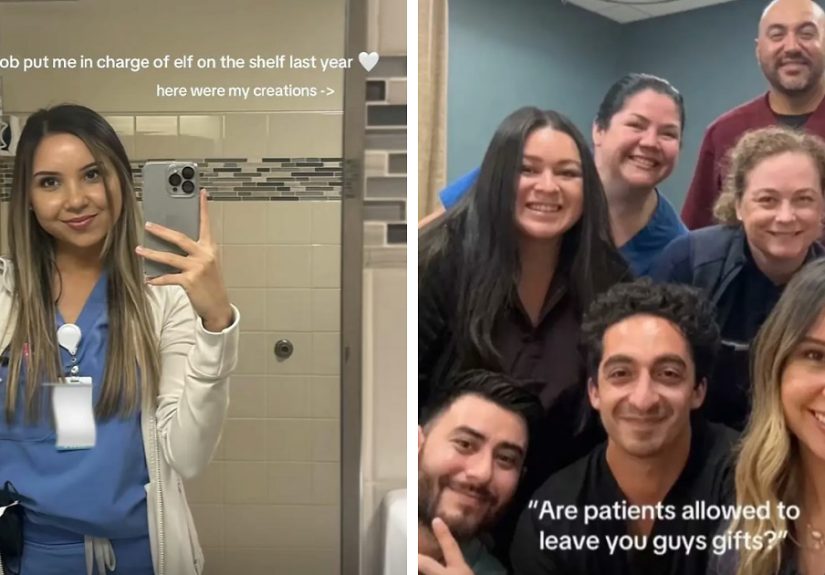
Reports described a now-deleted TikTok that circulated widely via screenshots and reposts. The content showed multiple staff members in a clinic exam area
appearing to mock patients by posing near stains or residue on exam-table paper and adding captions that framed it like a joke. Even without showing faces of
patients, the setting and tone communicated something loud and clear: “Your vulnerability is our punchline.”
The response: swift discipline and terminations
The organization affiliated with the clinic stated that employees involved were terminated and emphasized that the behavior was unacceptable and violated policy.
News coverage described a rapid internal response that included administrative leave followed by firings soon after the incident became known publicly.
Why the internet reacted so intensely
Plenty of workplace posts are cringe. This one was different because it touched a live wire: healthcare is one of the few places where people routinely show up
scared, in pain, embarrassed, or uncertainand still have to trust strangers with intimate details. When that trust is mocked, it doesn’t feel like “oops.”
It feels like betrayal.
Why “dehumanizing” is the word that stuck
Patients don’t show up at urgent care at their best
People go to urgent care for infections, injuries, respiratory symptoms, rashes, UTIs, stomach issues, and yessometimes concerns tied to reproductive health.
The common denominator is not glamour. The common denominator is need.
A joke about a patient’s bodily realities isn’t “dark humor.” It’s punching down at someone who is already in a vulnerable position. And in medicine, power
imbalances are not a side notethey’re the whole stage.
It turns care into content
Social platforms reward “relatable” behind-the-scenes moments. But healthcare behind-the-scenes isn’t like behind-the-scenes at a bakery where the worst-case
scenario is someone drops a croissant. In a clinic, “behind the scenes” is where dignity is either protectedor quietly traded for likes.
Trust is clinical infrastructure
Trust isn’t just a warm-and-fuzzy value. It affects whether patients disclose symptoms, follow instructions, return for follow-up, or seek help early.
When patients think they’ll be ridiculed, they delay careand urgent care becomes “urgent later,” which is rarely a great plan.
Legal and professional consequences: it’s not just “bad optics”
HIPAA: privacy is bigger than names and faces
HIPAA’s Privacy Rule restricts how covered entities and their workforce can use or disclose protected health information (PHI). PHI is not limited to a
patient’s name. Depending on context, images from a care setting, timestamps, unique circumstances, or other identifiers can create privacy riskeven if the
post doesn’t say, “This is Jane Doe.”
In plain English: “We didn’t show the patient” is not a magic spell. The safer standard is: don’t post anything from patient-care areas that could reasonably
be linked to a patient’s visit, condition, or identity.
Employer policies: at-will employment meets public trust
Many healthcare employers have strict social media rules because a single post can damage brand credibility, trigger complaints, and undermine patient
relationships. When a post is perceived as humiliating or disrespectful, discipline can escalate quicklyespecially if it was created at work, in uniform,
or inside clinical space.
Licensing and ethics: boards and professional bodies don’t love “LOL” as a chart note
Professional guidance for clinicians emphasizes confidentiality, professionalism, and respect for patient dignityonline and off. Nursing and medical ethics
resources consistently warn that posts about patients (even “anonymous” ones) can cross ethical lines and jeopardize employment and licensure.
The core message from professional ethics is simple: your role doesn’t end when your shift ends. If you can’t say it in an exam room with the patient present,
don’t say it on a public platform with an algorithm present.
The social media trap: why smart people post catastrophically dumb things
Normalization: “everyone posts at work” (until HR walks in)
In many industries, workplace content is encouraged. In healthcare, that culture can sneak in through trends: “day in my life,” “what I eat on shift,”
“things patients say,” and other formats that feel harmlessright up until they aren’t.
The danger is that the line isn’t always obvious in the moment, especially when coworkers are laughing and someone says, “It’s fine, no patient is in the shot.”
That’s how a group decision becomes a group termination.
Algorithms reward shock, not judgment
TikTok and similar platforms don’t hand out virality for nuance. Outrage and “can you believe this?” content spreads fast. A joke meant for a small circle can
reach millionsplus local news, national entertainment outlets, and your future employer’s Google search results.
Burnout and gallows humor: a real problem with a risky outlet
Urgent care is intense. Staff see a nonstop stream of pain, anxiety, and sometimes aggressive behavior. Gallows humor exists in many high-stress professions as
a coping mechanism.
But coping that relies on humiliating patients is not copingit’s corrosive. The healthier move is to direct humor toward the system, the chaos, or yourself,
not the person who came to you for help.
How to vent without violating patient dignity (or your paycheck)
“De-identified” isn’t the same as “safe”
Removing a name doesn’t erase context. Posting from inside a clinic, showing exam-room setups, referencing a rare circumstance, or sharing a timeline can make
a situation identifiable. In healthcare, “probably anonymous” is still too risky.
Tell stories that educate, not stories that shame
There’s a big difference between:
- Educational content (e.g., “Here’s why urgent care swabs your throat a certain way”) and
- Humiliation content (e.g., “Look what a patient left behind, gross!”)
If the point is to teach, improve access, or reduce stigma, you’re likely on safer ground. If the point is to embarrass a patienteven indirectlyyou’re
standing on a trapdoor.
Use humor “upward,” not “downward”
A good rule: make jokes about the printer that jams at 4:59 p.m., not about a person who needed care at 4:59 p.m. One of those builds team camaraderie.
The other breaks patient trust.
What urgent care clinics should do now (without banning phones like it’s 2007)
1) Write a social media policy that includes real examples
A policy that says “don’t post PHI” is not enough because people interpret PHI too narrowly. Good policies include examples of “no” content:
- Any photos/videos from patient-care areas (exam rooms, treatment bays, hallways where patients could appear)
- Any patient-related jokes, even without identifying info
- Any content that could reasonably be interpreted as mocking, shaming, or demeaning
- Any “behind-the-scenes” posts made during work hours or in uniform without explicit authorization
2) Train the why, not just the rule
Staff buy into policies faster when the training explains the impact:
trust → disclosure → outcomes. Include short case studies (like this incident) and discuss how a post can harm people who already fear stigmaespecially for
sexual health, mental health, and other sensitive concerns.
3) Build healthier outlets for stress
If burnout is high, “don’t post” is not a complete solution. Clinics can reduce risk by giving staff better pressure valves:
- Structured debriefs after rough shifts
- Peer support programs
- Access to counseling resources
- Clear pathways for reporting workplace strain or conflicts
4) Create a crisis playbook
When an incident hits, speed matters. A response plan can include:
- Immediate preservation of facts (what was posted, when, by whom)
- Internal review and appropriate discipline
- Patient-facing communication that centers dignity and accountability
- Re-training and process improvements (so it’s not just “we fired them”)
What patients can do if they feel disrespected or exposed online
Ask to speak with the clinic manager or patient relations
If something happens during a visitor you see content online that appears connected to a cliniccontact the organization and ask how they’re addressing it.
You can request that your concerns be documented and ask what steps are being taken to protect patient privacy and dignity.
Document what you saw
If a post is involved, screenshots and dates matter. Even if content is deleted, documentation can help an organization investigate and respond appropriately.
Escalate when needed
If you believe protected health information was disclosed, you can explore filing a privacy complaint with the appropriate authorities. You can also contact
your health plan or healthcare organization’s privacy officer for guidance on next steps.
500-word experiences: what this kind of incident feels like on both sides of the curtain
In urgent care, the waiting room is basically a cross-section of human vulnerability. Someone is trying not to cough. Someone is trying not to cry. Someone is
staring at their phone like it holds the answer to “Is this normal?” (Spoiler: Google says everything is either totally fine or definitely a rare disease named
after a 19th-century guy with impressive sideburns.)
On the patient side, embarrassment is common. People apologize for their symptomslike they scheduled a sinus infection as a personal inconvenience for the
staff. They whisper about rashes. They hesitate before describing odors, discharge, or pain in places we politely refer to as “down there.” A good clinician
meets that moment with calm, matter-of-fact professionalism: “You’re not the first person to have this, and you won’t be the last. Let’s take care of you.”
That sentence does more healing than it gets credit for.
On the staff side, urgent care can feel like sprinting a marathon. Phones ring. Rooms turn over. The printer jams when it senses fear. You’re balancing speed,
safety, and empathy, sometimes while dealing with short tempers and long days. Many teams develop tight bonds because they have tourgency has a way of turning
coworkers into co-pilots. And yes, humor shows up. But the healthiest humor is the kind that releases tension without turning patients into targets: laughing
about the “mystery squeak” of a supply cart, or how every shift includes at least one person who says, “I’m not sick, I’m just here because my mom made me.”
When staff mock patientsespecially for bodily realities tied to careit changes the story patients tell themselves after they leave. Instead of “I got help,”
it becomes “I was a joke.” That’s the part people don’t forget. The fear isn’t only about privacy; it’s about dignity. Patients start wondering, “Did they
laugh at me after I left?” And staff who would never behave that way get hit too, because the public doesn’t separate “those employees” from “healthcare.”
One viral post can make the next patient hesitate before being honestand honesty is how medicine works.
The better experience, the one urgent care teams should chase, is boring in the best way: a patient comes in anxious, gets treated respectfully, leaves
informed, and feels like a human being the entire time. No punchlines. No thumbnails. Just care. In 2026, that kind of professionalism isn’t old-fashioned
it’s a competitive advantage and a moral baseline.
Conclusion: the real lesson isn’t “don’t post”it’s “don’t forget who you’re serving”
The viral TikTok incident is a harsh reminder that healthcare work isn’t content, and patients aren’t props. People remember how you treat them when they’re
exposed, uncomfortable, and scared. Urgent care centers can’t control the internet, but they can control their culture: train for digital professionalism,
support staff stress in healthier ways, and make patient dignity non-negotiable.