Table of Contents >> Show >> Hide
- What the Wabi Large Sand Fiberstone Planter Actually Is
- Why “Sand” Is a Power Neutral (and Not Just a Beige Mood)
- Fiberstone 101: The Material Behind the “Lightweight Stone” Trick
- Plant Pairings That Look Expensive (Even If Your Plant Was $12)
- How to Plant the Wabi Planter Without Creating a Swamp
- Styling Ideas: Wabi-Sabi Energy, Real-World Function
- Outdoor Reality Check: Frost-Resistant Still Requires Good Winter Habits
- Maintenance: Keep It Pretty Without Turning It Into a Weekend Job
- Fiberstone vs. Other Planter Materials (So You Can Feel Smart at Checkout)
- Common Mistakes (and How to Avoid Them)
- Conclusion: A Big Planter That Doesn’t Feel Loud
- Experiences: Living With the Wabi Large Sand Fiberstone Planter (Extended)
Some planters scream, “I was on sale!” The Wabi Large Sand Fiberstone Planter whispers,
“I own a linen slipcover and I’m emotionally stable.” It’s the kind of vessel that makes a simple snake plant
look like it has a publicist and a skincare routine.
If you’re hunting for a large outdoor planter that feels modern but not cold, minimal but not boring,
and elevated but not “don’t breathe near it,” you’re in the right place. Let’s break down what this planter
is, why fiberstone is having a moment, and how to set it up so your plant thrives instead of staging a
dramatic collapse.
What the Wabi Large Sand Fiberstone Planter Actually Is
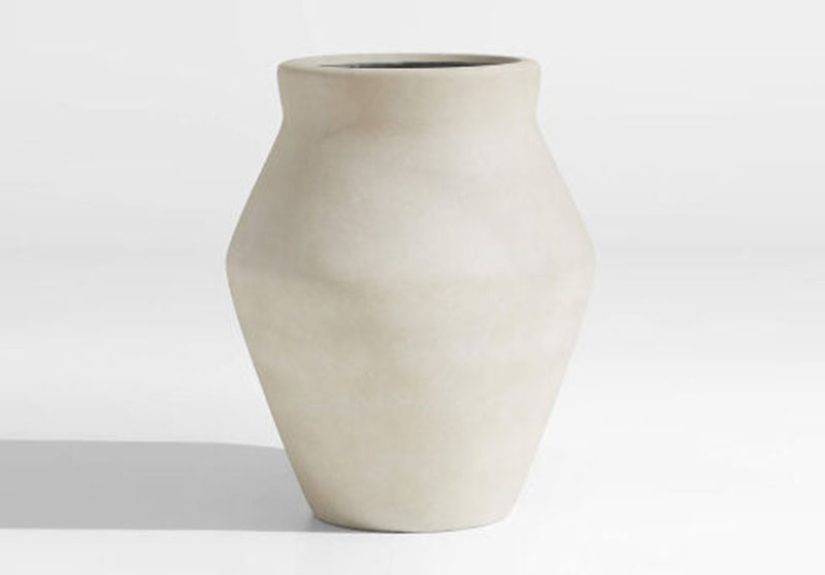
The Wabi planter is inspired by the rounded silhouette of traditional storage jars, streamlined into a clean,
contemporary bicone shape. In plain English: it’s curvy in a classy waymore “museum pottery” than “bulbous
fishbowl.” That silhouette matters because it plays well with trailing greens, mounding flowers, and
architectural plants that need a strong base to look intentional.
Key specs (the stuff you’ll want to know before you click “Add to Cart”)
- Size: Large, with a substantial footprint for visual weight and root room.
- Dimensions: Approximately 24″ diameter × 29.5″ height (big enough to anchor a patio corner).
- Material: A cement/sand/fiber composite commonly referred to as fiberstone.
- Drainage: Includes a drainage hole with a removable rubber stoppera rare detail that makes it flexible for indoors or outdoors.
- Use case: Styled for decks, balconies, patios, and indoor “please look at my entryway” moments.
Design-wise, the Sand color reads as a soft, natural off-whitewarm enough to complement wood, brick,
and greenery, but neutral enough to behave around bolder furniture. It’s a color that doesn’t compete; it
collaborates.
Why “Sand” Is a Power Neutral (and Not Just a Beige Mood)
The best neutrals don’t disappearthey edit the space. Sand does that. On a sunny patio, it brightens
without glare. In shade, it stays warm instead of going gray and sad. And in a busy outdoor setup (grill,
lounge chairs, string lights, dog toys that “aren’t yours”), it brings the eye back to the plant.
Practically speaking, a sandy off-white also hides real life better than pure white. Dust, water spots,
mineral marks, and normal outdoor grime are less obvious than they’d be on a stark bright finish.
(Your future self, holding a hose and regretting everything, will appreciate this.)
Fiberstone 101: The Material Behind the “Lightweight Stone” Trick
“Fiberstone” is commonly used to describe a manufactured composite designed to look like natural stone or
concretewithout the back-breaking weight. Many fiberstone products blend stone-like materials with resins
and reinforcing fibers so you get durability and a convincing finish in a more manageable form.
What you can expect from fiberstone performance
- Stone-like look and feel: Often mimics natural stone texture and visual depth.
- More manageable weight: Typically lighter than full concrete or solid stone planters.
- Outdoor-friendly: Commonly positioned as UV- and frost-resistant (with smart placement and drainage).
- Weathering is normal: Mineral deposits, surface changes, and patina can develop over timeespecially outdoors.
Here’s the key: “frost-resistant” doesn’t mean “invincible.” It means the material is designed to tolerate
cold better than fragile ceramicsif you prevent the #1 winter villain: trapped water + freeze/thaw
cycles. Think of winter water like a surprise science experiment. It expands when it freezes, and it never
asks permission.
Plant Pairings That Look Expensive (Even If Your Plant Was $12)
The Wabi Large planter is tall and wide enough to act like a piece of outdoor furniture. That means your
plant choice should match the scale. Tiny plants can look a little lostlike a toddler wearing a trench coat.
Outdoor favorites
- Dwarf olive or bay laurel (in suitable climates): Clean structure, Mediterranean vibe, low drama.
- Boxwood or dwarf conifers: Great for formal entry moments and year-round shape.
- Ornamental grasses: Movement + texture that makes the planter feel “alive” even in off seasons.
- Seasonal swaps: Spring bulbs → summer blooms → fall mums → winter greens. One planter, four personalities.
Indoor favorites
- Fiddle-leaf fig (real or faux): The classic “I have my life together” silhouette.
- Rubber plant: Glossy leaves, strong shape, forgiving attitude.
- Snake plant cluster: Sculptural, low maintenance, and basically impossible to offend.
If you’re planting anything woody (small tree/shrub) in a container and you live where winters are real,
remember that container roots get colder than in-ground roots. Translation: you may need extra winter
protection, or choose plants significantly hardier than your zone would normally require.
How to Plant the Wabi Planter Without Creating a Swamp
The fastest way to ruin a gorgeous large planter is to turn it into a slow-motion bath tub. Plants want
moisture, yesbut they also want oxygen at the roots. The goal is consistent drainage and a potting mix that
holds moisture without staying soggy.
Step-by-step setup (outdoors)
- Keep the drainage hole open. If your planter has a stopper, remove it outside.
- Cover the hole with mesh/screen. This prevents soil washout without blocking water flow.
-
Skip the “rocks at the bottom” myth. Adding gravel can create a perched water table and keep
soil above wetternot drier. - Use a high-quality potting mix. Avoid garden soil; it compacts and drains poorly in containers.
- Plant at the right height. Keep the root flare (for trees/shrubs) visible and not buried.
- Water deeply until it drains. Then let the top couple inches dry (depending on the plant) before watering again.
Two smart indoor approaches
-
The “nursery pot inside decorative pot” method: Keep your plant in a plastic pot with drainage,
place it inside the Wabi planter, and lift it slightly so it never sits in runoff. Easy to remove, rotate, and water. -
The lined planter method: If you want to plant directly inside, use a waterproof liner and
treat the interior like a controlled systembecause water + floors = heartbreak.
Styling Ideas: Wabi-Sabi Energy, Real-World Function
Wabi-sabi as a design philosophy celebrates simplicity, natural materials, and the beauty of imperfection and
aging. That makes this planter a strong match for relaxed, layered spacesespecially if you like interiors that
feel lived-in rather than staged.
Where it shines
- Front entry: One on each side of the door for symmetry, or just one for a calm focal point.
- Patio corners: Use it to “finish” an outdoor room the way a floor lamp finishes a living room.
- Poolside or balcony: It reads sculptural without visually crowding small spaces.
- Indoor threshold areas: Mudroom, foyer, or by a big window where the plant can be the star.
Pro styling tip: match the plant’s “attitude” to the planter. This shape wants something architecturalan
upright plant, a small tree, or a deliberate mass of foliage. If your plant looks like it accidentally grew
there, the planter will look like it’s trying too hard. (And nobody wants that. Especially not the planter.)
Outdoor Reality Check: Frost-Resistant Still Requires Good Winter Habits
If you live somewhere with freezing temperatures, treat large planters like outdoor structures:
they need drainage, airflow, and smart placement. The biggest winter issue isn’t coldit’s water trapped in
the planter or soil, freezing and expanding, then thawing, then doing it again like a villain with free time.
Winter best practices for large containers
- Elevate for drainage: Use planter feet or a stand so water doesn’t pool underneath.
- Move to a protected spot if possible: Against a wall, under an overhang, out of wind.
- Insulate the pot/roots: Wrap the container, mound mulch, or move to an unheated garage for dormancy (plant dependent).
- Water before hard freeze: Moist (not soggy) soil helps plants handle winter better than bone-dry media.
And yesplants in containers can behave like they’re in a colder climate than your actual zone because the
roots are exposed. If you’re overwintering shrubs/trees in planters, extra protection isn’t “being dramatic,”
it’s being successful.
Maintenance: Keep It Pretty Without Turning It Into a Weekend Job
Good news: fiberstone planters are generally low maintenance. Better news: low maintenance doesn’t mean
zero maintenance, unless you enjoy the “mysterious stains” aesthetic.
Quick care checklist
- Clean gently: Mild soap + water and a soft cloth. Avoid abrasives that can scratch the surface.
- Avoid harsh cleaners: Highly acidic or citrus-based cleaners can affect finishes.
- Watch for mineral deposits: Outdoor water can leave marks over time; light cleaning helps.
- Consider sealing: In some environments, a suitable sealer can help reduce weathering and stains.
- Don’t drag it: Large planters should be lifted carefully (ideally empty) to avoid stress cracks or surface damage.
If you want the most consistent “new” look, keep it out of standing water, don’t let fertilizer runoff sit on
the surface, and give it a gentle wash a few times a year. If you prefer patina, congratsyou’re doing wabi-sabi
correctly.
Fiberstone vs. Other Planter Materials (So You Can Feel Smart at Checkout)
The Wabi planter sits in a sweet spot: elevated design + outdoor practicality. Here’s how fiberstone typically
compares to the usual suspects.
| Material | Pros | Cons | Best for |
|---|---|---|---|
| Fiberstone | Stone-like look, usually lighter, often outdoor-rated | Can stain/weather; needs good drainage in freezes | Patios, entries, modern outdoor rooms |
| Terra cotta | Breathable, classic, affordable | Can crack in freeze/thaw; dries quickly | Warm climates, herbs, dry-loving plants |
| Glazed ceramic | Colorful, decorative | Heavier; more crack risk in freezing temps | Covered porches, mild climates |
| Concrete | Very stable, durable look | Heavy (hello, herniated dreams); may stain | Windy sites, permanent placements |
| Plastic/resin | Lightweight, budget-friendly | Can look cheap; may fade or warp | Casual gardens, frequent rearranging |
| Metal | Modern, sleek | Can heat up; may rust depending on finish | Minimalist spaces, shade placements |
Common Mistakes (and How to Avoid Them)
- Blocking drainage “just this once”: That’s how root rot gets invited to move in permanently.
- Adding rocks for drainage: It often does the opposite; use proper mix and drainage instead.
- Using garden soil: Compacts, drains poorly, and can bring pests/weed seeds.
- Letting water sit under the planter: Standing water is a freeze/thaw and staining recipe.
- Planting too small for the scale: Match the plant to the planter’s visual “presence.”
Conclusion: A Big Planter That Doesn’t Feel Loud
The Wabi Large Sand Fiberstone Planter is for people who want their outdoor (or indoor) space to
feel intentional without looking precious. It’s sculptural, calm, and versatileespecially because the drainage
setup can flex for different environments.
Set it up with proper drainage, choose a plant with enough scale to match the silhouette, and treat winter
like a real season (not just a vibe). Do that, and you’ll have a planter that looks better over timewhether
that means staying clean and crisp or developing a little character like a well-loved cutting board.
Experiences: Living With the Wabi Large Sand Fiberstone Planter (Extended)
The first thing you notice about the Wabi planter is that it doesn’t look like a “garden supply” itemit looks
like something that belongs in a thoughtfully designed space. When it arrived, I expected a big neutral pot.
What I got was more like a quiet statement piece: tall, rounded, and oddly calming, like the planter version
of a deep breath.
Placement was my first lesson. I originally put it near a seating area, but it felt like the plant was trying
to join the conversation. Moving it to a patio corner instantly made more sense. Corners love tall planters.
They’re the awkward social spaces of architecture, and a large planter gives them a job. Suddenly the outdoor
setup felt “finished,” like a room with proper endpoints.
Plant choice was lesson number two. I started with something too smallbecause optimism is free and mistakes
are educational. The plant looked like it was borrowing the planter for a school presentation. Once I swapped
to a larger, more architectural option (upright foliage with a little height), the whole thing clicked. The
Wabi shape wants confidence. It doesn’t demand a rare plant, but it does demand a plant that can hold its own.
Watering taught me the third lesson: drainage isn’t a detail, it’s the entire plot. If you’re using it outdoors,
let it drain like it’s getting paid to do so. After one heavy rain, I realized how easy it is for water to pool
underneath big planters if the surface isn’t perfectly sloped. A small lift (planter feet or a discreet stand)
made a big differencebetter airflow, less sitting water, and fewer mysterious marks on the patio.
Then came the seasonal reality check. “Frost-resistant” sounded comforting until I remembered that winter is
basically physics with an attitude. Before the first deep freeze, I shifted the planter closer to the house,
where it was more protected from wind and weather. I also got more disciplined about not letting water collect
anywhere near the base. The goal wasn’t to baby itit was to avoid the freeze/thaw cycle that makes any
moisture-related issue dramatically worse.
Maintenance has been refreshingly normal. A gentle wash keeps it looking clean, and the sand color is forgiving
in a way bright white never is. Over time, I’ve started to appreciate subtle weathering because it fits the
whole wabi-sabi vibe: a little texture, a little patina, a little proof that the planter has lived outside and
survived. In other words, it’s aging like a well-written novelnot like a forgotten cup holder.
The biggest “experience takeaway” is that this planter rewards good habits. If you’re the type to set a pot in
a puddle and hope for the best, it won’t magically fix that lifestyle. But if you give it proper drainage,
choose a plant with presence, and treat winter like a real thing, the Wabi planter does what great design
should do: it makes your space feel calmer, sharper, and more put togetherwithout looking like you tried too
hard.