Table of Contents >> Show >> Hide
- The Short Answer
- Why Dupixent Is Supposed to Go Under the Skin
- What You Might Notice If Dupixent Hits Muscle
- Is It Dangerous?
- What to Do Right Away If You Think You Injected Dupixent into a Muscle
- Could One Wrong Injection Make Dupixent Stop Working?
- How to Reduce the Chances of This Happening Again
- When to Call the Doctor, Pharmacist, or Emergency Services
- Bottom Line
- Common Experiences After an Accidental Muscle Injection of Dupixent
Let’s start with the part everyone actually wants to know: if you accidentally inject Dupixent into a muscle instead of the fatty layer under the skin, it is usually not a cue for dramatic movie music. But it is not ideal, either. Dupixent is designed to be given as a subcutaneous injection, which means it is supposed to land just under the skin, not deep in the muscle. If it goes too deep, the most likely results are more pain, more bruising, more soreness, and some uncertainty about how well that dose will be absorbed.
In other words, the issue is usually not “your body will instantly revolt,” but “this shot may be more uncomfortable and less predictable than it should have been.” That distinction matters. It keeps you from panicking, while still taking the mistake seriously enough to handle it the right way.
Because Dupixent is a prescription biologic, proper injection technique matters. If you think you injected it into a muscle, the safest move is to contact your doctor, nurse, or pharmacist for guidance rather than guessing whether you should repeat the dose. Guesswork and injectable medications are not best friends.
The Short Answer
If you inject Dupixent into a muscle, you may notice:
- more immediate pain than usual
- deeper soreness afterward
- bruising or minor bleeding at the site
- a “that definitely felt wrong” sensation during the shot
- uncertainty about whether the medication was absorbed as intended
Most of the time, an accidental intramuscular injection is not the same thing as a life-threatening emergency. However, if you develop hives, facial swelling, trouble breathing, severe dizziness, or other signs of a serious allergic reaction, seek emergency care right away.
Why Dupixent Is Supposed to Go Under the Skin
Dupixent is a subcutaneous medication
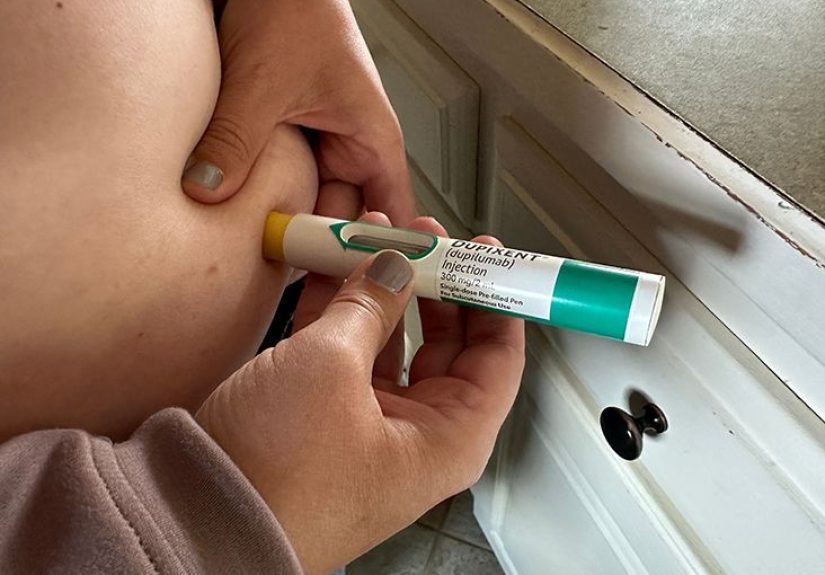
Dupixent, also called dupilumab, is a biologic medication given by injection under the skin. The recommended injection areas are the thigh, the abdomen except for the area close to the belly button, and the upper arm when a caregiver gives the shot. Those sites are chosen because they offer a layer of fatty tissue where the drug is meant to sit and absorb the way it was designed to.
Muscle is a different neighborhood
Muscle tissue has a different blood supply and a different feel during injection. A medication made for subcutaneous delivery can behave differently if it is accidentally placed into muscle. That does not automatically mean the dose is ruined, but it does mean absorption may be less predictable. And yes, it often hurts more. A lot more.
Technique matters for comfort and consistency
The whole reason healthcare providers teach injection technique is not to make life unnecessarily complicated. It is to help you get a dose that is both comfortable and consistent. A good Dupixent injection should feel controlled, not like you just lost a duel with your own thigh.
What You Might Notice If Dupixent Hits Muscle
1. More pain during the injection
This is the most commonly discussed experience. A shot that accidentally goes into muscle tends to sting or ache more sharply than a proper subcutaneous injection. Many people describe it as deeper, heavier, or more intense than the usual pinch-and-pressure feeling.
2. More soreness afterward
Instead of a small, brief irritation near the skin, you may end up with lingering muscle soreness that lasts for hours or even into the next day. It can feel similar to the soreness after a vaccine or a particularly rude workout.
3. Bruising or a tender lump
Bruising can happen with any injection, but a deeper injection may leave the area more tender or discolored. Some people also notice mild swelling or a firm spot. Usually, this settles down with time. Still, if the area becomes very red, hot, hard, or increasingly painful, call your clinician.
4. Worry about whether the dose “counted”
This is the part that drives people nuts. The real concern with an accidental muscle injection is not just discomfort. It is the possibility that the medication may not be absorbed exactly as intended. That is why many patient education sources recommend contacting your doctor if you believe you injected the dose incorrectly. The goal is to figure out whether you likely received the full dose and what to do next.
Is It Dangerous?
Usually, the route mistake itself is not the dangerous part. The bigger concern is whether you got the full intended dose and whether you are having an unusual reaction. An accidental muscle injection is more likely to cause pain and bruising than a medical crisis.
That said, Dupixent can cause side effects regardless of where it lands. Common ones include injection site reactions such as pain, swelling, redness, itching, or bruising. Rarely, hypersensitivity reactions can happen. So if your symptoms go beyond a sore injection site and start looking systemic, do not shrug them off.
Seek urgent medical help if you have:
- difficulty breathing
- swelling of the face, lips, mouth, or throat
- widespread hives
- faintness or severe dizziness
- a rapidly worsening reaction after the shot
What to Do Right Away If You Think You Injected Dupixent into a Muscle
- Do not panic. Most wrong-route injections are uncomfortable, not catastrophic.
- Make a note of the time and injection site. This helps if you need to speak with a clinician.
- Watch the area. Mild pain or bruising can happen. Rapid swelling, rash, or severe symptoms need faster attention.
- Do not automatically give yourself another dose. Contact your doctor, specialty pharmacy, or pharmacist first for guidance.
- Ask whether the dose should be counted. This is the key practical question after an incorrect injection.
- Get emergency help for serious allergic symptoms. If breathing becomes difficult or swelling spreads, call 911.
If you are in the United States and feel unsure about a medication mistake, Poison Help can also direct you to the right next step. That does not mean you are poisoned; it means you are being smart.
Could One Wrong Injection Make Dupixent Stop Working?
Probably not in any dramatic, all-or-nothing way. One imperfect injection does not usually erase all the benefit of a medication that is taken on a schedule over time. But that specific dose may be less reliable than intended. Think of it as a detour, not necessarily a total engine failure.
For people using Dupixent for eczema, asthma, chronic rhinosinusitis with nasal polyps, eosinophilic esophagitis, or another approved condition, treatment works best when dosing stays consistent. That is why it is worth checking with your prescriber if you think the shot went into muscle. You want the next step to be based on actual guidance, not vibes.
How to Reduce the Chances of This Happening Again
Choose the right site
Use an approved injection site with enough soft tissue. The front of the thigh and the abdomen are common choices. If a caregiver gives the injection, the upper arm may also be used. Avoid scarred, bruised, tender, irritated, or damaged skin.
Rotate your sites
Do not keep choosing the exact same spot. Repeated injections in one area can increase irritation and make future shots less comfortable.
Review your device instructions
Dupixent pens and prefilled syringes are not handled in exactly the same way. Follow the instructions for your specific device every time. If you are ever unsure, ask for a refresher instead of improvising like a contestant on a medical game show.
Let the medication reach room temperature as directed
Injecting cold medication can sting more. Follow the instructions that come with your specific pen or syringe for how long to let it sit before use.
Ask for a technique check
If you are very lean, nervous about needles, or not sure how deep you are going, ask your doctor, nurse, or pharmacist to watch your technique. A quick demonstration can prevent a lot of future drama.
When to Call the Doctor, Pharmacist, or Emergency Services
Call your doctor or pharmacist if:
- you think the shot went into muscle
- you are not sure you received the full dose
- the site becomes increasingly painful, red, swollen, or hard
- you have a significant bruise and want advice about the next dose
- you need help correcting your injection technique
Call 911 or get emergency care if:
- you have trouble breathing
- your face or throat starts swelling
- you feel faint or collapse
- you have signs of a severe allergic reaction
Bottom Line
If you inject Dupixent into a muscle, the most likely outcome is a more painful shot, more soreness, and some uncertainty about how well that dose was delivered. It is not the recommended route, and it is worth reporting to your healthcare team, but it is not automatically a disaster. The smartest move is to stay calm, monitor symptoms, and get guidance before doing anything else.
Dupixent works best when it is used exactly as directed: under the skin, in the right areas, with the right technique. Your future self, your treatment plan, and your not-currently-offended thigh will all appreciate that.
Common Experiences After an Accidental Muscle Injection of Dupixent
Below are common real-world patterns people worry about or describe after a shot that may have gone too deep. These are not formal case reports or guaranteed outcomes. They are practical, experience-based scenarios that help explain what the mistake can feel like in everyday life.
The deep-thigh “whoa, that was different” experience: This is probably the most familiar one. Instead of the usual quick sting, the person feels a deeper jab followed by a spreading ache in the thigh. The area may feel sore when walking up stairs, sitting down, or getting out of bed. Usually, the soreness fades, but the memory of the shot remains emotionally available for several business days.
The dramatic bruise that looks worse than it is: Some people notice a bluish or purple patch that appears later the same day or the next morning. It can look alarming, especially if the shot was already stressful. In many cases, the bruise improves on its own. What matters more is whether the area keeps getting hotter, harder, redder, or more painful, because that is when a routine injection-site problem starts to deserve a medical call.
The “did the dose even count?” spiral: This is less about physical symptoms and more about anxiety. People often worry they wasted an expensive medication or threw off their treatment plan. That concern is understandable. Dupixent is not a casual over-the-counter product you shrug at and replace with another bottle. If you think the shot went into muscle, it is reasonable to contact your prescriber and ask whether the dose likely counts and when the next one should be taken. That one phone call can save a lot of second-guessing.
The repeat-dose temptation: Sometimes people want to immediately inject again because they are afraid the first shot “didn’t work.” This is exactly the moment to pause. Repeating an injection without guidance can create a new problem while trying to solve the first one. In practice, most clinicians would rather you call and explain what happened than freestyle your biologic dosing at home.
The confidence dip on the next injection day: Even when nothing serious happens, a painful mistake can make the next scheduled dose feel emotionally heavier. People may hesitate, hover, overthink the angle, or suddenly become convinced they have forgotten how to inject. That loss of confidence is real. One of the best fixes is to review the instructions, choose a calm setup, and ask for a quick training refresh if needed. Good technique is partly physical and partly psychological. Feeling steady matters.
The reassuring outcome: In many everyday situations, the story ends with soreness, monitoring, a quick message to the care team, and a better injection next time. That does not make the mistake ideal, but it does make it manageable. For most people, an accidental muscle injection is a technique problem to correct, not a sign that Dupixent has suddenly become unsafe or unusable.