Table of Contents >> Show >> Hide
- What Is a Transom on a Boat?
- What Is the Purpose of a Transom?
- What Is a Boat Transom Usually Made Of?
- Signs a Boat Transom May Have Problems
- Why Water Intrusion Is the Transom’s Biggest Enemy
- How to Care for a Boat Transom
- Can a Damaged Transom Be Repaired?
- Examples of How the Transom Differs by Boat Type
- Real-World Experiences Boaters Often Have With a Transom
- Final Thoughts
- SEO Tags
If you have ever stood at the back of a boat and thought, “Well, that part looks important,” congratulationsyou were staring at the transom. It is not the flashiest part of a boat. It does not roar like an outboard or sparkle like new gelcoat. But it does a lot of heavy lifting, sometimes literally. On many boats, the transom supports the engine, helps shape the stern, carries hardware, and deals with constant stress from waves, speed, vibration, and the occasional “that dock came out of nowhere” moment.
For new boaters, the transom can sound like one of those nautical words people say just to seem salty. It is not. It is a real structural component with a real job, and if you ignore it, your wallet may stage a small protest. Understanding what a transom is, what it does, and how to care for it can help you avoid water intrusion, mounting issues, rot, cracking, and expensive repairs later.
This guide breaks it all down in plain English: the definition of a boat transom, why it matters, where you will find it, what can go wrong, and how to keep it in good shape for years of safe boating.
What Is a Transom on a Boat?
A transom is the rear section of a boat’s hullthe part at the stern that forms the back of the vessel. On many recreational boats, especially outboard-powered boats, it is the broad, mostly vertical surface at the back where the motor mounts. Think of it as the boat’s back wall, but with a much more demanding résumé.
In simple terms, the transom connects the hull sides at the stern and helps close out the rear of the boat. Depending on the boat’s design, it may be flat, slightly angled, cut down, stepped, or integrated with a swim platform. Some transoms are tall and beefy to support heavy outboards. Others are lower and more open for easier access to the water. Either way, the transom is not just there to look nautical in family photos.
Transom vs. Stern: What’s the Difference?
These two terms often get mixed up, but they are not exactly the same. The stern is the entire rear end of the boat. The transom is the structural section at the back of the hull. So, every transom is at the stern, but not every mention of the stern means only the transom. One is the neighborhood; the other is the house.
What Is the Purpose of a Transom?
The transom has several important jobs, and none of them are optional if you would like your boat to remain a boat.
1. It Adds Structural Strength
The transom helps tie the hull together at the stern. It resists twisting, flexing, and impact loads while the boat is underway. That matters because the rear of a boat takes a beating. Waves hit it, engines pull on it, trailers bounce it, and hardware gets bolted through it. A solid transom helps the hull stay stiff and balanced under all that stress.
2. It Supports the Engine
On outboard boats, the transom is often the engine’s home base. It carries the weight of the motor and absorbs the thrust generated when the boat accelerates. That means the transom must handle both static weight and dynamic force. In plain English: it must support a heavy engine while that engine is trying very hard to shove the boat forward.
On sterndrive boats, the transom also matters because the drive assembly passes through or attaches at the stern area. Even on smaller boats with portable outboards or transom-mount trolling motors, the transom still serves as the mounting point.
3. It Carries Important Gear and Hardware
A lot of useful equipment ends up on or through the transom. That can include:
- Outboard engines
- Trolling motors
- Transducers for fish finders
- Drain fittings and splashwell drains
- Trim tabs
- Swim ladders or platforms
- Transom eyes and tie-down points
- Auxiliary or kicker motor brackets
Every bolt hole, bracket, and fitting on the transom creates another possible stress point or path for water intrusion, which is why proper installation and sealing matter so much.
4. It Affects Balance and Performance
The transom helps manage weight at the stern and influences how the boat sits in the water. If the transom is overloaded, damaged, waterlogged, or paired with the wrong engine setup, the boat may squat too much at the rear, plane poorly, handle awkwardly, or ride lower than it should. That is bad for performance and even worse for peace of mind.
5. It Often Holds the Hull Identification Number
On many boats, the Hull Identification Number, or HIN, is affixed on the starboard outboard side of the transom near the top. That little code is the boat’s version of a VIN on a car. It is used for registration, ownership records, theft recovery, and identifying the model year. So yes, the transom is also carrying paperwork, just in a very boat-like way.
What Is a Boat Transom Usually Made Of?
Transoms vary by boat type, construction era, and intended use. Common materials include fiberglass, aluminum, marine plywood cores, and modern composite materials. Many fiberglass boats, especially older ones, have a wood-cored transom laminated inside fiberglass skins. That construction can be strong and durable, but it becomes a problem when water sneaks into the core.
Aluminum boats may use aluminum framing with wood or composite reinforcement where the motor mounts. Some newer boats use composite cores to reduce rot risk. Inflatable boats and small utility craft may have simpler transom assemblies designed for lightweight outboards.
The important takeaway is this: even if you cannot see the core, what is inside the transom matters. A glossy outer finish does not always mean the structure underneath is healthy.
Signs a Boat Transom May Have Problems
Transom issues can range from minor hardware leaks to serious structural failure. Catching problems early is the difference between a weekend repair and a dramatic invoice.
Watch for These Warning Signs
- Cracks or spiderwebbing around engine mounts or hardware
- Softness, sponginess, or flex when pressure is applied
- Water seeping from bolt holes or fittings
- Rusty or corroded fasteners and backing hardware
- Dark staining, swelling, or delamination around drilled holes
- A transom that moves when the engine is trimmed or pushed gently
- Loose mounting bolts or hardware that will not stay tight
On wood-cored transoms, water intrusion is the classic troublemaker. A poorly sealed bolt hole, old drain tube, loose transducer screw, or neglected bracket can let water migrate into the core. Over time, that moisture can cause rot, weakening the structure from the inside out. The outside may still look decent while the inside is having a complete existential crisis.
Why Water Intrusion Is the Transom’s Biggest Enemy
The transom lives in a harsh environment. It deals with spray, rain, washdowns, waves, and sometimes saltwater, which never misses a chance to be extra. If water gets into the transom core through unsealed penetrations, failed caulk, damaged drain fittings, or old hardware, it can stay trapped for a long time.
That trapped moisture can cause wood rot, weaken bonding, add weight, and reduce structural integrity. On aluminum boats, water intrusion and poor sealing can also contribute to corrosion and fastener issues. This is why professional installers emphasize sealing transom bolt holes properly and why boaters should be cautious about drilling “just one quick little hole.” Those are famous last words in marine maintenance.
How to Care for a Boat Transom
Good transom care is mostly about inspection, prevention, and not pretending small cracks are decorative. Here is how to protect it.
Inspect It Regularly
Look over the transom before the season, during the season, and anytime you notice unusual flex, vibration, or handling changes. Pay close attention to engine mounts, drain fittings, tie-down points, ladders, and transducers. Look for cracks, movement, missing sealant, or staining around holes.
Keep Hardware TightBut Correctly Tight
Mounting bolts should be secure and checked periodically, especially on outboard boats. Loose hardware can wallow out holes, damage brackets, and increase movement at the transom. At the same time, over-tightening can crush or damage the structure. The smart move is to follow the boat or engine manufacturer’s specifications instead of relying on “that seems about right.”
Seal Every Hole Properly
Any time hardware is installed, removed, or reinstalled on the transom, use proper marine sealant and re-bed the fitting if needed. This includes engine bolts, transducer screws, swim ladder mounts, drain tubes, and auxiliary brackets. Water does not need a large opening. It only needs one neglected fastener and a little patience.
Rinse After Saltwater Use
Saltwater is rough on metal fittings, brackets, transom accessories, and exposed hardware. Rinse the stern area thoroughly after every saltwater trip. That simple habit helps reduce corrosion and makes inspections easier because you are not evaluating damage through a crust of dried salt.
Support the Engine When Trailering
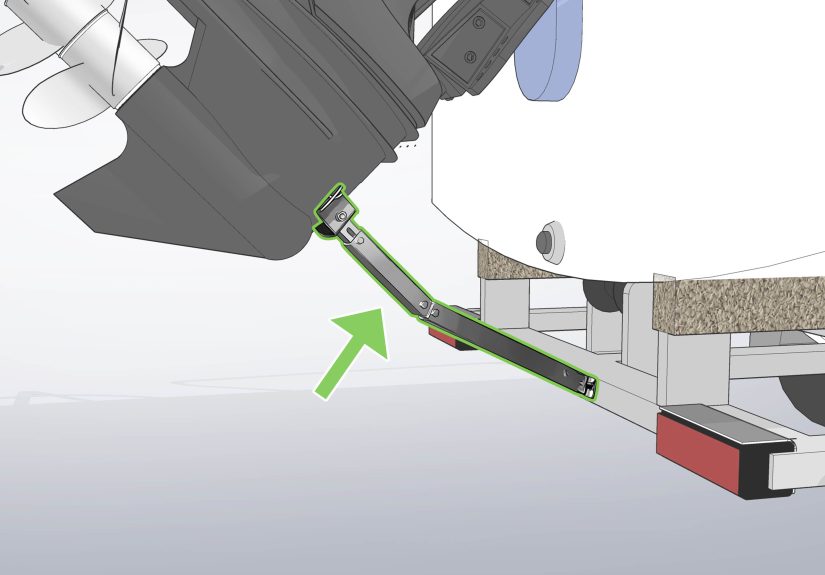
Trailering can put extra stress on the transom because of road shock and vibration. Many boaters use a transom saver or outboard support bracket to reduce bouncing and relieve stress during transport, especially on smaller boats, older fiberglass boats, or wood-core transoms. Use a support system that is compatible with your setup and follow the manufacturer’s guidance. The highway is not gentle, and your transom would prefer not to audition for a stunt reel.
Do Not Overpower the Boat
The transom is designed for a certain load. Exceeding the boat’s rated maximum horsepower or hanging too much engine weight on the stern can create safety issues and structural stress. If you are repowering a boat, confirm that the transom is sound and that the new engine’s weight, mounting height, and horsepower are all appropriate.
Fix Problems Early
If you see flex, softness, leaking around holes, or cracks near engine mounts, do not wait for “one more season.” Minor moisture intrusion can turn into core damage, and core damage can turn into a major repair. A professional marine surveyor or repair yard can determine whether the problem is cosmetic, hardware-related, or structural.
Can a Damaged Transom Be Repaired?
Yes, but the type of repair depends on the damage. Small issues such as failed sealant, loose fittings, or isolated hardware leaks may be relatively straightforward. More serious issueslike a rotten wood core, delamination, or heavy cracking around engine mountscan require extensive transom rebuilding.
Transom repair may involve removing hardware, opening part of the inner or outer skin, replacing damaged core material, drying the area thoroughly, laminating new material, and reinstalling fittings with proper sealing. On some boats, especially older outboard models with known moisture issues, a full transom replacement may be the smartest long-term fix.
This is not always a beginner DIY project. Some owners tackle it successfully, but structural repairs demand good materials, careful technique, and a realistic understanding of what is carrying your engine. Confidence is nice. Structural engineering is nicer.
Examples of How the Transom Differs by Boat Type
Fishing Boat
Often built to handle outboards, transducers, trim tabs, and multiple stern-mounted accessories. The transom may be heavily reinforced and busy with gear.
Pontoon Boat
The transom area supports the outboard and may be integrated into a motor pod or aft deck structure. It still needs careful inspection around mounts and fasteners.
Inflatable Boat or Tender
The transom is usually a compact but critical panel that supports a small outboard. Lightweight design does not mean low importance.
Watersports Boat
Depending on propulsion type, the transom may support a sterndrive assembly, a swim platform, tow-point hardware, or stern access features that see constant use.
Real-World Experiences Boaters Often Have With a Transom
Ask enough boat owners about the transom and you will start hearing the same stories. One owner buys a used center console that looks terrific from ten feet away, only to notice a hairline crack near the motor bolts after the first choppy afternoon. Another boater installs a fish finder, drills a couple of screw holes for the transducer, and forgets to seal one of them well. A year later, the boat still runs, still floats, still smiles for photosbut now the owner notices damp wood shavings around a fastener and suddenly becomes very interested in marine epoxy.
A common experience happens during repower projects. Someone upgrades to a newer outboard because the old motor is tired, smoky, or about as easy to service as a fax machine. The new engine is cleaner, quieter, and often heavier in a different way. That is when the transom inspection becomes the star of the show. Smart owners and mechanics check for cracks, flex, soft spots, old holes, and questionable sealant before the new engine goes on. It is much easier to confirm a solid transom before mounting fresh horsepower than after discovering the stern has developed trust issues.
Trailering brings its own lessons. Plenty of boaters have reached the ramp after a long drive and realized the outboard bounced more than expected on the highway. That usually starts a conversation about support brackets, trailer setup, and whether the stern tie-downs are doing their job. Some owners learn that a transom saver or motor support can help reduce road shock. Others learn that the boat trailer bunks need adjustment so the transom is supported correctly. The transom, much like your lower back, appreciates good support during travel.
Then there is the saltwater crowd, who become part-time detectives. They rinse the boat, wipe down the stern, and inspect hardware because salt loves to hide in fittings, brackets, and mounting points. Many experienced owners develop a ritual: rinse, dry, inspect, repeat. It sounds boring until you compare it with replacing corroded hardware and chasing leaks through the stern.
Used-boat shoppers also learn to pay special attention to the transom during inspections. They push gently on the engine, watch for movement, examine the drain area, and look for spider cracks around mounting holes. A clean gelcoat finish can be reassuring, but seasoned buyers know the transom is one place where appearances can flatter. The real question is whether the structure underneath is sound.
And perhaps the most relatable transom experience is this: once you understand what it does, you never look at the back of a boat the same way again. What used to seem like a simple rear panel starts to look like a structural workhorse. It carries the engine, supports gear, helps define the boat’s balance, and quietly absorbs punishment trip after trip. That tends to earn respect. Not glamorous, maybe. Essential? Absolutely.
Final Thoughts
So, what is a transom on a boat? It is the stern structure at the back of the hull, and on many boats it is the part that supports the engine, carries hardware, helps distribute load, and contributes to safety, performance, and durability. In other words, it is one of the hardest-working parts of the boat.
If you own a boat, inspect the transom regularly, keep hardware sealed, watch for flex or cracks, and take water intrusion seriously. If you are buying a used boat, give the transom the attention it deserves before you fall in love with the upholstery. Cushions are easy. Structural repairs are not.
Take care of the transom, and it will quietly keep doing its job season after seasonno applause required, though it has certainly earned some.