Table of Contents >> Show >> Hide
- Why Bianca Censori’s Revealing Display Sparked So Much Concern
- Who Is Bianca Censori Beyond the Headlines?
- Why People Keep Bringing Up Her Family
- Fashion, Performance Art, or Publicity Machine?
- Bianca Censori’s Own Response to the Control Rumors
- The Grammy Moment That Changed the Conversation
- Why the Internet Feels So Protective and So Judgmental
- What Kanye West Gains From the Attention
- Public Nudity, Consent, and the Limits of Shock Fashion
- Experience-Based Reflection: What This Story Teaches About Watching Celebrity Culture
- Conclusion
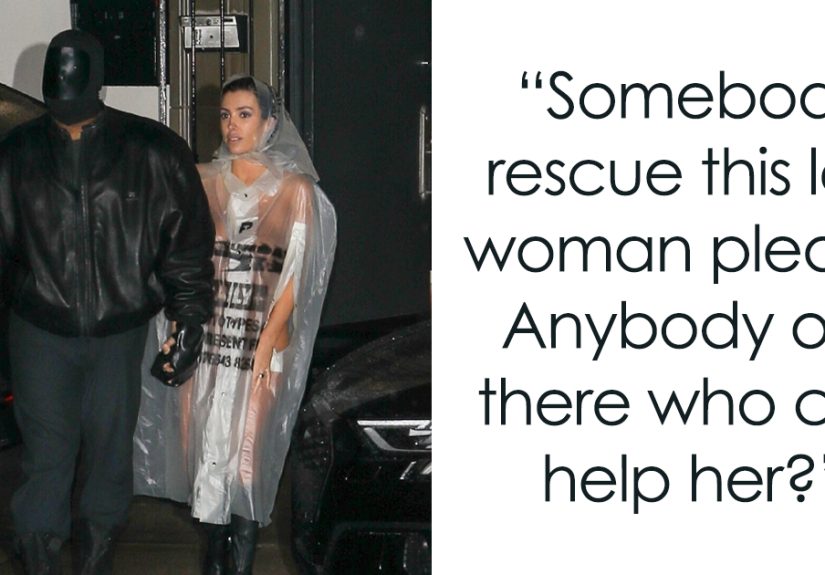
Bianca Censori has become one of the most discussed women in celebrity culture, not because she releases chart-topping albums, stars in blockbuster films, or gives weekly interviews, but because almost every public appearance turns into a full-scale internet referendum. The latest wave of concern traces back to a revealing Los Angeles outing with Kanye West, now legally known as Ye, where Censori appeared in a transparent raincoat-style look that left fans asking the same anxious question: “Where’s her family?”
That phrase traveled quickly across comment sections because it captured something bigger than one outfit. It reflected a public unease that has followed Censori since she married West in a private ceremony in December 2022. Some viewers see her barely-there wardrobe as performance art, branding, and avant-garde fashion with a paparazzi flashbulb attached. Others see something more troubling: a young woman standing beside one of the most controversial men in pop culture while appearing exposed, silent, and increasingly isolated.
The truth, as usual, is messier than the comment section wants it to be. Bianca Censori is not merely “Kanye West’s wife.” She is an Australian architectural designer, a Yeezy collaborator, and, more recently, a public figure attempting to frame her image as art. At the same time, the concern around her is not imaginary. It has been fueled by repeated public displays, West’s history of styling and reshaping the women around him, and the stark visual contrast between his covered outfits and her near-nude appearances.
Why Bianca Censori’s Revealing Display Sparked So Much Concern
The appearance that inspired the “Where’s her family?” reaction involved Censori stepping out in Los Angeles in a see-through raincoat with little visible coverage underneath. West, by comparison, appeared far more covered. That contrast has become a familiar part of the couple’s public image: Bianca exposed, Ye layered up, cameras waiting, internet exploding.
For celebrity watchers, the outfit was not just a fashion choice. It became a symbol. People questioned whether Censori was comfortable, whether the display was legal, whether it was planned for publicity, and whether her family approved. The internet, naturally, performed its usual magic trick: turning a single paparazzi moment into a courtroom, therapy session, fashion seminar, and family group chat all at once.
Some commenters framed the outfit as self-expression. Others described it as humiliating. A third group argued that the public should stop assuming Censori has no agency simply because her clothes make people uncomfortable. That last point matters. Concern can be compassionate, but it can also become patronizing when it turns a grown woman into a puzzle everyone else believes they are entitled to solve.
Who Is Bianca Censori Beyond the Headlines?
Before she became a permanent fixture in celebrity news, Bianca Censori was known mainly in design circles. Born in Melbourne, Australia, she studied architecture and later worked with Yeezy. Her background helps explain why her public image often feels less like ordinary street style and more like a conceptual project. The outfits are frequently architectural in their severity: sheer materials, sculptural silhouettes, stark contrasts, masks, boots, and body-focused shapes.
Her relationship with West became public after his high-profile divorce from Kim Kardashian. Since then, Censori has been photographed around the world, often in outfits that blur the line between fashion, exposure, and spectacle. She has appeared in sheer bodysuits, stocking-like dresses, face coverings, extreme boots, and minimal garments that seem designed to trigger maximum debate with minimum fabric.
But the public rarely hears directly from her. For a long stretch, Bianca’s silence became part of the story. Fans and critics filled that silence with theories. Some imagined her as a trapped muse. Others saw her as a willing collaborator. Still others viewed the entire spectacle as a branding machine for Yeezy and Ye’s larger world of provocation.
Why People Keep Bringing Up Her Family
The question “Where’s her family?” is emotionally loaded. It suggests that viewers believe someone close to Censori should intervene, protect her, or at least check in. That reaction intensified because reports over the years have described family concern, while other moments have shown family members appearing publicly supportive or private.
After the 2025 Grammy Awards, for example, Censori’s sheer red-carpet look caused global debate. Her sister Angelina appeared to support the look on social media, while her mother, Alexandra, avoided feeding the frenzy and reportedly described the family as private people living their own lives. That response did not satisfy everyone, but it did complicate the simple “family must rescue her” narrative.
Families of public figures are often placed in impossible positions. If they speak, they feed headlines. If they stay quiet, strangers accuse them of neglect. If they show support, critics say they are enabling. If they express concern, the story grows even bigger. In Censori’s case, her relatives have become characters in a story they did not write, directed by the internet, edited by tabloids, and distributed by anyone with a Wi-Fi signal and an opinion.
Fashion, Performance Art, or Publicity Machine?
One reason this story refuses to fade is that Censori’s outfits are not random. They appear coordinated, staged, and highly aware of cameras. West has long used clothing as communication. From shutter shades to Yeezy minimalism to oversized black layers, he understands that outfits can create headlines faster than press releases. With Censori, the visual language has become even louder.
Some sources close to the couple have described their appearances as a form of performance art. That interpretation is not hard to understand. The looks often feel like live installations: a woman’s body, a famous husband, a public sidewalk, a swarm of cameras, and a culture that cannot decide whether it is offended, fascinated, or both. In other words, the audience is part of the artwork, whether it likes it or not.
Still, calling something “art” does not automatically end the conversation. Art can be provocative and uncomfortable. It can also be exploitative or poorly received. When Censori wears something nearly transparent in a public space, the debate becomes less about fabric and more about consent, power, and spectatorship. Who is choosing the display? Who benefits from it? Who is being asked to look? And why does the internet feel so personally involved?
Bianca Censori’s Own Response to the Control Rumors
For a long time, one of the biggest criticisms was that Censori had not publicly explained herself. That changed when she addressed speculation that West controls her wardrobe. In a rare interview, she pushed back against the idea that she is being forced into revealing outfits and described the fashion process as collaborative. She made clear that she would not participate in something she did not want to do.
That statement is important because it challenges the most extreme version of the online narrative. It does not mean every viewer must like the outfits. It does not mean every concern was baseless. But it does mean that any responsible discussion has to include Censori’s own words. Ignoring her denial of control while claiming to defend her agency creates a strange contradiction: people say they want her voice heard, then talk over it when it does not match their theory.
At the same time, public concern often persists because power dynamics are rarely simple. West is older, wealthier, globally famous, and historically influential in fashion and music. Censori, while accomplished, became internationally famous largely through their relationship. That imbalance is why the conversation remains sensitive. People are not only reacting to what she wears; they are reacting to the context around who stands beside her.
The Grammy Moment That Changed the Conversation
The 2025 Grammy Awards turned Censori from a frequent tabloid subject into a mainstream culture-war flashpoint. She arrived with West in a dark fur-style covering before revealing a nearly nude sheer dress on the red carpet. The images spread instantly. Some called it a fashion stunt. Others called it indecent. Many asked whether the couple had been removed from the ceremony, though later reporting clarified they were not kicked out and had left after the red-carpet appearance.
That Grammy moment matters because it became the clearest example of the couple’s public formula. West stood covered in black while Censori became the visual event. The image was theatrical, controlled, and impossible to ignore. It also reignited old questions about West’s role in shaping the public image of his partners. During his marriage to Kim Kardashian, he was famously involved in her fashion transformation. With Censori, the transformation appears more extreme, which is why concern and criticism have followed more intensely.
Yet the Grammy appearance also showed the limits of public judgment. Many viewers assumed distress from a still image or a few seconds of video. Body-language experts, fans, critics, and casual observers all offered interpretations. But interpretation is not proof. A photograph can suggest discomfort, confidence, strategy, awkwardness, or all four depending on who is looking.
Why the Internet Feels So Protective and So Judgmental
The public reaction to Bianca Censori reveals a lot about how people consume celebrity women. When a famous woman dresses modestly, she may be called boring. When she dresses provocatively, she may be called exploited. When she explains herself, people may doubt her. When she stays silent, people invent explanations for her. It is a game with rules written in disappearing ink.
There is also a strong protective impulse online, especially when viewers believe a woman may be under pressure. That impulse can be healthy when it calls attention to coercion, emotional abuse, or unsafe relationships. But it can become unhealthy when it turns strangers into amateur detectives diagnosing someone’s life from paparazzi photos.
Censori’s situation sits right in that uncomfortable middle. The concern is understandable because the visuals are extreme and the power dynamics are complicated. But the certainty of some online claims goes too far. Unless Censori or someone close to her provides clear evidence of harm, the most ethical approach is to discuss what is visible, avoid declaring private facts as truth, and leave space for her stated autonomy.
What Kanye West Gains From the Attention
One reason skepticism remains high is that West has built much of his modern public identity around disruption. Controversy has repeatedly kept him in headlines, even when music is not the main topic. Every shocking outfit, every paparazzi walk, every viral red-carpet reveal becomes part of a larger attention economy. In that economy, outrage is not a side effect. It is often the fuel.
From a branding perspective, Censori’s looks keep Yeezy-adjacent aesthetics in public conversation: minimal, body-focused, futuristic, unsettling, and hard to ignore. Whether viewers praise or criticize them, they still share them. The result is a cycle where concern becomes content, content becomes traffic, and traffic keeps the couple at the center of pop culture.
That does not mean every appearance is cynical. It does mean the public should recognize how easily genuine worry can be absorbed into the publicity machine. When people ask “Where’s her family?” the question may come from care. But it also becomes another headline, another viral phrase, another layer in the spectacle.
Public Nudity, Consent, and the Limits of Shock Fashion
Bianca Censori’s wardrobe also raises a broader question: when does shock fashion stop being fashion and become a public-consent issue? Naked dresses have existed for decades. Celebrities from Cher to Rihanna to Rose McGowan to Megan Fox have used sheer clothing to challenge norms, generate headlines, and play with sexuality. The difference with Censori is frequency, context, and degree.
A red carpet is a controlled environment where bold fashion is expected. A city street, restaurant, or studio entrance can feel different. Some people argue that public spaces require a different standard because bystanders have not agreed to participate in the spectacle. Others argue that fashion has always pushed boundaries and that discomfort alone should not dictate what women wear.
Both arguments deserve attention. A free society should allow adults significant control over self-presentation. At the same time, public nudity laws and social norms exist because shared spaces require negotiation. Censori’s appearances force that negotiation into the open, which is why they keep provoking debate far beyond celebrity gossip.
Experience-Based Reflection: What This Story Teaches About Watching Celebrity Culture
There is a familiar experience many people have when scrolling celebrity news: you see a shocking image, feel an immediate reaction, and form an opinion before reading a single paragraph. Bianca Censori’s public appearances are almost designed to trigger that reflex. The photo arrives first. Context shows up late, wearing mismatched socks and asking if anyone saved it a seat.
For readers, the experience can be strangely personal. Some people look at Censori and think of a friend who changed dramatically after entering a relationship. Others think of fashion school, performance art, and the long history of women using the body as a canvas. Some parents think about young viewers seeing the images. Some survivors of controlling relationships feel alarm bells. Some fashion fans roll their eyes and say, “It’s a look, not a hostage note.”
That variety of reactions is exactly why this topic is so powerful. It is not only about Bianca Censori. It is about how people read women’s bodies in public. It is about how fame turns private choices into public property. It is about the awkward fact that concern and judgment can wear the same outfit.
The best way to approach stories like this is with curiosity before certainty. It is fair to ask why West is usually covered while Censori is often exposed. It is fair to question whether the couple uses controversy as marketing. It is fair to discuss the difference between empowerment and objectification. But it is not fair to erase Censori’s own voice simply because her choices make people uncomfortable.
There is also a lesson for publishers and readers. Headlines that shout “Where’s her family?” work because they tap into fear, protection, and outrage. But a responsible article should not stop there. It should ask what is known, what is alleged, what is speculation, and what the subject herself has said. Otherwise, coverage becomes another form of exposure: not of the body, but of a person’s private life, stripped down for clicks.
In everyday life, most people understand that outfits can mean many things. A bold look can be confidence, rebellion, insecurity, art, pressure, humor, or simply Tuesday. Celebrity culture flattens that complexity. It asks viewers to choose one answer quickly: victim or mastermind, muse or manipulated, artist or attention seeker. Real people are rarely that tidy.
So the next time Bianca Censori appears in another headline-making outfit, the more useful question may not be only “Where’s her family?” It may be: “Why are we so eager to decide what her life means from a photograph?” That question is less viral, unfortunately. It probably will not trend. It also does not come with dramatic punctuation. But it gets closer to the complicated reality behind the spectacle.
Conclusion
Bianca Censori’s revealing display with Kanye West sparked worry because it touched several cultural nerves at once: public nudity, celebrity control, marital power dynamics, family concern, artistic freedom, and the internet’s hunger for drama. The phrase “Where’s her family?” captured genuine anxiety, but it also showed how quickly online audiences can turn concern into a verdict.
The most balanced view is neither blind defense nor instant condemnation. Censori is an adult who has described her fashion choices as intentional and collaborative. She is also part of a celebrity partnership where image, controversy, and power are impossible to separate. That tension is why the conversation continues.
Whether one sees her wardrobe as performance art, publicity strategy, or something more concerning, the story says as much about viewers as it does about Censori. In the end, the real display may not be the transparent coat or the sheer dress. It may be the way celebrity culture reveals our own assumptions, fears, and fascination with women who refuseor appear to refuseto be easily understood.