Table of Contents >> Show >> Hide
- How A Simple Spoon Question Became Internet Catnip
- Why Spoon Preference Feels So Personal
- What The Great Spoon Debate Says About Human Behavior
- Team Spoon 1 Vs. Team Spoon 2
- Why Spoon Debates Keep Coming Back
- Everyday Experiences That Prove The Spoon Debate Is Real
- The Real Reason This Viral Spoon Debate Worked
Every so often, the internet pauses its regularly scheduled programming of doomscrolling, celebrity gossip, productivity hacks, and people explaining how to become a millionaire before breakfast, just to argue about something gloriously small. This time, it was spoons. Not war. Not politics. Not whether pineapple belongs on pizza. Spoons.
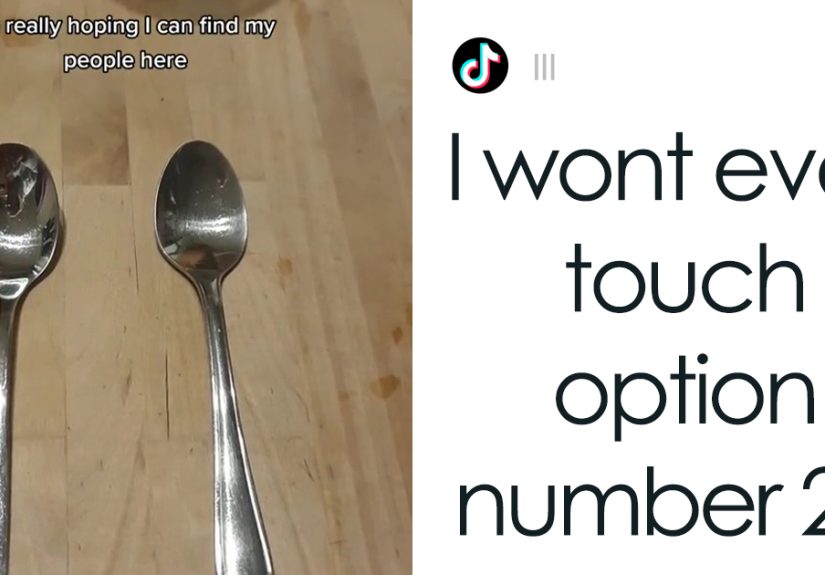
A woman asked viewers to choose between two nearly identical spoons, and the response was immediate, emotional, and surprisingly passionate. Social media users flocked to the comments to defend their pick as if national security depended on it. One spoon looked sleeker and simpler. The other had a different handle shape and bowl feel. That was enough to divide people into camps.
And honestly? The intense debate online makes perfect sense. Spoon choice sounds silly until you remember how often people use spoons. Yogurt, cereal, soup, ice cream, pudding, oatmeal, late-night peanut butter, emotionally necessary mac and cheese from a mug; the spoon is not some occasional guest star in the kitchen. It is a main character.
What made this viral spoon debate so irresistible was not just the question itself, but what it exposed: people are deeply attached to tiny rituals. We all think we are rational, easygoing adults until someone presents two spoons and says, “Pick one.” Suddenly, we are delivering testimony, reliving childhood kitchen memories, and questioning the judgment of complete strangers.
This story is funny on the surface, but it also reveals something real about design, comfort, habit, and the weirdly personal relationship people have with everyday objects. So let’s dig into why two spoons managed to stir up such a big reaction, what the argument says about human behavior, and why spoon preference is a lot less random than it looks.
How A Simple Spoon Question Became Internet Catnip
The viral post worked because it asked a question that looked trivial but felt intimate. Instead of asking for a complicated opinion, it asked for an instinct. Which spoon would you choose? No spreadsheets. No life philosophy. Just a snap judgment from the cutlery drawer.
That kind of question is social media gold. It invites instant participation, creates low-pressure disagreement, and gives people an easy way to reveal personality. Some users treated the choice like a matter of logic. Others responded with pure emotion. A surprising number of people seemed personally offended that anyone could prefer the other spoon. That is exactly why the post took off.
The best viral prompts are not always about big issues. Often, they hit hardest when they expose tiny private preferences that most people have never said out loud. Plenty of viewers probably had no idea they cared about spoon shape until they were forced to make a choice. Then, all at once, they did. Deeply.
It also helped that the two spoons were similar enough to make the choice difficult, yet different enough to make the debate meaningful. This was not “silver spoon versus shovel.” It was a much more dangerous setup: two spoons that looked almost alike, but not quite. That is exactly the zone where internet arguments are born.
Why Spoon Preference Feels So Personal
Weight Changes The Experience
A spoon is not just a shape. It is a physical experience. The moment you pick one up, your brain starts judging it: too heavy, too light, too sharp, too deep, too flimsy, too fancy, too much “hotel breakfast buffet energy.” People notice balance even when they are not consciously thinking about it.
That is one reason flatware experts spend so much time talking about heft, comfort, and balance. A spoon that feels right in the hand can instantly seem more useful, even more trustworthy. A spoon that feels awkward can be rejected on sight. It might still carry soup just fine, but emotionally? It has already lost.
Researchers have even found that cutlery can influence how food is perceived. That sounds dramatic, but it tracks with everyday experience. Food does not exist in isolation. The bowl, the plate, the setting, and the utensil all shape how the bite feels. When a spoon feels lighter or more natural, people may interpret the whole eating experience differently.
Bowl Depth Is A Bigger Deal Than People Admit
This is where spoon discourse gets serious. Some people want a shallow spoon that glides easily into the mouth and gives a controlled bite. Others prefer a deeper bowl because it feels more secure, more substantial, and better for soup, cereal, or chunky dessert. This is not just preference. This is spoon engineering meeting personal psychology.
If you eat yogurt, for example, a deep spoon may feel too aggressive, like it is trying to excavate the container. A shallower spoon may feel more elegant and precise. But if you are eating soup, a spoon with too little depth can feel useless. Suddenly you are not dining, you are chasing broth.
That is why the “best spoon” debate never lands on a universal answer. There probably is no perfect spoon in the abstract. There is only the perfect spoon for your hand, your habits, and your favorite foods.
Handle Design Quietly Runs The Show
Handle shape matters more than most people realize. A slim, smooth handle often feels modern, clean, and easy to hold. A wider or more decorative handle can feel charming to one person and mildly offensive to another. If a spoon handle has ridges, edges, or unusual proportions, people notice immediately.
That is one reason the viral debate became so heated. People were not only responding to the spoon bowl. They were reacting to texture, balance, grip, and aesthetics all at once. One person’s “classic spoon” is another person’s “drawer goblin.”
Flatware reviewers often point out the same thing: comfort is not just about looks. A spoon can be beautiful and still feel wrong in the hand. It can also be plain as a tax form and still become the household favorite because it simply works.
What The Great Spoon Debate Says About Human Behavior
Small Differences Can Trigger Big Decisions
Psychologists have long noted that when two options are very similar, the decision can feel harder, not easier. That is exactly what happened here. If one spoon had clearly been ridiculous, the debate would have died in five minutes. But because both spoons were plausible, the brain had to work harder to decide which subtle traits mattered most.
This is also why people got so animated. When the difference between two choices is tiny, people start building strong arguments to justify the decision. Suddenly, the spoon is not just a spoon. It is a statement about function, taste, and whether you are the kind of person who enjoys civilized bites or culinary chaos.
Once We Choose, We Start Defending The Choice
Humans are excellent at getting attached to whatever they picked five seconds ago. Choice often strengthens preference. Once someone publicly declares, “Spoon 1 is obviously the correct answer,” the debate is no longer theoretical. Now it is personal. They are defending their judgment, their instincts, maybe even their identity as a competent member of society.
That sounds exaggerated, but online behavior proves it over and over. The moment a casual preference becomes public, people stop treating it as casual. They explain. They double down. They gather allies. They act like the other side is one bad meal away from moral collapse.
Low-Stakes Arguments Feel Weirdly Good
Part of the appeal is that spoon debates are safe. No one is changing tax policy here. No one is writing legislation about teaspoons. It is a playful kind of conflict, and that makes participation easy. People can be opinionated without being terrified.
These tiny online debates also offer a rare form of connection. When someone says, “Yes, that spoon is the superior yogurt spoon,” other users feel unexpectedly seen. The comments become less about cutlery and more about recognition. It is the internet equivalent of realizing a stranger also hates wet socks.
Team Spoon 1 Vs. Team Spoon 2
Although the exact visual details are what launched the argument, the split mostly came down to two competing philosophies of eating.
Team Spoon 1 tended to favor simplicity. They liked a smooth handle, a cleaner silhouette, and a spoon that looked less fussy. To them, the winning spoon felt more natural, more practical, and somehow more trustworthy. This was the spoon for yogurt, dessert, cereal, and everyday peace.
Team Spoon 2 leaned toward substance. They often preferred a spoon with a stronger presence, a different grip, or a bowl that felt more secure. To them, the other option looked too slight, too plain, or not deep enough. Their argument was less about elegance and more about performance.
Neither side was irrational. They were simply prioritizing different qualities. One group wanted ease and softness. The other wanted structure and confidence. In other words, this was not really about spoons. It was about what people value when an object enters daily life: comfort, control, aesthetics, or utility.
Why Spoon Debates Keep Coming Back
If this story feels familiar, that is because utensil arguments never truly disappear. People debate tiny spoons versus big spoons, soup spoons versus teaspoons, matte flatware versus shiny silverware, wooden spoons versus metal spoons, and even whether certain foods “belong” with a specific utensil at all.
Food culture has always treated utensils as more than tools. A formal table setting distinguishes between spoon types for a reason. Flatware sets often include different spoons because different meals create different needs. A dessert spoon is not exactly a soup spoon, and a serving spoon is living on a completely different planet.
Then there is the emotional layer. Some people love tiny spoons because they slow down each bite and make desserts feel more deliberate. Others hate them because they feel inefficient and mildly insulting. Some people want a spoon that disappears into the experience. Others want a spoon that feels sturdy and specific.
This is why the internet keeps returning to utensil discourse. It taps into routine. It taps into memory. And it taps into the fact that everyone thinks their everyday method is normal until they discover the rest of humanity is out here eating cereal like absolute maniacs.
Everyday Experiences That Prove The Spoon Debate Is Real
If you still think this whole thing was overblown, spend one week paying attention to how people react to spoons in real life. The evidence is everywhere. Open an office kitchen drawer and watch coworkers scan the cutlery tray like archaeologists searching for a sacred artifact. Nobody says, “Any spoon will do,” unless they are either lying or running late.
Consider the yogurt situation. Some people want the small spoon because it makes each bite feel neat and controlled. They like being able to scrape the corners of the cup without feeling like they are using construction equipment. Give them a large, deep spoon and they immediately look inconvenienced, as though breakfast has become an aggressive sport.
Then there is cereal. Cereal people are a category unto themselves. One person wants a deeper spoon that can hold enough milk and flakes in one bite. Another wants a narrower spoon so they can regulate the ratio. The wrong spoon can turn a perfectly good bowl of cereal into an annoying sequence of splash damage and disappointment.
Ice cream inspires even stronger feelings. A lot of people prefer a smaller spoon because it slows the pace and stretches out the treat. A small spoon makes each bite feel colder, tidier, and somehow more expensive, even if the dessert came from a pint eaten while standing under the kitchen light at 11:47 p.m. Meanwhile, other people want the bigger spoon because they are not trying to “savor the moment.” They are trying to survive a long day.
Soup creates its own factional warfare. Some diners want a rounder, deeper spoon that feels like actual soup infrastructure. Others want something lighter and easier to maneuver, especially with chunkier soups where too much depth turns each bite into a gamble. No one wants to burn their face because a spoon got overconfident.
Family kitchens are where these preferences become tradition. Many households have one or two spoons that mysteriously disappear first after every dishwasher cycle. Nobody formally announces that they are the best spoons. Everyone just knows. Children learn it. Guests sense it. A certain spoon becomes the mashed potato spoon, the pudding spoon, the “don’t take that one, that’s my favorite” spoon.
Even at restaurants, people notice more than they admit. A beautiful meal can feel slightly off if the spoon is too heavy, too shallow, too slippery, or oddly sharp around the edges. Most diners will not write a 900-word manifesto about it, but they will feel it. And if they end up talking about the spoon on the ride home, the spoon mattered.
That is what made the online argument so relatable. It did not invent spoon preferences. It simply dragged them out into the open. Suddenly, people who had spent their whole lives quietly favoring one spoon shape realized there were others just like them. Or worse, people unlike them.
In that sense, the debate was less about choosing between two utensils and more about recognizing ourselves in ordinary habits. The spoon you reach for says something about how you eat, what textures you like, how fast you move, how much control you want, and whether your kitchen philosophy is “minimalist precision” or “give me the sturdiest scoop available.” That is a lot of emotional cargo for one piece of silverware, but apparently the spoon is up for the job.
The Real Reason This Viral Spoon Debate Worked
At its core, this story exploded because it combined three powerful ingredients: familiar objects, instant judgment, and personal habit. People did not need background information to participate. They did not need expertise. They just needed a lifetime of quietly preferring one spoon over another and the courage to say so in public.
The debate also reminds us that design is never neutral. Small differences in weight, shape, and feel can completely change how an object is experienced. That matters in kitchens, restaurants, product design, and everyday life. The “best” spoon is not merely the prettiest one. It is the one that feels right for the way a person eats.
And perhaps that is why the whole thing was so oddly delightful. In a digital world obsessed with scale, speed, and outrage, it was refreshing to watch people care deeply about something microscopic. Not because the issue was important in a global sense, but because it was important in a human one.
So, which spoon would you choose? Be careful before answering. You may think you are just picking cutlery. In reality, you might be revealing your entire personality, your dessert strategy, and your level of tolerance for a ridged handle. No pressure.