Table of Contents >> Show >> Hide
- What Happened in the Viral Post (and Why People Instantly Picked a Side)
- Why This Hits a Nerve: Childcare Is Expensive, and Everyone’s Tired
- The Real Fight Isn’t BabysittingIt’s the Invisible Contract
- When Family Turns Into a Boss (and the “Employee” Starts Quiet-Quitting)
- So… Who’s “Right”? Use This Fairness Checklist
- How to Fix This Without Nuking Thanksgiving
- What This Story Really Teaches About Modern Family Economics
- Real-World Experiences: “Babysitting as Rent” in the Wild (500+ Words)
- Conclusion: Love Isn’t Labor, and Boundaries Aren’t a Crime
- SEO Tags
Generated with GPT-5.2 Thinking
Family living arrangements are supposed to be the budget-friendly version of “community.” Split the bills, share the chores,
maybe borrow each other’s shampoo in an emergency. But sometimes the deal quietly morphs into something else entirely:
a live-in, always-available support staff… who did not apply for the job.
That’s why this viral sister showdown hit such a nerve. It’s not just about babysitting. It’s about boundaries, burnout, and the
invisible contract people think they have when money, rent, and childcare all get stirred into the same pot. Spoiler:
that pot boils over fast.
What Happened in the Viral Post (and Why People Instantly Picked a Side)
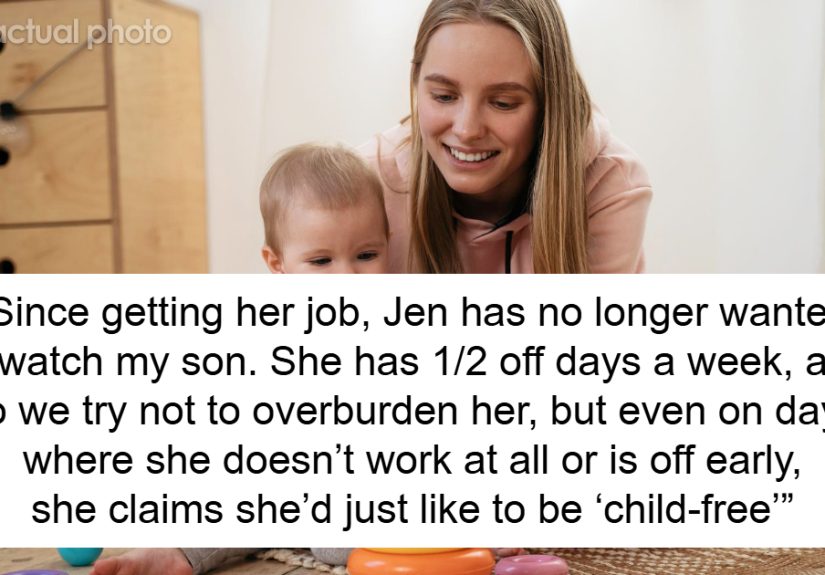
The setup reads like a modern fable: An older sister and her husband have a new baby. Her younger sisterJenlives with them
rent-free. Jen also happens to work a grueling schedule as a professional nanny, roughly 50 hours a week. Before the baby arrived,
Jen had casually offered to help a few days a week.
Then reality punched the calendar. After Jen landed the demanding nanny job, her “free time” stopped being free. She still helped
in small burstswatching the baby for a quick walk, pitching in around the housebut she didn’t want to spend her rare day off doing
the same work she does all week. When her sister asked for a full babysitting day anyway, Jen refused.
The older sister’s frustration boiled down to a single idea: Why pay for childcare when a literal professional is in the same home?
Jen’s response was blunt enough to launch a thousand comment threads: the parents chose to have the baby, and they chose the added responsibility.
In other words: your kid, your plan.
It went viral because so many people recognize this exact pressure cookernew-parent exhaustion meets a family member’s time and labor
being treated like “part of the rent.”
Why This Hits a Nerve: Childcare Is Expensive, and Everyone’s Tired
Childcare costs keep climbing (even when caregivers aren’t getting rich)
Childcare is one of those costs that can make a household budget feel like it’s being attacked by a swarm of tiny, adorable piranhas.
Reports show child care prices have risen notably in recent years, and many U.S. adults describe the cost as a major problem. That
economic squeeze is the backdrop for a lot of “Can you just watch the baby?” conversations.
The twist is that high prices for families don’t automatically translate into high pay for workers. Childcare workers’ median hourly wage
has been around the mid-teens nationally in recent datameaning the people doing the work aren’t exactly swimming through piles of gold like
a Disney villain.
Professional caregiving is physically and emotionally demanding
Nannying isn’t “hanging out with kids.” It’s constant movement, emotional regulation, safety vigilance, developmental support, and the occasional
Olympic-level sprint when a toddler tries to launch themselves off a couch like they’ve got a sponsorship deal.
So when someone works long hours caring for children, their days off often aren’t “free.” They’re recovery. Asking a nanny to spend that recovery
time doing more childcare is like asking a bartender to spend their day off mixing drinks at your houseexcept with more bodily fluids and fewer tips.
The Real Fight Isn’t BabysittingIt’s the Invisible Contract
“Rent-free” isn’t “free labor”
This is where things get messy: People treat informal family arrangements like they’re legally binding, spiritually ordained, and retroactive.
Someone hears “You can stay here rent-free,” and assumes the other person heard “Cool, I’m now on-call for whatever you need.”
Those are not the same sentence.
If the living situation was offered to help a sibling get aheadfinish school, pay down loans, stabilizethen the “benefit” is housing.
If the living situation is offered in exchange for weekly childcare, then it’s a work-for-housing agreement. Different deal, different
expectations, and a very different chance of resentment.
Bartering labor for housing is a contract, not a vibe
Can people trade services for rent? Sure, in many places you can make all sorts of agreementsespecially in private arrangements.
But the moment you tie housing to labor, you need clarity: what tasks, how many hours, what schedule, what happens when someone gets sick,
what happens when the family’s needs change (like… having a baby).
Even basic renter/lease guidance emphasizes clear terms and expectations in agreements. Family members skip that step because it feels “too formal,”
and then act shocked when the relationship starts feeling like a bad workplace.
When Family Turns Into a Boss (and the “Employee” Starts Quiet-Quitting)
Boundaries aren’t betrayal; they’re relationship maintenance
A lot of us were raised on the idea that “family comes first” means your needs come last. But psychologists have pointed out that family dynamics can
condition people to override personal needs, making it harder to set boundaries without guilt. That guilt shows up as: “If you loved me, you would.”
Which is emotionally spicy… and also not a fair hiring policy.
Jen’s boundary“I want my day off to be child-free”isn’t cruel. It’s specific. It’s also measurable, which is the best kind of boundary because it
doesn’t require mind-reading or interpretive dance.
The burnout math is brutal
If you work 50 hours a week with kids, your “off day” isn’t just leisure. It’s errands, laundry, sleep, social life, and the small human ritual of
remembering you exist as a person separate from snack schedules.
Add a full day of babysitting on top, and you’ve essentially turned “rent-free living” into unpaid overtime. In the domestic work world, there are
real legal frameworks around household employment, pay, and hours. Even if your situation is informal, the human body still keeps receipts.
So… Who’s “Right”? Use This Fairness Checklist
Viral stories invite hot takes, but real-life families need something more practical than “YTA” stamped in all caps. Here’s a quick fairness checklist
that cuts through the noise:
- Was childcare explicitly part of the housing agreement? If it wasn’t, it’s not “owed.”
- Is the request occasional or ongoing? One emergency is different from weekly coverage.
- Is the caregiver already working in childcare professionally? If yes, their off time matters more, not less.
- Are you asking for supervision… or a full shift? “Watch the baby while I shower” is not “take the baby all day.”
- Would you accept the same deal from a non-relative? If you wouldn’t ask a neighbor to do it, don’t guilt a sister into it.
- What’s the escape hatch? If someone says no, do you have another planor just a louder argument?
How to Fix This Without Nuking Thanksgiving
Option 1: Pay for childcare like a grown-up (even if it stings)
If you need reliable coverage, hire it. That can mean a part-time sitter, a mother’s helper, a daycare day, or a rotating schedule with paid help.
Yes, childcare costs can be steep. But “steep” doesn’t turn someone else’s free time into your coupon.
A useful mental reframe: If you can’t afford the childcare you need, your problem is not “my sister won’t.” Your problem is “our childcare plan
doesn’t match our budget,” and that’s a household planning issuenot a sibling obedience issue.
Option 2: Charge rent and stop mixing money with diapers
If the living arrangement is causing resentment, separating the two issues can help. Charge a reasonable rent (even discounted) and remove the
expectation of babysitting. Then, use that rent to partially fund childcare. It’s not romantic, but neither is screaming “UNFAIR” over a high chair.
Yes, the sister might move out. That’s not a threat; that’s information. If she’s only there because it’s free and quiet, charging rent changes the deal.
And if you’ve been relying on her help as a hidden pillar of your household, that’s a signal that the system needs reinforcement.
Option 3: Write a “family work agreement” (seriously)
This is the boring solution that saves relationships. Create a simple written agreement that covers:
- What help is expected (if any) and what is not expected
- Number of hours per week and the schedule
- What counts as an emergency
- How far in advance requests must be made
- Compensation (rent discount, cash, or both)
- Review dates (because life changes)
If the sister is a professional nanny, she’s already familiar with work agreements and boundaries. Treating her time with professional respect
is the fastest way to keep the relationship personal.
Option 4: Trade non-childcare contributions instead
If the goal is “contribute to the household,” childcare is only one possible currencyand it’s the most emotionally loaded one.
Alternatives that don’t hijack someone’s nervous system:
- Fixed chores (meal prep once a week, laundry rotation, pet care)
- Errand runs (grocery pickup, pharmacy runs) on a schedule
- A monthly household fund contribution
- Occasional planned babysitting for a date night (paid, scheduled, and optional)
Simple scripts that actually work
For the parent: “I realize I was treating your time like it was included in the rent. That wasn’t fair. Can we reset and make a clear plan?”
For the nanny sister: “I love you and I love the baby. I can help in small bursts, but my days off can’t be childcare days. If you need coverage, we should plan paid care.”
What This Story Really Teaches About Modern Family Economics
A lot of viral family drama is basically the same plot wearing different pajamas: housing is expensive, childcare is expensive, wages feel stuck,
and people try to patch the gaps with informal family labor. Sometimes that works beautifullywhen it’s voluntary, occasional, and appreciated.
It falls apart when it becomes assumed, scheduled, and guilt-enforced.
The reason commenters side so hard with the nanny sister in stories like this is simple: professional caregiving already demands so much. Treating a
caregiver’s rest time as “available inventory” is how you turn love into resentment. And resentment has a long memory. It remembers every “just this once”
that somehow happened every weekend for six months.
If you want a relationship to survive the baby years, you have to protect it from becoming a workplace. That means clear expectations, fair compensation
when labor is requested, and enough respect to accept “no” the first time it’s said.
Real-World Experiences: “Babysitting as Rent” in the Wild (500+ Words)
If you hang around parenting groups, nanny forums, or even just that one friend who treats brunch like a therapy session, you’ll hear variations of this
story constantly. Here are a few common “experience patterns” people describeplus what usually helps before the group chat becomes a crime scene.
1) The “It’s Only Saturdays” slide
It starts with a single Saturday. One parent has an appointment. Someone’s tired. A sister, cousin, or roommate covers “just this once.” Then a second
Saturday happens. Then it becomes, “Well, you’re home anyway.” Pretty soon, the caregiver’s weekends are booked by default, and the parent is shocked when
the caregiver finally says, “I need my life back.”
What fixes it: A calendar rule. Requests must be made in advance, and the caregiver has a right to decline without debate. If it’s recurring, it must be paid
or swapped for a defined housing discount. No surprise shifts.
2) The “Professional Discount” assumption
When the family member works in childcare, the entitlement gets weirdly stronger. People think, “You’re good at this, so it’s easier for you,” which is like
saying, “You’re a chef, so you should cook for freealso, for 12 peoplealso, you can’t sit down.” Skill doesn’t reduce effort; it just raises expectations.
What fixes it: Language that separates identity from labor. “I’m a nanny at work. At home I’m your sister. If you want nanny services, we can talk rates and
schedule. If you want sister energy, I can hold the baby while you pee.”
3) The “Rent-free means you owe me” tug-of-war
Housing generosity can quietly become a scoreboard: “After all I’ve done for you…” The person living there may feel gratitude, but also panicbecause their
housing is now conditional on pleasing someone else. That dynamic creates compliance, not closeness. It also makes every boundary feel like it risks eviction,
which is an emotional load no one sleeps well under.
What fixes it: Clarify the housing arrangement as stable and time-bound. “You can live here until X date at Y cost, and chores are A/B/C.” If babysitting is
included, it’s specific: “Two hours on Wednesday evenings, paid,” not “whenever we need it.”
4) The postpartum pressure cooker
New parents aren’t villains for being desperate. Sleep deprivation turns basic math into interpretive art. A baby who won’t be put down can make a parent feel
like they’re sprinting a marathon on Legos. In that state, it’s easy to see a capable adult in the house and think, “Help me or I’ll dissolve.”
What fixes it: Build redundancy. Even a small budget for backup careone paid afternoon a weekcan lower household tension dramatically. If money is tight,
lean on resources that don’t exploit one person: alternating shifts between partners, community swaps that are truly reciprocal, or part-time help.
5) The “brutal response” moment that saves the relationship
In many families, the “brutal” line is actually the turning point. It’s the moment someone finally names what’s happening: “You chose this baby, not me.”
That can sting, but it’s also honest. And honestydelivered without crueltyis often the only thing that stops a slow drift into lifelong resentment.
What fixes it: A repair conversation that focuses on the future. Not “who’s ungrateful,” but “what’s sustainable.” The best repairs include a concrete plan:
paid care, written agreements, schedule boundaries, and a shared acknowledgment that love doesn’t require unlimited access to someone’s labor.
Conclusion: Love Isn’t Labor, and Boundaries Aren’t a Crime
The viral babysitting-as-rent fight isn’t really about one Saturday. It’s about a mismatch between expectations and reality. Childcare is expensive. Housing
is expensive. Everyone is stressed. But the shortcuttreating a relative’s time as “included”usually costs more in the long run.
If you need childcare, plan and pay for childcare. If you want a family relationship, protect it with clear boundaries. And if you’re lucky enough to have a
professional nanny in your home, remember the key word in that job title: professional. Professionals get paid. Professionals get days off.
Professionals don’t magically stop being human because you share a last name.
The healthiest outcome isn’t “who wins.” It’s an agreement that lets everyone keep their dignityand maybe even enjoy each other again.