Table of Contents >> Show >> Hide
- What PLG Really Means in SaaS
- 20 Interesting PLG Learnings from the Leaders in SaaS
- 1. Time-to-value beats top-of-funnel vanity every day of the week.
- 2. A free plan works best when it proves value, not when it gives away the whole kitchen.
- 3. Frictionless signup is not a UX detail. It is a revenue strategy.
- 4. Blank screens kill momentum, so templates and guided starts matter more than teams expect.
- 5. Collaboration is one of the most powerful growth loops in software.
- 6. Product virality is usually earned through usefulness, not gimmicks.
- 7. Transparent pricing builds trust before sales ever enters the chat.
- 8. The best onboarding changes based on user intent, not company ego.
- 9. Product analytics are the engine room of PLG.
- 10. Activation metrics should be behavioral, not ceremonial.
- 11. Retention is the real PLG moat.
- 12. Expansion often starts with one user, but it wins at the account level.
- 13. Product-qualified leads are better than vague hand-raisers.
- 14. Product-led does not mean sales-less.
- 15. Enterprise readiness must arrive before enterprise demand becomes painful.
- 16. Usage limits should create urgency, not resentment.
- 17. The growth team cannot live in a silo.
- 18. Customer education is part of the product, not a side dish.
- 19. AI can improve PLG, but only when it reduces effort or increases relevance.
- 20. PLG is an operating model, not a growth hack.
- Why These PLG Learnings Matter Now
- Extended Field Notes: What PLG Looks Like in Real SaaS Life
- Conclusion
Product-led growth, or PLG, has been one of the most talked-about ideas in SaaS for years. And yet, plenty of teams still treat it like a trendy sticker they slap onto a pricing page and call it strategy. Real PLG is messier, smarter, and a lot more interesting than that. It is not just “offer a free plan and hope for the best.” It is the discipline of building a product that helps users discover value quickly, share that value naturally, and expand usage without requiring a parade of demos, follow-up emails, and calendar gymnastics.
The leaders in SaaS have made one thing clear: the best PLG motions do not remove humans from growth. They remove unnecessary friction. That is a huge difference. The winning companies make it easy to start, easy to succeed, and easy to justify paying more once the product becomes useful enough to feel slightly dangerous to cancel. That, in the most lovable way possible, is the dream.
Below are 20 interesting PLG learnings from the SaaS companies and operators that have shaped the space. Some are tactical. Some are strategic. All of them are worth stealing politely.
What PLG Really Means in SaaS
At its core, product-led growth means the product becomes the main engine for acquisition, activation, retention, and expansion. Instead of pushing every prospect through a heavy sales process, the product helps people experience value firsthand. That is why PLG tends to show up in self-serve onboarding, free plans, usage-based upgrade prompts, transparent pricing, collaboration loops, and strong product analytics.
But the smartest SaaS leaders also know PLG is not the opposite of sales. In mature companies, it often becomes the front door to a broader go-to-market system. Users discover value on their own, then sales steps in with better timing and better context. In other words, the product does the flirting, and sales shows up when the relationship gets serious.
20 Interesting PLG Learnings from the Leaders in SaaS
1. Time-to-value beats top-of-funnel vanity every day of the week.
The first PLG lesson is brutally simple: if users do not experience value fast, nothing else matters. Fancy acquisition campaigns cannot rescue a confusing product. The best SaaS companies obsess over the shortest path from signup to “Aha, this is useful.” That is why PLG leaders trim onboarding steps, reduce setup burden, and highlight one core win immediately. The goal is not to show everything. The goal is to make one important thing work fast.
2. A free plan works best when it proves value, not when it gives away the whole kitchen.
Free access is powerful, but only when it is designed with intention. Zoom’s free tier helped millions understand the product in minutes. Dropbox let people start storing and sharing files with almost no friction. The point is not generosity for its own sake. The point is to let users feel the product’s core value quickly, while leaving meaningful reasons to upgrade later. Good PLG free tiers say, “Here is enough to get hooked.” Bad ones say, “Enjoy the buffet, we may never hear from you again.”
3. Frictionless signup is not a UX detail. It is a revenue strategy.
Every extra field, forced demo request, or unclear step introduces doubt. PLG leaders understand that reducing friction at the start is one of the highest-leverage growth moves available. Atlassian helped define this approach with transparent pricing and straightforward online purchasing. That kind of simplicity signals confidence. It tells the buyer, “You do not need permission to see whether this works for you.”
4. Blank screens kill momentum, so templates and guided starts matter more than teams expect.
One of the sneakiest PLG killers is the empty state. Users sign up, stare at a dashboard that looks like an abandoned airport terminal, and leave. Leaders in SaaS reduce that anxiety with templates, examples, sample data, checklists, and role-based starting points. The best onboarding is not a product tour that talks too much. It is a useful shortcut that gets users to a small win before they have time to second-guess themselves.
5. Collaboration is one of the most powerful growth loops in software.
PLG gets stronger when one user naturally pulls in another. That is why collaboration products have been such iconic PLG winners. Slack becomes more valuable when a team uses it together. Figma becomes stickier when designers, developers, and stakeholders can all view, comment, and contribute. Shared workflows create organic distribution because the product spreads as part of the work itself. No megaphone required.
6. Product virality is usually earned through usefulness, not gimmicks.
There is a reason SaaS buyers ignore gimmicky “invite 10 friends” mechanics when the product itself is weak. Real virality happens when sharing is embedded in the job users are already trying to do. A Loom video is naturally sent to coworkers. A Figma file is naturally reviewed by teammates. A Dropbox file is naturally shared with collaborators. The invite is not a marketing trick. It is the next logical step in the task.
7. Transparent pricing builds trust before sales ever enters the chat.
Many PLG leaders make pricing visible because opacity creates hesitation. Transparent pricing does not solve every buying challenge, but it lowers anxiety and speeds up self-serve evaluation. Buyers want to know whether they are entering a reasonable relationship or accidentally applying for a mortgage. Clear packaging helps the right users move faster and helps the wrong users disqualify themselves without wasting anyone’s time.
8. The best onboarding changes based on user intent, not company ego.
Not every user comes for the same reason. Some want a quick personal win. Others are evaluating the product for a team. Others are just poking around because a coworker sent a link. Great PLG companies segment onboarding around jobs-to-be-done and behavior, not around what the product team is most excited to show off. Users do not care about your roadmap masterpiece if they are still trying to import one CSV without crying.
9. Product analytics are the engine room of PLG.
PLG falls apart without data. Leaders rely on product analytics to understand activation, drop-off points, adoption patterns, upgrade signals, and retention behavior. This is where companies like Amplitude, Mixpanel, and Pendo have shaped the conversation: growth becomes sharper when teams can measure how users move through the product instead of guessing based on opinions from the loudest person in the room. Nothing humbles a bad assumption like a brutal funnel chart.
10. Activation metrics should be behavioral, not ceremonial.
Too many SaaS teams define success using shallow milestones like “completed signup” or “opened app twice.” PLG leaders focus on actions that reflect real value. Did the user invite teammates? Publish something? Automate a workflow? Share an asset? Record and send a video? The right activation event is not just activity. It is a meaningful behavior that predicts continued use.
11. Retention is the real PLG moat.
Anyone can buy signups. Fewer companies can create products people keep using months later. In PLG, retention is not a back-office metric. It is the proof that the product solved something worth repeating. The best SaaS companies continuously improve the product after onboarding, because growth compounds when users stay, deepen usage, and bring others in. Without retention, PLG turns into a revolving door with good branding.
12. Expansion often starts with one user, but it wins at the account level.
PLG leaders understand that the first user is rarely the full opportunity. A single champion can open the door, but revenue grows when the product spreads across a team, department, or company. That is why seat expansion, collaboration features, admin tools, and governance options matter. SaaS leaders do not just ask, “Can one person love this?” They ask, “Can an organization adopt this without chaos?”
13. Product-qualified leads are better than vague hand-raisers.
One of the smartest evolutions in modern SaaS has been the shift from abstract lead scoring to usage-informed signals. When sales knows a team has activated key features, invited multiple users, hit usage thresholds, or repeatedly explored premium functionality, outreach becomes more relevant and less annoying. Product-qualified leads give sales a map instead of a blindfold.
14. Product-led does not mean sales-less.
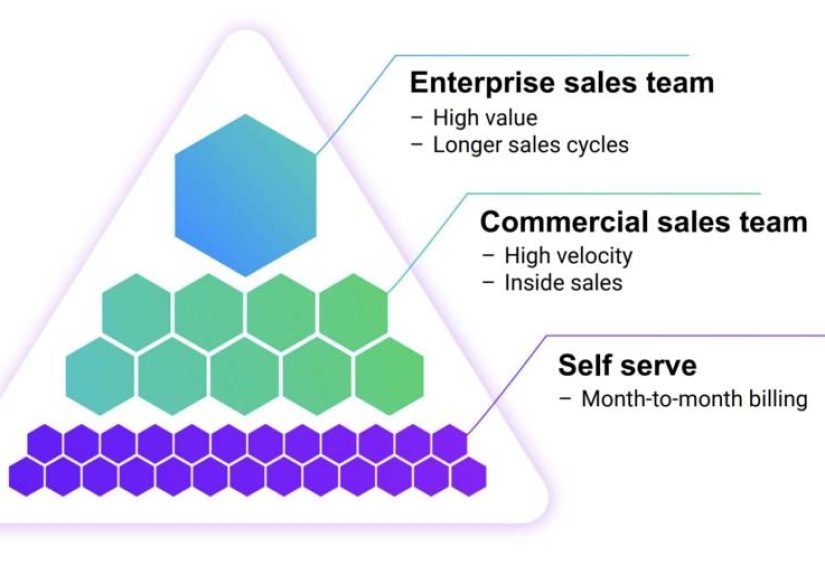
This is one of the biggest lessons from the market. McKinsey, Bain, Salesforce, and other operators have all pointed to the same reality: PLG often works best when paired with the right sales motion, especially for larger accounts. Self-serve gets you in the building. Sales helps you navigate procurement, security, multi-team rollout, and enterprise change management. PLG may open the door, but someone still has to help carry the furniture upstairs.
15. Enterprise readiness must arrive before enterprise demand becomes painful.
Harvard Business Review and other industry voices have warned that successful PLG companies can hit a wall if they ignore enterprise needs for too long. Security, permissions, compliance, billing controls, and administrative visibility are not glamorous features, but they are often what determines whether a product can graduate from a beloved team tool to a company standard. SaaS leaders know when to stop acting like a scrappy app and start acting like critical infrastructure.
16. Usage limits should create urgency, not resentment.
Some of the best PLG monetization design comes from thoughtful constraints. Zoom’s meeting limits on free plans and Loom’s differences between starter and paid capabilities are examples of how boundaries can nudge upgrades without destroying the experience. Good limits say, “You are getting enough value that an upgrade now makes sense.” Bad limits say, “We made this frustrating on purpose.” Users can tell the difference immediately.
17. The growth team cannot live in a silo.
PLG works best when product, design, engineering, data, marketing, and customer teams operate in sync. Growth is not just a marketing problem. It is a systems problem. The strongest SaaS organizations build cross-functional teams around outcomes such as acquisition, onboarding, monetization, or retention. When these teams share goals and data, experimentation becomes faster and far more useful.
18. Customer education is part of the product, not a side dish.
PLG leaders invest heavily in help centers, in-product guidance, templates, community content, onboarding emails, webinars, and use-case libraries. This is not fluff. It is part of how the product creates value at scale. Users do not always need a rep, but they do need clarity. Great SaaS companies teach customers how to win with the product, not just where to click next.
19. AI can improve PLG, but only when it reduces effort or increases relevance.
In the current SaaS era, more companies are embedding AI into discovery, onboarding, support, and productivity flows. That can strengthen PLG, but only when it helps users reach value faster or make better decisions. AI used as glitter is forgettable. AI used to summarize work, recommend next steps, personalize onboarding, or remove repetitive effort can meaningfully improve activation and retention. The lesson is simple: utility first, sparkle second.
20. PLG is an operating model, not a growth hack.
The final learning is the biggest one. PLG is not a free trial, not a homepage slogan, and not a one-time launch strategy. It is an operating model that reshapes how a SaaS company designs the user journey, prioritizes features, measures success, and coordinates sales, marketing, and support. The leaders in SaaS treat PLG as a company-wide discipline. That is why they keep learning from it while everyone else is still debating the acronym.
Why These PLG Learnings Matter Now
SaaS has matured. Buyers are more skeptical, budgets are more scrutinized, and nobody wants to book six meetings just to learn whether a tool can rename a file or create a dashboard. That is exactly why PLG still matters. It respects buyer behavior. It acknowledges that modern users want to explore first, understand value quickly, and commit only after the product proves it deserves a seat at the table.
For SaaS leaders, the real opportunity is not to copy a famous company feature for feature. It is to borrow the underlying principles. Reduce time-to-value. Measure meaningful behaviors. Design collaboration into the workflow. Use pricing and packaging as part of the experience. Let product usage inform sales. Build for retention, not just signups. That is the difference between having a product people try and having a product people adopt.
Put differently, the best PLG companies do not merely attract users. They create momentum. And in SaaS, momentum is the closest thing to magic that still shows up in a dashboard.
Extended Field Notes: What PLG Looks Like in Real SaaS Life
In practice, the most memorable PLG experiences rarely feel like “growth strategy” to the user. They feel easy. That is the trick. A team signs up for a tool because one person wanted to solve a small problem by Friday. They are not thinking about acquisition cost, expansion revenue, or product-qualified leads. They are thinking, “Can this help me get my job done before lunch?” The companies that win those moments usually win something much bigger later.
One common pattern is that the first victory is tiny, almost laughably small. A designer shares one file. A manager records one Loom. A founder hosts one Zoom call. A team creates one Slack channel. Nothing about that first action screams “future revenue engine.” But PLG leaders understand that small wins create confidence, and confidence creates repetition. Repetition becomes habit. Habit becomes team behavior. Team behavior becomes budget line item. That is the whole movie, and it usually starts with a scene so ordinary that companies underestimate it.
Another real-world lesson is that users are excellent at revealing where the product is confusing. They do it with silence, abandonment, repeated clicks, and support questions that arrive with the same exhausted energy as someone asking where the light switch is in a hotel room. The best PLG teams do not defend their flows out of pride. They watch the friction, fix it, and move on. In many SaaS organizations, the biggest growth unlock does not come from a shiny launch. It comes from removing a stupid step that never should have existed.
There is also a human side to PLG that often gets missed in boardroom conversations. Self-serve does not mean users want zero help. It means they want help on their terms. They want clear onboarding, sensible defaults, contextual nudges, useful templates, and support that appears before frustration hardens into churn. Great PLG feels less like being left alone in a store and more like having a smart guide nearby who knows when to step in and when to stop talking.
And then there is the internal company experience. PLG sounds elegant from the outside, but inside a SaaS business it can be gloriously chaotic at first. Product wants cleaner onboarding. Marketing wants more signups. Sales wants better signals. Customer success wants fewer confused accounts. Data wants everyone to stop changing metric definitions every two weeks. The companies that make PLG work are usually the ones that turn that chaos into coordination. They agree on what activation means, what expansion signals matter, and where the product should hand off to humans.
That is why PLG remains so compelling. It is not because it removes effort. It is because it points effort in the right direction. It forces SaaS teams to earn growth through product usefulness, not just persuasion. And in a market full of noise, that is still one of the most interesting lessons of all.
Conclusion
The leaders in SaaS have shown that product-led growth is not a shortcut. It is a sharper way to build, sell, and scale software. The most successful PLG companies make products that are easy to start, quick to prove value, naturally collaborative, and smart about turning usage into expansion. They combine self-serve simplicity with strong analytics, thoughtful pricing, and well-timed human support. For any SaaS company trying to grow more efficiently, these 20 PLG learnings offer a practical roadmap: build for value first, reduce friction everywhere, and let the product earn the next conversation.