Table of Contents >> Show >> Hide
Disney songs are basically emotional time machines: press play, and suddenly you’re eight years old again, holding a juice box like it’s an Oscar. But what makes a Disney song “the best”? It’s not just catchiness (though, yes, that helps). The all-timers do at least one of these things insanely well:
- Advance the story (so well you forget you’re being “exposited” at)
- Define a character in under four minutes (a superpower, honestly)
- Plant a hook that follows you into adulthood and rents a room in your brain
- Hit emotionallysometimes with a gentle hug, sometimes with a dramatic anvil
This list pulls from major U.S. entertainment rankings, cultural retrospectives, chart history, and Disney’s own musical legacy. It’s not trying to “solve” Disney musicjust celebrate the songs that keep winning hearts, playlists, karaoke nights, and that one dramatic moment when you stare out the car window like you’re in a montage.
How This “Best Disney Songs” List Was Picked
Disney is a giant musical universe: animated classics, live-action gems, Pixar tearjerkers, theme-park earworms, and the occasional TV theme that has no business being that catchy (looking at you, ‘80s cartoons). So instead of pretending there’s one “correct” ranking, I used a blended approach:
- Cultural impact: the songs people quote, meme, perform, and pass down like folklore.
- Musical craftsmanship: melody, structure, vocal moments, and lyrics that actually say something.
- Story function: the famous Disney “I Want” song blueprint and beyondsongs that move the plot.
- Staying power: decades of re-listens, covers, and “why am I humming this at the grocery store?” moments.
Also: villain songs matter. Comic numbers matter. Quiet, devastating ballads matter. If you only crown power anthems, you miss half the magic (and most of the wickedly good fun).
The 42 Best Disney Songs Ever
Classic Foundations (1937–1970s): Where the DNA Was Invented
- “When You Wish Upon a Star” Pinocchio (1940)
The company’s musical North Star. Simple, sincere, and so iconic it basically functions as Disney’s emotional logo. - “Someday My Prince Will Come” Snow White and the Seven Dwarfs (1937)
Classic Disney romantic dreamingso influential it escaped the movie and became a jazz standard. Not bad for a cartoon daydream. - “Heigh-Ho” Snow White and the Seven Dwarfs (1937)
The original workplace anthem. Catchy, rhythmic, and proof Disney understood the power of a chorus you can march to. - “Baby Mine” Dumbo (1941)
Two minutes of gentle heartbreak that still hits like a lullaby wrapped around a tear. Softly devastating in the best way. - “Bibbidi-Bobbidi-Boo” Cinderella (1950)
Nonsense words, maximum joy. The blueprint for “magic is happening right now,” and it sounds like glitter feels. - “A Dream Is a Wish Your Heart Makes” Cinderella (1950)
Peak bedtime optimism. It’s gentle, melodic, and still the gold standard for “hope, but make it musical.” - “Once Upon a Dream” Sleeping Beauty (1959)
Elegant, waltzy romance with a melody that floats. It’s basically a musical snow globe. - “Chim Chim Cher-ee” Mary Poppins (1964)
A little mysterious, a little melancholy, and completely charminglike stumbling into a foggy London fairytale. - “Supercalifragilisticexpialidocious” Mary Poppins (1964)
The ultimate “say it loud and feel better” song. It’s chaos with perfect diction and a grin you can hear. - “Feed the Birds (Tuppence a Bag)” Mary Poppins (1964)
A quiet masterpiece. It’s often singled out as one of Disney’s most emotionally central songstender, moral, and cinematic. - “The Bare Necessities” The Jungle Book (1967)
A jazz stroll through life’s simplest joys. Baloo’s philosophy remains undefeated: relax, breathe, repeat. - “I Wan’na Be Like You (The Monkey Song)” The Jungle Book (1967)
Big band energy, big personality. It swings, it struts, it basically moonwalks before moonwalking was a thing. - “It’s a Small World (After All)” Disney Parks / 1964 World’s Fair (1964)
The catchiest global-unity message ever engineered. It’s cheerful, persistent, and yesonce it’s in your head, it pays rent. - “Grim Grinning Ghosts” The Haunted Mansion (Disney Parks) (1969)
Disney’s spookiest singalong: playful, macabre, and oddly cozy. Proof that “cute creepy” is a legitimate genre. - “Everybody Wants to Be a Cat” The Aristocats (1970)
Pure swagger in animated form. It’s a party, it’s jazz, it’s Pariswhat more do you want, a beret? - “You’ve Got a Friend in Me” Toy Story (1995)
Instant warmth. It’s simple, sincere, and somehow makes friendship feel like a melody you can hold.
The Disney Renaissance (1989–1999): Broadway Moves In and Never Leaves
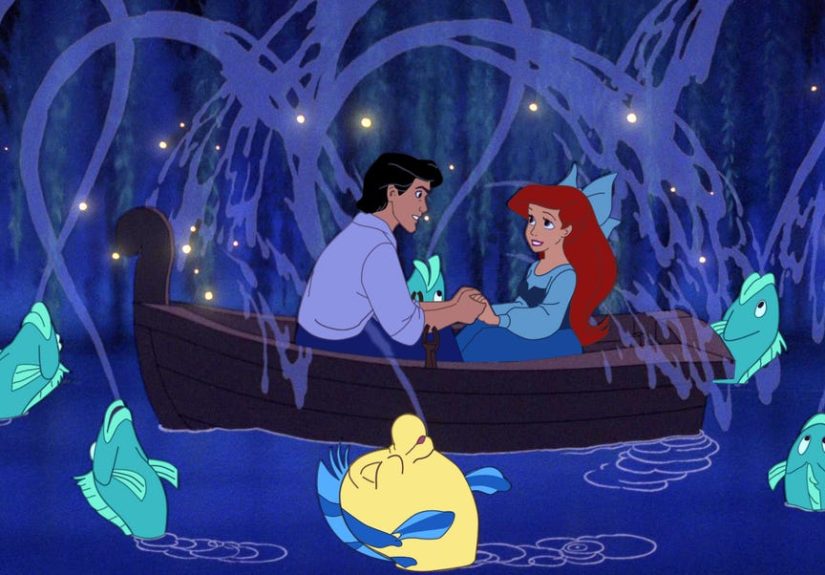
- “Part of Your World” The Little Mermaid (1989)
The modern “I Want” song that rewired Disney storytelling. Ariel doesn’t just singshe reveals her whole inner life. - “Under the Sea” The Little Mermaid (1989)
A full-on musical celebration with unstoppable rhythm. It’s joyfully persuasive… even if Ariel remains unconvinced. - “Poor Unfortunate Souls” The Little Mermaid (1989)
Villain song perfection: theatrical, manipulative, hilarious, and dark. Ursula sells a scam with the confidence of a headliner. - “Beauty and the Beast” Beauty and the Beast (1991)
A gentle, timeless ballad that turns a castle dinner into an emotional turning point. Romance, but with narrative purpose. - “Be Our Guest” Beauty and the Beast (1991)
Disney’s ultimate showstopper. It’s hospitality as spectaclelike dinner theater got enchanted and never looked back. - “Gaston” Beauty and the Beast (1991)
A character roast disguised as a pub anthem. It’s witty, muscular, and somehow makes arrogance sound… catchy. - “A Whole New World” Aladdin (1992)
A soaring duet with true cinematic lift. If you’ve never pretended your living room couch was a magic carpet, please try joy. - “Friend Like Me” Aladdin (1992)
Rapid-fire charisma with jazz hands. The Genie doesn’t sing thishe performs it directly into your dopamine receptors. - “Circle of Life” The Lion King (1994)
A spiritual opening statement. It’s huge, mythic, and instantly tells you: this is not a small story. - “Hakuna Matata” The Lion King (1994)
The world’s friendliest coping mechanism. It’s comedic relief that doubles as character therapy (and a phrase everyone knows). - “Can You Feel the Love Tonight” The Lion King (1994)
Warm, romantic, and undeniably classic. Also: it somehow makes a lion romance feel both epic and… relatable? - “Colors of the Wind” Pocahontas (1995)
A powerful moral argument delivered as a pop-Broadway ballad. It’s one of Disney’s boldest “listen and learn” moments. - “Hellfire” The Hunchback of Notre Dame (1996)
One of Disney’s darkest villain songs, period. Operatic intensity, moral conflict, and a level of drama that could power a city. - “Go the Distance” Hercules (1997)
Inspirational without being corny. It’s the song you play when your motivation needs a cape and a training montage. - “Reflection” Mulan (1998)
Quiet strength, razor-sharp identity questions, and a melody that lingers. It’s vulnerable in a way that feels timeless. - “I’ll Make a Man Out of You” Mulan (1998)
A training song that became a cultural event. It’s structured like momentum itselfeach chorus feels like leveling up. - “You’ll Be in My Heart” Tarzan (1999)
A universal promise set to a pop power ballad. It’s warm, protective, and engineered to make you miss someone immediately.
Modern Disney (2000s–Now): Viral Hits, Big Feelings, and Zero Shame
- “Almost There” The Princess and the Frog (2009)
A dream-chasing anthem with New Orleans sparkle. Tiana’s ambition feels grounded, hardworking, and deeply earned. - “Friends on the Other Side” The Princess and the Frog (2009)
A villain number with swampy swagger. It’s spooky-fun, musically rich, and delightfully untrustworthy. - “I See the Light” Tangled (2010)
Disney romance at its prettiest: intimate, luminous, and perfectly paced. It’s basically a duet-shaped lantern. - “Let It Go” Frozen (2013)
The modern powerhouse anthemdramatic key changes, emotional release, and a chorus that became global currency. - “Try Everything” Zootopia (2016)
A pop pep talk that actually works. It’s the soundtrack for learning, failing, and trying again without spiraling. - “How Far I’ll Go” Moana (2016)
An “I Want” song with ocean-sized longing. It captures ambition and responsibility like two tides pulling at once. - “You’re Welcome” Moana (2016)
Charm, comedy, and flexing set to a beat. Maui turns self-mythology into a show, and it’s ridiculously re-playable. - “Remember Me” Coco (2017)
A song that changes meaning depending on who sings itand that’s the genius. It’s tender, heartbreaking, and unforgettable. - “Into the Unknown” Frozen II (2019)
A sequel song that refuses to be a downgrade. It’s restless, cinematic, and built for anyone who’s ever felt the call of “more.” - “We Don’t Talk About Bruno” Encanto (2021)
A narrative puzzle box disguised as a banger. Everyone gets a voice, the story moves forward, and the hook is basically illegal. - “Surface Pressure” Encanto (2021)
A powerhouse metaphor for carrying everything. It’s muscular, anxious, relatable, and catchy enough to make therapy feel like a chorus.
Honorable Mentions (Because Disney Has Too Many Good Songs)
If you’re building a playlist and want extra sparks: “Kiss the Girl,” “Be Prepared,” “I Just Can’t Wait to Be King,” “A Spoonful of Sugar,” “I’ll Be There” energy from various soundtracks, “You’ve Got a Friend in Me” (yes, again), “Love Is an Open Door,” and “You’ve Got a Friend in Me”’s entire emotional extended universe.
Why These Songs Work: A Quick (Fun) Breakdown
1) The “I Want” Song Is Disney’s Secret Engine
Disney musicals often kick into gear the moment a character admits what they want. Ariel wants the human world. Moana wants the horizon. Mulan wants to be seen as herself. These songs don’t just sound prettythey establish stakes, identity, and a direction. When they’re great, they don’t feel like exposition; they feel like confession.
2) Villain Songs Are Basically Musical Espresso
Villain numbers like “Poor Unfortunate Souls,” “Hellfire,” and “Friends on the Other Side” are theatrical rockets: clear point of view, sharp rhythm, and a delicious sense of danger. They’re fun because they’re honestvillains sing what heroes are too polite to say out loud.
3) Modern Hits Win by Being Both Meme-able and Meaningful
The newest classics (“Bruno,” “Surface Pressure,” “Let It Go”) thrive because they work on multiple levels: you can sing them as a joke, sing them as a flex, or sing them while staring into the middle distance like your feelings have a spotlight. The best Disney songs are flexible like that.
of Experiences Related to Disney Songs
There’s a special kind of human bonding that happens when a Disney song starts playing in a room. It doesn’t matter if it’s a living room, a long car ride, a school talent show, or a grocery store aisle where you’re just trying to buy toothpaste like a responsible adult. The first few notes hit, and suddenly everyone becomes a backup singer with strong opinions about the “best version.”
One of the most common Disney-song experiences is the accidental singalong: you’re cooking, cleaning, or doing something deeply un-magical, and a track like “Under the Sea” or “You’re Welcome” comes on. You tell yourself you’ll just hum. Then you’re doing the chorus. Then you’re doing the character voice. Then you’re performing the hand gestures like this is a Broadway audition and the spatula is your microphone. The song didn’t ask permission. It simply moved in.
Another classic experience is the “I Want” song momentusually when someone needs motivation but doesn’t want a lecture. People play “Go the Distance” before a big exam, “How Far I’ll Go” before making a scary decision, or “Reflection” when they need to feel understood without explaining themselves. Disney songs are sneaky like that: they’re entertainment first, emotional support second, and somehow both at once.
Then there’s the intergenerational magic. A parent plays “When You Wish Upon a Star” for a kid, and it becomes more than a melodyit becomes a ritual. Someone else remembers hearing “A Dream Is a Wish Your Heart Makes” at bedtime, and now they’re passing it forward. The song acts like a bridge between versions of the same family, even when tastes change and decades pass.
Group experiences get even better. “We Don’t Talk About Bruno” is basically a party game: everyone picks a character line and commits like their reputation depends on it. “Hakuna Matata” turns into a chorus where nobody sings quietly. And “Let It Go”? That’s not a song; that’s a public service announcement for emotional release. People don’t just sing itthey exhale through it.
Finally, there’s the theme-park effect: hearing “It’s a Small World (After All)” or “Grim Grinning Ghosts” in the wild can trigger instant sensory memory lights, sets, crowds, laughter, that specific feeling of being somewhere that runs on imagination. Love it or get it stuck in your head for three days, those songs prove Disney’s real trick: music doesn’t just accompany the memory. It becomes the memory.