Table of Contents >> Show >> Hide
- What Is a Condensate Pump?
- Before You Begin: Safety and Code Notes
- Tools and Materials You May Need
- Step 1: Choose the Right Condensate Pump
- Step 2: Turn Off Power and Inspect the Area
- Step 3: Position the Pump Correctly
- Step 4: Connect the Inlet Drain Line
- Step 5: Install the Check Valve and Discharge Tubing
- Step 6: Choose a Proper Drain Destination
- Step 7: Plug the Pump Into a Proper Outlet
- Step 8: Connect the Overflow Safety Switch
- Step 9: Test the Pump
- Common Condensate Pump Installation Mistakes
- Troubleshooting After Installation
- Condensate Pump Maintenance Tips
- When to Call a Professional
- Final Thoughts
- Field Experience: Practical Lessons From Real Condensate Pump Installations
Installing a condensate pump is one of those home maintenance jobs that sounds more intimidating than it usually is. The name feels like something from a submarine manual, but the job is simple in concept: your air conditioner, high-efficiency furnace, boiler, humidifier, or dehumidifier creates water, and when gravity cannot drain that water away, a small pump gives it a polite but firm shove toward a proper drain.
That little pump matters more than it gets credit for. Without it, condensate can overflow into closets, basements, attic spaces, ceilings, flooring, or walls. And water, as every homeowner eventually learns, has the personality of a determined raccoon: if there is a way to get where it should not go, it will find it.
This step-by-step guide explains how to install a condensate pump safely, how to route the discharge tubing, how to test the float switch, and how to avoid the most common mistakes. It is written for practical homeowners, landlords, maintenance beginners, and anyone who wants to understand what the HVAC technician is doing instead of nodding wisely while secretly wondering whether “check valve” is a medical term.
What Is a Condensate Pump?
A condensate pump is a compact automatic pump that collects and removes condensation produced by HVAC equipment. It usually has a small reservoir, a float switch, a motor, an inlet opening, and a discharge outlet. When water rises inside the reservoir, the float switch activates the motor. The pump then pushes the water through tubing to a drain, laundry sink, utility sink, sump pit, or other approved disposal point.
Condensate pumps are commonly used when the equipment sits below the nearest drain, when the drain is too far away for gravity alone, or when a system is installed in a basement, crawlspace, attic, closet, or mechanical room where water needs to travel upward before it can drain away.
Before You Begin: Safety and Code Notes
Most plug-in condensate pump installations are manageable for a careful DIYer, but electrical and HVAC safety still matter. Always turn off power to the HVAC equipment before working around the drain system. Never modify line-voltage wiring unless you are qualified. If the installation requires hardwiring, opening the furnace or air handler control cabinet, or connecting an overflow safety switch to the thermostat circuit, hire a licensed HVAC technician or electrician.
Also check local plumbing and mechanical codes. Some areas have rules about where condensate may drain, whether an air gap is required, and whether acidic condensate from high-efficiency gas appliances must pass through a neutralizer before entering plumbing. A pump can be installed neatly and still be wrong if it sends corrosive condensate into a drain that local code does not allow.
Tools and Materials You May Need
Basic tools
- Condensate pump sized for your equipment
- 3/8-inch inside-diameter vinyl tubing or the tubing size recommended by the pump manufacturer
- Hose clamps
- Screwdriver or nut driver
- Tubing cutter or utility knife
- Level
- Bucket or towel
- Mounting screws or bracket, if included
- Zip ties or pipe straps
- Condensate neutralizer, if required for a high-efficiency furnace or boiler
Helpful extras
- Non-contact voltage tester
- Flashlight or headlamp
- Wet/dry vacuum for old water or clogged lines
- Replacement check valve, if the old one is worn or clogged
- Clear tubing so you can see water movement during testing
Step 1: Choose the Right Condensate Pump
Before installing anything, confirm that the pump matches the job. Look at the pump’s maximum lift, also called shutoff head. This is the highest vertical distance the pump can push water. If your discharge line must rise 12 feet before reaching a drain, do not choose a pump rated for only 10 feet of lift. That is not “close enough”; that is a future puddle wearing a disguise.
Also check the gallons-per-hour rating, liquid temperature rating, inlet size, discharge size, power requirements, and whether the pump includes an overflow safety switch. For standard air conditioning condensate, a common residential condensate pump is usually enough. For high-efficiency furnaces and boilers, confirm that the pump is compatible with acidic condensate and install a neutralizer if required.
Step 2: Turn Off Power and Inspect the Area
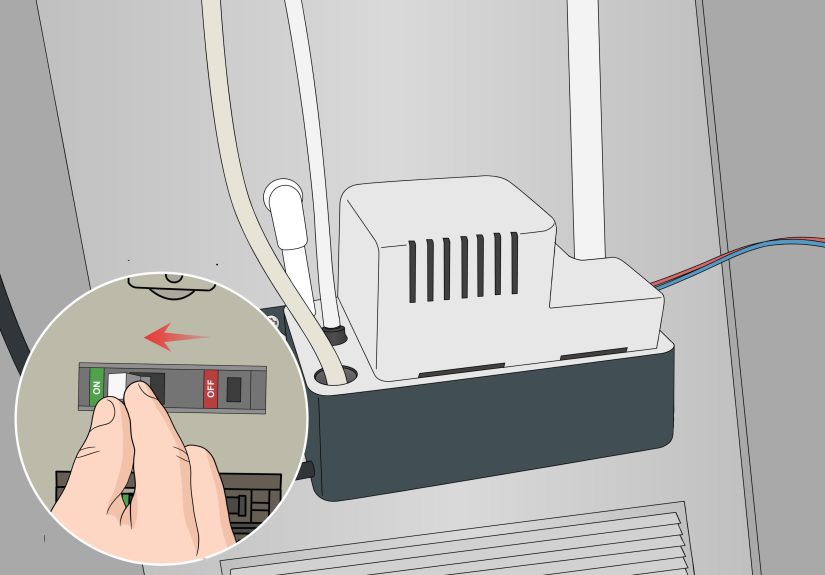
Switch off power to the HVAC unit before working near the drain pan, furnace, air handler, or condensate line. If you are replacing an old pump, unplug it and remove any standing water from the reservoir. Take a quick photo before disconnecting tubing so you have a reference. Photos are free, and future-you will appreciate not having to solve a tiny plumbing mystery at 9:47 p.m.
Inspect the area around the equipment. Look for stains, algae buildup, cracked tubing, rust, loose drain fittings, or signs that the old pump overflowed. If water has been leaking for a while, address the cause before installing the new pump. A new pump cannot fix a clogged evaporator coil drain, a broken pan, or a discharge line that runs uphill like it is training for a marathon.
Step 3: Position the Pump Correctly
Place the condensate pump on a flat, stable surface near the HVAC drain outlet. The pump should sit level, dry, and accessible for maintenance. Most pumps are non-submersible, meaning they should not be placed where they can flood, splash, or sit in standing water.
The inlet of the pump must be lower than the equipment’s condensate drain outlet so water can flow into the pump by gravity. If the pump sits too high, water may back up into the drain pan or appliance. Keep the pump close enough that the drain line can enter the reservoir smoothly without sagging, kinking, or putting stress on fittings.
If the pump has mounting slots, you may mount it to a nearby wall, equipment side panel, or bracket, as long as the manufacturer allows it and the pump remains level. Do not block motor vents. Condensate pumps need airflow to stay cool during operation.
Step 4: Connect the Inlet Drain Line
Run the condensate drain line from the HVAC unit into one of the pump’s inlet openings. On many pumps, unused inlet openings are capped with plastic plugs. Remove only the cap you need and leave the others sealed.
The inlet tubing or pipe should extend slightly into the reservoir, but it should not touch the bottom or interfere with the float. A good practice is to cut the end of the tubing at an angle. This helps prevent the tubing from sealing itself against the bottom of the tank and blocking water flow.
Make sure the inlet line slopes downward into the pump. Avoid creating a low belly in the line where water and sludge can collect. If the line is loose, secure it so vibration cannot shake it out of the pump opening. A drain tube that pops out during cooling season can turn a small equipment closet into an indoor pond, minus the relaxing koi fish.
Step 5: Install the Check Valve and Discharge Tubing
The check valve is the small valve at the pump outlet that helps prevent pumped water from flowing backward into the reservoir after the pump shuts off. Some pumps come with the check valve already installed; others require you to insert it into the discharge port. Follow the manufacturer’s direction and make sure it is seated securely.
Attach the discharge tubing to the barbed outlet or check valve. Use the tubing size recommended by the pump manufacturer, commonly 3/8-inch inside-diameter tubing for many residential models. Slide the tubing fully onto the fitting and secure it with a hose clamp. Do not overtighten the clamp to the point that it cuts into the tubing.
Route the discharge tubing upward first if the pump needs to lift water, but stay within the pump’s rated lift capacity. After the high point, run the tubing toward the drain with as much downward slope as practical. Keep the route short, smooth, and protected from damage. Avoid sharp bends, tight coils, pinched tubing, and places where the line could freeze.
Step 6: Choose a Proper Drain Destination
The discharge line must end at an approved drain location. Common options include a floor drain, utility sink, laundry sink, sump pit, or dedicated condensate drain. Do not simply run the tubing outside onto a walkway, driveway, or foundation area unless local code allows it and freezing or icing is not a concern.
Leave an air gap where required. An air gap means the discharge tube ends above the drain opening rather than being submerged inside it. This helps prevent contaminated water from being siphoned backward into the condensate system. It also makes it easier to see whether the pump is actually discharging water during testing.
Step 7: Plug the Pump Into a Proper Outlet
Most residential condensate pumps plug into a standard grounded outlet. Use an outlet that matches the pump’s voltage and remains powered continuously. Do not plug the pump into a switched outlet that someone might accidentally turn off. Avoid extension cords, power strips, or temporary wiring.
If the pump requires a dedicated circuit, GFCI protection, or any special wiring based on its location, follow local electrical code and the manufacturer’s instructions. When in doubt, ask a licensed electrician. Water and electricity should have a formal, well-supervised relationship, not a chaotic roommate arrangement.
Step 8: Connect the Overflow Safety Switch
Many condensate pumps include an overflow safety switch. This switch can shut down the HVAC system or trigger an alarm if water rises too high in the pump reservoir. It is a smart feature because it helps prevent water damage if the pump fails, the discharge line clogs, or the float gets stuck.
However, wiring a safety switch into HVAC controls is not the same as plugging in a lamp. The connection may involve low-voltage thermostat wiring or the appliance control circuit, and mistakes can damage equipment or create unsafe conditions. If you are not trained in HVAC controls, have a qualified technician connect and test the switch.
For a web-published DIY guide, the safest advice is simple: install the pump body and tubing if you are comfortable, but let a professional handle control wiring. A safety switch only protects your home if it is wired correctly and tested under real overflow conditions.
Step 9: Test the Pump
Testing is not optional. A condensate pump should prove itself before you walk away and declare victory. Slowly pour clean water into the pump reservoir until the float rises and the pump turns on. Watch the discharge tubing and confirm water flows to the drain. The pump should shut off automatically once the water level drops.
Check every connection for leaks. Look at the inlet line, outlet fitting, hose clamp, check valve, and drain termination. If the pump vibrates excessively, confirm that it is level and sitting securely. If it hums but does not pump, unplug it and check for a stuck float, blocked tubing, kinked discharge line, or improperly seated check valve.
If a safety switch is connected, test it according to the manufacturer’s instructions. The HVAC system should shut down or the alarm should activate before the reservoir overflows. After the test, restore normal operation and make sure the equipment starts correctly.
Common Condensate Pump Installation Mistakes
Using tubing that is too large or too small
Discharge tubing must match the pump outlet and manufacturer’s requirements. Oversized, undersized, or loose tubing can reduce performance, cause leaks, or fall off under pressure.
Ignoring vertical lift
A pump rated for 20 feet of shutoff lift does not mean it will pump strongly at 20 feet. Flow decreases as lift increases. Choose a pump with enough capacity for the actual height and distance involved.
Creating kinks in the discharge line
Vinyl tubing bends easily, which is convenient until it folds flat behind the furnace. Use wide bends and secure the line so it cannot kink.
Skipping the air gap
Where required, an air gap protects the condensate system from backflow. It also makes troubleshooting easier because you can see the water discharge.
Forgetting maintenance access
Do not bury the pump behind boxes, drywall, insulation, or a jungle of storage bins. You will need access to clean the reservoir and test the float.
Troubleshooting After Installation
The pump does not turn on
Check that the outlet has power, the plug is fully inserted, the breaker is not tripped, and the float moves freely. If the motor still does not respond, stop and consult the manual or a technician.
The pump runs but water does not drain
Look for kinked tubing, excessive lift, a clogged discharge line, a blocked check valve, or a frozen outdoor termination. Also confirm that the discharge line is connected to the correct outlet.
Water flows back into the reservoir
The check valve may be dirty, missing, installed incorrectly, or worn out. Clean or replace it according to the pump manufacturer’s instructions.
The pump runs constantly
A stuck float, debris in the reservoir, water returning through the discharge line, or too much incoming condensate can cause continuous operation. Unplug the pump before inspecting it.
The pump smells bad
Odor usually means biological buildup, stagnant water, or debris inside the reservoir. Clean the tank and flush the line with an approved condensate pump cleaner or mild soap and water if the manufacturer allows it.
Condensate Pump Maintenance Tips
A condensate pump is low-maintenance, not no-maintenance. Inspect it at least once or twice a year, especially before cooling season. In humid climates or dusty mechanical rooms, more frequent checks are wise.
- Unplug the pump before cleaning.
- Remove the cover according to the manual.
- Clean sludge, algae, dust, and mineral buildup from the reservoir.
- Make sure the float moves freely.
- Flush the discharge tubing if water flow seems weak.
- Inspect the check valve for debris.
- Replace brittle, cloudy, cracked, or kinked tubing.
- Pour clean water into the reservoir after cleaning to confirm normal operation.
For high-efficiency furnaces and boilers, also check the condensate neutralizer media. Neutralizer material wears down over time, and once it is depleted, acidic condensate may damage drains, pumps, or piping.
When to Call a Professional
Call a licensed HVAC technician or electrician if the pump must be hardwired, if the overflow safety switch needs to be tied into the HVAC control circuit, if the appliance shuts down after installation, if the breaker trips, if you smell burning, or if water continues to back up into the furnace or air handler.
You should also call a professional if the HVAC equipment is in an attic or finished ceiling space. In those locations, a failed condensate system can cause expensive water damage quickly. A professional can verify the drain pan, secondary drain, float switch, pump capacity, and code compliance.
Final Thoughts
Learning how to install a condensate pump is mostly about planning the water’s path. The pump must sit level and below the drain outlet. The inlet must feed by gravity. The discharge line must be secure, unclogged, and within the pump’s lift rating. The outlet must remain powered. The safety switch should be properly connected and tested. When those pieces work together, the pump quietly does its job in the background.
A good condensate pump installation is not flashy. Nobody invites neighbors over to admire the discharge tubing. But it protects floors, ceilings, walls, equipment, and your future weekend from becoming a surprise water cleanup event. Install it carefully, test it thoroughly, maintain it regularly, and your condensate pump can remain one of the most boring appliances in the housewhich, in HVAC language, is a compliment.
Field Experience: Practical Lessons From Real Condensate Pump Installations
After enough condensate pump installations, one lesson becomes obvious: the pump is rarely the only thing that matters. The tubing route, drain location, maintenance access, and safety switch are just as important. A brand-new pump can fail to protect a home if the discharge line is kinked behind the equipment or if the pump is plugged into an outlet controlled by a wall switch. The best installation is not always the prettiest one; it is the one that still works on the hottest, most humid day of the year when the air conditioner is pulling gallons of moisture from the air.
One useful habit is to test the pump with more water than you think is necessary. Pouring in a small cup may trigger the float, but it may not reveal a slow leak at the hose clamp or a weak discharge route. Filling the reservoir enough to make the pump cycle several times gives you a better picture. Watch the tubing during the test. Clear tubing is especially helpful because you can see whether water is moving smoothly, pulsing backward, or stopping at a high point.
Another practical experience: never assume the old tubing is worth saving. Old vinyl tubing can become stiff, cloudy, flattened, or packed with algae and sediment. Reusing it may save a few dollars but create a headache later. If the old pump failed because the discharge line was clogged, installing a new pump without replacing or flushing the tubing is like buying new shoes and stepping straight into a mud puddle.
Placement also matters more than beginners expect. A pump tucked tightly behind a furnace may look clean on day one, but someone has to clean that reservoir later. Leave enough room to remove the cover, inspect the float, and disconnect the tubing. If the pump is in a basement storage area, keep boxes and laundry baskets away from it. Many pump problems start when someone accidentally bumps the tubing loose or blocks access until maintenance becomes “next weekend,” which is homeowner language for “possibly never.”
Noise is another clue. A healthy condensate pump usually makes a brief, predictable sound when it cycles. If the pump suddenly becomes louder, runs longer, clicks repeatedly, or vibrates against the wall, inspect it. It may be sitting unevenly, the check valve may be dirty, or the tubing may be partially blocked. Small changes in sound often show up before a full failure.
Finally, label the outlet or add a small tag near the pump that says “Condensate PumpDo Not Unplug.” This sounds almost silly until someone unplugs the pump to charge a vacuum, run a holiday decoration, or power a tool. A condensate pump cannot protect anything without electricity. The best installations include small reminders that prevent big accidents.