Table of Contents >> Show >> Hide
- Why a Glue Gun Deserves Its Own Rack
- Scrap Fabric: The Secret Weapon of Organization
- The Anatomy of a “Gun Rack That Stuns”
- Design Ideas That Make the Rack “Stun”
- Planning the Organizer Like a Pro (Without Becoming One)
- Small-Space Versions That Still Feel Fancy
- Safety Notes (Hot Glue Edition)
- Keeping Scrap Fabric Organized So the Organizer Stays Organized
- FAQ: Real Questions People Ask Right Before a Glue Disaster
- Experience Notes: Lessons From Real Craft Rooms (The Good, the Sticky, and the “Why Is This Glued to That?”)
- Conclusion: A Rack That Looks Good and Works Hard
Every craft room has that one tool that’s always “just for a second” on the table… and then somehow
lives there permanently. For a lot of us, it’s the hot glue gun: half tool, half chaos wand, full-time clutter magnet.
If you’ve ever untangled a glue gun cord like you’re defusing a tiny sticky bomb (dramatic? yes. accurate? also yes),
you’re ready for the hero of this story: a stunning “gun rack” made for your hot glue gun and
a scrap fabric organizer that finally gives all those leftover bits a purpose beyond “future guilt.”
Quick clarity: this article uses “gun rack” in the craft-tool sense (hot glue gun, staple gun, paint gun, etc.).
If you meant a firearm gun rack, skip to the safety note belowbecause scrap-fabric pockets are cute, but they are not
secure storage for firearms. (Your quilting cotton should never be responsible for home security.)
Why a Glue Gun Deserves Its Own Rack
A good organizer isn’t just about looking tidyit’s about making the next project easier. A glue gun rack does three jobs at once:
- Protects your workspace from drips, strings, and mystery glue blobs that appear overnight.
- Stops the cord chaos (the number-one cause of “why is everything stuck together?”).
- Keeps supplies in reachsticks, tips, mini scissors, silicone finger caps, and the random clip you swear you’ll use.
The “stuns” part? That’s where scrap fabric shines. Instead of a plastic bin that screams “temporary solution,” you get a wall-worthy
organizer that looks intentionallike you planned your life. (It’s okay if you didn’t. Your wall doesn’t need to know.)
Scrap Fabric: The Secret Weapon of Organization
Scrap fabric is ideal for organizers because it’s flexible, durable (especially denim, canvas, and upholstery leftovers),
and easy to customize. Plus, scrap projects have a sneaky bonus: they’re low-pressure. If you mess up a pocket seam,
you’re not ruining “the good fabric.” You’re simply giving your scraps a more… adventurous backstory.
Best Fabric Choices for a Tool-Friendly Organizer
- Denim / canvas / duck cloth: sturdy pockets that keep their shape and handle weight.
- Quilt cotton (as the “pretty” layer): great for patchwork fronts, labels, and color-blocking.
- Interfacing or batting: adds structure so pockets don’t collapse like a sad paper bag.
- Repurposed pockets: old jeans pockets = instant organizers with built-in durability.
The Anatomy of a “Gun Rack That Stuns”
Think of this as a tool station plus a fabric scrap wall organizer. The smartest versions follow a simple layout:
heavy items anchored, messy items contained, and hot items treated like hot items (because they are).
1) The Parking Spot (Where the Hot Glue Gun Actually Goes)
Your glue gun needs a “home base” that’s stable and heat-aware. The easiest way to make your rack safer (and cleaner)
is to include a non-stick, heat-resistant surface where the gun can rest while warm. Silicone mats and drip pads are popular
because cooled glue peels off instead of becoming a permanent art installation.
If your glue gun has a built-in stand, greatstill give it a drip-catching zone. If it doesn’t, consider adding a dedicated “parking” area
so it’s never balanced on a pile of fabric scraps like a toddler on a sugar high.
2) Drip Control (Because Gravity Is Not Your Friend)
Hot glue drips. Even when you swear it won’t. A rack that works includes at least one of these:
- Drip tray zone: a removable surface you can scrape or peel clean.
- Silicone catch pad: protects wood, laminate, and sanity.
- “Strings happen” containment: a small area where glue strings can land without ruining your whole organizer.
Practical example: cordless glue guns and higher-temp models can drip more when fully heated, so the “drip solution” isn’t optional
it’s part of making your rack feel like a professional setup instead of a sticky gamble.
3) Stick Storage (Full-Size, Mini, Specialty)
Glue sticks reproduce when you’re not looking. Your organizer should include a dedicated spot for:
- Everyday sticks: the ones you reach for constantly.
- Specialty sticks: glitter, colored, high-temp, low-tempaka “the fancy stash.”
- Half-used sticks: because throwing them away feels wrong, but keeping them loose feels worse.
4) Tool Pockets (Small Things That Disappear Instantly)
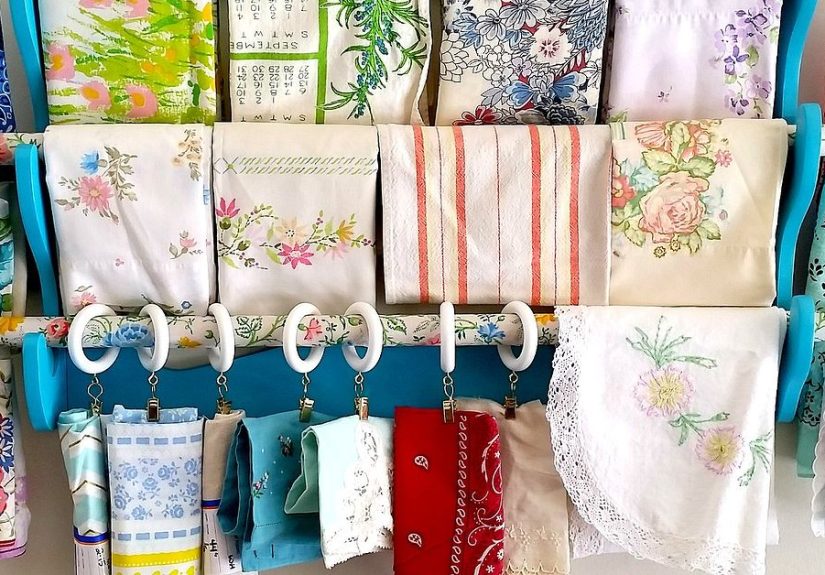
The magic of a scrap fabric wall organizer is the pockets. Lots of pockets. Pockets with personality.
Here are pocket categories that actually help:
- Precision tools: tweezers, craft knife, mini scissors, seam ripper.
- Glue helpers: silicone finger caps, heat-resistant pad, cleaning sticks, spare nozzles (if your gun supports them).
- Fasteners: clips, pins, rubber bands, tiny clamps for holding pieces while glue sets.
- Label-friendly pocket: one pocket that always holds your “current project bits,” so your table can breathe.
5) Cord Management (The Quiet MVP)
If your glue gun is corded, your rack needs a plan. Otherwise, the cord will do what cords do: wrap around everything like it owns the place.
Add a strap, loop, hook, or pocket dedicated to the cord and plug. The goal is simple: no dangling cords on the work surface.
Design Ideas That Make the Rack “Stun”
Function is great, but “stunning” is where you get to show off. Your organizer can look like decor while working like a tool station.
Here are a few styles that play well with scrap fabric:
Patchwork Panel (Quilt-Adjacent, Zero Quilt Pressure)
Use coordinated scraps to create a patchwork front panel, then add uniform pockets over it. It’s colorful without being chaotic
like a well-organized rainbow with a schedule.
Denim Utility (Jeans Pockets = Instant Structure)
Repurposed jeans pockets look rugged and modern. Mix them with canvas backing and label each pocket (even with a simple fabric tag).
It’s “workshop chic,” but for people whose power tool is a glue gun.
Minimalist Neutral (Quiet Luxury, Craft Edition)
Use natural canvas, cream or gray scraps, and clean lines. Add one accent strip of pattern fabric at the top like a little “yes, I have taste”
moment. It’ll blend into a home office without screaming “craft explosion behind this door.”
Planning the Organizer Like a Pro (Without Becoming One)
Before you sew or hang anything, do a 60-second workflow check:
- Where do you use the glue gun most? Desk, cutting table, kitchen counter (no judgment), garage bench?
- What do you reach for with it? Sticks, scissors, tweezers, clips, ruler, silicone mat?
- What makes the mess? Drips, strings, cord tangles, and the “where did the cap go?” problem.
Your organizer should match your habits. The best racks aren’t the most complicated; they’re the most honest.
If you never use glitter sticks, don’t build a glitter-stick penthouse.
Small-Space Versions That Still Feel Fancy
Vertical Wall Rack
Mount a fabric organizer on the wall near your workspace. Keep heavy items low, frequently-used items at hand level,
and “rarely used but emotionally important” items up high.
Behind-the-Door Organizer
If wall space is limited, a door-mounted hanging organizer can hold glue accessories, sticks, and small tools.
Just make sure the glue gun parking spot is stable and not pressed against fabric while hot.
Portable Caddy Hybrid
Want to craft in multiple rooms? Make a fabric organizer panel that snaps onto a board or slides into a tote.
The key is having a consistent “home” for the glue gun so you don’t spend 10 minutes looking for it every time.
Safety Notes (Hot Glue Edition)
Hot glue guns are friendly… until they are not. A few safety rules make your organizer smarter:
- Never store a hot glue gun in a fabric pocket while it’s still hot or dripping.
- Use a heat-resistant resting surface (silicone pad/drip tray) for warm parking.
- Keep cords controlled so they can’t tug the gun off a shelf or snag your elbow mid-project.
- Place the rack away from kids/pets if you craft in shared spaces.
If You Meant a Firearm Gun Rack
A quick, serious note: if your title was meant literally for firearms, a scrap-fabric organizer is not appropriate storage.
Firearms should be secured in a way that prevents unauthorized access (commonly a locked safe or locked cabinet),
and local laws may apply. Consider this article a craft-room solution for a glue gun, not a security device.
Keeping Scrap Fabric Organized So the Organizer Stays Organized
The organizer is the “final form.” But the real secret is managing scraps so you don’t end up with a scrap pile that needs its own zip code.
Try a simple sorting method:
- By size: tiny (crumbs), small (usable patches), medium (pocket-worthy), large (future panels).
- By type: sturdy (denim/canvas), soft (cotton), specialty (knits, slippery stuff).
- By project potential: “usable now” versus “sentimental maybe.”
This keeps your stash usableso when you need a pocket reinforcement or a cute binding strip, you don’t have to excavate like an archaeologist.
FAQ: Real Questions People Ask Right Before a Glue Disaster
How do I keep glue strings from taking over?
Use a drip zone (silicone or peelable surface), pause your gun on it between glues, and keep a small “string catcher” area
even a dedicated scrap strip you don’t mind getting messy.
What’s the best fabric for pockets that won’t sag?
Denim, canvas, and heavy cotton with interfacing are your best friends. If you want pretty fabric on the outside,
layer it over something sturdy so it doesn’t droop under tool weight.
How do I clean dried glue off surfaces?
On silicone, dried glue usually peels off cleanly. On hard surfaces, let it fully cool, then gently lift/peel.
Avoid scraping finished wood aggressivelyyour organizer should look stunning, not “survived a bear attack.”
Experience Notes: Lessons From Real Craft Rooms (The Good, the Sticky, and the “Why Is This Glued to That?”)
Crafters who build glue gun stations often report the same “before and after” feeling: before, the glue gun is always in the way,
always dripping, and always missing the one accessory you need. After, it becomes a tool you pick up and put down without thinking.
That sounds small, but it changes how you start projects. When set-up friction disappears, you create more often.
One common learning curve is realizing that the parking spot matters more than the pockets. Many people start by sewing
beautiful storage pockets, then discover the glue gun itself still ends up on the table because they don’t have a heat-safe resting zone.
The fix is simple: integrate a dedicated drip surface and treat it like the “front door” of the organizer. If the glue gun can’t be set down
safely in one motion, it won’t stay in the rackno matter how gorgeous the patchwork is.
Another frequent “aha” moment: cord control prevents half the mess. When the cord is managedlooped, strapped, or tucked
crafters stop knocking over lightweight bins, stop snagging rulers, and stop dragging a warm glue gun across the workspace by accident.
It’s also why wall-mounted organizers feel so calm: everything has gravity working for it instead of against it.
Scrap fabric organizers also tend to evolve. People often begin with a simple pocket panel, then add “micro-upgrades” once they notice patterns:
a narrow pocket for tweezers because they always vanish, a taller sleeve for glue sticks because half-used sticks roll away, a labeled pocket for
“current project bits” because those are the items that clutter the table fastest. Over time, the organizer becomes customnot because you designed
it perfectly on day one, but because you let your habits teach you what to add.
The most satisfying reports are about aesthetics. When crafters choose scraps from favorite projectsold quilt blocks, leftover binding strips,
denim from worn jeansthe organizer feels personal. It’s functional storage, but it also becomes a little memory wall. And that’s the “stuns”
part: your tool station stops looking like a utility corner and starts looking like a deliberate piece of your creative space. Even if the rest of
the room still has a suspicious pile labeled “to sort later.”
Finally, a reality check that comes up often: no organizer eliminates glue drips entirely. But the right organizer contains the drips,
makes cleanup predictable, and reduces the number of times you glue your sleeve to your project. That’s not perfectionbut it is progress,
and progress is what keeps crafting fun instead of frustrating.
Conclusion: A Rack That Looks Good and Works Hard
A “gun rack that stuns” is really a craft-room power move: it turns a messy tool into a tidy station, gives scrap fabric a second life,
and makes your workspace feel more like a studio and less like a glue-string crime scene.
Start with the essentials (safe parking + drip control), add pockets that match your real workflow, and let scraps do what they do best:
show up, show off, and save the day.