Table of Contents >> Show >> Hide
If you’ve ever sliced into a Thanksgiving turkey and thought, “Wow, that’s… a lot of chewing,” this is your sign to embrace an apple spice turkey brine. A good brine turns dry, bland turkey into juicy, fragrant meat that actually deserves the prime spot on your holiday table. Add apple cider, warm baking spices, and fresh herbs to the mix, and you’re basically giving your bird a fall-themed spa day.
In this guide, we’ll walk through an easy, flavorful apple cider turkey brine recipe, explain why brining works, and share safety tips and real-life tricks so you don’t accidentally turn your kitchen into a science experiment. By the time you’re done, you’ll know exactly how to brine, roast, and serve the best turkey of your life.
Why an Apple Spice Turkey Brine Works So Well
At its core, a turkey brine is a salty liquid that helps the meat hold onto moisture and absorb flavor. Salt moves into the meat, loosens up muscle proteins, and creates space for water and aromatics to stay put during roasting. Translation: more juice in your slice and less on the cutting board.
When you add apple juice or apple cider, you’re layering in natural sweetness and tartness that play perfectly with turkey’s mild flavor. Cinnamon, cloves, allspice, and bay leaves bring cozy holiday vibes, while fresh herbs and citrus keep everything bright instead of cloying. This combination hits all the notes: sweet, salty, spicy, and savory.
Wet brining (soaking the bird in seasoned liquid) is especially helpful for lean meats like turkey breast that love to dry out. Think of an apple spice turkey brine as moisture insurance plus built-in seasoning, all in one big pot.
Apple Spice Turkey Brine Recipe
This brine works well for a turkey up to about 14–16 pounds. If your bird is larger, you can scale the recipe up by 50–100%, as long as the turkey stays fully submerged in the brine.
Ingredients
- 1 gallon (3.8 L) apple cider or unsweetened apple juice
- 1 gallon (3.8 L) cold water
- 1 cup kosher salt (Diamond Crystal; use about 2/3 cup if using Morton’s)
- 1 cup packed brown sugar
- 4 cinnamon sticks
- 2 tablespoons whole cloves
- 2 tablespoons whole allspice berries
- 1 tablespoon black peppercorns
- 4 bay leaves
- 1 large orange, sliced (leave the peel on, seeds removed)
- 1 large apple, sliced
- 1 onion, quartered
- 4–6 cloves garlic, smashed
- 4 sprigs fresh rosemary
- 4 sprigs fresh thyme
- 1 whole turkey (up to 14–16 lb), fully thawed and with giblets removed
- Ice, as needed, to cool the brine quickly
Equipment
- Large stockpot (at least 8 quarts)
- Food-grade brining bag, large stockpot, or clean non-reactive container (stainless steel, glass, or approved plastic)
- Refrigerator space big enough for the turkey + brine
- Meat thermometer (instant-read or probe-style)
Step-by-Step Instructions
1. Make the apple spice brine base
- In a large stockpot, combine the apple cider, 2 quarts of the water, kosher salt, and brown sugar.
- Stir over medium heat until the salt and sugar dissolve completely.
- Add the cinnamon sticks, cloves, allspice, peppercorns, bay leaves, orange slices, apple slices, onion, garlic, rosemary, and thyme.
- Bring the mixture just to a simmerno need for a rolling boiland cook for about 5 minutes to wake up the spices and aromatics.
2. Cool the brine safely
- Remove the pot from the heat and add the remaining cold water.
- Stir in a generous amount of ice to bring the brine down to room temperature and then colder. The brine should be cool, not warm, before it touches the turkey.
- For extra safety, you can refrigerate the brine until it is completely cold (40°F/4°C or below).
3. Submerge the turkey
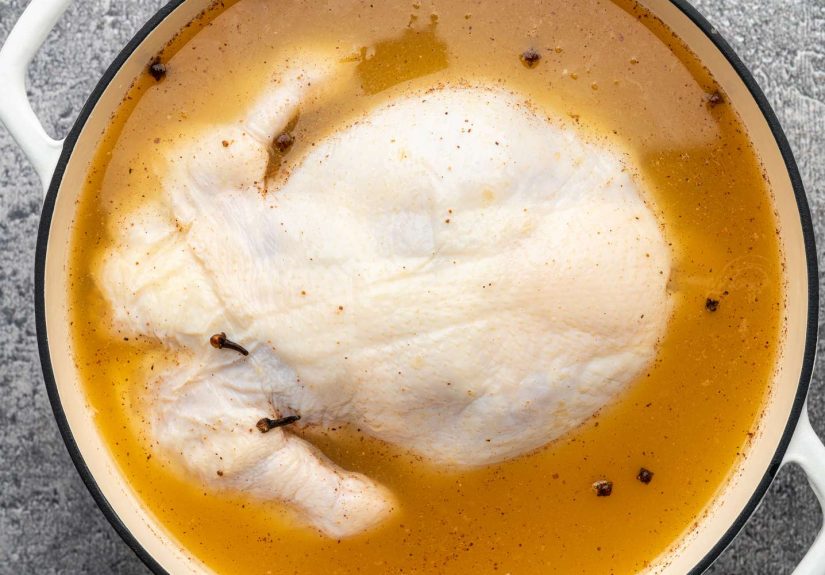
- Place the thawed turkey, breast-side down, into a large food-grade brining bag or non-reactive container.
- Pour the cooled apple spice brine (including all the solids) over the turkey, making sure the cavity fills and the bird is fully submerged. Add more cold water or a bit of extra apple cider if needed.
- Seal or cover, pressing out excess air if using a bag.
4. Brine time: How long is long enough?
For most turkeys, aim for:
- 8–12 hours for a smaller bird (10–12 lb)
- 12–18 hours for a medium bird (12–16 lb)
Try not to go beyond 24 hours, or the texture can start to get a little spongy and overly salty.
5. Keep it cold and safe
- Always brine in the refrigerator or in a cooler packed with ice. The temperature should stay at or below 40°F (4°C).
- Never leave the turkey in brine at room temperature.
- Use only food-grade containers or brining bagsnot trash bags or random buckets that aren’t meant for food.
6. Rinse, dry, and prep for roasting
- When the brining time is up, remove the turkey from the brine and discard the liquid and aromatics.
- Rinse the turkey briefly under cool running water, inside and out, to remove excess surface salt.
- Pat the turkey very dry with paper towelsespecially the skin. Dry skin = better browning and crispiness.
- Let the turkey air-dry in the fridge, uncovered, for 1–4 hours if you have time. This helps the skin dry out and crisp up beautifully in the oven or smoker.
7. Roast (or smoke) your turkey
Season the turkey lightlyremember, the brine already added saltand roast or smoke using your favorite method. A simple approach:
- Stuff the cavity with extra citrus, onion, and herbs rather than bread stuffing.
- Rub the skin with a mix of butter or oil and a turkey-friendly seasoning blend (paprika, garlic powder, onion powder, pepper, maybe a pinch of ground cinnamon).
- Roast at around 325°F until the thickest part of the breast reaches 165°F and the thigh reaches 175°F.
Let the turkey rest at least 20–30 minutes before carving so the juices redistribute instead of streaming all over your cutting board.
Wet Brine vs. Dry Brine: Why Choose Apple Spice?
Food pros go back and forth on wet brining vs. dry brining. Dry brining (rubbing salt directly onto the meat) is tidier, takes less fridge space, and often produces amazing flavor and crispy skin. Wet brining adds more liquid, which can slightly dilute flavor if overdonebut it’s fantastic for lean meats and for cooks who want a big, juicy, forgiving bird.
An apple spice wet brine is the best of both worlds: you still get that classic Thanksgiving turkey look and texture, but with a gentle infusion of apple, citrus, herbs, and warming spices in every bite. It’s especially helpful if you’re roasting a large turkey for a crowd and want a little extra protection against overcooking the breast.
Here’s a simple way to think about it:
- Choose wet brine if your turkey tends to run dry, you want softer, more forgiving breast meat, and you love the idea of a subtly sweet, spiced flavor from apple cider.
- Choose dry brine if you’re short on space, you prioritize ultra-crispy skin, or you don’t want to deal with a big pot of liquid.
Some advanced cooks actually combine ideas: they’ll wet-brine with apple cider one year, then dry-brine the next, using apple spice rubs and an apple-based pan sauce to mimic similar flavors.
Flavor Variations for Apple Spice Turkey Brine
Once you’ve mastered the base recipe, you can tweak your apple spice turkey brine to match your vibe:
Smoky Apple Spice Brine
- Add 1–2 teaspoons smoked paprika and a few dried chipotle peppers to the brine for subtle heat and smokiness.
- Smoke the turkey at low temperature (around 225–250°F) until it reaches a safe internal temperature.
Citrus-Forward Apple Cider Brine
- Increase the orange slices and add a lemon or two.
- Use fresh sage and thyme for a classic Thanksgiving aroma.
- Finish the turkey with a citrus-herb butter brushed on during the last 30 minutes of roasting.
Herb-Heavy Garden Brine
- Throw in extra rosemary, thyme, and even a few sprigs of marjoram or oregano.
- Reduce the brown sugar slightly if you prefer a more savory turkey.
Safety Tips You Really Shouldn’t Skip
Holiday turkey horror stories usually start with “I thought it would be fine if…” Let’s not go there. Keep these non-negotiables in mind:
- Thaw safely. Thaw in the fridge, not on the counter. Plan about 24 hours of refrigerator time per 4–5 pounds of turkey.
- Keep it cold. The turkey and brine must stay at or below 40°F (4°C). If you use a cooler, pack extra ice and check the temperature occasionally.
- Use food-grade containers. No trash bags, no mystery plastic bins. Use brining bags designed for food, or stainless-steel or glass containers.
- Cool the brine first. Never pour hot or warm brine over raw turkeythat’s a food safety red flag and can partially cook the surface.
- Cook thoroughly. The breast should hit 165°F at minimum; dark meat can go a bit higher for tenderness (170–175°F).
Apple Spice Turkey Brine FAQ
Can I use table salt instead of kosher salt?
Not directly. Table salt is finer and denser, so a cup of table salt is much saltier than a cup of kosher salt. If you must swap, use about half as much table salt and adjust to taste, or, better yet, stick to kosher salt for predictable results.
Will the turkey taste like dessert?
Nope. The apple cider and spices add a gentle, aromatic sweetness, not apple pie intensity. The final flavor is more “whisper of fall” than “Thanksgiving dessert explosion.”
Can I reuse the brine?
Hard no. Once raw poultry has sat in the brine, it needs to be discarded. If you want more brine for another turkey or chicken, make a fresh batch.
What if I have a pre-brined or self-basting turkey?
Skip this brine, or reduce the salt drastically and brine for much less time. Pre-brined, “enhanced,” or self-basting turkeys already contain added salt and liquid, and can easily turn too salty.
Real-Life Experiences with Apple Spice Turkey Brine
Recipes are great, but the real magic happens when you start noticing what works in your own kitchen. Here are some practical, lived-in lessons from cooks who have put apple spice turkey brine to work during busy holidays.
The “backup turkey” success story. One common theme: people try an apple cider brine as their “backup bird” while their family clings to the classic salt-and-pepper roast. More than a few home cooks report that the apple-brined turkey disappears first, while the traditional bird lingers awkwardly on the platter. The subtle sweetness from the cider, along with the warm spices, makes the turkey taste like it actually belongs at the center of the meal, not just under the gravy.
How brining saves overcooked turkey breast. Even confident cooks admit that the turkey breast can still overshoot the ideal temperature when the kitchen gets chaotic. The beauty of a good apple spice turkey brine is its forgiveness. People often note that their brined breast meat stays juicy even when it creeps a few degrees past 165°F. That doesn’t mean you should roast the bird into oblivion, but it does give you a buffer when multiple dishes are fighting for time and oven space.
Smoker vs. oven: where apple spice really shines. If you own a smoker, apple cider brine plus a low, smoky cook is a match made in holiday heaven. Many backyard barbecue fans swear that brining with apple cider before smoking adds a quiet sweetness and extra moisture that complements the wood smoke instead of competing with it. The spices in the brinecinnamon, clove, allspicetend to sit in the background while the smoke and herbs take the lead, creating layers of flavor instead of a single “smoky” note.
Lessons learned about salt and timing. On the flip side, cooks who pushed the brine time past the 24-hour mark sometimes reported a slightly ham-like texture and a saltier flavor than they wanted. That’s where paying attention to both time and salt type really matters. Switching from a very fine salt to kosher, or shaving a little time off the soak, usually fixes the issue. Many people land on 12–16 hours as their sweet spot for a 12–16 pound turkey with this kind of brine.
How apple spice brine helps picky eaters. Another surprising benefit is how well apple spice turkey brine plays with picky guests. The flavors are familiarapple, cinnamon, orange, herbsso even cautious eaters recognize what they’re tasting. It’s not spicy in a hot-pepper way, and it doesn’t scream “weird experimental recipe.” The turkey simply tastes a bit more flavorful and aromatic than usual, which is often enough to win over skeptics without provoking a speech about “ruining tradition.”
The gravy bonus. One more experience people love: the drippings from an apple-brined turkey make fantastic gravy. Because the brine adds both salt and a hint of sweetness, the pan juices often taste richer and more developed. You do need to taste as you gosometimes a splash of low-sodium stock balances out the saltbut the base flavor is usually so good that the gravy comes together with minimal fuss. Add a little butter, a roux, and maybe a hint of fresh thyme, and you’ve got a gravy that tastes like you worked on it all day.
Annual tradition status. That’s the real test: does a recipe earn a spot in your holiday rotation? Apple spice turkey brine regularly graduates from “fun experiment” to “non-negotiable tradition.” Once families notice how much more relaxed the cook isbecause the turkey is less likely to dry outand how happily everyone eats, the brine becomes part of the ritual. Mix the brine the night before, queue up your favorite playlist, and let the apple cider and spices do their work while you plan dessert.
If you’re looking for a small change that creates a big upgrade, this apple spice turkey brine is it. You’re still serving a classic roasted turkeyjust one that’s juicier, more flavorful, and a lot more memorable.