Table of Contents >> Show >> Hide
- Where in the World Is Casa Helsinki?
- Design Concept: Midcentury Meets Handcrafted Minimalism
- Inside the Rooms: How Casa Helsinki Welcomes Its Guests
- The Courtyard: Heart of the House
- Between Airbnb and Boutique Hotel
- How to Steal the Casa Helsinki Look at Home
- What It’s Like to Stay at Casa Helsinki
- Experiences and Insights from Casa Helsinki
Some places feel like they were designed by an algorithm. Casa Helsinki is not one of those places.
This midcentury-inspired guesthouse in Córdoba, Argentina, feels less like a hotel and more like
staying with your impossibly stylish friend who somehow owns vintage Bertoia chairs, builds
furniture from pallets, and keeps every houseplant alive.
Originally a private home, Casa Helsinki was transformed by owner and designer Diego Sánchez into
a small guesthouse with just a handful of thoughtfully furnished rooms. It sits in that sweet spot
between a low-frills rental app stay and a fully serviced boutique hotel: intimate, design-forward,
and full of personal touches that make you want to stay “just one more night” (or five).
With checkerboard floors, warm wooden doors, midcentury silhouettes, and handmade details, this
guesthouse has quietly become a reference point for travelers and design lovers who crave something
original. Let’s step inside, look closely at what makes Casa Helsinki so memorable, and see how you
can borrow its ideas at home.
Where in the World Is Casa Helsinki?
Casa Helsinki is located in Córdoba, Argentina’s second-largest city and a cultural hub known for
its universities, historic architecture, and easygoing lifestyle. Instead of a glassy tower downtown,
the guesthouse hides in a more residential neighborhood, behind solid walls and a traditional façade
that opens into a sequence of airy rooms and a central courtyard.
The building itself has all the classic bones you want in a midcentury Argentine home: tall ceilings,
generous wood-framed windows, and patterned tile floors that have seen decades of family life. When
Sánchez turned the property into a guesthouse, he kept these original elements and layered in a very
specific mix of midcentury modern furniture, reclaimed materials, and practical, low-cost finishes.
The result feels relaxed rather than fussed over, like the house has always been stylish and just
decided to let visitors in.
Casa Helsinki typically offers a small number of bedrooms, each with its own character but unified by
a simple palette: white walls, warm wood, metal wire furniture, and detailed tiled floors. Instead of
heavy décor and endless accessories, the design leans on proportion, light, and texture. It’s a
masterclass in getting more with less.
Design Concept: Midcentury Meets Handcrafted Minimalism
Original Architecture as the Star
The starting point at Casa Helsinki is the existing architecture. Rather than cover everything in
drywall and new tile, the design celebrates what was already there: original floors, wood doors, and
tall windows that flood rooms with soft light. The black-and-white checkerboard floor in the living
area is especially striking. It instantly grounds the space, adds energy, and makes even the simplest
furniture arrangement feel intentional.
This approach mirrors a broader design trend: instead of fighting older buildings, designers work
with them. At Casa Helsinki, the geometry of the existing tiles, the patina on the wood, and the
slightly irregular surfaces become part of the aesthetic. New pieces are chosen to complement that
character, not to erase it.
Midcentury Classics, But Make It Cozy
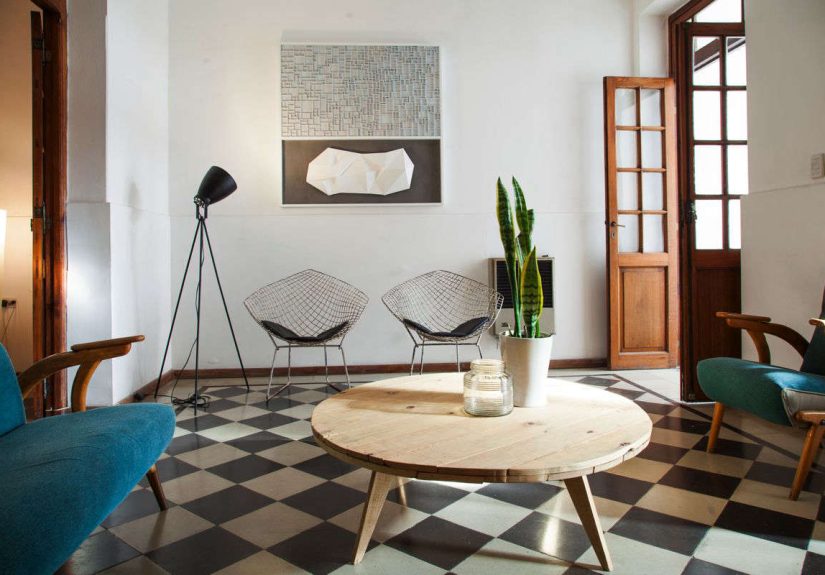
Walk into the living areas and you’ll spot familiar midcentury silhouettes: Bertoia-style diamond
chairs in metal wire, a low circular coffee table on splayed legs, and a deep green lounge chair with
sculpted wooden arms. The look is recognizably midcentury modern, but not museum-like. The pieces are
there to be used, not just admired.
The secret is how they’re combined. Instead of a room full of matching icons, there’s a curated mix:
one or two midcentury standouts, a couple of anonymous vintage finds, simple lighting, and lots of
negative space. The checkerboard floor and crisp white walls do a lot of visual work, so the furniture
doesn’t have to shout. The vibe is calm, warm, and slightly nostalgicmidcentury modern with its feet
up.
DIY Furniture That Actually Looks Good
One of the most charming aspects of Casa Helsinki is the use of pallet wood and simple lumber for
custom furniture. Beds are built from sanded pallet platforms, stained and finished just enough to
feel intentional. Desks and side tables are made from straightforward pine or similar woods, with
minimal hardware and uncomplicated shapes.
This isn’t faux distressed furniture trying to look old; it’s honest, low-cost material used with a
light touch. Because the forms are clean and the wood is left relatively natural, the pieces sit
comfortably next to midcentury classics. The overall effect is both budget-friendly and design-savvy:
guests get something unique, and the house avoids the “Ikea catalog” look entirely.
Inside the Rooms: How Casa Helsinki Welcomes Its Guests
Bedrooms with Just-Enough Decoration
In the bedrooms, you’ll typically find a platform bed in pale wood, a simple side table, a reading
lamp, and maybe a pair of wire chairs pulled up to a long, narrow desk. The floors often feature
patterned tilesintricate geometric designs or traditional motifsthat add subtle color and movement
without the need for rugs or busy textiles.
Bedding is kept intentionally neutral: white or off-white quilts, light throws, and minimal cushions.
Instead of relying on color explosions or trendy prints, the rooms feel restful and bright. The
character comes from the architecture and finishes: the depth of the window recesses, the grain of
the doors, the pattern of the tile.
Living Areas Designed for Lingering
The public spaces at Casa Helsinki are where the midcentury personality really shows. The sitting room
with its checkerboard floor often features a low, round coffee table at the center, with midcentury
chairs orbiting around it: wire lounge seats, a vintage armchair in deep green, and maybe a compact
sofa or bench. A narrow media console holds a small TV and speakers, but the room never feels built
around screens.
Plants play a recurring role: potted greenery on the coffee table, leafy trailing plants on open
shelves, and clusters of pots near the windows. Combined with the high ceilings and generous doors
that open to the courtyard, the living spaces feel like an extension of the gardenperfect for reading,
sipping coffee, or planning your next wander through the city.
Kitchen and Dining: Casual and Unfussy
Casa Helsinki’s kitchen and dining areas are purposefully low-key. Instead of sleek, high-gloss
cabinetry and a wall of stainless steel, you’re more likely to find open shelving, simple counters, and
everyday dishes stacked where you can see them. It’s the kind of space where you don’t feel bad making
your own breakfast in pajamas or brewing a late-night tea after everyone else has gone to bed.
The design idea here is simple: make guests feel at home by giving them access to real, functional
spaces rather than treating the kitchen like a display. It’s a reminder that modest materials used
thoughtfully can feel more luxurious than the most expensive finishes used indifferently.
The Courtyard: Heart of the House
Step outside the main rooms and you meet the soul of Casa Helsinki: a small, plant-filled courtyard.
In true Argentine fashion, the house wraps partially around this open-air space, blurring the line
between indoors and outdoors. Wooden structures and shelves hold pots of trailing plants, herbs, and
shrubs; wire chairs invite you to sit with a book or a glass of Malbec and absolutely no agenda.
The courtyard is also a smart climate strategy. By drawing light and air into the interior, it keeps
the rooms brighter and cooler, reducing the need for heavy mechanical systems. It’s functional,
sustainable, and photogenicall the things modern travelers love, often without realizing it.
For guests, the courtyard becomes a shared living room: a place to chat with other travelers, hang
laundry, or just watch the shadows shift across the floor tiles. It’s casual and un-staged, which is
exactly the point.
Between Airbnb and Boutique Hotel
One of the reasons Casa Helsinki resonates so strongly is that it fits into a newer category of
lodging: small, design-led guesthouses that feel more personal than a hotel but more curated than a
random apartment rental. You’re not just handed keys and a Wi-Fi code; you’re stepping into someone’s
carefully assembled vision of how a home can look and feel.
That in-between position reflects a larger shift in travel. Many guests want the independence and
authenticity of a rental, but they also want design, comfort, and a sense of story. Casa Helsinki checks
those boxes with its combination of original architecture, midcentury pieces, DIY solutions, and
thoughtful details. You can cook your own meals, work at a real desk, and still feel like you’re in a
place that could easily appear in your favorite design magazine.
There’s also the human element: a small property like this makes it easier for hosts to share local
tips, help with logistics, and create a quiet sense of community among guests. It’s hospitality at a
smaller, more human scale.
How to Steal the Casa Helsinki Look at Home
You may not be able to teleport to Córdoba today (tragic, really), but you can borrow some of Casa
Helsinki’s design moves for your own space. Here are a few practical takeaways:
1. Let One Bold Pattern Lead
The checkerboard floor is a star, but it works because everything around it is relatively quiet. If
you love a strong patternwhether it’s black-and-white tile, graphic cement, or bold terrazzotreat it
as the main character and keep walls, large furniture pieces, and textiles simple and solid.
2. Mix Trusted Icons with Anonymous Finds
Rather than buying a full suite of brand-new midcentury-style furniture, think like Casa Helsinki:
combine one or two recognizable silhouettes (wire chairs, a clean-lined armchair) with thrifted or
secondhand pieces that have good proportions and comfortable seats. Authenticity matters more than
labels.
3. Use Honest, Affordable Materials
Pallet wood, basic lumber, and simple plywood can become beautiful when used with restraint. A low
platform bed, a plank desk, or a slim wall-mounted shelf in raw or lightly finished wood can look
incredibly chic against white walls and tiled floors. Skip heavy distressing or faux “aged” finishes;
let the materials develop real patina over time.
4. Go Big on Plants, Small on Décor
Instead of filling surfaces with trinkets, let plants do the decorative work. Place a tall snake plant
on a coffee table, line a window with potted herbs, or install a simple wood shelf to display trailing
vines. Greenery softens the geometry of tiled floors and wire furniture and makes even minimal spaces
feel lived in.
5. Keep the Palette Calm and Flexible
Casa Helsinki leans heavily on whites, neutrals, and natural wood tones, with the occasional pop of
deep green or warm terracotta. This makes it easy to swap textiles and art over time without
redecorating from scratch. Start with a neutral base in your walls and big pieces, then add color in
ways that are easy to change: throws, cushions, prints, or a single painted chair.
What It’s Like to Stay at Casa Helsinki
So what’s the actual experience like for guests? Imagine waking up to sunlight filtering through
wooden shutters, stepping onto cool patterned tiles, and walking down a short hall to make coffee in a
shared kitchen that feels like a friend’s place, not a commercial kitchen. You might check emails at a
simple wooden desk, then move out to the courtyard for a slower second cup.
Throughout the day, the house shifts with the light. In the afternoon, the living room with its
checkerboard floor is a bright, graphic backdrop for reading or planning your next outing. At night,
lamps and warm-toned bulbs lower the mood; suddenly the same space feels intimate and quiet, perfect
for a glass of wine and a conversation with another guest who “just came for a weekend” and is now
staying a week.
The rooms don’t rely on flashy technology or fussy amenities. Instead, they focus on comfort: a good
mattress, breathable bedding, decent storage solutions, and a layout that makes sense if you’re staying
more than a couple of days. That’s what makes Casa Helsinki especially appealing to remote workers,
slow travelers, and anyone who values a home-like rhythm.
Experiences and Insights from Casa Helsinki
Spending time at a place like Casa Helsinki changes the way you think about both travel and home
design. On the travel side, it proves that you don’t need an enormous resort or a high-drama lobby to
feel well looked after. A handful of well-designed rooms, a welcoming courtyard, and a host who cares
about the details can create a far richer experience than a long list of amenities ever could.
On the design side, Casa Helsinki is a real-life argument for simplicity with personality. You notice
that the most memorable moments aren’t about expensive piecesthey’re about how things are arranged.
The way the round coffee table anchors the living area, how the wire chairs frame the view toward the
courtyard, or how a single vintage lamp turns a basic plank desk into a place you want to sit and
write. These small moves are surprisingly transferable to any home.
Guests often describe a shift that happens after a day or two: you start slowing down to match the
rhythm of the space. Because the house is compact and the design is calm, you’re not bombarded with
visual noise. There’s enough empty space for your mind to wander. That’s especially clear in the
bedrooms, where the lack of clutter and the quiet palette make it easy to unplug from your phone and
actually rest.
For design lovers, staying at Casa Helsinki can be almost like a short workshop in midcentury-inspired
living. You get to test what it feels like to sit in wire chairs for long stretches, to live with a
bold patterned floor, or to rely on a very minimal wardrobe rack instead of a full closet. By the time
you leave, you probably have a list on your phone of ideas to bring back: “Add a plant shelf in the
kitchen,” “Switch bedroom lamp for something smaller and warmer,” “Try a low platform bed.”
There’s also something quietly empowering about seeing how much of the house’s charm comes from
accessible choices. Pallet beds, simple wooden desks, affordable lighting, and secondhand chairs prove
that good design isn’t necessarily about big budgets; it’s about decisions. Casa Helsinki shows that
you can work with what you have, highlight your home’s strengths, and slowly layer in pieces that tell
a story rather than buying everything at once.
Finally, Casa Helsinki reminds you that travel can be deeply local without being rustic or
uncomfortable. From the courtyard plants to the tiled floors, the guesthouse echoes the architecture
and climate of Argentina while still feeling modern. When you leave, you don’t just remember the city;
you remember the feeling of that housethe sound of footsteps on tile, the way the air cooled in the
courtyard at night, and the comforting sight of a plant-filled window every morning. It’s the kind of
stay that quietly raises your standards for every future trip.
SEO JSON Meta (at the end of the article)