Table of Contents >> Show >> Hide
- Dolma vs. Sarma: What’s the Difference?
- A Short History of Dolma in Ottoman Cuisine
- Key Types of Dolma in Turkish Cuisine
- Sarma: Wrapped Little Parcels of Joy
- How Dolma and Sarma Are Made
- Dolma and Sarma on the Turkish Table
- Flavor, Nutrition, and Why They’re So Satisfying
- How to Enjoy Dolma and Sarma Like a Local
- Experiences and Stories Around Dolma and Sarma
If you’ve ever sat at a Turkish table and seen a huge plate of tiny, neatly rolled leaves
and plump, stuffed vegetables, congratulations you’ve met dolma and sarma. These dishes
look delicate, taste luxurious, and yet were originally born from very practical cooking:
“What if we stuffed or wrapped everything with rice and herbs?” As it turns out,
that idea was genius.
Today, dolma and sarma are iconic pillars of Turkish cuisine. You’ll find them in home
kitchens, meze spreads, holiday feasts, and even fancy restaurants. In this guide, we’ll
break down what they are, how they differ, a bit of their history, the most common
variations, and how you can enjoy them like someone who grew up eating them at
their grandmother’s table.
Dolma vs. Sarma: What’s the Difference?
Let’s start with the basics. In Turkish, dolma roughly means
“stuffed thing,” while sarma means “wrapped thing.” Dolma usually refers
to vegetables that are hollowed out and filled with a savory mixture. Sarma typically
describes a filling that is wrapped in leaves, most famously grape leaves, but
also cabbage, chard, or even vine leaves from other plants.
Think of it this way:
- Dolma: Peppers, tomatoes, eggplants, zucchini, onions, or even
apples and quinces that are stuffed with rice and/or meat. - Sarma: Grape leaves or cabbage leaves rolled around a rice or
rice-and-meat mixture like little savory cigars.
In everyday Turkish conversation, people often use the word dolma for both,
especially when they’re talking about stuffed grape leaves. But technically, those are
a kind of sarma. If it’s rolled, it’s sarma; if it’s filled, it’s dolma. Simple rule,
very tasty outcome.
A Short History of Dolma in Ottoman Cuisine
Dolma didn’t appear out of nowhere. Stuffed vegetables and leaves are part of a deep
culinary tradition across the Eastern Mediterranean, the Balkans, and the Middle East.
Historical records and food historians point to stuffed dishes appearing in ancient
Greek and Middle Eastern sources, but they truly flourished under the
Ottoman Empire, which ruled much of this region for centuries.
In Ottoman palace kitchens, cooks had access to an impressive range of ingredients:
eggplants, peppers, grape leaves, herbs, rice, spices, and dried fruits. These ingredients
became the building blocks of dolma and sarma dishes some rich with lamb and spices,
others delicate and plant-based, bathed in olive oil and served at room temperature as
part of elaborate banquet menus.
Over time, dolma and sarma spread from the palace to everyday homes and across borders.
Today you’ll find local versions in Turkey, Greece, Armenia, the Balkans, the Levant,
and beyond. Each culture adds its own twist, but in Turkey, these dishes hold
a special place as comfort food, celebration food, and a symbol of generous hospitality.
Key Types of Dolma in Turkish Cuisine
“Dolma” in Turkish cuisine is more of a category than a single dish. Here are some of the
best-known variations you’ll encounter:
Biber Dolması (Stuffed Peppers)
Stuffed peppers are one of the most recognizable forms of dolma. Green bell peppers (or
smaller, mild peppers) are hollowed out and packed with rice, onions, herbs, and sometimes
ground meat. They’re simmered in a tomato-based liquid until the peppers are tender and the
filling is fragrant and fluffy.
In olive oil–based versions, the filling is meatless and often includes pine nuts and
currants, giving a subtle sweetness that balances the tang of tomato and lemon. These
lighter versions are commonly served at room temperature as part of a meze spread.
Patlıcan, Kabak, and Domates Dolması
Turkey’s love for dolma doesn’t stop at peppers. You’ll also see:
- Patlıcan dolması: hollowed eggplants stuffed with rice and/or meat.
- Kabak dolması: zucchini or summer squash filled with herby rice.
- Domates dolması: tomatoes stuffed with a similar mixture and baked
until they collapse into sweet, savory perfection.
These versions show up especially in summer when fresh vegetables are abundant. The
flavors are bright, gently spiced, and deeply satisfying without being heavy.
Soğan Dolması (Stuffed Onions)
A bit less familiar outside Turkey, soğan dolması uses onion layers as edible pockets for
rice-and-meat filling. Onions are parboiled, separated into “shells,” filled, and then
simmered slowly. The result is sweet, soft onion wrapped around aromatic stuffing the
sort of dish that makes you forget onions can ever be harsh.
Sarma: Wrapped Little Parcels of Joy
Sarma takes the same general idea seasoned rice, sometimes with meat and wraps it
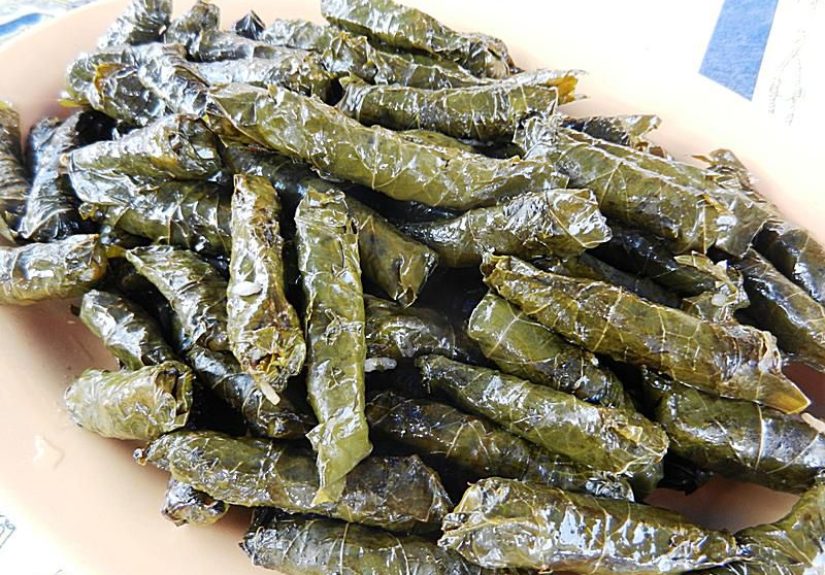
tightly in leaves. The most iconic version in Turkish cuisine is
yaprak sarma, meaning “leaf wrap,” usually made with grape leaves.
Yaprak Sarma (Stuffed Grape Leaves)
Fresh or brined grape leaves are blanched, trimmed, and rolled around small spoonfuls of
filling. Depending on the region and the cook, that filling might be:
- A meatless mixture of rice, onions, tomato, mint, parsley, dill,
pine nuts, and currants, cooked gently in olive oil and served at room temperature. - A meat-and-rice mixture with ground lamb or beef, spices, and herbs,
simmered in a tangy broth and served warm with yogurt.
You’ll often hear meatless versions called zeytinyağlı sarma (literally
“with olive oil”) or even yalancı dolma, meaning “liar’s dolma” jokingly
implying that the dolma is “pretending” to be full of meat when it’s actually vegetarian.
Names aside, these vegetarian sarma are silky, tangy, and surprisingly filling.
Other Leaf-Wrapped Sarma
While grape leaves are the star, Turkish cooks also use other greens for sarma:
- Lahana sarması: cabbage leaves wrapped around meat-and-rice filling,
especially popular in colder regions and winter months. - Pazı sarması: chard leaves filled with rice or rice-and-meat mixture,
a favorite in areas where chard is abundant.
These leaf-wrapped versions are particularly comforting when served hot with a dollop of
garlicky yogurt and a drizzle of melted butter spiked with red pepper flakes.
How Dolma and Sarma Are Made
There isn’t just one master recipe every region, and frankly every grandmother, has
their own version. But the basic process for Turkish dolma and sarma follows a familiar
pattern:
- Prepare the vegetables or leaves. Vegetables like peppers, tomatoes,
eggplants, and zucchini are hollowed out. Grape or cabbage leaves are blanched to soften
them and remove excess salt if they’re brined. - Make the filling. Rice is sautéed with onions and olive oil, then
mixed with herbs (like dill, mint, and parsley), spices (allspice, cinnamon, black pepper),
salt, and sometimes pine nuts and currants. For meat versions, ground lamb or beef is added. - Fill or roll. Vegetables are lightly packed with filling not too tight,
because the rice needs room to expand. For sarma, a small amount of filling is placed on a
leaf and rolled into a neat cylinder, with the sides tucked in. - Arrange in the pot. Dolma and sarma are packed closely together in
layers so they don’t move around as they cook. Often, extra leaves or vegetable scraps
are placed on the bottom of the pot to prevent sticking and add flavor. - Add cooking liquid. A mixture of water or broth, tomato, olive oil,
and lemon juice is poured over the top, sometimes with a plate placed over the dolma to
keep them submerged. - Simmer gently. Everything cooks over low heat until the rice is tender
and the flavors have melded. Olive oil–based versions are cooled to room temperature;
meat-based versions are usually served warm.
The process is a bit of a project, which is why dolma and sarma are often made for special
occasions, weekends, or big family gatherings it’s almost always a group activity, not
a solo weeknight “I’m tired” dinner.
Dolma and Sarma on the Turkish Table
One of the best things about dolma and sarma is how flexible they are. They can be:
- Part of a meze spread, served at room temperature with other small
plates like hummus, eggplant salads, cheeses, olives, and fresh bread. - A main course, especially when made with meat and served hot with
yogurt and a simple salad. - Holiday or celebration food, appearing at Eid tables, New Year’s
gatherings, weddings, and family reunions. - Picnic and travel food, because they taste delicious even when they’re
not piping hot.
They’re also a favorite for hosting vegetarian guests. Olive oil–based dolma and sarma are
naturally meatless and can easily be made vegan by skipping yogurt or choosing a plant-based
alternative.
Flavor, Nutrition, and Why They’re So Satisfying
From a flavor perspective, Turkish dolma and sarma sit in that magical place where hearty
comfort food meets bright, fresh, herbal notes. The key players are:
- Rice: provides body and comfort.
- Herbs: dill, mint, and parsley add freshness and complexity.
- Olive oil: gives richness, especially in zeytinyağlı (olive oil–based)
versions. - Acidity: lemon juice and sometimes tomato keep everything lively and
prevent the dish from feeling heavy. - Sweetness: currants, onions, and sometimes cinnamon create a gentle
sweet note that balances the tang and spice.
Nutritionally, dolma and sarma can be quite balanced. Vegetarian versions provide
carbohydrates, healthy fats, and fiber, along with antioxidants from herbs and vegetables.
Meat-based versions add protein and iron. Like many traditional dishes, they can be very
wholesome when made with good ingredients and moderate amounts of oil.
How to Enjoy Dolma and Sarma Like a Local
If you’re eating dolma and sarma in Turkey, here’s how to get the most out of the
experience:
- Pair with yogurt. A spoonful of plain or garlicky yogurt is the classic
companion, especially for warm, meat-based versions. - Look for olive oil sheen. For zeytinyağlı sarma, a glossy finish from
good-quality olive oil is a sign you’re in for a treat. - Take small bites. Each piece is meant to be savored; you’ll taste the
layers of herbs, rice, and leaf or vegetable casing. - Don’t be shy about lemon. A squeeze of fresh lemon right before eating
brightens the flavors dramatically. - Notice the size. Tiny, evenly rolled sarma often signal a very patient,
very experienced cook. In Turkey, there’s almost a friendly competition over who can roll
the thinnest, most delicate sarma.
Experiences and Stories Around Dolma and Sarma
Talking about dolma and sarma in Turkish cuisine without mentioning the human side would be
like describing a family photo album by listing the file names. These dishes are less about
“recipe cards” and more about the people gathered around the table.
Imagine walking into a Turkish home on a weekend. In the kitchen, there’s a big bowl of
rinsed grape leaves, a pan of fragrant rice filling, and a low table or tray in the middle
of the room. Someone is carefully placing little mounds of filling on each leaf, someone
else is rolling, and another person is stacking the finished sarma in neat circles in the
pot. There’s tea, there’s conversation, there’s probably gossip and there’s a quiet,
shared understanding that this kind of food simply can’t be rushed.
For many Turkish families, dolma and sarma are also a bridge between generations. A
grandparent might insist on adding a pinch of cinnamon or allspice “because that’s how my
mother did it.” Another family member prefers more lemon, fewer currants, or uses chard
leaves when grape leaves aren’t available. These tiny variations become part of a family’s
identity. Ask two people “What’s the best dolma?” and they’ll probably say “My mom’s” or
“My grandma’s,” not a restaurant’s.
If you’re making dolma or sarma for the first time, your experience will likely start with
slightly chaotic rolling. Your first grape leaf might look like a loosely wrapped present;
your second like a tiny overstuffed pillow. That’s normal. The trick is to use less filling
than you think you need, roll gently but firmly, and not panic when the rice expands a bit
during cooking. By the tenth leaf, you’ll already be better. By the twentieth, you’ll be
planning who you can invite over to show off.
Travelers often remember their first taste of dolma and sarma as a standout food memory
from Turkey. Maybe it was a plate of cool, glossy, olive oil–based yaprak sarma served at a
seaside restaurant on the Aegean coast, with waves in the background and a strong breeze
carrying the scent of the sea. Or perhaps it was a steaming bowl of cabbage sarma in a
family-run lokanta on a cold winter day, served with yogurt and a basket of bread one of
those meals that instantly warms you all the way through.
Even outside Turkey, cooking dolma and sarma can be a way of bringing that atmosphere into
your own kitchen. The slow, repetitive motion of rolling, the fragrant steam when you lift
the lid, the satisfaction of filling a big platter with dozens of identical little rolls
it all invites you to slow down. In a world of fast meals and takeout, there’s something
deeply grounding about spending a couple of hours transforming humble rice, leaves, and a
few vegetables into something worthy of a celebration.
And perhaps the most important “experience tip” is this: dolma and sarma are meant to be
shared. They’re finger-friendly, plate-covering, conversation-starting dishes. Put them on
the table with some olives, cheese, salad, and bread, and they quietly do what they’ve been
doing for centuries bringing people together.
Whether you taste them in a Turkish household, order them in a restaurant, or tackle them at
home, dolma and sarma in Turkish cuisine offer much more than stuffed or wrapped vegetables.
They’re a living tradition, a delicious history lesson, and a reminder that some of the
world’s most memorable dishes are built from simple ingredients, patience, and a lot of
care.