Table of Contents >> Show >> Hide
- What Was Found Under the Wangu Gold Field?
- How Do Geologists “Stumble” on Gold That’s Two Miles Underground?
- Is It Really the Largest Gold Mine in the World?
- Why This Discovery Matters (Even If the Final Size Changes)
- The Not-So-Glittery Part: Mining at 2,000–3,000 Meters
- What Comes Next: How Big Discoveries Turn Into Real Mines
- Field Notes: of Real-World Exploration Experience (What the Headlines Don’t Tell You)
- Conclusion
If you picture a “gold discovery” as someone tripping over a glittery rock and yelling “EUREKA!”good news:
geology still delivers the occasional plot twist. Bad news: the “stumble” usually involves months of paperwork,
a drill rig the size of a house, and enough data to make your laptop beg for mercy.
Still, the headline-worthy version is real: deep beneath China’s Wangu gold field in Hunan Province, geologists
and mining teams reported a “supergiant” gold deposit thatif the estimates hold upcould rank among the largest
known gold finds on Earth. We’re talking about gold so deep it practically has its own ZIP code, and so potentially
abundant that it’s being compared with the biggest names in global mining.
What Was Found Under the Wangu Gold Field?
The discovery centers on a network of gold-bearing veins identified far below the surface in Pingjiang County,
near existing mining areas. The initial exploration campaign reportedly mapped dozens of ore veins and confirmed
a substantial quantity of gold in a core zone. Then the story got even louder: 3D modeling suggested the mineralization
may continue deeper and wider than the first drilling grid could fully prove.
The Numbers That Made Everyone Sit Up Straighter
Early reports described more than 40 gold ore veins identified at depths of over 2,000 meters.
In the core exploration area, teams reported roughly 300 metric tons of gold resources, with a maximum grade
reported as high as 138 grams of gold per metric ton of ore.
To translate that last figure into plain English: many operating gold mines consider 1–5 g/t “good,”
and anything into the teens can look downright delicious depending on costs and metallurgy. A reported 138 g/t
is not “good.” It’s “did someone sprinkle gold dust on the sample bag?” high. (Yes, labs have controls for this.
No, geologists still joke about it.)
From Confirmed Ore to “Model Says There’s More”
The real drama comes from the deeper forecast: 3D models suggested the system could hold over 1,000 metric tons
of gold at depths exceeding 3,000 metersnearly two miles down. That’s where headlines start using phrases like
“largest gold mine in the world,” because at that scale, we’re not talking about a small bump in reserves.
We’re talking about a potential reshuffling of the “biggest deposits” conversation.
How Do Geologists “Stumble” on Gold That’s Two Miles Underground?
Nobody is out there tapping the ground with a cane like an old-timey prospector going, “Yep. That’s gold.”
Modern discovery is more like detective work with a science degree and a very expensive toolkit.
“Stumbling” happens when a routine exploration program hits something so big that the whole plan gets rewritten.
Step 1: Read the Rocks Like a Thriller Novel
Exploration often starts with regional geologic mapping, sampling, and geophysicsmethods that help teams see
patterns in rock types, faults, and alteration. Gold often travels in hot fluids through fractures, depositing
minerals as the chemistry changes. If you can find the plumbing (faults, fractures, shear zones), you can hunt
for where the gold dropped out.
Step 2: Drill, Drill, Drill (Then Assay, Assay, Assay)
The truth lives in drill core. Teams drill deep holes, pull up cylindrical rock cores, log them (rock type, structures,
mineralization), and send samples to labs for assays. That’s how you move from “interesting anomaly” to “this is
actually mineralized rock with measurable gold.”
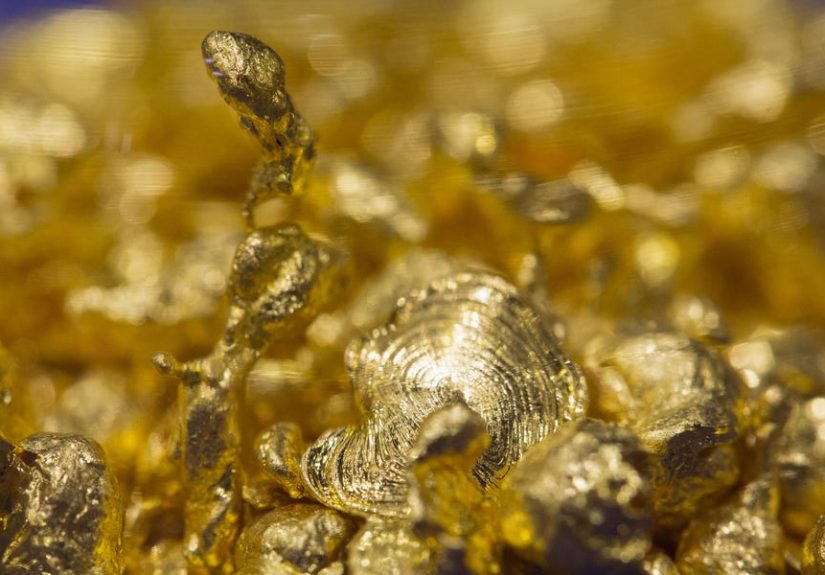
Reports from the Wangu area included notes about “visible gold” in coresan eye-catching detail that’s both exciting
and a little misleading. Visible gold can happen, but it isn’t required for an economic deposit. Plenty of major mines
produce gold that’s microscopic, locked in sulfides, or dispersed in host rock. Visible gold is basically geology’s
version of a cameo appearance: fun, flashy, and not the whole cast.
Step 3: Build a 3D Model (The Part Where the Deposit Gets Bigger)
Once drill data accumulates, geologists build 3D models to estimate continuity: how veins connect, how grades vary,
and whether mineralization likely persists beyond drilled areas. Modeling doesn’t magically create goldit estimates
the probability and volume based on data trends. It’s powerful, but it’s not a substitute for drilling.
That’s why the Wangu story is best described as a high-confidence find in a core zone plus an ambitious
projection for deeper extensions. The difference matters, and it leads us straight to the biggest question.
Is It Really the Largest Gold Mine in the World?
“Largest” sounds simple until you realize the mining world keeps score in multiple ways:
largest by annual production, largest by remaining reserves,
largest by total contained gold, and largest by historical output.
These are different trophies, and they don’t always go to the same place.
Largest Potential Deposit vs. Largest Operating Producer
The Wangu discovery is discussed as potentially one of the largest single deposits of gold based on
estimated contained metal. But it is not yet the world’s largest operating producer. Operating “largest”
often points to huge, mature mining complexes with established infrastructure and a long production track record.
For example, the Nevada Gold Mines joint venture (a major U.S. mining complex) has been described as the single
largest gold-producing complex, with multi-million-ounce annual production in peak years and extensive processing
infrastructure spread across multiple mines.
What About Muruntau and Other Mining Giants?
If you’ve seen satellite photos of a circular pit that looks like the Earth took a scoop out of itself, you may be
thinking of Muruntau in Uzbekistanoften cited among the world’s biggest gold sources and one of the
largest single deposits. It’s an open-pit behemoth that demonstrates what “world-scale” looks like when a deposit
is developed over decades.
Here’s the key point: Wangu’s reported grades and potential tonnage are attention-grabbing, but the deposit must still
pass the real-world testsmore drilling, engineering studies, metallurgical testing, economics, and environmental constraints.
“Largest” becomes official only after the hard math (and harder mining) catches up.
Why This Discovery Matters (Even If the Final Size Changes)
Even if the deepest projections get revised downward (which happens in mining more often than anyone likes to admit),
the Wangu system is still significant for three big reasons: grade, depth potential, and strategic context.
1) High-Grade Gold Changes the Economics
Gold mining is a margin game. Higher grade often means more gold per ton of rock, which can help offset costsespecially
when deposits are deep and expensive to access. High-grade zones can improve project economics, shorten payback periods,
and support more robust mine planning.
2) Deep Discoveries Hint at Untapped Mineral Systems
Mining has spent centuries skimming the easier parts of Earth’s crust. Going deeper is harder, but it’s also where
new world-class discoveries may still existespecially in regions with mature exploration histories.
Wangu’s reported depth suggests the mineral system could be larger than what surface geology alone would have revealed.
3) It Lands in a World That Treats Gold Like Financial Velcro
Gold is geology’s greatest crossover hit: part industrial metal, part cultural artifact, part “everyone gets nervous and
buys it” financial asset. Large discoveries can shift investor sentiment, influence long-term supply expectations, and
shape national strategiesespecially in countries with high gold consumption and import reliance.
The Not-So-Glittery Part: Mining at 2,000–3,000 Meters
Deep mining is not just “dig more.” It’s a different sport entirely.
At depths approaching two miles, mines face higher temperatures, rock stress, ventilation requirements, and safety complexity.
The engineering challenges can be enormouseven when the geology is generous.
Heat, Stress, and the Reality of “Hard Rock”
The deeper you go, the hotter it gets (geothermal gradient doesn’t care about your budget). High rock stress can lead to
seismic events, rock bursts, and stability issues. That forces heavy investment in ground support, monitoring, and careful
mine design. Your ore may be rich, but the environment is not.
Cost Is a Geological Force, Too
People talk about gold deposits like they’re just “there,” waiting to be harvested. In reality, a deposit becomes a mine
only when it can be extracted profitably and responsibly. Depth increases costs: longer haul routes, more power, more cooling,
more ventilation, more development. High-grade zones helpbut they don’t make physics go away.
Reserve vs. Resource: The Word That Changes Headlines
A resource is an estimate of mineralization based on evidence and interpretation. A reserve
is the economically mineable portion of that resource under defined assumptions (costs, prices, recovery, engineering, permitting).
Early announcements often mix these in the public imagination, which is how “big find” becomes “biggest mine ever” before
feasibility studies have even warmed up.
What Comes Next: How Big Discoveries Turn Into Real Mines
If the Wangu deposit continues to test well, the path forward usually looks like this:
more drilling to tighten the model, metallurgical testing to confirm gold recovery, engineering studies for mine design,
andcriticallyenvironmental and community planning. The timeline from “wow” to “we’re pouring gold bars” can be years.
Meanwhile, the broader significance is already clear: the discovery underscores how modern explorationdeep drilling,
3D modeling, and systematic geologycan still uncover massive gold systems in an era where many assume the easy discoveries are over.
Field Notes: of Real-World Exploration Experience (What the Headlines Don’t Tell You)
Big gold discoveries make it sound like geology is a glamorous treasure hunt. The reality is funbut it’s a different kind of fun,
like running a marathon while solving a puzzle and occasionally arguing with a spreadsheet. If you ever visit an exploration site
(or talk to someone who’s lived on one), you’ll learn fast that “finding gold” is mostly about mastering the unsexy moments.
First, there’s the rhythm of drilling. Drill rigs don’t care about your weekend plans. Core comes up in long cylinders, gets placed
carefully in boxes, photographed, logged, and sampled. The best crews treat core like evidence in a courtroom: label everything,
document everything, assume someone will question everything. Because they will. A single mislabeled interval can wreck a model,
delay decisions, and turn an exciting program into a cautionary tale.
Second, there’s the emotional whiplash of assays. A drill hole can look promisingalteration, sulfides, quartz veinsand still come back
low grade. Another hole might look ordinary and suddenly return numbers that make everyone stop mid-sentence. Experienced geologists
learn to celebrate cautiously. They’ll smile, then immediately ask: “Is it repeatable? Does it tie into structure? How does it fit the
mineral system?” The party comes after the second round of confirmation, not after one lucky hit.
Third, “visible gold” is both thrilling and tricky. It’s thrilling because you can actually see the payoff. It’s tricky because gold can be
nuggetyunevenly distributedmeaning one sample might look spectacular while the surrounding rock is modest. That’s why good sampling
protocols matter. When a headline says “visible gold,” a field team hears, “Double-check your QA/QC, run duplicates, verify the lab, and
keep your excitement on a short leash.”
Fourth, deep deposits change how teams think. At shallow depth, you can map and trench and chase structures across hillsides. At two miles deep,
you’re building your understanding from indirect clues: geophysics, a sparse grid of drill intersections, and a 3D interpretation that is
constantly being refined. This is where exploration becomes a chess game. Every drill hole is a betexpensive, slow, and strategically chosen.
The best teams don’t just drill “where it feels right.” They drill where the model is wrong, where the uncertainty is highest, and where one
new intercept can reshape the whole interpretation.
Finally, there’s the human side. Exploration sites run on coordination: geologists, drillers, surveyors, environmental staff, safety teams,
logisticians, and community liaisons. The best discoveries happen when the operation is disciplined and curious at the same timewhen people are
free to say “this doesn’t fit” and encouraged to test new ideas without cutting corners. That’s the part the internet rarely celebrates:
the quiet competence that turns a rumor of gold into a defensible, drill-backed, model-supported discovery.
Conclusion
The Wangu gold field discovery is the kind of story that reminds us why geology still feels a little magical. Not because anyone literally
stumbled into a mountain of treasure, but because disciplined science can still reveal world-class surprisesdeep, complex, and enormousbeneath
ground that looks perfectly ordinary from above.
Whether the final numbers land at the bold end of the estimates or settle into something more conservative, the takeaway is the same:
modern exploration is pushing deeper, thinking smarter, and occasionally hitting the kind of jackpot that makes the entire mining world
do a double-take. The rocks were always holding the secret. We just got better at listening.

![18 Best Types of Charts and Graphs for Data Visualization [+ How to Choose]](https://corkopencoffee.org/wp-content/uploads/2026/05/18-best-types-of-charts-and-graphs-for-data-visualization-how-to-choose-qKM1PBYG-thumb.jpg)