Table of Contents >> Show >> Hide
- The Story Did Not Begin With Genius
- Solitary Confinement Became an Unlikely Classroom
- From Puzzles to Published Mathematics
- Why the Paper Mattered Beyond Mathematics
- The Bigger Lesson About Education Behind Bars
- What Makes This Story So Human
- Conclusion
- Related Experiences and Lessons From Learning Math in Prison
- SEO Tags
Most math discoveries begin in places with whiteboards, office hours, and enough coffee to wake a small village. This one began in a prison cell.
The story centers on Christopher Havens, a Washington inmate who, while serving a long sentence, taught himself advanced mathematics and eventually published original work in number theory. That sentence alone sounds like the setup to a movie that would get rejected for being “a little too on the nose.” But it happened. And the reason the story still resonates is not because it turns prison into a fairy tale. It does the opposite. It shows how difficult learning can be in confinement, how fragile transformation is, and how powerful education becomes when almost everything else has been stripped away.
Havens did not stroll into prison as a secret prodigy waiting to be discovered. He was not a misunderstood professor in handcuffs. By his own account and by the reporting that followed his story, he came into prison with a chaotic past shaped by addiction, instability, and destructive choices. He was convicted of murder and sentenced to 25 years. That reality matters. Any honest version of this story has to keep both facts on the table: a serious crime happened, and later, a serious intellectual transformation happened too.
The Story Did Not Begin With Genius
One reason this story is so compelling is that it does not fit the lazy “born genius” script. Havens had dropped out of high school. He did not arrive with formal math training, a college transcript, or a smug little notebook labeled Future Theorems. What he had was time, isolation, and eventually a reason to focus.
While in solitary confinement, he began doing Sudoku and basic math problems. That sounds modest, and it was. But sometimes a life changes not through one dramatic revelation, but through a tiny opening that keeps widening. A puzzle becomes a habit. A habit becomes concentration. Concentration becomes obsession. Obsession, when pointed toward something constructive, can become discipline. In Havens’s case, mathematics became a structure strong enough to compete with chaos.
He reportedly spent long stretches of each day studying. In prison, where routines are rigid and resources are limited, that kind of sustained mental effort is not just impressive. It is defiant. He began moving from arithmetic and algebra into calculus and, eventually, number theory. That is a huge leap under normal circumstances. Doing it without internet access, without easy access to mentors, and without the normal ecosystem of higher education makes it borderline absurd in the best possible way.
Solitary Confinement Became an Unlikely Classroom
There is an uncomfortable truth at the center of this story: the same prison environment that can damage people mentally and emotionally also became the setting in which Havens discovered a disciplined inner life. That is not an argument in favor of solitary confinement. It is an argument in favor of what a human being can sometimes salvage from a brutal environment.
Accounts of his prison study describe fluorescent lights that never fully let up, noise from surrounding cells, and the kind of monotony that can flatten a person’s sense of time. In that atmosphere, math gave him something rare: a world governed by logic rather than impulse. A proof either works or it doesn’t. A pattern either appears or it doesn’t. In a life previously shaped by instability, that kind of clarity can feel revolutionary.
And math, unlike many forms of entertainment, does not let you fake your way through it for long. It demands patience. It punishes shortcuts. It rewards humility eventually, though usually not before making you feel like a confused potato. For someone trying to rebuild himself, those are not bad lessons.
From Puzzles to Published Mathematics
At some point, Havens moved beyond self-study and began reaching outward. He wrote letters asking about mathematical publications and contacts. That effort led to a correspondence with mathematicians, including Umberto Cerruti in Italy. Their exchange became one of the most remarkable parts of the story because it shows what happened when raw determination finally met expert guidance.
According to published accounts, Havens mailed back pages and pages of handwritten work. Not casual notes. Not “I have a theory about everything” scribbles. Actual mathematical reasoning. One early response reportedly arrived on a long sheet covered with formulas. What looked at first glance like crank mail turned out to contain real mathematics. That changed the relationship. The conversation became collaboration.
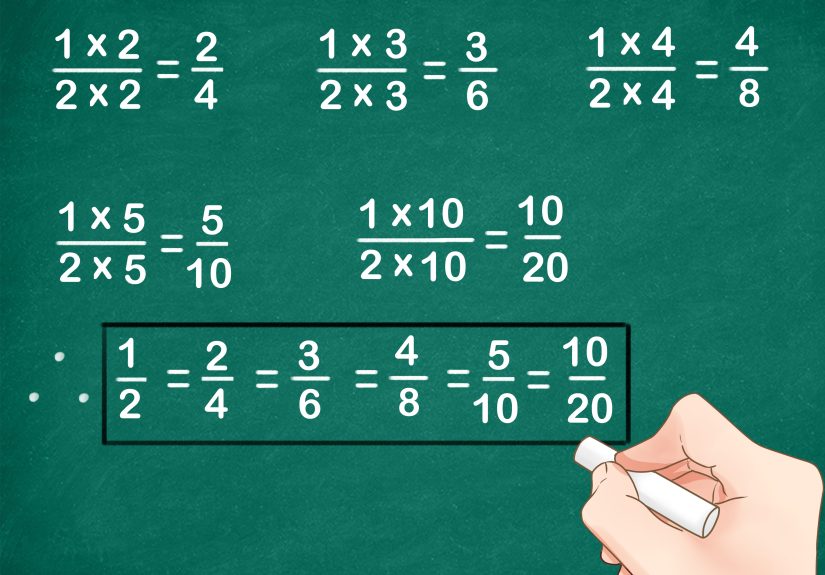
The subject they worked on involved continued fractions, a classic area of number theory. Continued fractions are expressions built by nesting fractions inside fractions, creating structured expansions that mathematicians study for their patterns, approximations, and surprising relationships. If that sounds abstract, that is because it is. But abstract does not mean meaningless. Number theory often looks decorative from the outside until it quietly becomes useful in fields like cryptography, computation, and mathematical modeling.
What the Discovery Was Really About
Havens later became lead author on a paper published in Research in Number Theory in 2020. The paper focused on continued fractions and how certain algebraic transformations affect their structure. To non-specialists, that may sound like a sentence produced by a very determined blender. But in mathematical terms, it meant he and his co-authors were not just solving classroom exercises. They were producing new research in a recognized journal.
That distinction matters. Plenty of people get good at math. Far fewer contribute new results to the field. Havens’s work was not a publicity stunt, not a pity publication, and not a magazine-friendly “look what prison boredom can do” curiosity. It was peer-reviewed mathematics. The paper studied linear fractional transformations and nonlinear leaping convergents of certain continued fractions, identifying regularities and relationships that had not previously been laid out in that form.
In simpler terms, Havens helped show that when you transform some continued fractions in specific ways, their behavior is not random chaos. Hidden structure survives. Math people love that sort of thing. It is basically the academic equivalent of finding out your junk drawer is secretly organized by a system only a wizard could appreciate.
The Pen-and-Paper Obstacle Course
What makes the achievement even more striking is the method. Havens did this work largely by hand. Modern mathematicians often rely on computers to test examples, check patterns, or run calculations that would be painfully slow otherwise. Prison denied him that luxury. No open browser tabs. No mathematical software. No late-night coding session with a search engine open and a snack nearby. Just paper, pencils, mail delays, and persistence.
Some reports describe his cell walls filling with sheets of calculations, with lines of continued fractions stretching across page after page. That image sticks because it captures the physical reality of abstract thought. We like to imagine mathematical insight as lightning from the heavens. Usually it is more like wallpaper made of failed attempts, partial patterns, revisions, and stubbornness.
Why the Paper Mattered Beyond Mathematics
The publication mattered for obvious reasons inside mathematics, but its real cultural impact came from what it challenged outside the field.
First, it challenged the stereotype that serious intellectual life belongs only to people who took the usual route through schools, degrees, and institutions. Havens’s path was jagged, delayed, and morally complicated. Yet the mathematics was still real. His story does not erase the value of formal education. If anything, it highlights that expert mentorship and scholarly communities still mattered enormously. But it does show that talent and discipline can surface in unlikely places when people are given even a narrow opening.
Second, the story challenged the way many people think about prison education. Public debates about incarceration often swing between punishment and public safety, leaving education framed as an optional extra, like prison is a grim airline and learning is the tiny bag of pretzels. Research suggests the issue is more serious than that. Educational opportunities in prison are associated with lower recidivism and better reentry outcomes. In other words, education is not a soft perk. It is practical public policy.
And third, the story challenged the mythology around who “looks like” a mathematician. Not because Havens fits a new stereotype, but because he breaks the old one. He was not sitting in a university office wearing elbow patches and calmly discussing elegant lemmas between committee meetings. He was an incarcerated man doing high-level math in a setting that rarely supports even basic academic ambition.
The Bigger Lesson About Education Behind Bars
Once the story gained attention, it became linked to a larger conversation about prison education in the United States. That broader context matters because Havens’s journey was unusual, but the underlying lesson is not. When incarcerated people get access to education, some of them use it to radically reshape how they think, work, and live.
That does not mean every prison classroom will produce a number theory paper. Obviously. Most college campuses do not produce one before lunch either. The real point is that education changes the internal architecture of a person’s life. It gives structure to time. It creates goals that are measured in progress instead of survival. It invites people to see themselves as learners, builders, and contributors rather than as the worst thing they have ever done.
That is part of why Havens later helped build the Prison Mathematics Project, an effort aimed at connecting incarcerated people with math mentorship and resources. The project emerged from the recognition that his own path should not remain a one-off miracle story that everybody admires and nobody scales. If meaningful mathematical study could happen in prison once, why not create conditions that make it more possible for others?
The answer, of course, is that prison systems are not designed for intellectual flourishing. Access to books can be restricted. Communication is slow. Technology is tightly controlled. Specialized materials are hard to obtain. Even when the will to learn exists, the infrastructure is often flimsy. That is why this story should not be read as “Look, prison is secretly a great school.” It should be read as “Imagine what could happen if serious learning were not this hard to pursue.”
What Makes This Story So Human
At the center of all the reporting, beyond the journal paper and the headlines, is a simple emotional truth: Havens found something he could love that demanded he become more disciplined, more patient, and more honest with himself. People often talk about education as a ladder. Sometimes it is. But in stories like this, it is also a mirror.
Math reflected back a version of him that was capable of concentration instead of destruction. It gave him problems that could be solved without violence, status games, or self-sabotage. It gave him a reason to write letters, ask better questions, and build relationships with people outside prison around ideas rather than chaos.
That is why this story keeps circulating. Not because everyone suddenly became obsessed with continued fractions, though stranger hobbies exist. It circulates because it compresses a huge question into one unforgettable example: if a person can change this much under conditions this harsh, what are we doing to help more people change at all?
Conclusion
How did an inmate make a math discovery in prison? Not by magic, and not by accident. He did it through obsessive study, handwritten calculations, outside mentorship, and a willingness to keep working in conditions that would make most people quit before page three. Christopher Havens’s published research in number theory was remarkable on its own. But the deeper significance of the story is what it reveals about education, identity, and human possibility under confinement.
His story should not be turned into a neat redemption slogan. It is messier than that, more demanding than that, and more useful than that. It reminds us that intellectual life can begin late, that discipline can grow in hostile environments, and that access to learning is not just a kindness. It is a serious tool for transformation. In a prison cell, with no internet and no academic office in sight, one man found a theorem-sized way to rebuild a life. That is not a fairy tale. That is a challenge.
Related Experiences and Lessons From Learning Math in Prison
One of the most powerful ways to understand this story is to think about the experiences wrapped around it, not just the finished publication. Advanced math in prison is dramatic enough for a headline, but the daily experience behind that headline is where the real meaning lives.
Imagine trying to learn a difficult subject in a place where interruption is normal, privacy is limited, and access to materials depends on rules that were not designed for scholarship. Under those conditions, even basic studying becomes a test of emotional control. A missing book is not a minor inconvenience. It can stall progress for weeks. A delayed letter is not just slow mail. It is a frozen conversation with the only mentor who understands the problem you are working on. A noisy unit is not background annoyance. It is the difference between seeing a pattern and losing it.
There is also the strange experience of learning something beautiful in an ugly environment. That contrast shows up again and again in stories about prison education. A person may be surrounded by concrete, fluorescent light, institutional schedules, and the emotional tension of confinement, yet spend hours thinking about symmetry, proofs, equations, and patterns. That contrast can feel almost surreal. It is like planting a tiny garden in the middle of a parking lot and then being shocked when something actually blooms.
Another experience tied to this topic is the emotional roller coaster of self-education. Anyone who has taught themselves a hard subject knows the cycle: confidence, confusion, despair, breakthrough, repeat. In prison, that cycle can hit harder because there are fewer outlets for frustration and fewer people available to say, “No, this part is supposed to be difficult.” A classroom usually contains feedback. Self-study in confinement contains silence. That means every breakthrough can feel huge, and every mistake can feel personal.
Then there is the experience of identity change. People in prison are constantly labeled by files, charges, housing levels, and institutional categories. Education introduces a competing identity. Student. Thinker. Tutor. Researcher. Mentor. Those roles do not erase accountability, but they do expand the future. That is part of what makes stories like Havens’s so important. They show that learning is not only about employability or résumé lines. It can also rebuild self-respect, which is often the hidden engine behind long-term change.
There is a social experience here too. Serious study can create new kinds of relationships. A person who once built status through intimidation may begin building community through explanation, curiosity, and shared effort. Teaching someone else a concept, discussing a pattern, or working through a difficult problem together creates a different social atmosphere than the one many prisons naturally reward. In that sense, math becomes more than a subject. It becomes a culture, and sometimes a refuge.
Finally, there is the experience of hope that does not depend on fantasy. This may be the most important one. Prison education is often described in public language that sounds either overly sentimental or purely utilitarian. But the lived experience is usually more grounded. Learning does not promise instant redemption. It does not guarantee release, applause, or a TED Talk. What it can offer is something steadier: a reason to keep going, a structure for the day, a challenge worth meeting, and evidence that the mind can still grow inside a locked place. For many people, that kind of hope is not decorative. It is survival.