Table of Contents >> Show >> Hide
- What a Garage Door Spring Actually Does
- Why Garage Door Spring Adjustment Is Not a Normal DIY Job
- Step 1: Stop Using the Door If Something Feels Wrong
- Step 2: Identify the Type of Spring Without Touching It
- Step 3: Look for Warning Signs of a Spring Problem
- Step 4: Check the Opener Safety Features
- Step 5: Do Not Adjust Spring Tension Yourself
- Step 6: Call a Qualified Garage Door Technician
- Step 7: Understand What the Technician May Adjust
- Step 8: Ask About Door Balance
- Step 9: Maintain the Door Without Touching Dangerous Parts
- Common Mistakes Homeowners Make
- When Spring Adjustment May Not Be Enough
- How Much Does Professional Spring Service Cost?
- Questions to Ask Before Hiring a Garage Door Pro
- Safe Homeowner Checklist
- Real-World Experience: What Homeowners Learn the Hard Way
- Conclusion
Safety note: This guide is written for homeowners who want to understand garage door spring adjustment, recognize warning signs, and make smart decisions before touching anything risky. Garage door springs are high-tension parts, and actual spring tension adjustment should be done by a trained garage door technician. Your fingers, face, car, and weekend plans will all thank you.
A garage door spring may look like a simple coil of metal, but it is doing the heavy lifting every time your door opens and closes. Without the spring system, most garage doors would be too heavy for the opener to move safely. That is why a door that suddenly feels heavy, slams shut, opens crooked, or refuses to stay up is not “being dramatic.” It is sending a mechanical distress signal.
So, can you adjust a garage door spring yourself? For most homeowners, the safest answer is no. You can inspect the system, identify symptoms, test basic opener safety features, clean around the door, lubricate approved moving parts, and prepare useful information for a professional. What you should not do is loosen set screws, wind torsion springs, stretch extension springs, remove cables, or attempt to “add a quarter turn” because a random video made it look easy. Spoiler: random videos rarely show the emergency room part.
What a Garage Door Spring Actually Does
The spring system counterbalances the weight of the garage door. When properly balanced, the door moves smoothly, stays aligned, and does not force the opener motor to work like it is training for a strongman competition.
Torsion Springs
Torsion springs are usually mounted horizontally above the garage door opening. They twist to store energy and release that energy as the door moves. These springs are common on modern sectional garage doors and are powerful, compact, and efficient. They are also the type most strongly associated with professional-only adjustment because they are wound under significant torque.
Extension Springs
Extension springs usually run along the horizontal tracks on both sides of the door. They stretch and contract as the door moves. If your door has extension springs, it should also have safety cables running through the springs to help contain them if they break. A missing safety cable is a major red flag and a good reason to schedule service.
Why Garage Door Spring Adjustment Is Not a Normal DIY Job
Some home projects are perfect for a Saturday morning: painting a wall, replacing cabinet knobs, organizing the garage so you can finally find the rake. Garage door spring adjustment is not in that category. Springs store enough energy to move a door that may weigh hundreds of pounds. A mistake can cause sudden movement, falling parts, damaged tracks, broken cables, or serious injury.
That does not mean homeowners are helpless. It means the smart step-by-step process is about diagnosis, safety, and knowing when to bring in the right person. Think of it like smelling gas near a stove. You do not need to rebuild the appliance; you need to recognize the danger and act responsibly.
Step 1: Stop Using the Door If Something Feels Wrong
If your garage door suddenly becomes loud, jerky, crooked, unusually heavy, or stuck, stop using it. Do not keep pressing the opener button in the hope that the door will “work itself out.” Mechanical problems rarely respond well to optimism.
Disconnecting, forcing, or lifting a malfunctioning door can make the situation worse, especially if a spring has broken. Keep children, pets, bikes, storage bins, and vehicles away from the door until it has been inspected. If the door is partly open and unstable, treat it as a hazard and call a professional immediately.
Step 2: Identify the Type of Spring Without Touching It
Stand at a safe distance and look at the spring setup. If you see one or more coils mounted above the garage door header, you likely have torsion springs. If you see long springs running parallel to the tracks on the sides, you likely have extension springs.
This identification helps you explain the problem when calling a technician. It is not an invitation to grab tools. Do not touch spring cones, brackets, cables, drums, pulleys, or bottom fixtures. These parts are connected to the spring system and can move with force if handled incorrectly.
Step 3: Look for Warning Signs of a Spring Problem
A spring may need professional adjustment, repair, or replacement if you notice any of the following signs:
- The door opens a few inches and stops.
- The opener motor runs, but the door barely moves.
- The door feels unusually heavy.
- The door closes too quickly.
- The door looks crooked while moving.
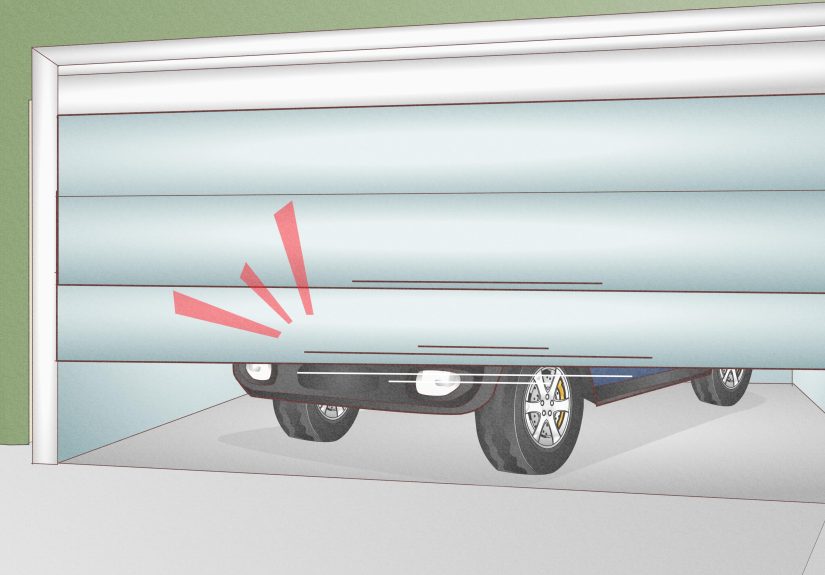
- You hear a loud bang from the garage.
- There is a visible gap in a torsion spring.
- Cables appear loose, frayed, or hanging.
- The door shakes, grinds, or jerks during movement.
A loud bang is often mistaken for something falling in the garage. In many cases, it can be a spring breaking. If you hear that sound and the door suddenly stops working, do not investigate with your hands. Look only from a safe distance.
Step 4: Check the Opener Safety Features
Garage door safety is not only about springs. The opener should have working safety features, including photo-eye sensors near the floor and an auto-reverse system. If the sensors are blocked, misaligned, dirty, or damaged, the door may not close properly.
You can safely check whether the sensor lenses are dusty or blocked by leaves, boxes, or spiderwebs. Clean the lenses gently with a soft cloth and make sure nothing is blocking the beam. Do not bypass the sensors. A garage door opener without functioning safety protection is not a clever shortcut; it is a bad idea wearing a tool belt.
Step 5: Do Not Adjust Spring Tension Yourself
This is the key step in the guide: do not adjust the spring tension yourself. Do not loosen set screws. Do not insert winding bars. Do not remove cables. Do not stretch springs. Do not move bottom brackets. Do not attempt to “balance” the door by guessing.
Professional technicians use specific tools, procedures, measurements, and safety practices. They also understand how door weight, spring size, cable drums, track condition, and opener settings work together. One wrong adjustment can create a door that seems fine for a day but damages the opener, wears cables, or fails later.
Step 6: Call a Qualified Garage Door Technician
When you call for service, provide clear details. Tell the technician whether you have torsion or extension springs, what symptoms you noticed, whether the door is stuck open or closed, and whether you heard a loud bang. Mention if cables are loose or if the door is crooked.
Ask whether the service includes a full balance test, spring inspection, cable inspection, roller and hinge check, track alignment review, opener force setting review, and safety sensor test. A good technician will not simply twist a spring and sprint away like a garage-door ninja. They should evaluate the system as a whole.
Step 7: Understand What the Technician May Adjust
A trained technician may adjust spring tension, replace worn springs, install safety cables, correct cable drum issues, align tracks, lubricate moving parts, tighten appropriate hardware, and test the door balance. The exact work depends on the door type and condition.
In some cases, adjustment is not enough. Springs have a limited service life based on cycles, meaning each full open-and-close movement counts toward wear. If a spring is near the end of its life, replacement may be safer than adjustment. If one spring breaks on a two-spring system, many technicians recommend replacing both because they have usually experienced similar wear.
Step 8: Ask About Door Balance
Door balance is the heart of spring performance. A balanced door moves smoothly and does not overload the opener. An unbalanced door may feel heavy, drift downward, shoot upward, or refuse to stay in position.
Instead of performing a risky balance test yourself, ask the technician to show you the result after service. A properly balanced door should move predictably and stay controlled. The opener should guide the door, not wrestle it into submission.
Step 9: Maintain the Door Without Touching Dangerous Parts
Safe maintenance can help your garage door last longer. Keep the tracks clean, remove debris near the door, listen for new noises, watch for uneven movement, and keep the photo-eye sensors clear. Use only lubricants recommended by the door or opener manufacturer, and apply them only to approved moving parts such as hinges, rollers, and bearings when appropriate.
Avoid coating the tracks with grease. Tracks are guide paths, not frying pans. Grease can collect dirt and make the rollers move poorly. Also avoid spraying random products onto springs, cables, or opener components unless the manufacturer specifically recommends it.
Common Mistakes Homeowners Make
Mistake 1: Treating the Opener as the Problem
When a door will not lift, many people blame the opener. Sometimes the opener is innocent. If the spring system is failing, the opener may struggle because it is trying to lift too much weight. Replacing the opener without addressing the spring issue can lead to another failure.
Mistake 2: Ignoring a Crooked Door
A crooked door can indicate cable, track, roller, or spring problems. Continuing to run it may bend panels or damage the track. If the door looks uneven, stop using it and schedule service.
Mistake 3: Using the Door After a Spring Breaks
A broken spring is not a “maybe later” repair. The door may be unstable, and the opener may not be able to control it safely. Keep the area clear and call a professional.
Mistake 4: Watching One Video and Feeling Certified
Online tutorials can make dangerous work look simple because the person filming may be trained, lucky, or leaving out important details. Garage door springs are not forgiving parts. Confidence is not a substitute for training.
When Spring Adjustment May Not Be Enough
Sometimes a garage door spring problem is part of a bigger issue. Worn rollers, bent tracks, damaged hinges, frayed cables, weak brackets, or a failing opener can all affect performance. A professional inspection can determine whether the spring needs adjustment or whether another part is causing the door to behave badly.
For example, if the door squeals but moves smoothly, lubrication or roller maintenance may help. If the door rises unevenly, cable or spring issues may be involved. If the opener hums but the door does not move, the spring may be broken or the opener may be under strain. The symptoms matter, but a full inspection matters more.
How Much Does Professional Spring Service Cost?
Costs vary by location, door size, spring type, labor rates, emergency service timing, and whether parts need replacement. A simple inspection or tune-up may cost less than a full spring replacement. Emergency after-hours service usually costs more. The best approach is to request a written estimate before work begins.
Do not choose a repair company based only on the lowest price. Look for licensing where applicable, insurance, reviews, clear pricing, warranty information, and professional communication. A bargain repair that leaves the door unsafe is not a bargain; it is a future invoice warming up in the bullpen.
Questions to Ask Before Hiring a Garage Door Pro
- Are your technicians trained to service torsion and extension spring systems?
- Do you inspect cables, drums, rollers, hinges, tracks, and opener settings?
- Will you test the door balance after service?
- Do you provide a written estimate before repairs?
- What warranty do you offer on parts and labor?
- Can you confirm whether my extension springs have safety cables?
These questions help you avoid rushed service and vague pricing. A reliable company should be comfortable explaining the work in plain English.
Safe Homeowner Checklist
Here is the safe version of a garage door spring adjustment checklist:
- Stop using the door if it moves strangely or feels heavy.
- Keep people, pets, and vehicles away from the door.
- Identify the spring type visually from a safe distance.
- Look for gaps, loose cables, crooked movement, or broken parts without touching them.
- Check that opener sensors are clear and aligned.
- Do not adjust spring tension, cables, brackets, or drums.
- Call a qualified garage door technician for spring adjustment or replacement.
- Ask for a full balance and safety test after service.
- Maintain the door with safe cleaning, observation, and approved lubrication.
Real-World Experience: What Homeowners Learn the Hard Way
Most garage door spring stories begin the same way: everything worked yesterday. Then one morning, the door opens six inches and stops. The opener groans. The car is trapped inside. Someone is late for work. Suddenly, the garage door becomes the main character of the household drama.
One common experience is the “mystery bang.” A homeowner hears a loud noise from the garage at night and assumes a box fell off a shelf. The next morning, the door will not open. On closer inspection, there is a visible gap in the torsion spring above the door. That gap is the clue. The spring has broken, and the door no longer has proper counterbalance.
Another common situation involves a door that still opens but looks crooked. At first, the homeowner ignores it because the opener technically still works. A week later, the door jams, the cable comes loose, and the repair becomes more expensive. The lesson is simple: uneven movement is not a personality trait. It is a warning sign.
Many homeowners also discover that garage door openers are not designed to lift the full weight of the door. The opener is supposed to move a balanced door. When springs weaken, the opener compensates until it cannot. That can wear out gears, chains, belts, and motor components. Fixing the spring problem early may protect the opener from unnecessary stress.
There is also the classic “I watched a video” mistake. A person sees someone adjust a torsion spring online and thinks the job looks manageable. What the video may not show is the exact spring size calculation, winding direction, door weight, cable tension, tool quality, safety setup, and years of experience behind the work. The result of guessing can be a door that rises too fast, drops too hard, or damages other components.
The best homeowner experience is usually the boring one: notice a symptom, stop using the door, call a qualified technician, get the spring system inspected, and have the door tested before returning to normal use. Boring is underrated. Boring means no injuries, no damaged car roof, no bent tracks, and no emergency repair at the worst possible time.
A smart maintenance habit is to listen to the door once a month. A healthy door should move smoothly without grinding, scraping, banging, or shaking. Look at the cables from a safe distance. Watch whether both sides of the door move evenly. Make sure the sensor area is clear. Keep clutter away from the tracks. These simple observations can help you catch problems before they become dramatic.
Another useful habit is saving the door information. Write down the brand, model, approximate age, spring type, and any service history. Take clear photos from a safe distance when something looks wrong. This helps the technician arrive prepared and may speed up the repair.
In the end, adjusting a garage door spring is less about proving you can do everything yourself and more about knowing which jobs deserve respect. You can be handy, careful, and smart while still calling a pro. In fact, that is often the smartest move. The garage door is the largest moving object in many homes. Treating it with caution is not fear; it is good homeownership.
Conclusion
Garage door spring adjustment is one of those topics where the safest step-by-step guide is not a set of winding instructions. It is a clear process for recognizing symptoms, avoiding dangerous parts, checking safe components, and hiring a qualified technician when spring tension is involved.
If your door is heavy, crooked, loud, stuck, or suddenly unreliable, do not force it and do not try to adjust the spring yourself. Identify the warning signs, keep the area clear, and schedule professional service. A properly balanced garage door protects your opener, your door panels, your home, and most importantly, the people around it.