Table of Contents >> Show >> Hide
- Quick TTC Basics (So You Don’t Feel Like You Missed a Tutorial)
- Step-by-Step: Riding the Toronto Subway Like a Person Who Lives Here
- Step 1: Plan your route (two-minute version)
- Step 2: Choose how to pay (PRESTO vs contactless vs tickets)
- Step 3: Enter the station and tap through the fare gates
- Step 4: Follow signs to the correct platform
- Step 5: Board the train (the etiquette that saves lives… socially)
- Step 6: Exit, transfer, or re-enter (yes, re-enter) within your transfer window
- Fares, Transfers, and the “Why Did I Get Charged Again?” Questions
- Navigating Like a Local: Stations, Transfers, and “Where Am I?” Moments
- Service Hours, Late Night Travel, and What to Do When the Subway Sleeps
- Accessibility Tips (Helpful for Everyone, Not Just Wheelchairs)
- Airport to Subway: The Easiest Visitor Move
- Tourist-Friendly Examples: Simple Routes You’ll Actually Use
- Common Mistakes (So You Can Skip Them and Look Cool)
- Real-World Toronto Subway Experiences (Add-500-Words Edition)
- Conclusion
Toronto is a city that politely pretends it’s not in a hurryright up until you’re standing in front of the subway fare gates at 8:32 a.m.
Then it becomes a competitive sport called “Please Let Me Tap Before My Coffee Wears Off.”
The good news: the Toronto subway (run by the TTCToronto Transit Commission) is straightforward, well-signed, and visitor-friendly once you learn a few
local habits (like stepping aside so others can exit… and not blocking the doors like you’re auditioning for a role as “Human Speed Bump”).
This guide walks you through everything: choosing a payment method, navigating stations, making transfers, avoiding rookie mistakes, and riding like a local.
Quick TTC Basics (So You Don’t Feel Like You Missed a Tutorial)
What “Toronto subway” usually means
When people say “the Toronto subway,” they’re usually talking about the heavy-rail rapid transit lines:
Line 1 (Yonge–University), Line 2 (Bloor–Danforth), and Line 4 (Sheppard).
Toronto’s rapid transit network also includes light rail lines (LRT) like Line 5 (Eglinton) and Line 6 (Finch West),
which use the same general “tap-to-ride” logic and TTC wayfinding style.
The “shape” of the system
- Line 1 forms a big “U” through downtown and up to the north end of the city, connecting many major destinations.
- Line 2 runs east–west across the city, intersecting Line 1 at two key transfer hubs.
- Line 4 is shorter and serves the Sheppard corridor (mainly useful if you’re heading to North York destinations).
The best mental model: Toronto’s subway is not an endless maze. It’s more like a clean, well-labeled closet. You can still get lost,
but it takes effort.
Step-by-Step: Riding the Toronto Subway Like a Person Who Lives Here
Step 1: Plan your route (two-minute version)
You need three pieces of information:
your starting station, your destination station, and the direction you’re traveling.
Directions are typically labeled as:
Northbound/Southbound for Line 1, and Eastbound/Westbound for Line 2 and Line 4.
If you’re unsure, use a trip-planning app and then sanity-check it with station signage.
Toronto stations are generally excellent at telling you, in plain language, where you’re going.
(And if you still feel uncertain, follow the crowdbut only if the crowd looks like it knows what it’s doing.)
Step 2: Choose how to pay (PRESTO vs contactless vs tickets)
Toronto’s TTC is “tap-friendly,” meaning you can typically pay by tapping a supported fare medium at gates and on vehicles.
Your best options are:
- PRESTO card: a reloadable transit card used across the region. Great for repeat rides, longer stays, and easy transfer tracking.
- Contactless debit/credit (or a mobile wallet): tap your card/phone/watch to pay an adult fare. Simple for visitors who don’t want another card.
- PRESTO Tickets: one-ride, two-ride, or day pass tickets sold at fare vending machines in subway stations (handy for tourists).
Pro tip: when you tap, take your card out of your wallet first. “Card clash” is real. If multiple contactless cards are close together, the reader can get confused,
and you’ll feel the kind of embarrassment normally reserved for waving at someone who wasn’t waving at you.
Step 3: Enter the station and tap through the fare gates
Subway stations have fare gates. You tap on the reader, the gates open, and you walk through. If the gates don’t open:
try again slowly, use a different gate, and resist the urge to “just slip in behind someone.” Toronto is polite, but fare enforcement is not a hobby.
Step 4: Follow signs to the correct platform
After the gates, look up. Toronto stations are sign-heavy in a good way.
Find the line number/name and your direction (north/south/east/west).
If you’re transferring between lines, follow the signs that say “Line 1”, “Line 2”, etc.
Step 5: Board the train (the etiquette that saves lives… socially)
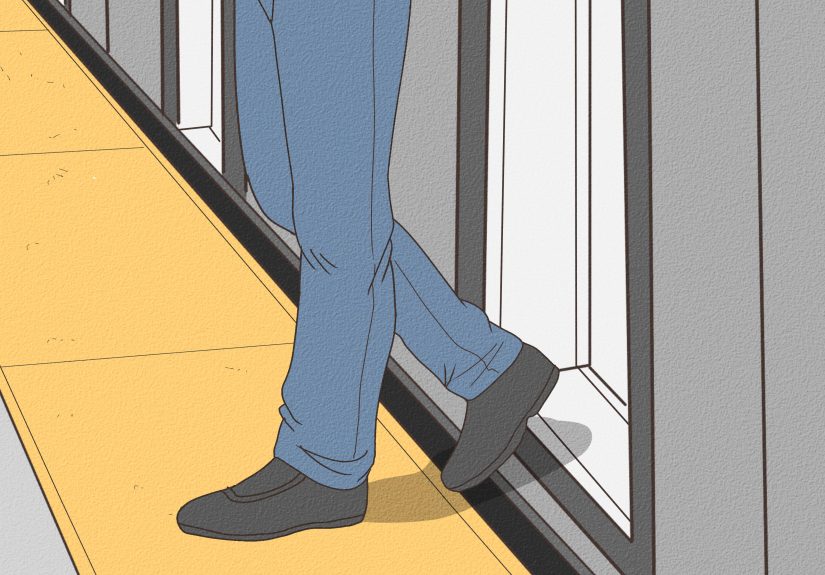
- Let people off first. Always. This is transit law, even if it’s not carved into marble.
- Move in. Don’t stop in the doorway like you’re waiting for dramatic lighting.
- Hold a pole. Toronto trains can be smooth… until they aren’t.
- Backpacks off in crowds. Your bag doesn’t need its own seat. It has no feelings.
Step 6: Exit, transfer, or re-enter (yes, re-enter) within your transfer window
One of the TTC’s most visitor-friendly features is the two-hour transfer when you pay with eligible methods.
That means within two hours of your first tap, you can transfer between TTC services and even enter/exit stations as neededhelpful if you pop out for a quick errand
and jump back in.
The important part: if you’re using contactless debit/credit or mobile wallet, tap with the same card/device each time
so the system recognizes it as your transfer.
Fares, Transfers, and the “Why Did I Get Charged Again?” Questions
Current TTC single fares (know before you go)
TTC fares can change over time, so always check the latest before you travel. As of the most recent TTC fare pricing:
adult single fare is $3.35, while PRESTO pay-as-you-go and debit/credit tap
are commonly listed at $3.30 for adults. Youth (13–19) and seniors (65+) have lower fares, and
children 12 and under ride free.
PRESTO Tickets for visitors
If you’re in Toronto for a short trip and you like simple options, PRESTO Tickets can be a sweet spot:
one-ride, two-ride, and day pass ticket formats are designed for occasional riders. A day pass can make sense if you’re doing
a busy itinerary with lots of hop-on/hop-off movement.
The two-hour transfer (what it means in real life)
The two-hour transfer is your permission slip to be spontaneous. For example:
you can ride from Union Station to St. Andrew, exit to grab lunch, re-enter, and continue to another neighborhood
as long as you’re within that two-hour window and using an eligible payment method.
One Fare Program (regional transfers that can save money)
If your Toronto day includes regional transit (like connecting with neighboring transit systems or GO Transit),
Ontario’s One Fare Program can reduce double-paying. In plain English: eligible riders using PRESTO or contactless payment can receive
free transfers to certain local systems and discounted integration with GO trips when the trip starts on the TTC.
For visitors, this matters most when you’re doing “Toronto plus nearby” travel and want smoother transfers.
Navigating Like a Local: Stations, Transfers, and “Where Am I?” Moments
Know the big transfer hubs
- Bloor–Yonge: a major transfer point between Line 1 and Line 2 (often busyvery busy).
- St. George: another key transfer between Line 1 and Line 2 (sometimes calmer than Bloor–Yonge).
- Union: main downtown hub, close to major attractions and regional rail connections.
Use station names, not vibes
Toronto is a city of distinct neighborhoods, but subway navigation works best when you think in stations.
Instead of “I’m going to the cool shopping area,” think “I’m going to Dundas” or “I’m going to Queen’s Park.”
Your future self will thank you for being specific.
Announcements and signs: trust them
Trains announce stops and stations display maps and next-train information.
If you’re worried you’ll miss your stop, keep your map app open and watch station names as you arrive.
Within one day, you’ll develop the Toronto rider instinct: “This feels like my stop.”
(It’s a real feeling. Not always correct, but real.)
Service Hours, Late Night Travel, and What to Do When the Subway Sleeps
Typical subway hours
Subway service is generally described as running from around 6 a.m. to about 1:30 a.m. on weekdays and Saturdays,
and starting later (around 8 a.m.) on Sundays, with exact first/last train times varying by station.
If you’re traveling late, always check the schedule for your specific station.
Blue Night Network (the “Toronto is still awake” backup plan)
When the subway closes, Toronto isn’t abandoned to the raccoons. Overnight service is provided by the TTC’s
Blue Night Network, which runs on many major corridors until subway service resumes.
If you’re out late, plan the last subway trip like you plan a last call: deliberately.
Weekend closures and shuttle buses
Toronto does maintenance work, and sometimes that means partial closures.
The TTC typically runs shuttle buses during planned closures. The trick is to budget extra time and avoid panic.
Everyone on that shuttle is in the same boatjust a bus-shaped boat.
Accessibility Tips (Helpful for Everyone, Not Just Wheelchairs)
TTC vehicles include accessibility features like announcements, and many stations provide step-free access.
Elevators can go out of service, so if you need an accessible route, check elevator status before you head out.
Even if you don’t require step-free access, this info helps when you’re traveling with luggage, strollers, or a shopping haul
you swore you weren’t going to buy.
Airport to Subway: The Easiest Visitor Move
If you’re flying into Toronto Pearson (YYZ), the subway doesn’t go straight to the terminals.
The visitor-friendly strategy is usually:
airport train service to Union Station, then subway from there if needed.
This is often faster and cheaper than a car during busy traffic windowsespecially when Toronto decides to be Toronto.
Tourist-Friendly Examples: Simple Routes You’ll Actually Use
Downtown classics (CN Tower area and waterfront-adjacent stops)
Many visitors end up near Union Station or the central downtown corridor.
From there, Line 1 stations place you within a short walk (or quick connection) of major attractions, restaurants, and museums.
The subway won’t drop you into every tourist spot’s lobbybut it will get you close enough that your step counter feels proud.
Museum day
If your itinerary includes major museums, Line 1 has stops that make cultural plans easy.
Ride in, step out, pretend you’re the kind of person who reads every placard, then ride to dinner like you meant it.
Common Mistakes (So You Can Skip Them and Look Cool)
- Tapping with different cards/devices during transfers: the system won’t recognize it as the same rider.
- Not checking service alerts on weekends: a planned closure can turn a 20-minute ride into a scenic bus adventure.
- Standing left on escalators: in busy stations, keep right if you’re not walking.
- Assuming every older travel guide is current: Toronto transit has evolved a lotespecially around fare media and payment options.
Real-World Toronto Subway Experiences (Add-500-Words Edition)
The first time you ride the Toronto subway, you’ll probably do the universal visitor ritual: you’ll stare at the map like it’s a cryptic treasure chart,
then realize the whole thing is basically three main lines and a couple of smaller cousins. Your confidence will spike instantlyuntil you approach the fare gate
and it doesn’t open on your first tap. This is normal. The gate is not judging you. (Okay, maybe it is a little. But in a very Canadian way.)
A classic Toronto experience is discovering how powerful the two-hour transfer can be. You’ll plan a neat, responsible itinerarymuseum, lunch, shopping, back to hotel
and then the city will tempt you with a random detour: a market you didn’t know existed, a coffee shop you “accidentally” found, a bookstore that smells like
ambition and old paper. In many cities, every detour costs you another fare. In Toronto, within your transfer window, detours can feel like a loophole in adulthood.
You pop out, you wander, you pop back in. Suddenly, you’re living your best urban life.
Rush hour is its own vibe. You’ll notice that locals become extremely efficient without becoming rude. People queue, doors open, bodies flow on and off like
a perfectly timed dance… and then one person stops dead in the doorway to check directions. The entire platform collectively sighs with the patience of a city
that’s practiced this moment a million times. If you want to blend in, do your navigating off to the side. The TTC is happy to carry you anywhere,
but it would prefer you not park your whole existence in the middle of the traffic lane.
Late night is where Toronto transit stories get fun. You’ll be heading home from a concert, a game, or a night out, and you’ll hear the quiet truth:
subway service ends, and the city switches to night buses like it’s changing into sweatpants. The Blue Night Network is a lifesaver, but it’s also where
you learn the art of patience. You’ll share a bus with fellow night owls, hospitality workers, and people having deeply philosophical conversations with their
shawarma. It’s oddly wholesome. If you’re nervous about late-night travel, stick to well-lit stops, keep your phone charged, and give yourself time.
Toronto at night is generally calm, but calm still requires planning.
And then there’s the moment you realize the subway is also a “Toronto museum” of sorts. Some stations have unique designs, public art, and architecture that
makes you look up from your screen. You’ll catch yourself thinking, “Wait, this station is actually… kind of beautiful?” That’s when you know you’re not just
taking transityou’re participating in the city. Congratulations. You are now 12% more Torontonian.
Conclusion
Riding the Toronto subway is mostly about two skills: tapping correctly and paying attention to direction.
Once you’ve got those, the TTC becomes one of the easiest ways to explore the cityfrom downtown landmarks to neighborhood food hunts to spontaneous detours.
Bring a little patience for busy platforms, check service alerts when timing matters, and remember: if you’re ever unsure, step to the side, look up, and follow the signs.
Toronto will do the rest.