Table of Contents >> Show >> Hide
- How Mirror-Selling Pics Took Over the Internet
- Why We’re Weirdly Obsessed with Mirror-Selling Fails
- The Unintentional Art of Selling a Mirror
- Okay but… How Do You Actually Photograph a Mirror to Sell It?
- What These Mirror Pics Say About Internet Culture
- Real-Life Experiences: When Mirror Listings Hit Close to Home
If you’ve ever tried to photograph a mirror without accidentally starring in the picture, you already know: this is elite-level chaos. Somewhere between “I just want to list this on Facebook Marketplace” and “why can I see my kneecaps in 4K,” people end up creating some of the funniest photos on the internet. That’s exactly why pics of people trying to sell mirrors have quietly become everyone’s new favorite thing – including the meme-loving crowd over at Bored Panda.
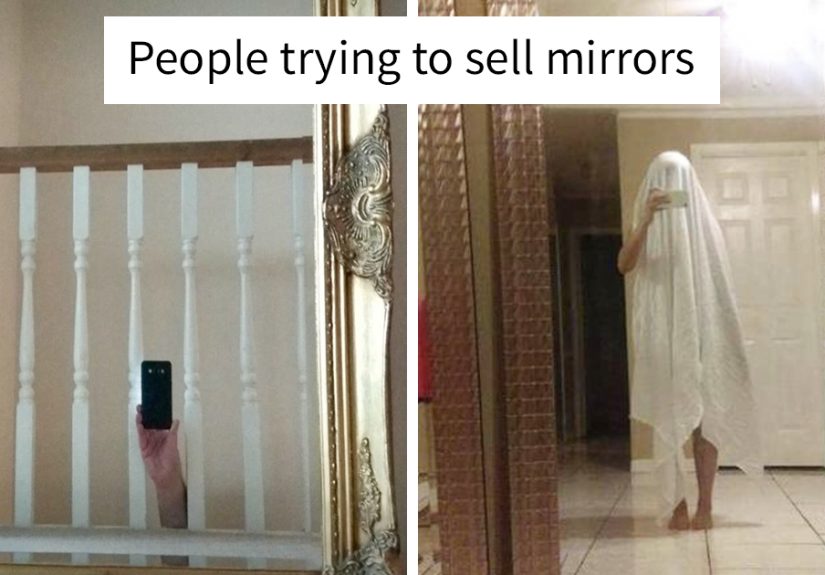
From accidental underwear cameos to mysterious headless bodies holding ornate frames, mirror-selling photos are a perfect storm of awkward angles, everyday homes, and zero understanding of how reflections work. The result? A never-ending stream of unintentional comedy that feels like a mix between a home tour, a blooper reel, and a low-budget art project.
How Mirror-Selling Pics Took Over the Internet
The Bored Panda effect
Bored Panda helped catapult this oddly specific genre into meme history by curating collections of “people selling mirrors” photos and turning them into full-on galleries of reflective fail gold. Their roundups gather images from an X (formerly Twitter) account called @SellingAMirror, Facebook Marketplace, Craigslist, and other secondhand platforms, then package them into scrollable comedy marathons that you cannot stop reading.
One Bored Panda feature describes these as amateur photos from people who just want to upload the mirror and move on with their lives – no lighting, no styling, no understanding that the mirror is basically a camera pointed back at them. That’s how we get things like:
- A cowboy in overalls snapping a mirror pic in his bathroom, unintentionally making the listing 90% “cowboy selfie,” 10% mirror.
- Sellers hiding behind doors or crouching behind furniture, only for a rogue hand, foot, or forehead to sneak into the reflection anyway.
- Pets photobombing the scene so hard that you forget the mirror is for sale and start wondering if the dog is included.
The rise of “People Selling Mirrors” accounts
This category got big enough that it spawned whole accounts devoted to the trend. The People Selling Mirrors page on X collects screenshots of mirror listings where the would-be photographer becomes the main character instead of the mirror. These photos are then syndicated around the web – to humor sites, image roundups, and of course, Bored Panda’s galleries.
Humor sites like Pleated Jeans, Thunder Dungeon, Demilked, and others now regularly publish compilations of these images, treating them like a fully formed internet micro-genre, right up there with awkward family photos and photobomb fails.
Why We’re Weirdly Obsessed with Mirror-Selling Fails
They’re painfully relatable
Good comedy is usually rooted in a shared human struggle, and mirror listings deliver that in spades. Anyone who’s tried to sell something online knows the “this will only take two minutes” lie we tell ourselves. Then you spend half an hour trying to avoid your own reflection, dodging camera glare, and angling the frame so your laundry pile isn’t in the background.
That struggle is exactly what makes these pics so funny. The sellers in these images are clearly trying – you can tell from the contorted poses, the halfway-ducked heads, and the random objects they hide behind – but the mirror exposes everything anyway. It’s like a built-in lie detector for how tidy your house is and how normal you look on a random Tuesday afternoon.
The accidental selfie problem
The real star of these images usually isn’t the mirror at all – it’s the stunned human trapped inside it. In compilation after compilation, you’ll see people:
- Standing in their pajamas, holding their phone, visibly mid-“I did not think this through.”
- Wearing Halloween costumes, gym clothes, or extremely chaotic outfits that were never meant to be immortalized online.
- Crouching on the floor in front of a giant round mirror like it’s a summoning circle for awkwardness.
It all taps into the same energy we see in photobomb memes and awkward candid shots: the moment you realize the camera has caught more than you wanted to show. Mirror listings are essentially accidental selfies disguised as product photos – and that mash-up is comedy kryptonite.
They feel like tiny, unedited documentaries
The other reason these images hit so hard is that they’re weirdly intimate. You’re not just seeing the mirror; you’re getting a tiny documentary snapshot of someone’s real life:
- The toddler toys on the rug.
- The half-painted wall in the reflection.
- The open kitchen drawer, the unmade bed, the dog staring directly into your soul.
Writers and photographers have pointed out that found mirror photos – from Craigslist and other resale platforms – have a kind of accidental art to them. They document real spaces with zero styling and zero filters, showing people’s homes and habits exactly as they are, which makes them strangely compelling to scroll through.
The Unintentional Art of Selling a Mirror
Every listing is secretly a self-portrait
When you photograph a mirror, you’re almost always photographing yourself. Even if you try to stay out of the frame, your choices – where you place the mirror, what’s behind it, whether you cleaned the glass – say a lot about you.
In many of the viral photos Bored Panda and similar sites feature, the seller becomes an accidental co-star: the proud grandparent kneeling on the floor to capture a round vintage mirror, the guy in work boots and a safety vest standing in a dusty garage, the student in a cramped bedroom trying to dodge their own reflection but forgetting about the closet mirror behind them.
Are these people trying to create art? Absolutely not. But art kind of happens anyway. That’s what makes the genre so lovable: the photos weren’t taken for us, but they end up feeling like they were.
The “haunted mirror” and “oops, too much leg” subgenres
Within the world of mirror listings, a few mini-genres have emerged:
- Haunted mirror energy: A dark, ornate mirror photographed in a dim hallway, with a ghostly figure lurking at the edge of the frame. No one mentions it in the description. Naturally, the internet decides the mirror is cursed.
- The leg-only shot: The seller stands as far back as possible so only their legs appear in the mirror, which somehow makes the photo even weirder.
- The “I swear it’s the mirror for sale” selfie: The photo is 90% the person and 10% mirror, often with a caption like “full-length mirror, good condition, $20.” Priorities.
- The double chaos reflection: When two mirrors reflect each other and the seller gets caught somewhere in the infinity loop, like a Where’s Waldo for mildly embarrassed adults.
Okay but… How Do You Actually Photograph a Mirror to Sell It?
Let’s say you want to be part of the trend without going viral as “Banana Suit Mirror Guy.” You can still list your mirror, keep your dignity, and maybe even avoid becoming the hero of the next Bored Panda compilation.
1. Step out of the line of fire
The easiest fix? Don’t stand directly in front of the mirror. Position the mirror so it reflects a blank wall, a window, or a corner of the room instead of your entire body. Stand to the side, stretch your arm out, and take the picture from an angle where you’re behind the edge of the frame.
2. Use a tripod or stack of books
If you have a tripod, set your phone on a timer and step out of the frame entirely. No tripod? A stack of books, a chair, or a nearby shelf works too. Just aim the camera so it only catches the mirror and a simple, uncluttered reflection.
3. Stage the reflection (just a little)
You don’t need full Pinterest energy, but a bit of tidying goes a long way. Clear the pile of laundry. Close closet doors. Move oddly personal items out of sight. Some photography pros even suggest using the reflection to tell a subtle story: maybe the mirror reflects a cozy corner of the living room or a nicely made bed so buyers can imagine it in their own space.
4. Embrace the chaoson purpose
Of course, you can also lean all the way into the trend. Some sellers now deliberately create funny mirror photos to stand out in crowded marketplaces. A goofy costume, a pet cameo, or an over-the-top pose can catch attention and (sometimes) help the listing spread further on social media. Just remember: once it’s out there, the internet never forgets.
What These Mirror Pics Say About Internet Culture
The joy of low-stakes cringe
Part of the charm of “people selling mirrors” content is that it’s low-risk embarrassment. These aren’t celebrities being dragged for scandals; they’re regular people trying to get fifty bucks for a secondhand mirror and accidentally creating slapstick comedy in the process. It’s cringe, but it’s gentle cringe – the kind you can laugh at and immediately imagine doing yourself.
Found photography as entertainment
Like Awkward Family Photos and other found-photo projects, mirror-selling galleries turn ordinary snapshots into entertainment simply by reframing them. Once someone collects them, titles them, and adds a bit of commentary, they transform from “random listing pics” into a recognizable internet genre.
It’s a reminder that the internet is basically one giant accidental photo album. We’re constantly uploading mundane images – for sale ads, ID photos, event pics – that might later be rediscovered as comedy, documentation, or even stranger, as art.
Our reflection problem in the age of selfies
Ironically, we live in the most selfie-trained generation of all time, and yet people still can’t figure out how not to appear in mirror shots. The very thing we usually obsess over (our own reflection) becomes the punchline when we’re just trying to get rid of an old wardrobe mirror and move on with our day. That gap between our polished social photos and these hilariously unpolished listings is exactly what makes the genre so addictive to scroll.
Real-Life Experiences: When Mirror Listings Hit Close to Home
Scrolling through galleries of people selling mirrors feels funny and distant… until you realize you are one poorly planned photo away from joining them. Here are a few all-too-believable “mirror moments” that make this trend feel personal.
The “I thought I was out of frame” incident
Picture this: you prop a full-length mirror against the wall, step way off to the side, hold your phone out, and snap a pic. Nailed it, you think. Later, when you zoom in, you realize that while your head missed the shot, your socks-with-slides combo is absolutely front and center in the reflection. The mirror looks fine, but your fashion choices are now part of the listing forever.
That’s the quiet horror behind so many viral images. The seller wasn’t trying to show themselves at all; they were just trying to move a piece of furniture. But the mirror is unforgiving. It sees your weird angle, your rushed outfit, the thing you didn’t notice in the background – and captures it with zero mercy and perfect clarity.
The pet that steals the show
Another extremely common scenario: you’re photographing a perfectly innocent bedroom mirror. You wait for the light to be right, clear the clutter, and make sure you’re standing out of frame. You snap the picture… and only later realize your cat is in the reflection, sitting in the doorway, staring directly at the camera like it’s about to announce a podcast.
These animal cameos are part of what makes “people selling mirrors” photos so shareable. The mirror becomes a tiny stage where the real scene unfolds: the dog trotting across the hallway mid-shot, the cat stretching in the corner, the kid peeking around the door to see what’s going on. Buyers get more than a product image – they get a tiny, unscripted slice of the seller’s life.
The costume you forgot you were wearing
One of the funniest variations in these compilations is when sellers completely forget how they’re dressed. You might start photographing your mirror after getting home from a themed party, a workout, or a long day in your comfiest – and least glamorous – clothes. In your mind, you’re just recording an object. In reality, the reflection is capturing “adult in banana suit,” “goblin-level sweatpants,” or “mismatched socks and mystery T-shirt” in glorious detail.
Later, when that photo ends up on a humor site, the mirror becomes almost secondary. People want to talk about the outfit, the pose, the expression of someone who clearly did not intend to become Internet Famous™ for their accidental self-portrait.
Mirror listings as tiny time capsules
If you strip away the jokes for a second, mirror listings also act like accidental time capsules. They capture:
- Trends in home decor – from farmhouse gray everything to bold accent walls.
- Technology – old phones in hands, old TVs in the background, older laptops on the desk.
- Moments in people’s lives – moving out, downsizing, redecorating, or just finally selling that mirror that’s been sitting in the hallway forever.
When sites like Bored Panda curate these images, they’re not just serving up laughs; they’re building a visual archive of how people actually live: clutter, costume, chaos and all. Years from now, scrolling through these galleries might feel like flipping through a scrapbook of internet-era domestic life – just one where every page happens to include a mirror listing and at least one person trying desperately not to be in the shot.
So yes, pics of people trying to sell mirrors are absolutely our new favorite thing – not just because they’re funny, but because they’re weirdly human. Every reflection is a reminder that behind every listing, every meme, and every “for sale” post, there’s a real person, in a real house, doing their best… and sometimes accidentally turning their living room into a comedy set in the process.