Table of Contents >> Show >> Hide
- Why Quick Poetry Lessons Work So Well for Young Learners
- What Makes a Poetry Lesson “Quick” but Still Meaningful?
- Lesson 1: The Five-Senses Poem
- Lesson 2: Rhyme Hunt Around the Room
- Lesson 3: Found Poetry for Little Word Collectors
- Lesson 4: Shape Poems That Turn Writing Into Art
- Lesson 5: Poetry Walks for Observation and Wonder
- Lesson 6: Read-Aloud Poems for Fluency
- Lesson 7: “I Am” Poems for Student Voice
- Lesson 8: Acrostic Poems for Names, Seasons, and Science
- How to Differentiate Quick Poetry Lessons
- Assessment Without Crushing the Joy
- Quick Poetry Lesson Plan: A Five-Day Mini Unit
- Common Mistakes to Avoid When Teaching Poetry
- of Classroom Experience: What Quick Poetry Lessons Feel Like in Real Life
- Conclusion
Note: This article is written in original, publish-ready American English and synthesizes real classroom guidance from reputable U.S. education resources without copied wording.
Why Quick Poetry Lessons Work So Well for Young Learners
Poetry and early elementary students are a surprisingly perfect match. Children in kindergarten, first grade, and second grade already think like poets. They notice that clouds look like mashed potatoes. They giggle when two words rhyme. They describe a pencil as “sleepy” because it rolled under the desk and refused to work. In other words, poetry is not a mysterious castle guarded by dusty old metaphors. For young students, it is simply language with its shoelaces untiedplayful, wiggly, and ready to run.
Quick poetry lessons for early elementary students are especially useful because they fit into small pockets of the school day. A teacher does not need a three-week unit, a dramatic spotlight, or a velvet poetry cape. Ten minutes after morning meeting, five minutes before dismissal, or one short writing block can become a powerful poetry moment. These short lessons build reading fluency, phonemic awareness, vocabulary, observation skills, oral language, confidence, and joy. That is a lot of academic spinach hidden inside a very tasty cupcake.
The best part is that poetry welcomes every child. Emerging readers can clap syllables, repeat lines, draw images, and contribute words. Stronger writers can experiment with line breaks, sensory details, and figurative language. English language learners can use rhythm, repetition, home-language connections, and visuals to participate meaningfully. Poetry gives students permission to write small, think big, and sound wonderful while doing it.
What Makes a Poetry Lesson “Quick” but Still Meaningful?
A quick poetry lesson is not rushed. It is focused. Instead of trying to teach rhyme, rhythm, imagery, line breaks, voice, punctuation, and the emotional history of the universe in one sitting, the teacher chooses one tiny skill. Young children learn best when the target is clear and the task feels doable.
A simple structure for a 10-minute poetry lesson
Try this easy rhythm: read, notice, try, share. First, read a short poem aloud. Next, invite students to notice one craft move, such as repeated words or a surprising description. Then students try the same move in a word, phrase, sentence, or tiny poem. Finally, a few students share. That is it. No confetti cannon required, although emotionally it may feel appropriate.
For example, after reading a poem about rain, students might notice sound words like “tap,” “plop,” and “splash.” Then they create their own sound-word list for wind, lunch, recess, or a very dramatic classroom pencil sharpener. This short activity teaches sound, word choice, listening, and descriptive language all at once.
Lesson 1: The Five-Senses Poem
The five-senses poem is one of the easiest poetry writing activities for early elementary students because it begins with observation. Ask students to choose a familiar object: an apple, a leaf, a crayon, a mitten, a shell, or even a lunchbox that has seen things no lunchbox should see. Then guide them through sensory details.
Classroom example
Write these sentence starters on chart paper:
- I see…
- I hear…
- I smell…
- I feel…
- I wonder…
A student writing about an orange might create: “I see a tiny sun. I smell breakfast. I feel bumpy skin. I hear the peel rip. I wonder if oranges ever get tired of being round.” That last line is the poetry magic. It shows personality, imagination, and voice.
This lesson supports descriptive writing and helps children slow down. In a world where students often rush to say “good,” “nice,” or “fun,” sensory poetry nudges them toward precise language. Suddenly a leaf is not just green. It is “crunchy,” “veiny,” “quiet,” or “brown like toast.” Much better. Toast-leaf is a poet now.
Lesson 2: Rhyme Hunt Around the Room
Rhyming is a classic doorway into poetry for young children. It strengthens phonological awareness and makes language feel like a game. For a quick lesson, choose one word and invite students to hunt for rhymes. Start with simple words such as cat, sun, book, or light.
How to teach it quickly
Say the focus word aloud. Students repeat it. Then they generate rhyming words orally while the teacher records them. If the word is “star,” students might offer “car,” “far,” “jar,” and “guitar.” Someone will eventually say something like “pickle-star,” which is not technically a rhyme but may deserve applause for enthusiasm.
After the rhyme list is complete, write a two-line poem together:
I saw a star
sleeping on my car.
Then students try their own two-line rhymes. Keep the pressure low. The goal is not perfect poetry; the goal is playful sound awareness. When students hear patterns, they become stronger readers and more flexible writers.
Lesson 3: Found Poetry for Little Word Collectors
Found poetry is a wonderful choice for early elementary classrooms because students do not have to invent every word from scratch. They collect words from books, classroom charts, magazines, old worksheets, labels, menus, or shared reading passages and arrange them into a poem.
Why found poetry helps hesitant writers
Some children freeze when asked to write. A blank page can look as friendly as a math test wearing sunglasses. Found poetry removes that fear. Students begin with existing words, then make creative choices about which words to keep, move, repeat, or illustrate.
For a quick version, give each student a small strip of text from a familiar read-aloud or science passage. Ask them to circle five beautiful, interesting, or important words. Then they arrange those words into a tiny poem. A passage about butterflies might become:
wing
sun
soft
flutter
sky
That is short, visual, and satisfying. It also helps students understand that poems do not always need full sentences. For many young writers, this is an exciting discovery. For teachers, it is a reminder that sometimes fewer words can do more work.
Lesson 4: Shape Poems That Turn Writing Into Art
Shape poems, sometimes called concrete poems, are excellent for early elementary students because they combine drawing, writing, and spatial thinking. Students write words or short phrases in the shape of the object they are describing. A poem about a snake can wiggle. A poem about a kite can climb. A poem about spaghetti can become a beautiful noodle disaster.
Fast classroom setup
Choose a simple object connected to current learning. If the class is studying weather, students can write cloud, sun, or raindrop poems. If they are learning about plants, they can write leaf or flower poems. First, brainstorm describing words. Then model placing the words around a simple outline.
For a sun shape poem, students might write “hot,” “bright,” “yellow,” “wake up,” “sparkle,” and “morning.” This activity naturally supports vocabulary, content-area learning, and fine motor skills. It also gives artistic students a chance to shine. Some children may not yet write long pieces, but they can create a poem that looks intentional and expressive.
Lesson 5: Poetry Walks for Observation and Wonder
A poetry walk gets students out of their seats and into the world. The walk can happen outside, in the hallway, around the classroom, or even at the window if the weather is making questionable choices. Students carry a clipboard, notebook, or simple recording sheet and collect words about what they notice.
What students can collect
- Colors: silver, muddy, lemon-yellow
- Sounds: buzz, scrape, whisper, thump
- Movements: floating, crawling, spinning, dripping
- Feelings: calm, curious, surprised, cozy
After the walk, students choose three to five words and turn them into a short poem. A first grader might write, “Ants hurry / grass tickles / the wind pushes my hair.” That poem is brief, but it captures a real moment. It also teaches students that writers pay attention. Attention is the secret ingredient in poetry, reading comprehension, science, friendship, and finding the missing glue cap.
Lesson 6: Read-Aloud Poems for Fluency
Poetry is made to be heard. Reading poems aloud helps early elementary students practice expression, phrasing, rhythm, and confidence. Because poems are usually shorter than stories, students can reread them several times without feeling trapped in a never-ending paragraph swamp.
Try echo reading and choral reading
In echo reading, the teacher reads one line with expression, and students repeat it. In choral reading, everyone reads together. Both methods are supportive for young readers because no one is left alone on the reading stage. Add gestures, claps, whispers, or silly voices when appropriate. A poem about a mouse may be read in a tiny voice. A poem about thunder may need a big classroom rumble. Use judgment, especially if the class next door is taking a spelling test.
Repeated poetry reading builds fluency because students hear how language should sound. They notice pauses, punctuation, line breaks, and emphasis. Over time, this carries into their reading of stories and informational texts too.
Lesson 7: “I Am” Poems for Student Voice
Early elementary students love writing about themselves, and honestly, they are fascinating subjects. An “I Am” poem gives them a simple structure for identity, feelings, hopes, and favorite things.
Simple template
Use a short frame like this:
I am ____.
I like ____.
I wonder ____.
I can ____.
I dream ____.
A student might write: “I am fast. I like noodles. I wonder if dogs understand jokes. I can build towers. I dream of flying.” This poem is developmentally friendly, emotionally meaningful, and often hilarious. It helps students see that their lives are worthy of writing. That is a powerful message for a six-year-old. Also, the dog-joke question deserves scientific funding.
Lesson 8: Acrostic Poems for Names, Seasons, and Science
Acrostic poems are another quick poetry lesson that works well in grades K–2. Students write a word vertically, then use each letter to begin a word or phrase. Names are a natural starting point, but acrostics also work beautifully with science and social studies vocabulary.
Examples for early elementary students
For the word “RAIN,” students might write:
Rumbling clouds
April puddles
Icy drops
New flowers
For the word “KIND,” a class poem might include:
Keep helping
Invite friends
Notice feelings
Do good things
Acrostics teach vocabulary, beginning sounds, letter recognition, and word choice. They also create a satisfying finished product for bulletin boards, poetry folders, or take-home writing celebrations.
How to Differentiate Quick Poetry Lessons
One reason poetry belongs in early elementary classrooms is that it is naturally flexible. Students can write one word, one line, one stanza, or one page. Everyone can participate at an appropriate level.
For beginning writers
Offer sentence frames, word banks, picture cards, partner talk, and drawing before writing. Allow invented spelling when the focus is ideas and language play. A child who writes “flufee clowd” is thinking poetically, even if the dictionary is quietly clutching its pearls.
For advanced writers
Invite students to add comparison, repetition, line breaks, stronger verbs, or a surprise ending. Encourage them to revise one ordinary word into a more vivid word. “Big dog” can become “giant muddy dog.” “Nice flower” can become “sleepy purple flower.” Revision does not need to be long to be meaningful.
For English language learners
Use visuals, gestures, oral rehearsal, shared reading, and home-language connections. Poetry is a friendly space for multilingual students because rhythm, repetition, and images support meaning. Students can contribute sounds, labels, drawings, and phrases even while developing English proficiency.
Assessment Without Crushing the Joy
Poetry assessment in early elementary should be simple and encouraging. Teachers can look for evidence that students used the target skill: a sensory detail, a rhyming pair, a repeated phrase, a sound word, or an observation from a poetry walk. Not every poem needs a grade. In fact, many poetry moments are best treated as practice, exploration, and celebration.
A quick checklist can help:
- Did the student try the poetry skill?
- Did the student use specific words or images?
- Did the student participate in reading, talking, drawing, or writing?
- Can the student share one thing they like about their poem?
Young poets need feedback that helps them keep writing. Try comments like, “Your word ‘sparkly’ helped me see the snow,” or “Your last line surprised me.” Specific praise teaches craft better than a lonely sticker ever could, although stickers remain undefeated in classroom popularity.
Quick Poetry Lesson Plan: A Five-Day Mini Unit
If you want a simple weekly structure, try this five-day poetry plan. Each lesson can take 10 to 20 minutes.
Day 1: Listen and notice
Read two short poems aloud. Ask students what they notice about sound, feeling, pictures in their minds, or repeated words.
Day 2: Write with the senses
Choose an object and write a class five-senses poem. Students then write or draw their own sensory poem.
Day 3: Play with rhyme and rhythm
Create a rhyme list together. Write a two-line rhyming poem as a class, then invite students to try their own.
Day 4: Make a shape or found poem
Let students choose between arranging found words or creating a shape poem connected to a classroom topic.
Day 5: Share and celebrate
Students read poems aloud, display them, or record themselves reading. Keep the celebration warm and low-pressure. The goal is to help every student feel like a real writer.
Common Mistakes to Avoid When Teaching Poetry
The first mistake is making poetry too complicated too soon. Early elementary students do not need to memorize advanced terminology before they enjoy poems. Words like “simile” and “stanza” can come later or be introduced gently. First, let students hear, feel, and play with language.
The second mistake is requiring every poem to rhyme. Rhyme is fun, but forced rhyme can lead to lines like “The cat sat on a hat with a bat and a rat and a splat.” That may be entertaining, but it can also trap students into choosing words only because they match sounds. Teach rhyme as one tool, not the whole toolbox.
The third mistake is overcorrecting. Poetry thrives on experimentation. If a child writes, “The moon is a cookie for the sky,” please do not respond with, “Actually, the moon is a natural satellite.” Save that for science. In poetry, the cookie moon is doing excellent work.
of Classroom Experience: What Quick Poetry Lessons Feel Like in Real Life
In real early elementary classrooms, quick poetry lessons often work best when they feel like a small adventure rather than a formal assignment. The teacher gathers students on the rug, reads a short poem with expression, and asks, “What did you notice?” At first, the answers may be simple: “It rhymes,” “It is funny,” or “I heard the word blue.” That is enough. Those small observations are the doorway. Over time, students begin noticing more: “The line got shorter,” “The word splash sounds wet,” or “The poem feels quiet.” That is when you know poetry is helping them become careful readers.
One of the most successful experiences is using ordinary classroom objects as poem starters. A crayon box, for example, can become a full writing lesson. Students pull out one color and describe it without naming it. Red becomes “hot candy,” “fire truck fast,” or “tomato face.” Blue becomes “pool water,” “sad blanket,” or “the sky after snack.” The room fills with laughter because children love surprising each other. They also begin to understand that writers make choices. The first word is not always the best word. The funniest word is not always the clearest word. The clearest word is not always the most exciting word. This is a big idea hiding inside a tiny lesson.
Another memorable experience comes from poetry walks. Young students are naturally active, and poetry walks use that energy instead of fighting it. Give each child a small paper folded into four boxes labeled “I see,” “I hear,” “I feel,” and “I wonder.” Walk slowly around the playground, garden, hallway, or classroom. The instruction is simple: collect words, not things. This matters, because without that reminder someone may attempt to collect a worm, a rock, or a suspiciously sticky leaf. When students return, their word collections become poems. The child who struggles to write a full story may proudly write, “Wind / cold ears / bird talking / gray sky.” That is poetry, and it is also confidence.
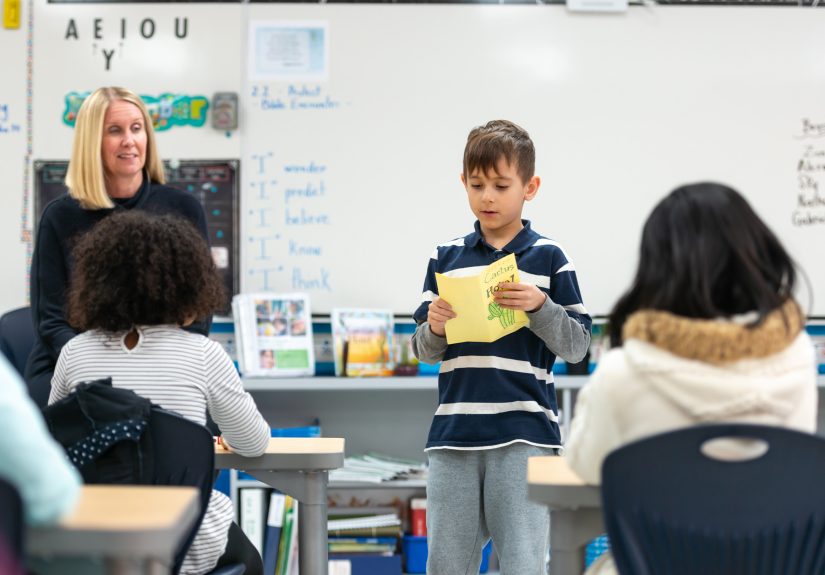
Sharing poems aloud can be equally powerful. Some students read boldly, as if accepting a national award. Others whisper so softly that the front row must use detective-level listening skills. Both responses are normal. A supportive routine helps: students may read with a partner, read one favorite line, or ask the teacher to read their poem while they stand beside it. Over time, many children become braver. Poetry gives them short texts they can own. A six-line poem feels possible in a way a full page may not.
The biggest lesson from teaching poetry to early elementary students is that poems do not need to be perfect to be valuable. A poem with invented spelling, wobbly handwriting, and one spectacular image is still a success. Quick poetry lessons create room for play, voice, observation, and language growth. They remind students that writing is not only something we do for worksheets. Writing is something we do because the world is strange, beautiful, noisy, bumpy, delicious, and occasionally shaped like a cookie moon.
Conclusion
Quick poetry lessons for early elementary students are more than cute classroom fillers. They are compact, joyful literacy experiences that help children listen closely, read fluently, choose vivid words, express feelings, and see themselves as writers. Whether students are creating five-senses poems, hunting for rhymes, building found poems, shaping words into pictures, or collecting observations on a poetry walk, they are practicing essential reading and writing skills in a format that feels playful and human.
For teachers, poetry is refreshingly practical. It does not require huge blocks of time or complicated materials. A short poem, a chart, a pencil, a few curious questions, and a classroom full of young imaginations are enough. Start small. Read one poem. Notice one craft move. Write one line together. Before long, students will begin finding poetry everywherein puddles, crayons, sneakers, clouds, lunchboxes, and maybe even in the mysterious crumbs at the bottom of their backpacks.