Table of Contents >> Show >> Hide
- What Really Happens When a Rose Flower Dies?
- So, Should You Cut the Stem When the Flowers Die?
- Where and How to Cut Rose Stems After Bloom
- Different Rose Types, Different Deadheading Strategies
- Seasonal Timing: When to Deadhead and When to Stop
- Common Mistakes to Avoid When Cutting Rose Stems
- Real-Life Experiences: What Gardeners Have Learned About Cutting Rose Stems
- Bottom Line: A Simple Rule of Thumb
You head out to admire your roses with a cup of coffee in hand… and instead
of perfectly posed blooms, you’re greeted by crispy petals and drooping
flower heads. The natural question hits: should you cut the stem of your
rose when the flowers die, or just leave it alone?
The short answer: in most cases, yes, you should cut. But how you cut,
where you cut, and when you stop cutting can make the difference
between a rose bush that reblooms like a champ and one that sulks its way
through the season.
In this guide, we’ll walk through what really happens when a rose bloom
dies, when you should cut the stem back, how far to go, and when it’s
smarter to leave those stems and hips alone. Think of it as Rose
Deadheading 101 with a little gardener-to-gardener honesty sprinkled in.
What Really Happens When a Rose Flower Dies?
When a rose bloom fades, your plant gets busy with something you can’t see.
Instead of putting energy into fresh flowers, it begins shifting resources
toward seed production. The base of the flower can swell and form what’s
known as a rose hipessentially the fruit of the plant.
From the plant’s perspective, this is a perfectly logical move: its job is
to reproduce, not to impress you on Instagram. But for gardeners who want
more blooms, this is where deadheading comes in.
Deadheading simply means removing spent or fading flowers so the
plant doesn’t keep investing in seed production. By cutting off the dead
bloom and a portion of the stem, you redirect the plant’s energy into new
growth and future flowers instead of seeds. Many horticulture experts note
that regular deadheading keeps rose bushes looking tidy, encourages repeat
blooming, and can help reduce disease problems by removing decaying petals.
Deadheading vs. Pruning: Two Different Jobs
It’s easy to confuse deadheading with pruning, but they’re not the same
thing:
-
Deadheading is a light, ongoing task during the growing season
where you remove individual spent blooms or small sections of stem. -
Pruning is a bigger seasonal job, usually done in late winter
or very early spring, where you shape the plant, remove dead or crossing
canes, and control overall size.
When we talk about whether to cut the stem after the flower dies, we’re
mostly talking about deadheading during the season, not heavy winter
pruning.
So, Should You Cut the Stem When the Flowers Die?
Here’s the big-picture answer:
if you’re growing modern repeat-blooming roses and you want more flowers,
you should usually cut the stem when the bloom dies.
But there are important exceptions we’ll get to in a moment.
Why Cutting Promotes More Blooms
Most hybrid teas, floribundas, grandifloras, and many shrub roses respond
beautifully to deadheading. When you remove the spent flower head and trim
the stem down to a healthy leaf set, you:
- Redirect energy away from seed formation and back into new growth.
- Encourage new flowering shoots to emerge from lower buds.
- Improve air circulation and reduce the chance of fungal problems.
- Keep the plant looking clean and well-kept rather than tired and messy.
University extension programs and rose societies consistently recommend
deadheading roses during the blooming season to encourage repeat flowering
and a better overall show.
When It’s Better to Leave the Stem Alone
There are situations where not cutting is actually the smarter move:
-
Once-blooming roses. Many old garden roses and some climbers
only bloom once a year on old wood. If you cut heavily after they flower,
you may remove the canes that would have produced next year’s blooms.
These are usually trimmed lightly right after flowering and then left
mostly alone. -
Roses grown for hips. Rugosas, some species roses, and certain
old varieties produce beautiful rose hips in fall and winter. If you want
those colorful hips for birds, winter interest, or even jelly, you need
to stop deadheading and let the spent blooms develop. -
LATE in the season. Many experts recommend stopping
deadheading in late summer or early fall so the plant can start preparing
for winter. Allowing hips to form helps signal the plant to slow down and
harden off before cold weather.
So, yes, cutting the stem is usually beneficialbut it’s not a year-round,
every-rose-no-matter-what rule.
Where and How to Cut Rose Stems After Bloom
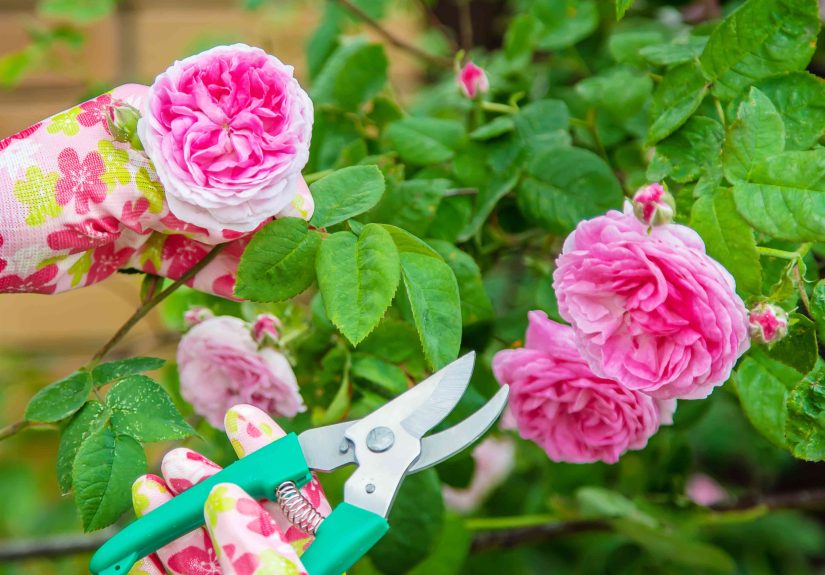
If you’re going to cut, you might as well do it in a way your rose bush
appreciates. The goal is a clean cut that heals quickly, encourages strong
new growth, and doesn’t leave awkward stubs.
Step 1: Find the Right Leaf Set
Look just below the dead flower on the stem. You’ll usually see:
- One or two leaves with three leaflets closer to the flower.
-
Then, lower down, a leaf with five leaflets (sometimes seven on
vigorous varieties).
Many rose specialists recommend cutting the stem just above the first
healthy five-leaflet leaf. That’s typically where the cane is thick and
strong enough to support new growth and the next flush of blooms.
You’ll also want to choose a leaf that’s facing outward. Cutting to an
outward-facing leaf or bud helps keep the center of the plant open, which
improves air flow and reduces disease risk.
Step 2: Make a Clean, Angled Cut
Use sharp, clean bypass pruners and:
-
Cut about 1/4 inch above the leaf or bud you’re targeting, leaving a
small bit of cane so the tissue can heal. -
Angle the cut at roughly 45 degrees, sloping away from the bud so water
runs off rather than pooling on the wound.
Dull tools crush instead of slice, which slows healing and invites disease,
so it’s worth keeping your pruners sharp and disinfecting them if you’ve
been dealing with any fungal or canker issues.
Step 3: How Much Stem Should You Remove?
How far down you cut depends on the age of the plant and your goals:
-
Newly planted roses (first season). Go easy. Many experts suggest
removing only the spent bloom and a small amount of stem above a
three-leaflet or upper five-leaflet leaf. Young plants need foliage to
make food and establish strong roots. -
Established roses. You can cut more deeply, down to a strong
five-leaflet leaf that points outward. This refreshes the plant and often
produces longer, stronger flowering stems for the next flush.
After deadheading, step back and look at the plant from a distance. You can
remove a few extra inches on tall, awkward stems to maintain a balanced,
rounded shape.
Different Rose Types, Different Deadheading Strategies
Not all roses play by the same rules. Adjust your approach based on what
you’re growing.
Hybrid Tea, Floribunda, and Grandiflora Roses
These classic “long-stemmed” roses are often grown specifically for their
repeat blooming. Regular deadheading is strongly recommended. Cut each
spent flower (or cluster of flowers) back to a strong five-leaflet leaf
that faces outward.
For floribundas and grandifloras that bloom in clusters, you can:
-
Remove individual fading blooms in a cluster to keep the rest looking
fresh. -
Once the whole cluster is finished, cut the entire stem back to a
healthy leaf set.
Shrub and Landscape Roses
Many modern shrub roses and landscape varieties are marketed as “low
maintenance,” and some are even self-cleaning. They drop petals and tidy
themselves without strict deadheading.
Still, light deadheading can improve appearance and encourage faster
rebloom. For these, you can cut just below the spent flower or remove a bit
more stem if you want to reshape the plant.
Climbing Roses
Climbers need a slightly different strategy. If you have a repeat-blooming
climbing rose, you can:
- Deadhead spent blooms along the lateral (side) shoots.
-
Trim back those side shoots lightly after flowering, but avoid hacking
away at the main structural canes during the growing season.
For once-blooming climbers, deadhead lightly if the petals bother you, but
avoid heavy cutting after flowering or you may reduce next year’s display.
Old Garden and Once-Blooming Roses
Many heritage roses bloom once in early summer and then focus on hips. With
these, gardeners often:
- Deadhead lightly (or not at all) for a natural, cottage-garden look.
-
Save major shaping and thinning for just after flowering or during the
appropriate dormant season, depending on climate.
Seasonal Timing: When to Deadhead and When to Stop
Timing matters. If you deadhead all the way into fall, your rose might keep
pushing out soft new growth that gets zapped by the first hard frost.
A simple schedule many gardeners follow:
-
Late spring through mid-summer: Deadhead regularly to keep
flowers coming and the plant looking fresh. -
Late summer: Start easing up. In many climates, experts suggest
stopping deadheading toward late August or early fall so hips can form
and the plant can begin hardening off. -
Fall and winter: Skip deadheading. Let any hips remain for winter
interest and wait for your regular winter or early spring pruning window
to do structural cuts.
The exact dates depend on your USDA hardiness zone, but the principle is
the same: don’t encourage tender new growth when cold weather is just
around the corner.
Common Mistakes to Avoid When Cutting Rose Stems
Cutting is helpfulunless you do it in ways that stress your plant. Try to
avoid these frequent missteps:
-
Cutting too close to the bud. If you cut almost right on top of a
bud or leaf, it can dry out or die. Leave about 1/4 inch of cane above
your chosen bud. -
Leaving long, empty stubs. Long stubs die back anyway and can
attract disease. Trim back cleanly to a live leaf or bud. -
Taking too much foliage off young plants. First-year roses need
plenty of leaves to fuel root growth. Keep deadheading light in their
debut season. -
Deadheading too late in the year. Continuous cutting into fall can
delay dormancy and leave your rose vulnerable to winter damage. -
Ignoring sanitization. If you’ve had black spot, canker, or other
diseases, occasionally disinfect your pruners with alcohol or a bleach
solution between plants.
Real-Life Experiences: What Gardeners Have Learned About Cutting Rose Stems
Theory is great, but roses are grown in real backyards with real weather,
real time constraints, and sometimes very real neglect. Here’s how the
“should you cut the stem?” question plays out in actual gardens.
Many home gardeners notice a dramatic difference the first season they get
serious about deadheading. Instead of one big flush of blooms followed by a
long lull, their roses cycle through wave after wave of flowers. One
common story: the rose bush that “only bloomed once” suddenly becomes a
repeat performer once spent flowers are removed consistently through early
and mid-summer.
Another frequent experience is discovering that location and climate
really matter. Gardeners in cooler northern climates often have a shorter
season, so every flush of bloom counts. They’re typically more diligent
about deadheading early in the summer to maximize the show. In warmer
climates with longer seasons, roses may bloom over a more extended period,
and gardeners sometimes take a more relaxed approach, focusing on shaping
and removing the worst spent blooms rather than grooming every single one.
There are also plenty of “I overdid it” stories. A common mistake is
aggressively cutting back once-blooming climbers after their flowers fade.
The plant responds by putting out vigorous, leafy growthbut the following
year, there are almost no blooms because the flower-bearing wood was
removed. That’s often the moment when gardeners learn to identify whether
a rose is a repeat bloomer or a once-a-year type before reaching for the
pruners.
Gardeners who love wildlife share a different perspective. Instead of
constantly deadheading, they intentionally stop cutting stems late in the
season to let hips develop. Those bright orange or red hips feed birds in
winter and add color to otherwise bare beds. People who make rose hip tea
or jelly sometimes plan their year around the transition from early
deadheading for blooms to late-season “hands off” for hip production.
Time is another huge factor. Not everyone wants to live in their rose bed
with pruners in hand. A lot of busy gardeners compromise: they deadhead
heavily visible roses near the front door or patio and take a more relaxed
approach with shrubs in the back of the border. Some switch to
self-cleaning shrub roses in high-traffic areas so they get continuous
flowers without constant trimming. The big takeaway from their experience:
you don’t have to deadhead perfectly to get good resultsjust do what fits
your schedule and goals.
Finally, many rose lovers talk about the psychological side of deadheading.
There’s something satisfying about walking through the garden with a pair
of pruners, snipping away the tired parts to make room for what’s next.
It’s a small ritual of optimism: every cut is a bet that more beauty is on
the way. And with roses, that bet usually pays off.
Bottom Line: A Simple Rule of Thumb
So, should you cut the stem of your rose when the flowers die? For most
modern, repeat-blooming roses, the answer is
yescut back to a healthy, outward-facing five-leaflet leaf during the
active growing season. You’ll encourage fresh growth, more blooms, and a
cleaner-looking plant.
But know when to step away from the pruners. Once-blooming roses, hip-forming
varieties, and late-season plants on the edge of dormancy often benefit
from a lighter touch. Learn what kind of roses you grow, respect the
seasons, and use deadheading as a helpful tool rather than a rigid rule.
Your roses don’t need perfectionjust consistent, thoughtful care. And
yes, a well-timed snip when those blooms call it quits.

![18 Best Types of Charts and Graphs for Data Visualization [+ How to Choose]](https://corkopencoffee.org/wp-content/uploads/2026/05/18-best-types-of-charts-and-graphs-for-data-visualization-how-to-choose-qKM1PBYG-thumb.jpg)