Table of Contents >> Show >> Hide
- The Meteor Years: How Dane Cook Became a Comedy Supernova
- Peak Dane: When Stand-Up Turned Into a Stadium Sport
- Why the Slide Started: The Backlash Was Not Random
- The Personal Blow That Changed the Story
- The Fall Was Real, but It Was Not a Total Disappearance
- What Dane Cook’s Career Really Says About Fame
- Experiences Related to The Rise And Fall Of Dane Cook
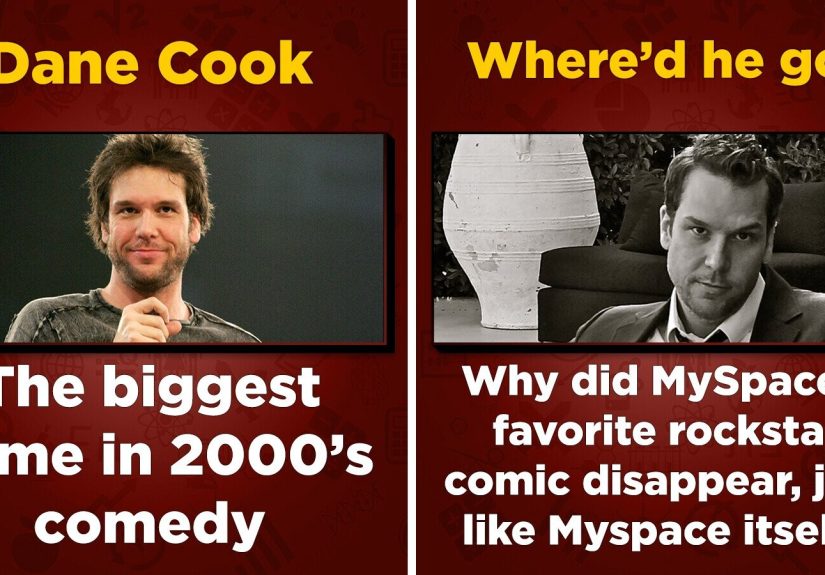
There was a stretch in the 2000s when Dane Cook did not merely feel famous. He felt unavoidable. He was in dorm rooms, on MySpace pages, in stand-up specials, on movie posters, on Saturday Night Live, and deep inside the brains of people who could quote half his act with the same confidence they used for song lyrics and bad pickup lines. For a few loud, caffeinated years, Cook was the face of a new kind of comedy celebrity: less tuxedo-and-microphone, more sprinting human exclamation mark.
That is what makes his story so fascinating. Dane Cook did not rise like a traditional comic who slowly collected prestige from critics, comedy nerds, and people who own too many black T-shirts. He went wide before “going viral” was the default career strategy. He built an enormous fan base online, moved huge albums, packed arenas, and proved that stand-up could be marketed with the energy of a rock tour. Then, almost as quickly, the culture turned. Backlash swelled. The movie career never became a permanent empire. Personal turmoil hit hard. And the guy who once looked like the future of mainstream stand-up became, instead, a case study in how fast fame can sprint past its own shadow.
The Meteor Years: How Dane Cook Became a Comedy Supernova
He understood the internet before Hollywood did
Dane Cook’s rise makes a lot more sense when you remember the era. This was the pre-streaming, pre-TikTok, pre-everyone-has-a-podcast world. Back then, many comics still treated the internet like a suspicious vending machine. Cook treated it like a stage, a fan club, and a direct marketing machine all at once. He leaned into his website, digital downloads, message-board-style fan interaction, and MySpace at a moment when a lot of entertainment executives still believed success had to trickle down from television.
That gave him a massive advantage. He did not wait for gatekeepers to hand him a crown. He built a relationship with young fans who felt like they had discovered him themselves, which is the strongest fuel in pop culture. Fans did not just watch Dane Cook. They evangelized Dane Cook. They sent clips, repeated bits, and treated his material like social currency. In college comedy culture, that kind of momentum matters. Being funny is great. Being quotable at 1:12 a.m. in a crowded apartment is better.
His style matched the moment
Cook’s stand-up was not built on the elegant architecture of a classic one-liner comic. It was physical, breathless, performative, and intentionally oversized. He acted out stories with the intensity of a man trying to outrun his own punch lines. For his audience, that was the appeal. He sounded like the id of mid-2000s youth culture: loud, hyperaware, horny, anxious, self-dramatizing, and a little ridiculous in a way that felt weirdly honest.
His material often focused on dating, embarrassment, social behavior, petty aggression, and the tiny humiliations of modern life. Not exactly philosophy seminar stuff, but he was not aiming for tweed-jacket approval. He was chasing momentum, relatability, and big-room laughs. And for a while, he got all three.
Peak Dane: When Stand-Up Turned Into a Stadium Sport
The numbers tell the story. Cook’s 2005 album Retaliation debuted at No. 4 on the Billboard 200, an eye-popping result for a comedy album and the highest-charting comedy effort in decades. That was not niche success. That was “the stand-up comic is now hanging out on the pop charts” success. Then came HBO, Vicious Circle, more mainstream exposure, and the kind of promotional force that made it seem like he was not just participating in comedy culture but swallowing it whole.
By 2006, Time named him to its Time 100 list. That is a big cultural stamp, especially for a comic who was still polarizing to traditional tastemakers. It meant Cook had crossed from “very popular comedian” into “important entertainment phenomenon.” In other words, the industry had stopped asking whether he mattered and started asking how much bigger he might get.
Then came the arena phase, which remains one of the most striking parts of his story. Cook sold out Madison Square Garden, a feat that placed him in rare company among stand-up comics. That was the moment his career stopped looking like a hot streak and started looking like a movement. The scale mattered. Comedy fans are used to clubs, theaters, and tightly framed specials. Arenas are different. Arenas say the comic is no longer just a performer. He is an event.
Cook also pushed into Hollywood around the same time. He landed roles in movies like Employee of the Month, Good Luck Chuck, My Best Friend’s Girl, and the darker, better-reviewed Mr. Brooks. For a while, the logic seemed simple: if he could sell out arenas and move albums like a rock star, surely movies would turn him into a long-term crossover giant.
Why the Slide Started: The Backlash Was Not Random
When you are everywhere, people get tired of your face
Part of Dane Cook’s fall was the most basic rule in entertainment: overexposure is a boomerang. The same ubiquity that makes an artist feel huge can also make the public want a week off. Then a month. Then maybe a decade. Cook’s fame expanded so quickly that it became easy to confuse visibility with permanence. He was on stages, on television, in magazines, in movies, and in endless debates about whether he was brilliant, overrated, or a living energy drink.
That intensity worked when the public wanted more. Once the mood shifted, it worked against him. His style, which fans experienced as electric, was interpreted by critics and comedy purists as overplayed, overacted, and heavy on motion compared with substance. The thing that got him to the top also made him a tempting target. The louder the success, the louder the backlash.
The comedy world never fully agreed on him
Cook’s success exposed a fault line in stand-up itself. One side saw him as proof that comedy could be modernized, energized, and marketed to huge new audiences. The other side saw him as a symbol of style beating craft, charisma beating structure, and popularity beating respect. That split followed him for years.
The joke-theft controversy involving material similarities between Cook and Louis C.K. only made matters worse. Even after the issue was later addressed publicly and somewhat defused, the damage had already been done to Cook’s image among comedy obsessives. He became the comic people argued about instead of the comic they simply enjoyed. In pop culture, that is a dangerous shift. Once the discourse becomes the product, the work itself has to fight for oxygen.
The movie career never became the second kingdom
Hollywood seemed interested in Dane Cook, but not committed to building an era around him. He had movie-star visibility, but the films did not become a lasting franchise of audience devotion or critical respect. Some projects made money, some did not, and several were met with the cinematic equivalent of a shrug followed by a wince. His screen persona often amplified the same traits that divided audiences in his stand-up: swagger, speed, volume, and a sense that everything was trying very hard to be a moment.
That does not mean he had no acting chops. In Mr. Brooks, he showed a darker and more controlled side. But his broader filmography never formed the stable second act that a comic with his reach probably needed. When the stand-up heat cooled, there was no bulletproof Hollywood identity waiting to catch him.
The Personal Blow That Changed the Story
Then came the kind of crisis no career blueprint can really absorb neatly. Cook’s half-brother and former business manager, Darryl McCauley, was convicted after stealing millions from him. It was the sort of betrayal that sounds too melodramatic for a screenplay, which is probably why life occasionally enjoys showing off. This was not just a financial wound. It was personal, destabilizing, and corrosive. Money can be replaced more easily than trust, especially when the theft is wrapped inside family.
That story matters in any account of Dane Cook’s career because it complicates the simplistic “people got tired of him and he vanished” version. Yes, the public backlash was real. Yes, his mainstream heat cooled. But he was also navigating a private catastrophe during an already unstable period. Fame is hard enough without discovering that your inner circle has been running a side hustle called “stealing your life.”
The Fall Was Real, but It Was Not a Total Disappearance
Here is where the Dane Cook story gets more interesting than the headline version. He did fall from the center of the culture. He did not, however, disappear into witness protection for former 2000s celebrities. He kept working. He toured. He reflected publicly on backlash. He tried to reframe his image. He released later work, including the special Above It All, and continued developing projects.
That is important because “fall” in entertainment rarely means total extinction. More often, it means the end of being the central obsession. Cook stopped being the guy who represented the future of mass-market stand-up and became something else: a veteran performer with a complicated legacy, a loyal audience, and a permanently debated place in comedy history.
That version of the story is less flashy than the rise, but more revealing. Some stars explode because they were always built to burn fast. Others get punished for arriving before the culture has language for what they are doing. Cook was probably a little of both. He used the internet like a future star. He built fandom like a future star. He sold comedy like a future star. But the culture had not yet figured out how to metabolize someone who was both massively popular and deeply uncool to the arbiters of taste.
What Dane Cook’s Career Really Says About Fame
The rise and fall of Dane Cook is not just about whether you think he was funny. Frankly, that argument has been running so long it probably qualifies for a pension. The more useful question is what his career reveals about fame in modern comedy.
First, he proved that audience connection can outrun old gatekeepers. Before every comic became a content machine, Cook showed that direct fan engagement could build empire-level momentum. Second, he proved that mass popularity does not guarantee critical immunity. In fact, sometimes it invites the opposite. Third, his career showed how fragile crossover fame can be when one medium thrives but the others never quite lock into place.
And finally, Cook’s story is a reminder that cultural relevance is often seasonal. The comic who defines one era can look oddly oversized in the next one. Tastes change. Rhythms shift. The crowd that once wanted maximum energy may later crave intimacy, irony, confession, or precision. That does not erase what came before. It just means the throne in comedy is built on roller skates.
Dane Cook was never merely a comedian with a hot streak. He was a transitional figure. He helped drag stand-up into a more internet-aware, fan-driven, aggressively branded era. His peak was enormous, his backlash was fierce, and his afterlife in comedy remains weirdly instructive. That is not a small legacy. It is just not the neat one people expected when the arenas were full and the culture could not stop yelling his name.
Experiences Related to The Rise And Fall Of Dane Cook
To really understand Dane Cook, you have to understand what it felt like to live through the Dane Cook era. This was not just about one comedian getting popular. It was about a moment when comedy itself started behaving differently. For a lot of people, Cook was the first stand-up comic who felt like a mainstream obsession instead of a niche favorite your friend’s older cousin forced you to watch. He was accessible, quotable, and everywhere. If you were in high school or college during the mid-2000s, there is a decent chance you did not just know who Dane Cook was. You knew someone doing a Dane Cook impression badly, which might be the truest sign of fame in America.
There was also a weird thrill to his success because it felt less polished than old-school celebrity. Dane Cook did not come across like a tidy network-TV product. He felt self-built, internet-fed, and slightly chaotic, which made fans feel closer to him. That mattered. Audiences were beginning to move away from only trusting big institutions to tell them what was cool. Cook fit that transition perfectly. He seemed like someone fans found, boosted, and defended on their own. In that sense, following him felt participatory. The audience was not standing outside the machine. The audience was the machine.
Then came the crash in perception, and that experience was just as revealing. It showed how quickly public enthusiasm can turn into public exhaustion. One year, quoting Dane Cook made you sound plugged in. A little later, quoting Dane Cook made you sound like you were frozen in 2006 next to an Xbox 360 and an energy drink fridge. The change was fast enough to give people whiplash. That is one reason his career still fascinates people: the speed of the turn feels almost brutal in hindsight.
Watching that shift happen also taught fans something uncomfortable about comedy culture. Being popular does not always earn respect. Sometimes it makes respect harder to keep. Cook became a lightning rod for arguments about authenticity, joke construction, critical taste, and whether broad appeal automatically lowers artistic value. For viewers, that meant the experience of liking him changed too. Enjoying the act became entangled with defending the act. That is a very different kind of fandom.
And maybe that is why Dane Cook remains such a compelling subject. His story captures the fun of sudden fame, the danger of oversaturation, the cruelty of backlash, and the stubbornness required to keep going after the spotlight moves. He was not a small comic with a small flameout. He was a giant pop-culture experiment in real time. For audiences who watched it happen, the experience was messy, loud, funny, and occasionally exhausting, which, now that I think about it, is also a decent summary of the Dane Cook brand itself.